 |
 |
|
Happy Monday, and welcome back to The Best & The Brightest. I’m Peter Hamby, coming to you with a report analyzing why shrill articulations of DeSantis’s demise are premature and overcooked. The Meatball’s opportunity will come down to three key factors, which will play out in the coming months.
But first, news and notes from Puck’s new congressional contributor Abby Livingston,who has been collecting all the dish from in and around the dome…
|
| The Capitol Hill Cafeteria Report |
|
| An utterly indispensable, high-minded, and, yes, occasionally dishy readout of what our lawmakers are really legislating behind closed doors.
By Abby Livingston
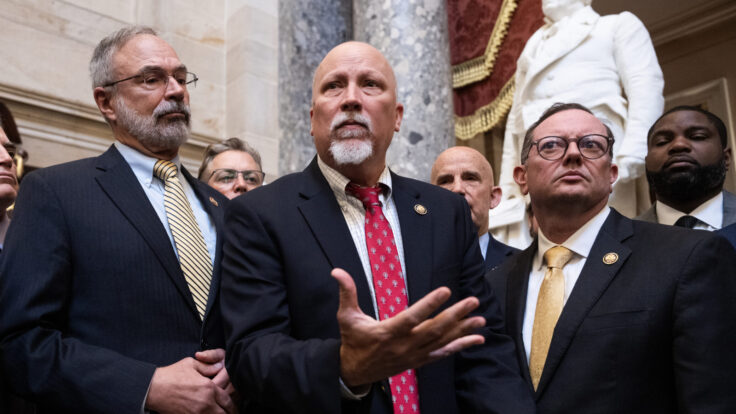
- The Dems ’24 Advantage: There’s more drama in store for House Republicans, thanks to the Supreme Court’s ruling in Allen v. Milligan, a 5-4 decision that found Alabama likely violated the Voting Rights Act, and will force several Southern states to redraw their congressional maps in ways that advantage Democrats—and possibly increase Democratic chances of taking back the House in 2024.
It will be a while before it’s clear who is running against whom in Alabama, and possibly elsewhere. But these races, which usually only happen once a decade, after redistricting, are particularly contentious. Known on the Hill as “member-member races” because they pit incumbents against each other, these contests are practically guaranteed to waste campaign money that Republicans would otherwise deploy against Democrats in a national campaign for the House gavel.
The anticipated Republican-on-Republican political violence also forces colleagues and lobbyists to choose sides by way of endorsements and campaign donations. But mostly, these are intensely personal family fights because the candidates’ policy differences are so slim. Any shred of political advantage—especially endorsements from bystander colleagues—is sure to add an uncomfortable dynamic for all House Republicans in their daily walk to the House chamber floor for votes.
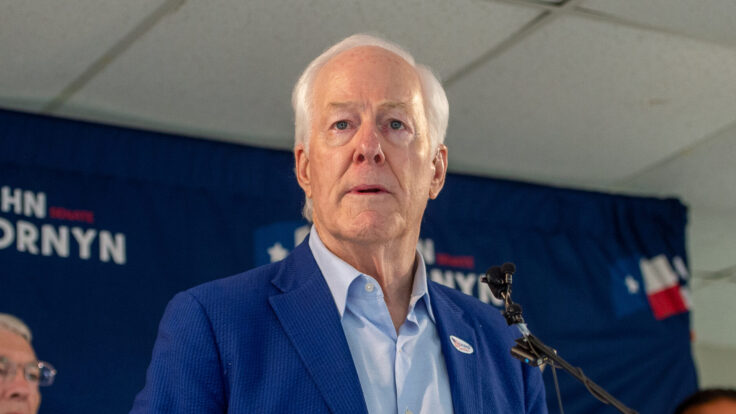
- Is Ted Cruz in Real Trouble?: Democrats are increasingly excited by the prospect that Senate candidate Colin Allred, a former NFL player and popular House Democratic caucus member, could unseat Ted Cruz in Texas. Yes, we’ve been here before with Beto (twice!) but Allred is a proven politician and fundraiser, and he slayed a dragon in 2018 when he defeated the two-time House G.O.P. campaign committee chairman Pete Sessions in a historically Republican district in posh North Dallas. One of his 2018 classmates, Abigail Spanberger, told me today that “Colin Allred can—and will—win in Texas.” His fellow Texan and another 2018 classmate, Lizzie Pannill Fletcher, chimed in that “many of us are excited by the prospect of having him as a thoughtful, pragmatic, engaged partner in the Senate.”
Texas and D.C.-based Republicans are cautiously monitoring the race but remain bullish on Cruz, who narrowly won re-election in 2018 by 2.6 points. “I am surprised at the quality of the candidate, but I just don’t see it,” a seasoned Senate G.O.P. operative told me. Plus, Allred does not yet have a clear path to the party nomination: State Senator Roland Gutierrez, who represents Uvalde, is also mulling a run. Nevertheless, this could be one to watch.
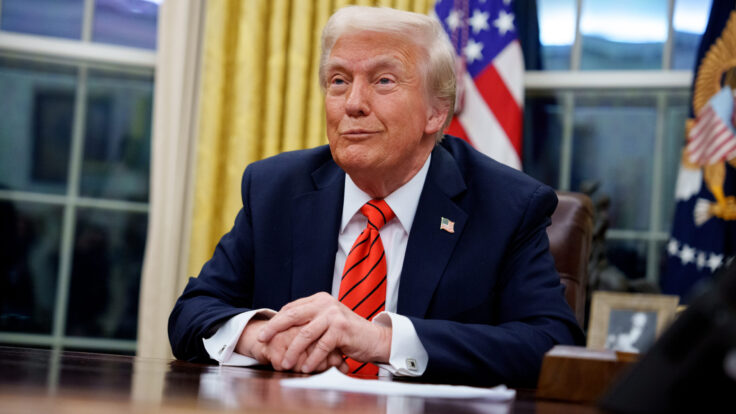
- Lastly, the Manu Raju Bogeyman: What do the majority of Republican lawmakers really, really think, deep in their hearts, about the Trump federal indictment? As you can imagine, many are keeping those convictions private. The news broke Thursday night, when members had already left the Capitol for the weekend and were able to avoid probing questions from the national press. But that all ends as members return for votes. Indeed, a pair of Hill Republicans told me in recent days that their colleagues are dreading running into CNN’s Manu Raju and being forced, with cameras rolling and boom mics in their face, to offer extemporaneous sentiments on the matter. (Manu, I hope you are taking note.)
And now, on to the DeSantis show… |
 |
| DeSantis Extinction Theory, Revisited |
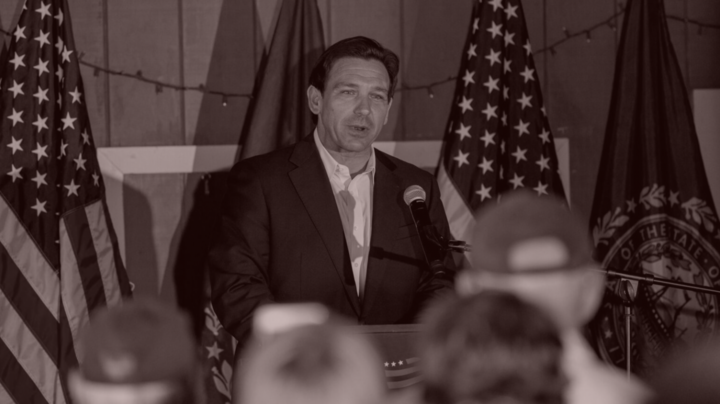
| What if those Scott Walker comparisons are misguided, or at least profoundly premature? Right now, the Republican campaign is in a limbo state until three important unknowns shake out: Republican voters respond to Trump’s indictments, the first G.O.P. debate in August, and whether DeSantis can grow outside of his Florida comfort zone. |
|
|
|
| When I was on my honeymoon in South Africa, a few weeks ago, a fellow tourist heard that I was a political journalist and wanted to talk shop. He seemed more like a news junkie than a partisan, and he asked me about a fresh New York Times push alert regarding Ron DeSantis and the infamous presidential announcement on Twitter. Even this guy understood the patent absurdity of it all: who does a campaign announcement on Twitter Spaces with Elon Musk? And who was this for, exactly? Surely not primary voters in Iowa, New Hampshire, or South Carolina, people who have jobs and families.
The announcement justified the mockery. There were tech fails, arcane bromides against “woke banking,” and corporate D.E.I. initiatives, and a heavy dose of David Sacks, a tech entrepreneur known to most Puck readers but zero actual voters. At certain moments, DeSantis sounded like he was talking to some kind of imagined human with a vocabulary familiar only to Ben Shapiro and the anons who edit Musk’s Wikipedia page. At other times—riffing on the REINS Act and Chevron deference—he was a typical Washington politician, talking about committee votes like the House member he once was.
I’m all for digital experiments in politics—I covered Senator Mark Warner’s bizarre foray into the virtual world of Second Life back in 2006—and, yes, the legacy media matters less and less. But a chorus of negative horse race coverage can easily lead to bad poll numbers—even for a Republican, even one competing against a candidate legitimately facing jail time. Even in South Africa, I detected an odd sense of conviction, from DeSantis’s critics and from the media narrative, that his campaign was already toast.
The comparison to Scott Walker—a young governor, overhyped by conservatives, who ultimately brought the excitement of a cheese curd to his dud of a 2016 campaign—is a common refrain. But despite DeSantis’s charisma deficit, it strikes me that he’s been suffering almost too much bad press lately, given where he actually stands in a still-winnable Republican primary against Trump.
Indeed, DeSantis might be some Walker-style flameout, or a permanent bridesmaid choice, or maybe even the nominee. Hear me out: We just don’t know right now, and despite the ups-and-downs of these early news cycles, the Republican campaign is really just in a limbo state until three important unknowns shake out in the coming months: How Republican voters respond to Trump’s indictments, the outcome of the first G.O.P. debate in August, and whether DeSantis can grow as a candidate outside of his Florida comfort zone. |
|
A MESSAGE FROM OUR SPONSOR
|
| |
 |
| Insurers and PBMs don’t pay full price for medicines. So why do you?
Insurance companies and pharmacy benefit managers (PBMs) get savings that can reduce the cost of some brand medicines by 50% or more. But they don’t have to share these savings with you.
What else are they hiding? |
|
|
|
|
| Lost in the daily punditry is the fact that DeSantis’s horse race numbers have dropped, but his other poll numbers really haven’t. Donald Trump’s super PAC has already spent $18 million attacking DeSantis—that’s on top of Trump’s personal attacks against Tiny D—and those volleys haven’t affected Republican voters’ opinions about DeSantis in any meaningful way at all. Trump—beloved in his party, as we all know—has a 77 percent favorable rating among Republicans. DeSantis? His favorables are just as high, at 76 percent. For comparison, Nikki Haley only has a 49 percent favorable rating among Republicans, and Mike Pence is at a hopeless 37 percent. A new CBS News poll found that 53 percent are either supporting DeSantis or considering him. No other Republican comes close.
So while Republicans in national polls currently prefer Don over Ron in the nomination fight, they still really, really like DeSantis. That dynamic is evident where it matters most, in Iowa and New Hampshire, where polls show a closer race than national surveys. In interviews on the ground in those early states, voters continue to say that they’re eager to learn more about DeSantis, who is less of a known quantity.
The DeSantis camp certainly hasn’t enjoyed watching their 15-point disadvantage in the national polls swell to 30-points after Manhattan District Attorney Alvin Bragg indicted Trump, in late March, as Republicans switched their allegiances. But the DeSantis team doesn’t actually want to be winning the race right now, anyway. Instead, I’d argue that they want to have room to grow, while the frontrunner with 100 percent Name ID somehow withers.
Trump’s mounting legal challenges are the biggest question hovering over the 2024 campaign. It’s become clear in hindsight that Republicans didn’t take Trump’s hush money scandal seriously. The response to Trump’s latest indictment—37 felony counts related to the handling of classified documents—might be similar, in the end. But there are some early signals that Republicans see this latest case differently. An ABC News/IPSOS poll released on Sunday showed that Republican voters appear to be taking the new charges more seriously, too. Today, 38 percent of Republicans view the federal indictment charges as serious, compared to 21 percent in April. That’s a significant jump.
Trump’s former attorney general, Bill Barr, an opportunistic sycophant-turned-critic, defended Trump when Bragg dropped his indictment in New York a few months ago, calling it “an abuse of prosecutorial power to accomplish a political end.” This time around, with Trump on tape seemingly admitting to the crimes, Barr went on Fox News Sunday and said the new federal charges from Special Counsel Jack Smith are all but airtight. “If even half of it is true, then he’s toast,” Barr said of Trump. “I mean, it’s a very detailed indictment, and it’s very, very damning. This idea of presenting Trump as a victim here—a victim of a witch hunt—is ridiculous.” |
|
|
| In our current media environment, where Republicans don’t trust the press, the government, or pretty much any institution, G.O.P. voters aren’t going to simply change their minds about Trump on their own. (To wit: the ABC/IPSOS poll found that Republicans believe the charges are politically motivated and that Trump should not be charged.) Instead, Republicans have to be pushed in that direction by the only people they do trust: Other Republicans. Particularly Republicans like DeSantis, who has establishment support but also MAGA street cred that Trump critics like Mitt Romney or Mitch McConnell lack.
But DeSantis remains reluctant to go after Trump on the criminal cases against him, knowing that the MAGA voters he needs are hostile to the criticism. “The weaponization of federal law enforcement represents a mortal threat to a free society. We have for years witnessed an uneven application of the law depending upon political affiliation,” DeSantis tweeted last week. “Why so zealous in pursuing Trump yet so passive about Hillary or Hunter?”
DeSantis and the other Republican candidates who aren’t running for Vice President (See: Scott, Tim) have to start to hack away at that subset of Republican voters who see the latest charges (and possible future charges against Trump on the matter of 2020 election interference) as a threat to victory in 2024. There’s a common refrain out there that G.O.P. voters don’t care about electability. That’s something primary voters might tell pollsters, but political winds can shift. After all, “electability” was never a concept that Democratic primary voters cared about either—until Trump came along and electability was the only thing that mattered for Democrats. It became the thing that carried Joe Biden to victory in the primary and beyond.
Winning matters to Republicans, too, even if they don’t say it out loud. Remember: Trump’s support among Republicans slipped badly after MAGA Republicans were embarrassed in the midterms. That’s also when DeSantis started to climb the polls, after his dominant re-election victory in Florida. DeSantis—really the only person other than Trump that Republicans are considering for president—has to figure out a way to remind voters that Trump is a singular political risk in 2024. He just has to do it without overstepping and angering the base. |
|
|
|
|
| That tricky messaging push begins at the first G.O.P. debate on August 23 in Milwaukee. All of the news about the Republican primaries that you think voters are paying attention to? They really aren’t, and they won’t be, until then. The biggest televised events in American life hardly merit public tune-in like they did even just eight years ago. Presidential debates and live sports are the main exception, and the fight in Milwaukee will be the first—and maybe only?—opportunity for the candidates to command singular attention and try to bend the narrative in their favor.
The 2016 debates were famous for showcasing the impotency of the G.O.P. field against Trump’s whirling dervish. But with DeSantis already rivaling Trump for money and attention, and other Republican candidates willing to criticize Trump this time around, the 2024 debates could play out differently. Helping his cause, DeSantis will have a pair of stalking horses on stage who are willing to call Trump a political liability—even an outright criminal.
Chris Christie and Asa Hutchinson, who have nothing to lose in their careers at this point, have already made clear they’re willing to publicly attack Trump. That might give other Republicans permission to throw punches at Trump, or at least give DeSantis some air cover to make the case he’s started to make: That Trump “is a different guy” today than he used to be and he’s actually the one to finish the conservative job on the border, abortion, and fighting the woke left.
DeSantis has been stepping up his criticism of Trump lately. But, importantly, he hasn’t yet said anything directly to Trump’s face. Does he have the cojones? That’s something else the first debate will test: Whether DeSantis is big enough for the moment. Governors—especially ones from big states—have a tendency to create their own mythologies and convince themselves that a national campaign isn’t that much harder than the ones back home.
Walker is one example, but past Republican primaries are littered with the bodies of G.O.P. governors from Republican-controlled states who saw themselves as invincible. Texas governor Rick Perry swaggered into the 2012 primary with a big state cockiness and a coterie of self-assured veteran strategists who just knew that their guy was better than the Republican frontrunner at the time. Until the debates. Oops! There was Jon Huntsman that same year… telegenic, hyped and “electable”—until he wilted under the klieg lights of the 2012 primary and retreated to his wife, rather than his campaign aides, for political advice. And Bobby Jindal, an Ivy League policy dork and McKinsey wind-up doll who cosplayed as a red meat cultural conservative in 2016 to outflank his opponents, even though voters easily sniffed out that he was trying too hard.
DeSantis reminds me of all those Republicans, in different ways. He might outperform them—and outperform Trump in the end. But Trump, for all his faults and venality, knows who he is and why he is running. Does Ron? We’re about to find out. |
|
|
|
| FOUR STORIES WE’RE TALKING ABOUT |
|
|
|

|
 |
|
|
|
Need help? Review our FAQs
page or contact
us for assistance. For brand partnerships, email ads@puck.news.
|
|
|
|
Puck is published by Heat Media LLC. 227 W 17th St New York, NY 10011.
|
|
|
|