Welcome back to Wall Power. I’m Marion Maneker, writing to you from
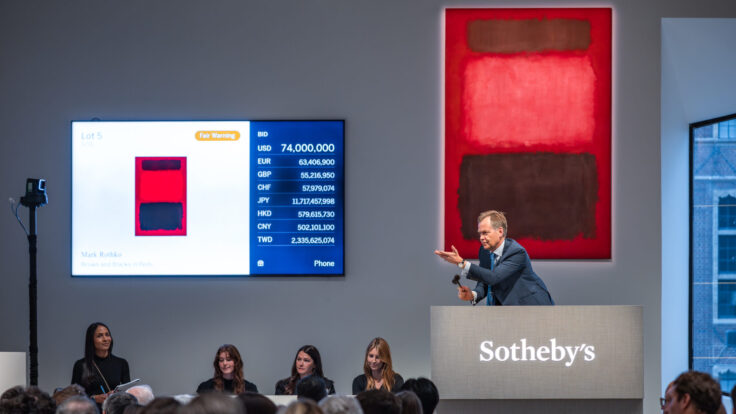
the fourth floor of the Breuer Building as Sotheby’s sale of the Leonard Lauder collection gets underway. Eighteen of the 24 lots, including two of the Klimts, are covered by irrevocable bids. In the Now and Contemporary sale, 16 of 44 lots, or a third of the offerings, are covered by I.B.s. As you’ll read below, this solid but cautious market is the emerging pattern of the week.
Here’s the plan: Tonight, I’m going to recap last night’s sales at
Christie’s. Tomorrow, I’ll give you everything I know about the Lauder sale and the contemporary art evening sale.
There’s lots to share, so let’s get started…
|
-
Bonhams’ November surprise: It can’t have been easy for Bonhams to transfer ownership last month from a private equity firm to one specializing in private credit. But that doesn’t seem to have hampered their ability to land works by prominent artists. Bonhams’ sale tomorrow includes a number of interesting works by the likes of Wayne Thiebaud, Richard Prince, David Hockney, Jeff Koons, and Andy Warhol—as well as actor
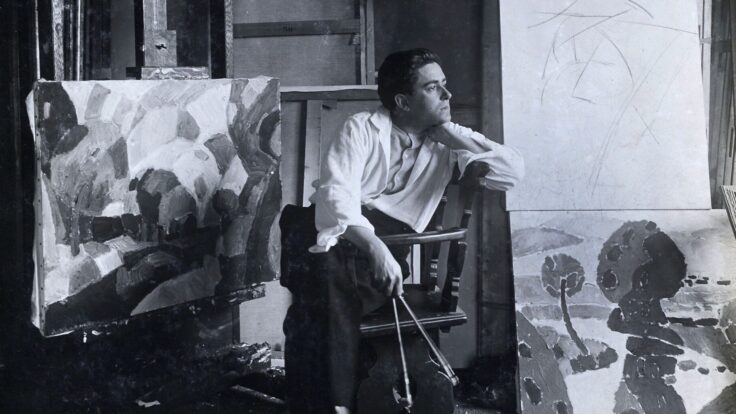
Gene Hackman’s collection, which includes some very nice Richard Diebenkorn works on paper.There are also some real finds. One is a great Yves Tanguy
painting that’s been hidden in a San Francisco collection for the last 75 years, known only to the artist’s widow and a few close associates. Another is an early Henri Matisse,
from 1901, that looks more like a Jules Pascin portrait (look him up).
|
|
|
A MESSAGE FROM OUR SPONSOR
|
The first steps towards a masterpiece starts with a dream. The all-electric BMW i7 – the
evolution of brilliance. Learn more at
BMWUSA.com
|
|
|
 |
Julie Brener Davich |
|
- A Rockwell’s
forever home: A Norman Rockwell quadriptych of sketches—commissioned in 1943 by Franklin Roosevelt’s press secretary, and on loan from his descendants to the White House for more than four decades—will now have a permanent place at 1600 Pennsylvania Avenue, at least until Donald Trump decides to redecorate again. So You Want to See the President! sold for $7.25 million against an estimate of $4 million at Heritage Auctions
last week, setting the world auction record for a work on paper by the artist. The winning bidder was the White House Historical Association, a nonprofit founded by Jacqueline Kennedy in 1961. Heritage also offered a selection of works benefitting the Boy Scouts of America Settlement Trust, including four Rockwell paintings that made between $800,000 and $1 million each.
- Turned wood turning heads: Tomorrow marks the sixth
sale at Rago Auctions featuring objects made from what’s called “turned wood.” If you don’t know what that is, you’re not alone—at least for now. Turned wood is carved using a lathe. Among the technique’s more quotidian applications are table legs and balusters, but it’s also used to make bowls and vases. Some are extremely thin; others feature intricately carved openwork. “That is
where wood turning is going,” Rago’s Suzanne Perrault told me.Perrault first discovered the craft in 2023 when she was asked to sell the Stephen Weinroth collection, and has been putting together dedicated sales ever since. Turns out there was a built-in—and woefully underserved—buyer base for the works.
It’s not a huge market—Rago’s record stands at $84,000 for a cocobolo vase by William Hunter—but the discipline is finding a larger audience. Tomorrow’s sale includes work from its best-known practitioners, including Hunter; David Ellsworth; Bob Stocksdale; J.
Paul Fennell; Rude Osolnik; Ed Moulthrop and his son, Philip; and Melvin Lindquist and his son, Mark. Among the works in the upcoming sale is one of the elder Moulthrop’s tall Saturn bowls, estimated at $6,000, and one of his son’s
globes, made from slices of white pine branches in black resin, estimated at $8,000.
|
|
|
Now, here’s the main event…
|
|
|
With brisk bidding and an uplifting sense that people were buying art
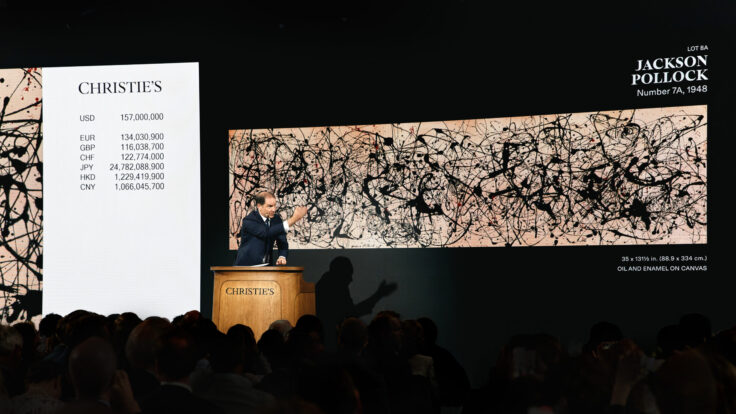
for art’s sake, Christie’s first auctions of New York’s fall season revealed a market returning to solid ground. With six well-known collections on offer, the single night yielded some $690 million in sales, even if the action in the eight-figure range was less heated.
|
|
|
It took a bit longer than expected, but the art market’s turn toward historical work
has finally arrived: Last night at Christie’s, nearly $700 million in art made before the 21st century was sold in a single night. We haven’t seen numbers like that in quite some time—it’s true that the Paul Allen estate sale of 2022 did twice that sum in a single evening, but there are only so many mega-collectors on that scale to go around. Yesterday’s auction of the Robert and Patricia Weis collection, which made $218
million, and the 20th century evening sale, which made another $471 million, felt like the kinds of sales that took place well before the pandemic.
For one thing, a great deal of the bidding came from a room packed with very few collectors but a few hundred art professionals, many of them poised and eager to pounce. Several dealers and advisors went home frustrated when they were outbid on a few choice works. And some of the collectors who got early third-party guarantees gave them up in
the face of determined bidding. But on the highest-value works there was less competition, even if a single bidder came in to top the guarantor just below the low estimate.
The sale was also exceptionally well managed. Forty-six lots had third-party guarantees going into the sale, with at least one more negotiated as it went on. Only one lot of 79 was withdrawn, and just three failed to find a buyer. The evening’s supply of high-quality works, as Christie’s 20th and 21st century chairman
Max Carter pointed out, was drawn from six different named collections—an unusually high number. Some of those, like Elaine Wynn’s, were familiar to buyers because of her visibility and recent buying activity; others were barely known. The Weis collection, for instance, came from a Pennsylvania supermarket family who lived modestly—and remotely—with the treasures they mostly acquired in the ’70s, ’80s, and early ’90s.
|
|
|
A MESSAGE FROM OUR SPONSOR
|
The first steps towards a masterpiece starts with a dream. The all-electric BMW i7 – the
evolution of brilliance. Learn more at
BMWUSA.com
|
|
|
Toward the very end of the sale, a Christie’s executive showed me their running
tally, which revealed a hammer ratio of 1.10—a sign of a solid but not exuberant market, in line with what we saw in Europe last month. “It’s definitely not the same landscape as six months ago,” one European advisor texted me after the sale. “At last, some light.”
Still, in today’s art marketplace, it takes a village to sell a painting. Another art advisor messaged me that “things felt good in the room tonight,” but pointed out that “there was a lot of work behind the scenes.”
Indeed, the auction room was filled with all manner of private dealers and art advisors, some representing buyers, some there for sellers. What we don’t see during the auction itself is the networking, politicking, and selling that takes place during the previews. Art isn’t sold spontaneously to a buyer on a telephone—every sale is the result of relationships, conversations, and some level of trust, since collectors are ultimately buying art from another person. “Christie’s delivered though,”
the advisor wrote. “They worked as hard as we did.”
|
The Action at the Auction
|
Alex Rotter, Christie’s global president, attributed the evening’s
success to a number of factors. On the buyers’ side, he said, the conversation was about the art, not its value as an asset. On the sellers’ side, there was a willingness to reduce estimates—Rotter called them “come-on estimates”—and take third-party guarantees, even if many of the lots did not sell to the guarantors. The result, he said, was “the kind of auction we haven’t seen in a while.”
When it worked, it worked extremely well. There were many sales for multiples of the estimate. For
instance, a Giorgio Morandi still life, the second lot, made $3 million with fees on an estimate of $1.2 million without fees. There were at least six bidders, including a Morandi expert who waved his hands but could not get a bid in. It was simply moving too fast.
The third lot, Henri Matisse’s Figure et bouquet (Tête
ocre), from 1937, was estimated at $15 million and sparked a prolonged bidding war between advisor Ralph DeLuca, seated on the aisle, and specialist Conor Jordan, standing with a cellphone on one of the daises. In the end, Jordan won with a $27.5 million bid that translated into just above $32 million with fees. Several other Matisse works also did
well. Nu au fauteuil, main gauche sous la tête, from 1920, consigned by the Kawamura Memorial DIC Museum of Art, sold for more than $5 million, or $6.8 million with fees, against an estimate without fees of $2.5 million. Elaine Wynn’s Matisse, Océanie, le ciel,
a screen print on linen numbered 29 out of a series of 30, from 1948, was estimated at $1.5 million. It sold for the remarkable price of just under $5 million with fees.
A Marc Chagall painting, Le songe du Roi
David, from 1966, also performed exceptionally well. That work, too, came from the Kawamura Museum, which ceased operation in March. It was estimated at $8 million, but sold for $26.5 million with fees to DeLuca, who used the same paddle number, 266, that he deployed in winning a Max Ernst bronze for just over $20 million. (He told me the purchases were for separate
clients.)
Another Chagall from the museum made $10.5 million with fees. And an Isamu Noguchi stone sculpture titled Myo, from 1957-66, was estimated at $2 million but sold for a premium price of $7.6 million. Beauford Delaney’s
portrait of James Baldwin, estimated at $500,000, sold for more than $1.5 million with fees—a record price for the artist at auction. And two of the three John Singer Sargent works, from the Carol and Terry Wall collection, gave cracking auction performances. Gondolier’s Siesta, a
watercolor from 1902-3, sold for almost $7.4 million with fees on an estimate of $2 million. Another version of Capri, from 1878—similar to the one in the Met’s show Sargent in Paris—sold for just under $11.5 million with fees
on an estimate of $4 million. The last of the Sargent works hammered at the $6 million estimate. Not too shabby.
An Edvard Munch painting, Morning, Nude at the Window, from 1902, sold for almost $5 million.
Consigned as part of the Arnold and Joan Saltzman collection, the work was estimated at half of that. A 1-foot-square Agnes Martin painting of a grid of dots on a grey ground, from 1960, was estimated at $1.5 million. The painting carried a third-party guarantee, but still saw bidding that pushed it
to a final sale price of $3 million. One of the more unexpected moments of the night came when a painting by Korean modernist master Kim Whanki sold for more than $10 million—the artist’s second-highest auction price. Hong Kong is the usual venue for Kim’s work, so it wasn’t surprising that one of the dogged bidders was a Korean specialist from
Christie’s. But the winner, having bid nonchalantly from the other side of the audience, was Saara Pritchard, an advisor who has worked at both Sotheby’s and Christie’s. She bought the work for an American client before quickly exiting the room.
|
The action was more subdued at the highest tier, where much was sold at or near the
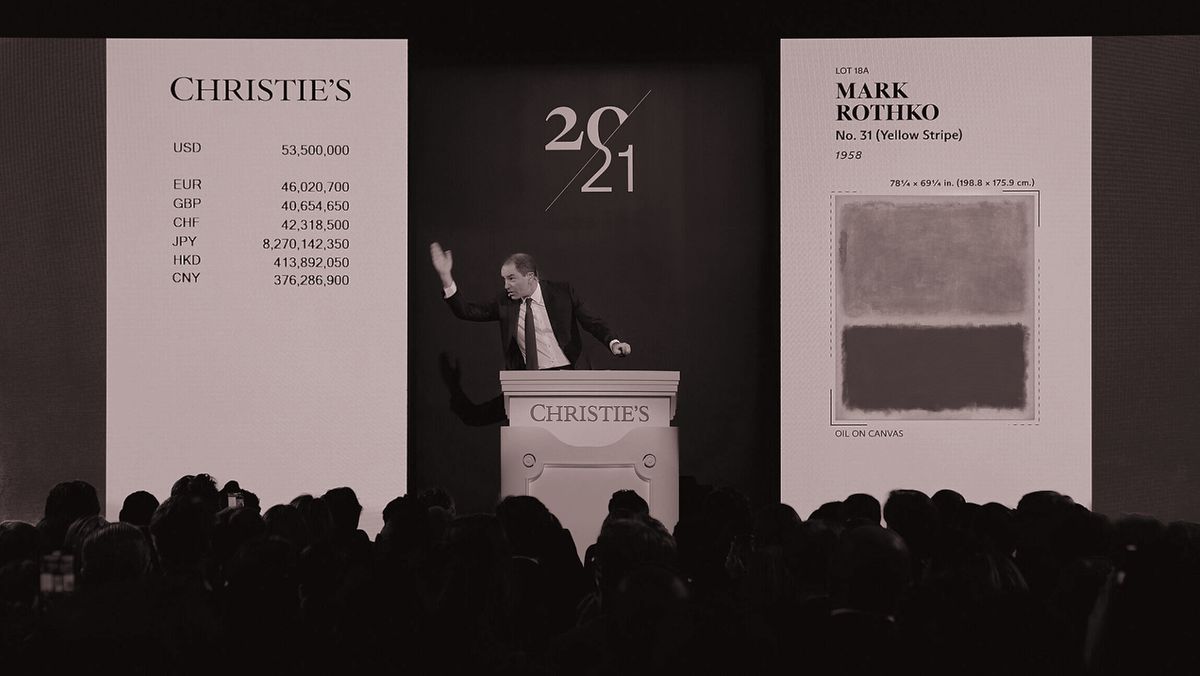
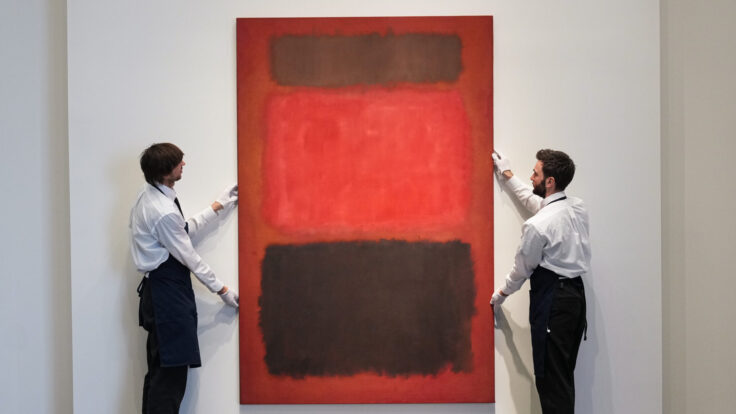
estimates. The top lot was a red-and-yellow Mark Rothko painting, No. 31, that was estimated at $50 million and hammered at $53.5 million. An anonymous internet bidder from Connecticut went up to $53 million, one of the highest online bids in recent memory, which left most of the audience to speculate about just which coastal hedge-fund haven it was coming from. But Christie’s London contemporary art head Katharine Arnold won against this online mystery opponent, and the final selling price was listed as $62 million with fees.
|
|
|
Otherwise, the top lots seemed to have a set point just below $40 million. That
number was the ask for the Weises’ 1932 Pablo Picasso painting of Marie-Thérèse Walter, and everyone seemed fine with the way auctioneer Adrien Meyer led a lone bidder up to the $38 million mark, which may have been where the third-party guarantee sat. But when Johanna Flaum’s client bid
$39 million, the air seemed to drain out of the room. She won it there.
Eighteen lots later, a similar scene played out with Claude Monet’s Nymphéas, from the Kawamura Museum, which was also offered with expectations of $40 million. Again, a lone bidder was laddered up to $38 million, then Flaum stepped in to bid $39 million—and the bidding stopped. Flaum’s client, who was prepared to go further, must have been pleased to retain the dry powder. Christie’s listed
the final selling price for both works, after fees, at $45.5 million. David Hockney’s double portrait of Christopher Isherwood and Don Bachardy, also estimated at $40 million, seemed to have only one bidder up to $38 million, surely the third-party guarantor’s price, also executed by Christie’s Arnold.
Not all of the eight-digit sales came in under the estimates. Several saw bidding that elevated their prices. There was a
prolonged bidding war for Alexander Calder’s Painted Wood, from 1943, with many feints leading to cut bids, and then jumped bids, as two Christie’s reps tried to shake each other off. In the end, though, the final hammer price was only a couple million above the $15 million estimate, to make a final selling price of a little more than $20
million. Another Calder, a wire sculpture of acrobats, was estimated at $5 million but sold for a final premium price of $8 million.
Elaine Wynn’s Joan Mitchell, Sunflower V, which she bought 20 years earlier for $1.5 million, sold for more than $16.7 million. Elaine’s daughters did a little less well with their mother’s Richard
Diebenkorn, Ocean Park #40, from 1971, which Wynn bought four and a half years ago at auction for $27 million. It sold last night for almost $18 million. All’s fair in love and auctions.
Christie’s overall message of the evening was that the sales were less about money and more about wanting to own art—an idea that seems to be gaining currency. Delivered by C.E.O. Bonnie Brennan during a talk-show-style, post-sale press conference, and by evening sales
co-heads Emily Kaplan and Imogen Kerr in the post-sale press release, the party line is that the sale’s success was built upon market momentum that began in Europe last month. Of course, the property for the sale was gathered long before that buying energy reemerged in the marketplace, which helps explain the overall sense of relief that pervaded the room after the auction ended.
|
That’s all I got for you tonight. I’ll be back tomorrow in the Inner Circle with
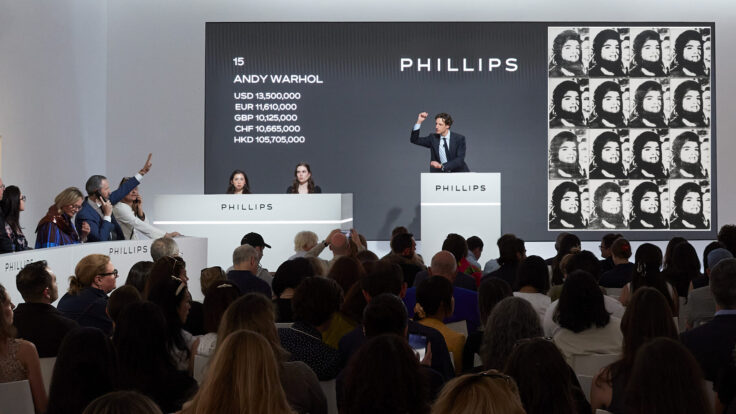
Sotheby’s results to see whether the market momentum carries through. I’ll also be doing the Inner Circle call at 4:30 p.m. ET, just before Phillips’s sale, to discuss what’s happening in the market. Hope to see you there.
M
|
|
|
Need help? Review our FAQ page or contact us for assistance. For brand partnerships, email ads@puck.news.
You received this email
because you signed up to receive emails from Puck, or as part of your Puck account associated with {{customer.email}}. To stop receiving this newsletter and/or manage all your email preferences, click here.
|
Puck is published by Heat Media LLC. 107 Greenwich St., New York, NY 10006
|
|
|
|