 |
 |
|
Welcome back to The Best & The Brightest, our new-ish daily political email covering what’s really happening in this town. In tonight’s edition, my conversation with Peter Hamby about Congress banning TikTok, A.O.C.’s cynical Gen Z play, the disappearance of Mike Pompeo, why Democrats have cooled on Alvin Bragg, and the possibility that Ron DeSantis drops his White House bid.
|
|
|
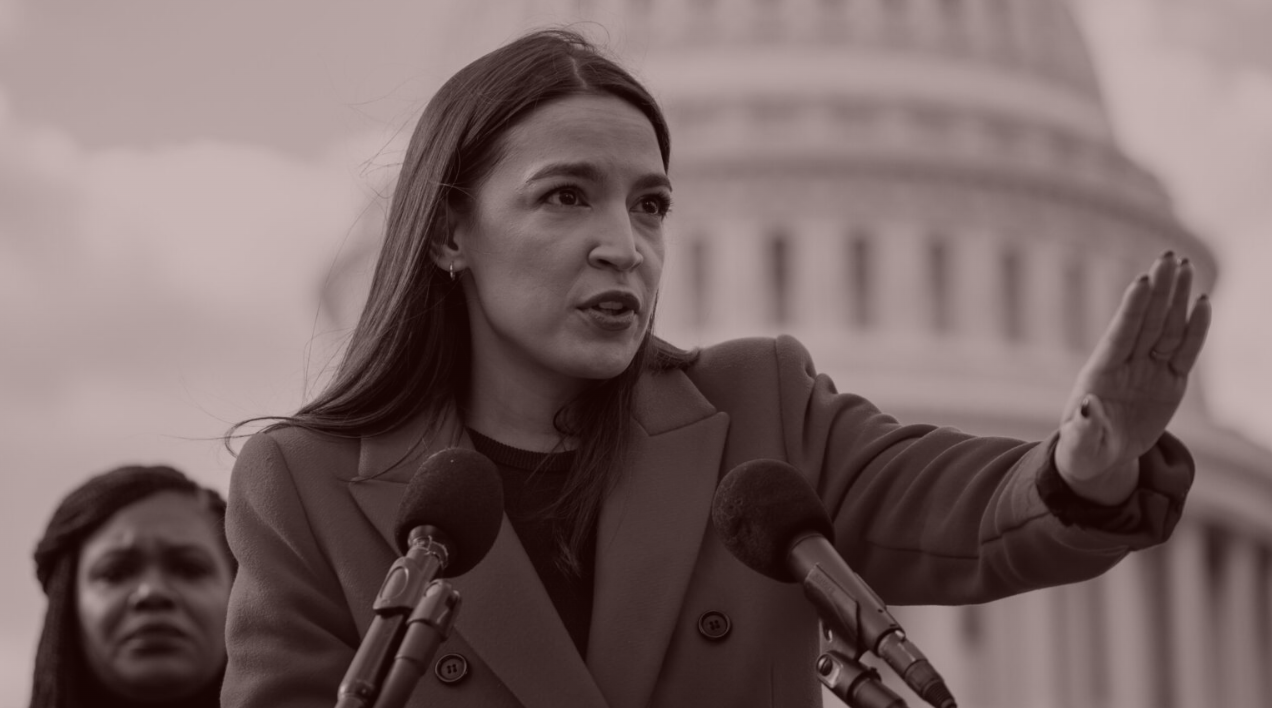
| Republicans and Democrats don’t see eye to eye on much, but there are a few exceptions: Namely, concern about the omnipotence of technology platforms and the growing threat of China. And this, in large part, helps explain why the congressional interrogation of TikTok C.E.O. Shou Chew turned into a made-for-TV double-piñata. (One of the few outliers was Alexandria Ocasio Cortez, who posted her first TikTok video in support of the app, earning some 1.5 million views and telling lawmakers they were putting “the cart before the horse” on a potential ban.)
TikTok has become a lightning rod in Washington for these reasons, among others. Herewith, I discuss the issue and its myriad derivatives, with Puck founding partner Peter Hamby. (Peter is also the host of Good Luck America on Snap, a TikTok competitor.) We also chatted about some mounting DeSantis national doubts, the absence of Pompeo, a potential A.O.C. base strategy, and why Democrats are so silent about the Trump indictment. Herewith… |
| The Rubio-Hawley Motive & A.O.C.’s Calculation |
|
| Tara: So how do you think TikTok’s crusade in Washington is playing out?
Peter: It’s been a minute since I watched a full congressional hearing, especially on the House side—but I definitely did last Thursday. I agree with the consensus that it was mostly bad news for TikTok. Whoever came up with their messaging, whether the company itself or the Biden-connected public relations firm SKDK, badly misread the room by coming into Rayburn with guns blazing, bragging about how TikTok is so deeply embedded in American life. I understand the need to go on offense, but TikTok’s growing influence in the U.S. is exactly the point that Republicans and Democrats were trying to spotlight negatively. The company has more than 150 million monthly active users in the United States, as Chew announced in his opening remarks—a huge number for any tech or media company, but perhaps worrisome when the corporate ladder leads straight up to the Chinese government, and at a time when U.S.-China relations are so heavily strained.
For several years now, members of Congress have been frothing at the mouth over the threats posed by TikTok, namely widespread Chinese data collection that could be used for blackmail, concerns over censorship, and its capacity for election interference. I thought Chew actually did a pretty good job seeming earnest and good-natured while fending off questions about pretty much every sin inflicted upon the world by social media platforms and “Big Tech,” a phrase that drives me to drink. So props to him and whoever did his media training. Tech C.E.O.s in the past—Mark Zuckerberg chief among them—have come off as arrogant and testy in front of lawmakers during such hearings. Still, Chew did little to assuage concerns that TikTok was free from Chinese influence.
I do think the most likely outcome at this point is a forced sale. There’s too much money—and potential money—wrapped up in the company at this point, including from U.S. venture capital firms. At the same time, it’s totally unclear how a sale happens. The Committee on Foreign Investment in the United States still has to complete its review of TikTok’s operations in the U.S. There are also two separate bills moving through Congress addressing TikTok. The Biden administration would have to consider one or the other, then decide on a ban or a sale. More importantly, would China even allow ByteDance to spin TikTok to an American entity? And what company could even afford to buy the company’s U.S. operations? On top of all that, I also think it’s safe to say any sale demand would be met with a First Amendment lawsuit by TikTok, which is what happened when Donald Trump tried to reckon with the app back in 2020.
Tara: The conventional wisdom in Washington, and in the press coverage following the hearing, was pretty negative toward TikTok. Of course, tellingly, there’s a world of difference with the conversations and responses being exchanged on TikTok itself.
Peter: The amount of thirst for Chew right now on TikTok from users, in comments and videos, is its own kind of weird corporate propaganda. Maybe it’s just my “For You” feed, but the prevailing sentiment from TikTok users right now about the hearing—and the possibility of a ban—boils down to “We love you Chew! Take our data! Congress sucks!” I literally saw one woman, a self-styled dating expert, saying that Chew’s confidence and poise at the hearing is something single men need to learn from. It’s pretty wild. Can you imagine a digital horde of young people uniting to post unbridled praise for a C.E.O. like Jeff Bezos or Tim Cook or Zuck? It’s especially glaring coming from a generation that fell in love with Bernie Sanders and is deeply skeptical of corporate power—but it shows you how much users are fanatical about the app. It’s also proving in real time how the TikTok algorithm can unwittingly shape user sentiment and bend the narrative in a single direction that favors the company.
Tara: It probably doesn’t help when you’ve got Rep. Richard Hudson going viral for interrogating Chew about whether TikTok can connect to his home Wifi.
Peter: It’s true, and of course lots of people on social media were dunking on certain dunderheaded lawmakers on the House Commerce Committee, but I actually thought, by and large, they did a decent job! Sure there were goofy moments, like when Rep. Buddy Carter asked if the TikTok camera can scan eyeballs for excited pupils. But there were many more reasonable and methodical questions from both Republicans and Democrats, about technical aspects of the app, their content moderation policies, trust and safety controls, ad targeting and so on. I’ve been covering politicians and tech since 2005, and remember when Ted Stevens went viral for calling the internet “a series of tubes.” I’ve seen a lot of very dumb comments about tech and social media from politicians in hearings like these, but House members tend to be younger and slightly more tech savvy than their older colleagues in the Senate, and to me at least, the committee came off surprisingly serious and well-prepared. Low bar, I know.
Tara: On that note, the Democrats on the committee were almost in total agreement that TikTok needs to be reined in. And as you mentioned, Democrats in the Senate like Mark Warner and Michael Bennet are co-sponsoring legislation that would either ban TikTok outright or create a framework for the White House to take action against the app. So what do you make of Squad members like Alexandria Ocasio-Cortez and Jamaal Bowman speaking up to defend TikTok?
Peter: That definitely caught my interest, in part because of what I mentioned earlier. An obvious cornerstone of leftist thought is the belief that large corporations have too much concentrated power and influence. And yet, here we saw two of the most prominent progressives in Washington speaking up to defend a giant corporation against government regulation? An international corporation that’s valued at more than $60 billion? A corporation that censors independence movements and is being investigated for stalking journalists? A corporation that, according to a study last year from NewsGuard, has disseminated disinformation about Covid, abortion rights, school shootings and voting—junk info peddled directly to the very young people A.O.C. and Bowman profess to stand up for?
Defending TikTok is a very odd look for the progressive left, which, you might recall, very much cared about foreign interference when Russia was using social media to influence U.S. elections. Some of this I simply attribute to the reductive negative partisanship of the Trump era: Trump wanted to ban TikTok, so, logically, liberals howled about it. Republicans like Marco Rubio and Josh Hawley want to ban TikTok. Rubio and Hawley are bad and racist, ipso facto, they must also be wrong. But as you said, Tara, Warner and Bennet and plenty of other Democrats are worried about TikTok, too. This isn’t just a crusade by race-baiting anti-China hawks and Trump goons.
Tara: That’s a great observation—that the left’s historical distrust of large corporations would seemingly set the stage for progressives like A.O.C. to align themselves with anti-TikTok crusaders. I’m curious why you think they seem willing to stand on this hill?
Peter: I suspect there’s some base politics at play here, too. Bowman, A.O.C., and other young progressives have a deep well of support among Gen Z and millennials who love TikTok. They worry that if Biden bans TikTok, it would be met with blowback from young voters in 2024 and depress Democratic turnout. That could be true on the margins, but I have a hard time envisioning a hypothetical 19-year-old TikTok user refusing to vote in a historically consequential election—with issues at stake like climate change, guns and civil rights—just because his or her favorite app isn’t around. John Della Volpe, the director of the Harvard Youth Poll, found in a survey last week that a majority of Gen Z and millennial voters actually support a TikTok ban once they are made aware of the national security concerns. He explained that if Democrats do move forward with a ban or pressure a sale, they need to clearly explain to young voters why they did it. But I think it’s pretty condescending, and evidence-free at this point, to suggest that young Americans will simply tune out politics if TikTok isn’t around.
These sentiments aren’t confined to politicians and activists, by the way. I’ve seen plenty of tech and politics reporters—from NBC News to The Washington Post and several other mainstream news organizations—tweet and write about TikTok with a kind of generosity that they would never, ever extend to another tech platform. It’s very strange. During the hearings, I saw a common rhetorical maneuver from TikTok sympathizers and certain reporters. They mostly ignored legitimate questions about the power of the algorithm and foreign influence, and instead focused on the data and privacy issues at stake. Well, actually, every tech company has privacy issues, not just TikTok! The government needs to put in place privacy regulations for ALL tech platforms! That’s literally the TikTok corporate line. It’s impossible to imagine anyone on the left, or very many reporters, parroting that spin for Twitter or stepping up to defend Elon Musk in similar good faith.
Tara: Fascinating observation. Why do you think TikTok has been able, so far, to duck the kind of vehement media criticism that has been levied at its competitors?
Peter: I’ve been saying on our The Powers That Be podcast for a while now that TikTok hasn’t faced the kind of widespread press scrutiny and cynicism that’s been unleashed on Twitter or Facebook or Apple in recent years. It finally happened in the last few weeks. But why did it take so long—and why should TikTok get the benefit of the doubt when other American-owned companies do not? Is it because TikTok is fun and Facebook is cringe? Is it because savvy younger reporters and Democratic operatives who love TikTok and “get it” feel compelled to defend their favorite platform against the stuffy ignorance of the olds? Is it because TikTok is an endless buffet of story ideas and trend pieces? I know I’m pro-Snapchat here, but it’s a curious phenomenon. Maybe I’m just looking at this as a millennial with some perspective. I’ve lived through the rise and fall of AIM, Friendster, MySpace, Vine and plenty of other au courant networks and platforms that captured youth attention. They all vanished, or just grew lame, and the world somehow kept orbiting around the sun. |
|
A MESSAGE FROM OUR SPONSOR
|
| |
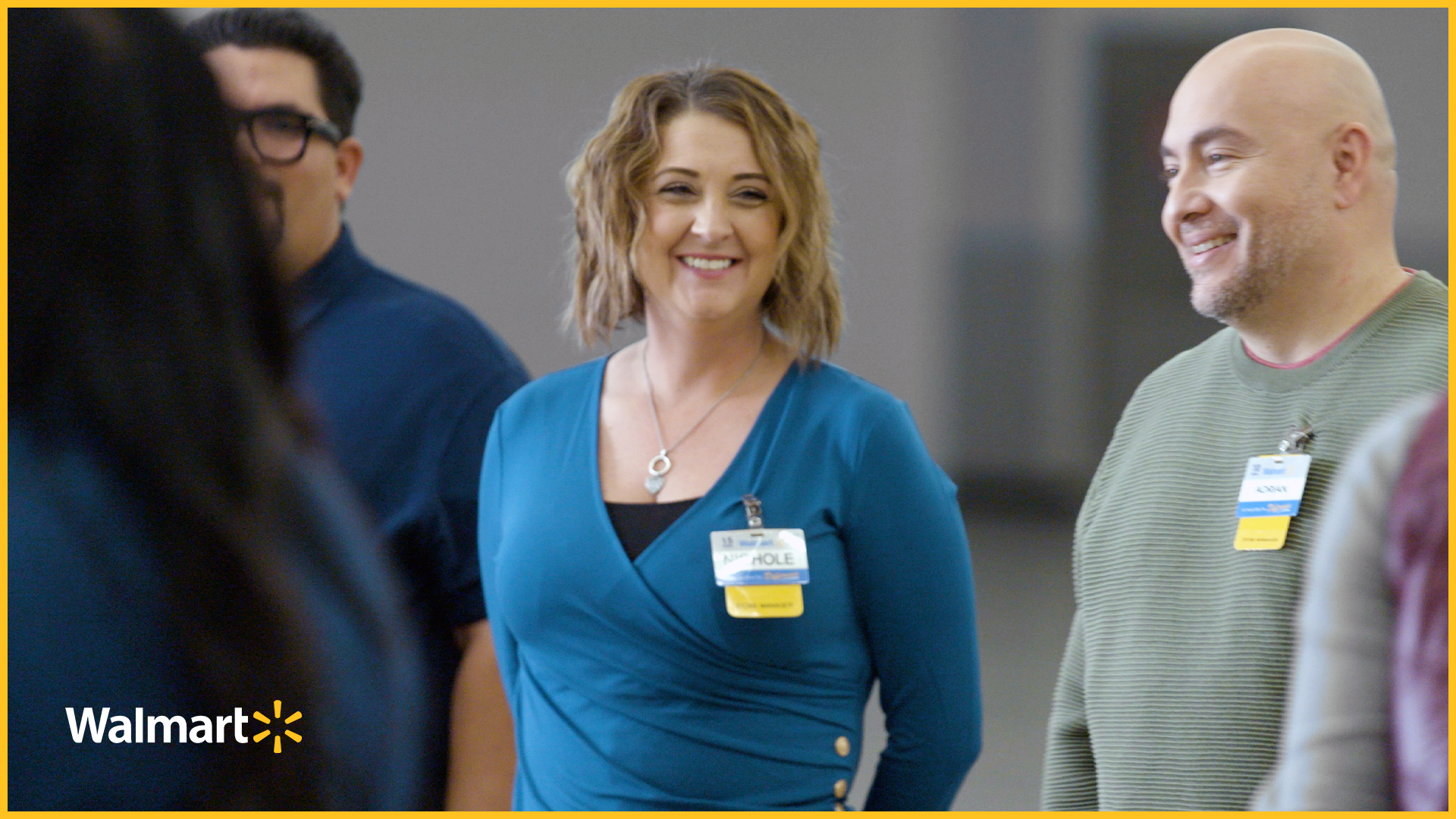 |
| At Walmart, many people start their careers as hourly associates on the sales floor, but they never have to end there. Approximately 75% of management started as hourly associates and Walmart was named one of LinkedIn’s Top Companies to grow a career in 2022. Working at Walmart provides a path for everyone to unlock their potential, drive their purpose-driven career and enjoy the great benefits and wages that come with the job.
Learn more about Walmart's commitment to associate opportunity.
|
|
|
|
|
| Peter: Speaking of TikTok, a high-profile, high-stakes national security fight over Chinese surveillance seems like exactly the sort of debate where you’d expect to see Mike Pompeo trying to insert himself, but I haven’t heard a sound. Is he even running for president?
Tara: You’re right, Pompeo was one of the first people to announce publicly that Trump was considering banning TikTok. This was back in September 2020, and TikTok lost half a million followers after he floated the idea. He’s been one of the company’s fiercest antagonists ever since, which is why, I agree, it was strange we didn’t hear a peep out of him last week.
If Pompeo is trying to position himself as a national security hawk, like Nikki Haley and Mike Pence, in contrast to Ron DeSantis and Donald Trump’s “America first” isolationist approach, he’s simply not breaking through. He wasn’t on the Sunday shows, besides daytime Fox; his statements on the issue aren’t being carried anywhere; and he didn’t even tweet about it in the last week. It can’t be overstated that this was his defining issue. Now he’s not taking any ownership of it.
I noticed a similar pattern this week when the Chinese government abuse of the Uyghurs was highlighted by the China select committee. No tweets, no TV appearances or op-eds. I mean, when Pompeo was secretary of state he compared the Xi regime to the Nazis! This week, nothing. I’m just surprised that he’s not taking these opportunities to be front and center on foreign policy when it’s actually in the news. Instead, he’s tweeting about the parental rights bill that’s going nowhere fast. Maybe he’s trying to become a culture warrior because he sees how well that’s working for DeSantis.
Peter: Yeah, the uncomfortable truth is that American voters don’t really care that much about foreign policy these days, even with the war in Ukraine. That’s especially true with Republicans after Trump, who took the G.O.P. in a more isolationist direction. Pompeo’s hawkish views almost make him feel like a Bush-era neocon without a party.
Tara: It’s enough to make you wonder whether Pompeo has quietly dropped his White House ambitions. He hasn’t been in Iowa or New Hampshire recently. I checked with a person familiar with his thinking who said that he’s less likely to run than he was a few months ago when he started his book tour (which was pretty lackluster). There was that embarrassing week of headlines about how his PAC spent $42,000 on copies of his own book—although in fairness, Pence also spent $91,000 on his own book.
It could be a money issue too. It’s hard to know how much cash he or the other also-rans like Haley or Pence have, because a lot of it is dark money, but Pompeo’s super PAC, Champion American Values, reported just under $1 million in its last filing—even less than Pence. It’s not a great look, especially when you’re up against DeSantis, who had $71 million in his PAC after his last election. Trump’s super PAC, Maga Inc., had $54 million at the end of 2022. Even Tim Scott, despite being in the deep second tier, has $13 million in the bank, thanks to Larry Ellison. Maybe this is why Pompeo dared to meet with No Labels, the politically toxic group trying to field a third party ticket for 2024. It all just doesn’t bode well for him.
Peter: So you don’t think this will be a 17 person G.O.P. primary like was originally anticipated?
Tara: I’m starting to think that it will be a smaller field, like back in 2008, with Trump, DeSantis, Pence, Scott, Haley, and then maybe Asa Hutchinson, Vivek Ramaswamy and Chris Christie, who said publicly he’ll make his decision in the next 40 days or so. I never really believed that the late entry was an option for Christie—you really need to be able to burn cash and build infrastructure fast. But who knows, maybe there are a few more sitting on the sidelines waiting to see if DeSantis crashes and burns. I mean, this week was not great. His declaration on Ukraine was a flop that required cleanup. His interview with Piers Morgan was inauthentic—like Kamala Harris-level bad. The hits from Trump seem to be working. His poll numbers have been dropping month after month. |
| A Little DeSantis Intrigue |
|
| Peter: DeSantis’s numbers are still strong in Iowa and New Hampshire, though, where Republicans are paying closer attention. But maybe the national polls give him pause. Is there any chance DeSantis just… doesn’t run for president?
Tara: That’s a good question, and it’s one that I’ve heard others in the shadow primary quietly pushing, among themselves and with donors. It’s certainly still possible that after all this, DeSantis ultimately holds his fire and waits until 2028. That’s surely what Trump wants, and why he’s trying to bully him out before he even steps into the ring. And DeSantis is still only 44 years old; whether Trump wins or loses next year, there’s no chance he runs again afterward.
But as we all know, politics is all about timing, and DeSantis has certainly got to be concerned that if he misses this window, the opportunity may never return. He’s still polling in second place, even if he now trails Trump by double digits, and he just won re-election in Florida by 19 points. And there’s no guarantee that the enthusiasm he’s receiving this cycle will still exist in 2028. Sure, he could be another Scott Walker—an establishment-friendly early favorite who ultimately flames out quickly into obscurity, but he probably figures he has to give it a go, even if the end result is that he’s “Meatball Ron” for all eternity.
Of course, this isn’t just about DeSantis. I’m sure that he, like all of the other potential candidates, has that rare genetic defect wherein he wakes up in the morning, looks at himself in the mirror and sees a future president. But DeSantis is also being pushed and pulled by consultants who know they can make a lot of money off a losing campaign. And frankly, there’s just no way that heavy hitters like Jeff Roe would skip out on working with his client Glenn Youngkin, who he shepherded to a win in Virginia, if DeSantis wasn’t serious about running.
So I think it’s all but certain that he’s running. Could you imagine what Roe, Ken Cuccinelli, Erin Perrine, and Phil Cox would do if DeSantis told them that he’d changed his mind? He would make an actual enemy of the G.O.P. establishment consultancy and they would not take that betrayal lightly. Then again, DeSantis may be crazy enough to do it. He’s burned tons of staffers in the past. But just ask Chris Sununu what kind of reputation you get after teasing a run for Senate for more than a year and then deciding against it. |
|
|
| And Now for the Trump Indictment Question… |
|
| Peter: Tara, one last question for you. Trump is expected to be indicted any day now. I’m curious, why haven’t we heard much from Democrats about the indictment?
Tara: Behind closed doors, a lot of Democrats privately wish that this Stormy Daniels campaign-finance scandal wasn’t the criminal case that Manhattan district attorney Alvin Bragg was bringing—and they also wish that it was being prosecuted by someone other than Bragg. Sure, the hashtag-resistance progressives are eating it up on MSNBC, but senior, establishment Democrats in Washington just see this as an old case, that’s been gathering dust for six years, that the D.O.J. previously passed on and offers no new messaging. The heart of the case—paying off pornstars or adultery—has never had a real impact on Trump. Also, adultery is a bipartisan issue. And frankly, few Americans care deeply about the technicalities of campaign-finance law.
Some senior Democrats I spoke to say they would rather see Trump indicted first in the Georgia case, where he’s under investigation for meddling in the 2020 election. There, you’ve got two themes that Democrats love: democracy and Georgia, a state they hope to one day turn blue. Of course, that case is also complicated, and was also passed on by D.O.J.
Anyway, it’s hard to predict how these things play out. If Trump is tried and exonerated in any of these cases—and it only takes one person on the jury to acquit him—then he’ll use the verdict as vindication. And while Trump’s troubles turn off independent voters—which is why Democrats keep winning when he is on the ballot—overzealous prosecutions aren’t a messaging gift for Democrats, either. It’s no wonder there are so few Democratic lawmakers really talking about the substance of the case. |
|
|
|
| FOUR STORIES WE’RE TALKING ABOUT |
 |
| TikTok Schadenfreude |
| Silicon Valley’s TikTok obsession, Disney cuts, and D.C. media games. |
| DYLAN BYERS |
|
 |
|
 |
| Hunter Goes Rogue |
| Inside Hunter Biden’s dueling P.R. campaigns & Jeff Roe’s DeSantis link up. |
| TARA PALMERI |
|
 |
|
|
|

|
 |
|
|
|
Need help? Review our FAQs
page or contact
us for assistance. For brand partnerships, email ads@puck.news.
|
|
|
|
Puck is published by Heat Media LLC. 227 W 17th St New York, NY 10011.
|
|
|
|