{{ 'now' | timezone: 'America/New_York' | date: '%b %d, %Y' }} |
|
|
|
Welcome back to Dry Powder. I’m William D. Cohan.
In tonight’s issue, a
close look at the recent, abrupt developments in the race to succeed Jamie Dimon at JPMorgan Chase. To me, the latest moves indicate two things: First, Jamie has no intention of stepping aside anytime soon; and second, despite years of speculation, there was only ever a slim chance that a woman would get the top job at the nation’s largest and most valuable bank.
Now, the race seemingly comes down to Doug Petno and Troy Rohrbaugh—both of
whom may well have aged out of contention when Jamie is finally ready to depart. Regarding the exit of Marianne Lake, the esteemed Wall Street analyst Mike Mayo told me: “The person whom I considered the frontrunner is no longer at JPMorgan.”
More on all that below, along with notes on Chamath Palihapitiya’s new SPAC proposal, and Leon Black’s showdown with Rep. James Comer on Capitol
Hill.
Also mentioned in this issue: Jennifer Piepszak, Mary Erdoes, Charlie Scharf, Bill Winters, William Demchak, Frank Bisignano, Jes Staley, Bill Gates, Elon Musk, Bill Clinton, Peter Thiel, Sergey
Brin, Reid Hoffman, Larry Summers, Ehud Barak, George Mitchell, Bill Richardson, Deepak Chopra, Tom Barrack, Tom Pritzker, and more. |
|
|
|
A MESSAGE FROM OUR SPONSOR |
INSPIRE AWE
Revered by all. Driven by those who lead by example. Elevate every move you make in a Range Rover.
EXPLORE
|
|
|
|
- Chamath’s
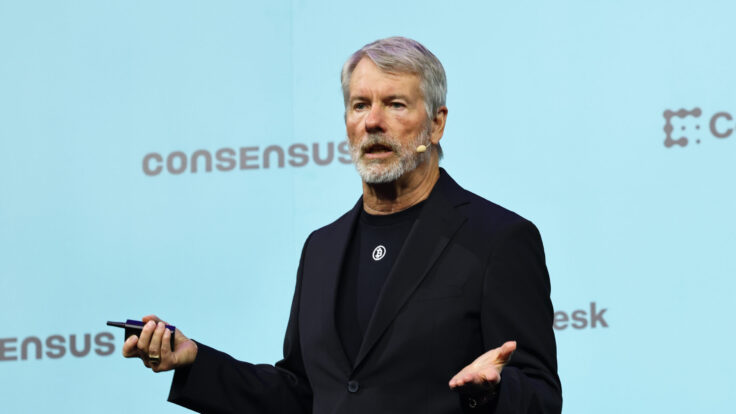
SPACtacular new proposal: A few years ago, our old friend Chamath Palihapitiya became a billionaire by taking advantage of hapless retail investors who bought into his special purpose acquisition companies. He used those SPACs to purchase companies such as Virgin Galactic, Opendoor, and Clover Health, and then took his winnings and got out before the companies crashed with his investors still on board. (He has quite the house in Palo Alto by the way, where last night he
raised $4.2 million for J.D. Vance.)
Now Chamath is back with a new special purpose vehicle with the grotesque name of American Exceptionalism Acquisition Corp., which raised $345 million in an I.P.O. last September with the help of Santander, the Spanish bank that has become the new darling of SPAC underwriters. At the moment, Chamath is on the prowl for a company to buy and merge with his new SPAC. While he’s trying to get a deal done, he went on an Axios podcast last
week and nearly apologized for the earlier SPAC deals. “The most important thing I learned, which I fought from accepting for a while, was that my incentives were grossly misaligned,” he said. “I was too insecure to admit it. I was like, No, this is the game. This is how it works. … My incentives were totally and fundamentally
misaligned because I could do a deal and still get paid.” Chamath, I’m sure your investors will take great comfort in this overdue introspection.
Chamath acknowledged that investors would have basically broken even if they had bought into a basket of his SPACs back in the day—a suboptimal outcome given the overall performance of the markets during the period. “That’s quite sad,” he mused, “considering what the S&P has done, and it’s a complete outlier, negatively, relative to my
performance and everything else I’ve done.” Now, he said, he wants a “second bite of the apple”—to repent by fixing the things he did wrong the first time around. “I make nothing unless this thing rips,” he said.
But that is not strictly true. Chamath, ever the salesman, got his shares in the new SPAC for pennies—so with the current share price around $11.30, his stake is worth roughly $170 million. Sure, he is subject to a longer required holding period than the last generation
of SPACs, and he’ll be rewarded for merging the SPAC with a viable company that performs over time. But c’mon, these are pretty much the same old tricks. He shouldn’t fret, though—presumably there are still enough All-In listeners willing to fall for his malarkey once again. - James Comer vs. Leon Black: When billionaire Apollo co-founder Leon Black appeared before the House Oversight Committee on
Friday as part of its ongoing investigation into Jeffrey Epstein’s business and advisory relationships, things went a bit off the rails. But not right away. Leon’s opening statement didn’t deviate from what he’d shared with me during our many hours together spent discussing his involvement with Epstein and other matters, both for Puck and my upcoming book about
Apollo, Money to Burn, which is out September 8. (You can preorder it now at your bookseller of choice.)
Leon reiterated that he regretted his involvement with Epstein, felt enormous sympathy for the victims of the late sex trafficker, and said that he’d paid Epstein $158 million only to solve tax and estate issues for him that the
well-heeled Wall Street law firms could not. His statement also featured a roll call of the prominent names in Epstein’s Rolodex, such as David Rockefeller, Ehud Barak, Larry Summers, George Mitchell, Bill Richardson, Ace Greenberg, Deepak Chopra, Tom Barrack, Tom Pritzker, Reid Hoffman, Kathy Ruemmler,
Elon Musk, Sergey Brin, Bill Gates, Bill Clinton, Peter Thiel, Steve Bannon, Ariane de Rothschild, etcetera, etcetera.
After about an hour of rather mild questioning, Rep. James Comer, the Republican committee chairman, asked Leon if Epstein had played any role in negotiating nondisclosure agreements with women to whom Leon had paid
settlements—specifically, Russian model Guzel Ganieva, whom Leon agreed to pay $21 million in exchange for her silence after an affair. (She later pulled the rip cord on the agreement after he had paid her $9 million.) As he has before, Leon replied that Epstein played no part in his dealings with Ganieva. But when the questioning shifted to “all N.D.A.s that involved
Jeffrey Epstein,” Leon’s attorney Susan Estrich called foul. She reminded the committee that N.D.A.s exist for the benefit of both parties and said Leon would not discuss other N.D.A.s, whether they existed or not.
When Comer left the hearing, he announced to reporters that he was issuing two subpoenas—one compelling Leon to produce his various N.D.A.s, the other requiring him to return on July 16 for a sworn deposition. “This is a result of refusing to answer specific
questions about the N.D.A.s and the terms,” Comer said outside the chamber. “We believe that information is vital to our investigation.”
In a press statement, Estrich wrote that Comer’s subpoena gambit amounted to little more than political theater. “Mr. Epstein had no involvement with any N.D.A.s, whether they exist or not,” she added. “Let me reiterate, the committee did not ask a single question about the legitimate payments to Epstein for professional services on tax and estate
matters.”
Nevertheless, Comer seemed to win widespread bipartisan support from the committee. Virginia Democratic Rep. Suhas Subramanyam said there were several questions he had not been able to ask Leon. “Some of these billionaires, they felt like they were above the law,” he said. Of course, Congress has been known to use N.D.A.s as well. Stay tuned—this thing could get very interesting, very quickly.
|
And now, the latest Jamie Dimon succession plot twist… |
|
|
|
The latest, shocking twist in the JPMorgan Chase succession race has whittled the contest
down to two men, catalyzed the exit of a major respected talent, and left the door open for the continuation of Dimon’s tenure. |
|
|
|
Jamie Dimon—or King Jamie, as he is known on Wall Street—has once again reshuffled the
succession deck at JPMorgan Chase. On Thursday, Dimon, now 70 and into his third decade running the bank, announced that two white men—Doug Petno, 61, and Troy Rohrbaugh, 56—had been named co-presidents, and dropped the bombshell that Marianne Lake, once
seen as his possible (perhaps even likely) successor, would relinquish her post as head of consumer banking within the next few weeks. In other words, right away. “Something happened,” Mike Mayo, the esteemed Wells Fargo analyst, told me by phone. “I’m not sure what. But I can’t imagine she’s pleased she’s not one of the top two people, given her record.” He continued, sounding genuinely surprised: “The person I considered the frontrunner is no longer at JPMorgan.”
Lake,
who was also once the bank’s chief financial officer, was respected by investors and analysts alike. Now she joins the ranks of two other women who came within a hair’s breadth of the top job, only to find themselves brushed aside: Jennifer Piepszak, the bank’s chief operating officer, and Mary Erdoes, the C.E.O. of asset and wealth management, both of whom accepted their fates and stayed on. Lake, obviously, responded to the news quite differently, and out she
went. |
|
|
|
A MESSAGE FROM OUR SPONSOR |
INSPIRE AWE
Revered by all. Driven by those who lead by example. Elevate every move you make in a Range Rover.
EXPLORE
|
|
|
|
Jamie tried to apply the best spin he could muster on Lake’s departure. “She has been an outstanding partner
and friend and has dedicated her career to championing our people and customers, building world-class businesses and delivering results, always with unquestioned integrity,” he said, noting her 25-year tenure. “We will miss her and wish her all the best in the future.” We will miss her, but apparently not enough to keep her in the running for the top job…
To me, the latest moves indicate two things. First, Jamie has no intention of stepping aside anytime soon. Second, despite years of
speculation, there was only ever a slim chance that a woman would get the top job at the nation’s largest and most valuable bank. Piepszak and Erdoes will receive as a consolation prize—er, a “retention and continuity” tool—a $20 million stock grant that cliff vests after three years, which is subject to their continuous employment by the bank, as well as a few other hurdles.
Meanwhile, Petno will take over sole management of JPM’s investment and commercial banking franchise, which is
among the best in the world, a job he previously shared with Rohrbaugh. And Rohrbaugh, whom Dimon recruited from Goldman Sachs some 20 years ago, will take charge of the retail banking operations—the job that Lake held before her abrupt departure. They too are being given retention and continuity sweeteners in the form of $30 million in stock that also vests after three years. Optically, at least, the bank has set up a horse race between the two men, but it’s clear that Jamie and the board are
trying to give Rohrbaugh, a former trader, experience in running different parts of the bank to see if he might be the one.
Rohrbaugh certainly seems to have the advantage age-wise. He’ll be 59 when, and if, Jamie departs in three years, as appears to be his intention. Petno will be 64. I can’t imagine a board of any large public company, let alone the nation’s top bank, choosing a 64-year-old guy to be the new C.E.O., which makes it Rohrbaugh’s corner office to lose. Then again,
this could be yet another head fake. As Mayo told me, Lake’s departure “is a cost of Jamie Dimon staying on for much longer. Is the cost worth it? Absolutely.”
After all, Mayo continued, “Jamie Dimon is a generational C.E.O. His brand power has never been stronger, and JPMorgan monetizes that brand power when it comes to I.P.O.s, dealmaking, private banking, and even retail—his views are piped into retail branches. Ultimately, it comes down to Jamie Dimon staying on longer than expected,
and I think that’s what investors want at this time. And it’s unfortunate, though, they lose someone as capable as Marianne Lake, and it would be more surprising if she doesn’t end up as a C.E.O. somewhere else.”
Therein lies the problem for the board of JPMorgan Chase. Unlike its top two competitors, Goldman Sachs and Morgan Stanley, which have resolved their C.E.O. succession issues with little sturm und drang, Jamie keeps dragging things out. It’s obvious he doesn’t want to
leave; he just moved the bank into his $4 billion palace on Park Avenue, and he seems to enjoy being C.E.O. of JPMorgan Chase more than pretty much anything else. “He wears the JPMorgan jersey 24 hours a day, seven days a week,” Mayo said.
And, of course, the board doesn’t seem to want him to leave either. The place was a major mess when Jamie got there after the merger between JPMorgan and Chase (I know, I was there) and after September 11. Jamie somehow got everyone rowing in the same
direction, and he built a behemoth that generates some $60 billion in net income a year. After the news dropped that Lake would be leaving, the stock hit its all-time high. The bank also announced that it would increase its dividend and continue its share buyback program. JPMorgan Chase’s market cap is knocking on the door of $900 billion. The next-closest competitor, Bank of America, another bank with lingering succession questions, is worth less than half as much. |
It’s no surprise that JPMorgan Chase has lost an extraordinary number of talented bankers who eventually grew
tired of waiting to learn whether, or when, Dimon would step aside. In that respect, the bank has become what GE was once upon a time—a place other companies go to find their next C.E.O. among the frustrated. “JPMorgan is a C.E.O.-manufacturing factory,” Mayo told me.
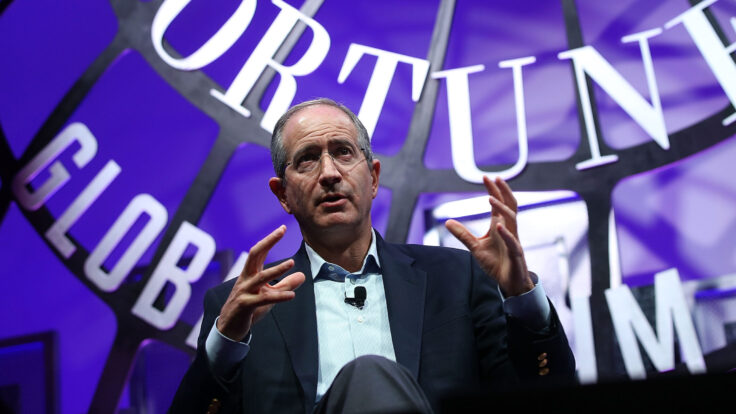
The list of the departed is formidable. Charlie Scharf now runs Wells Fargo. Bill Winters leads Standard Chartered. William Demchak runs PNC. Mike Cavanagh
is now co-C.E.O. of Comcast. Others—including Matt Zames, Steve Black, Barry Zubrow, and many more—also left when it became clear that the path to the top remained blocked. Frank Bisignano left to become C.E.O. of Fiserv and now heads both the Internal Revenue Service and the Social Security Administration. (Then there’s the former C.E.O. of Barclays, Jes Staley, whom I will mention for posterity
but probably should be omitted from this list for obvious reasons.)
This poses a real Bob Iger–style conundrum for a board of directors. When you have a healthy, still ambitious, and legendary C.E.O. who has turned the company into an earnings juggernaut, you want to keep him or her in place for as long as possible. That means there will inevitably be collateral damage, and Marianne Lake is just the latest example. “When it comes to retirement, maybe 75 is the new 65,”
said Mayo. “How many C.E.O.s are known just by their first name?”
For aspirants, the problem is partly one of timing. You have to be in the right place at the right time, and be the right age, and have accomplished the right things to be even under consideration to succeed someone like Dimon, Jack Welch, or Iger. Even if Rohrbaugh does a great job leading the consumer bank, he may still be out of luck. Three years from now, he will be 59. Jamie was just 49 when he became
C.E.O. of JPMorgan Chase, after taking the top job at Bank One at 44 and orchestrating its merger with JPMorgan.
In other words, I don’t think the Jamie Dimon era at JPMorgan Chase is ending anytime soon. The $30 million retention awards are probably enough to keep Rohrbaugh and Petno around to duke it out, but maybe not enough to dissuade either from accepting an offer to run another major financial institution. “It’s still a race to succeed Jamie Dimon,” said Mayo. “It’s just that the
race is going on a lot longer than expected. What some thought may have been a 10K is turning more into a marathon.” |
|
|
|
Join Puck’s chief political columnist, John Heilemann, as he roams the corridors of power and influence in America on this
twice-weekly interview show, taking you beyond the headlines with the people who shape our culture: icons and up-and-comers, incumbents and insurgents, moguls and machers in the overlapping worlds of politics, entertainment, tech, business, sports, media, and beyond. The conversations are rich and revealing, unrehearsed and unexpected… and reliably impolitic. A Puck-Audacy joint, new episodes drop every Wednesday and Friday. |
|
|
|
Ace media reporter Dylan Byers brings readers into the C-suite as he chronicles the biggest stories in the industry: the future
of cable news in the streaming era, the transformation of legacy publishers, the tech giants remaking the market, and all the egos involved. Also featuring a weekly dispatch from Puck’s crack streaming/media analyst, Julia Alexander. |
|
|
|
Need help? Review our
FAQ page or contact us for assistance. For brand partnerships, email ads@puck.news.
You received this email because you signed up to receive emails from Puck, or as part of your Puck account associated with {{customer.email}}. To stop receiving this newsletter and/or manage all your email preferences, click here. |
Puck is published by Heat Media LLC. 107 Greenwich St., New York, NY 10006 |
|
|
|
|