Welcome back to The Varsity. I’m John Ourand, and I can’t stop reading
about the dumpster fire in Chapel Hill. In just the past couple of days, there was a 28-point loss to Clemson; a report that Bill Belichick had issued a directive that UNC not post anything Patriots-related on its social feeds (even though the Pats’ starting QB went to UNC); and now there’s the
story that Belichick’s planned docuseries on Hulu has been canceled. The Tar Heels may only be 2–3, but they’re still proving to be much more fun to watch than most other teams.
The NHL kicks off tonight after its calmest off-ice period in decades. The league signed a new collective bargaining agreement last year and
has its media rights deals locked up for several years. It will also take a three-week pause in the middle of the season to allow its players to compete in the Winter Olympics—something the players like and owners hate. Gary Bettman referenced the Olympics on ESPN’s Get Up this morning: “Taking that break is a little disruptive to the season, and we have to manage around that,” he said. “But for our players it was vitally important that they be allowed to go back. … Because it was so important to the players, we decided that we had to go back.”
Meanwhile, I’ve read a ton of analysis on what could happen to Electronic Arts after the Saudis take it private. But only Julia Alexander writes about what this deal means for sports rights-holders. Could the new owners become new bidders for live sports rights? See below…
🎟️
In the Arena: You already know how good our lineup is for the media conference we’re hosting with MoffettNathanson next week (Adam Silver, Josh Harris, Gerry Cardinale, Michael Rubin…). So make sure you get your tickets early. Click
here to get yours.
Take it away, Julia… |
While the average audience for LIV Golf events jumped from
250,000 to 338,000 viewers across 17 telecasts in its 2025 season after moving to Fox from The CW, that’s just one-eighth of the average 2.66 million viewers who tuned in for PGA Tour tournaments this year (though still far higher than the number of viewers LIV pulled in on Fox’s sister network, FS1). Sure, the PGA Tour’s continued dominance over LIV is
hardly breaking news—this played out last year, too—but it does beg the question: How much longer will the Saudis pour money into a golf tour that reportedly lost around $500 million in the U.K. alone in 2024, according to the Financial Times, on top of a reported $650 million loss between 2022 and 2023? |
- Is Kalshi just a sports betting app?: Are prediction market apps just another way to bet on sports? Vlad Tenev, the Robinhood guy whose finance company has a partnership with the prediction market app Kalshi, says no. But new data from Kalshi, which lets people bet on everything from
the New York City mayoral race to Oscar nominations, says otherwise.
About $1.3 billion of trades on Kalshi in September were connected to the NFL, making up roughly 42 percent of all trading that month, Sportico reports. College football made up an additional 30 percent, with $811 million. Altogether, about 90
percent of all bets placed on Kalshi were related to sports. Yes, some of this is seasonal—sports betting volume also peaked on Kalshi during March Madness—but even when there wasn’t a major sports betting event, between April and September, sports still made up about 75 percent of all trades on Kalshi, according to the report.
Here’s the kicker: Technically, Kalshi isn’t a sports betting app, which is why it’s allowed to operate in all 50 states, while FanDuel,
DraftKings, and ESPN Bet are blocked in several states. If you ask executives at Kalshi or Robinhood, they’ll tell you the difference is that a prediction market essentially involves betting on future outcomes, and doesn’t facilitate transactions between bettors and a sportsbook, which collects the losses from unsuccessful players. Instead, Kalshi and Robinhood facilitate trades between people using the platform.
I’m not sure whether lawmakers will appreciate the difference. Hope everyone
has their lawyers and lobbyists on speed dial. - UEFA drama goes stateside: Club owners in soccer leagues like Serie A and La Liga are just as anxious about growing their U.S. audiences as Roger Goodell and Adam Silver are about expanding into European markets—which explains why UEFA president Aleksander Čeferin is grudgingly allowing teams to play games in the U.S.
Folks may remember that UEFA was outraged when La Liga announced it was bringing a match between Barcelona and Villareal, two of the most watched teams in Spain, to Miami (where Lionel Messi plays) in December. Meanwhile, Serie A teams Milan and Como announced a game in Perth, Australia.
At a press conference on Monday, Čeferin struggled to acknowledge the international games were indeed happening, even as he opposed them. He said the teams could go ahead based on “an
exceptional basis amid regulatory gaps at the global level,” per The Athletic, although he made clear his opposition to the decision to host games abroad. Čeferin went one step further and reiterated that this should not set a precedent (even though it clearly does), adding that “league matches should be played on home soil.” Whether or not this takes
off will likely depend on attendance. The NFL has repeatedly sold out its London, Dublin, and Munich games. In my experience: If a league can, it will. - YouTube’s sports business grows: Everyone knows why YouTube is getting into sports. It has little to do with Neal Mohan being a massive football fan (which he claims to be), and everything to do with ads. YouTube, after all, generated more than $8 billion in advertising
revenue last quarter, contributing about 10 percent of Alphabet’s total revenue. Now, YouTube is announcing new ways for advertisers to target specific sports audiences with two “Select” tiers: college and women’s sports.
YouTube’s Select tier is the highest tier that YouTube offers its advertising partners, and without getting into the nitty-gritty of targeted advertising tech, it’s basically the best way for advertisers to reach the widest audience across different V.O.D. and live
channels. Of course, YouTube’s main goal is to drive advertisers to more live TV viewing on connected TV sets (smart TVs), which represent the largest opportunity for growth as traditional linear advertising spend moves to digital formats. With YouTube TV close to surpassing 10 million subscribers, and YouTube generating more than 40 billion hours of sports viewership in the main app, it’s pretty clear that YouTube is all in on sports because it’s all in on ads.
|
|
|
All the headlines about the Saudis taking Electronic Arts private have
obscured its true $55 billion opportunity. As sports becomes more gamified, could the video game maker start streaming live sports? |
|
|
Last week’s news that the Saudis, alongside Silver Lake and Affinity Partners, would be taking
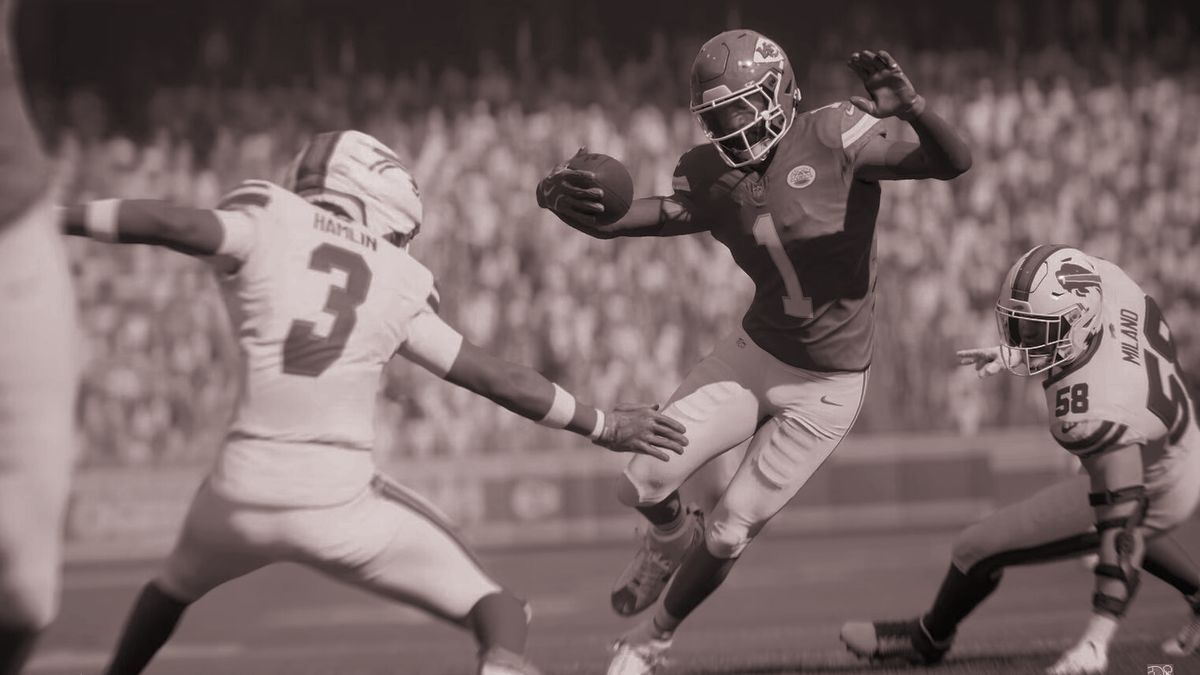
Electronic Arts private for $55 billion elicited the predictable hysterical reactions—from fretting over what it means for EA’s 14,500 employees to outrage over the source of the money. EA Games, after all, is one of the largest video game publishers in the world, with franchises like Madden, FIFA (now called EA Sports FC), The Sims, Need for Speed, etcetera. A leveraged buyout led by Saudi Arabia’s Public Investment Fund (PIF) was never going to be
popular. But it’s worth keeping an open mind about what EA Sports, the company’s biggest division, could become once freed from the pressures of a public market.
As an analyst covering the intersection of sports and gaming, I find the long-term opportunity obvious. Gaming has redefined sports: Madden and FIFA have sold hundreds of millions of copies, and are massive sources of recurring revenue for EA. Meanwhile, the line between video games and the sports they simulate
has blurred—games are increasingly treated like spectator sports, and sports themselves have become ever more gamified. Between July 2024 and July 2025, approximately 57 million adults participated in fantasy sports across the U.S. and Canada, while about 66 million bet on sports, with the number increasing year by year. (Unsurprisingly, nearly half of all fantasy sports players also engage in sports betting.)
Could the next step be to meld sports gaming with live sports? Matthew
Ball, one of the smartest media analysts out there, recently argued that most people have been looking at the EA deal too narrowly. “I imagine the goal here is partly to buy/distribute traditional sports, and then augment it with interactivity, and surround it with myriad other community features,” he
wrote. “That’s a very long game, and a costly one that few can play (Netflix, Amazon, Apple). It also has massive upside with clear-enough business cases.”
EA has already invested heavily in merging the virtual and live worlds over the last decade, Ball pointed out. The EA Sports Mobile App, for example, helps users follow favorite players and teams while integrating fantasy elements and providing real-time scores. And EA Sports’s player network of 265 million users is precisely the type of young, hyper-engaged audience that leagues like the NFL, MLB, the NBA, and the Premier League need to reach. More than half of U.S. gamers also watch live sports, per YouGov.
Sports media executives know they need to do more to engage and monetize fans as the number of cable subscriptions declines (on path to fall below 50 million households in a few years) and broadcast loses its audience (less than 20 percent of all households now engage with broadcast programming, according to
Nielsen). Those secular trends explain why Roger Goodell brought an NFL game to YouTube, why Adam Silver likes to talk about the value of TikTok highlight clips, and why MLS struck a deal with EA Sports to bring four live games into EA’s virtual arena. It’s why Jimmy Pitaro brought gambling and fantasy into ESPN’s streaming app, and why Amazon’s Jay Marine struck a deal with FanDuel. Meanwhile, the percentage of time spent with
video games has only increased. |
Legacy media companies’ interest in EA Sports is hardly new. Back in 2022, my colleague
Dylan Byers reported that Comcast’s Brian Roberts—lamenting that he hadn’t secured Activision Blizzard (it went to Microsoft for $69 billion)—approached EA C.E.O. Andrew Wilson to talk about spinning off NBCUniversal into a merged company with Electronic Arts. Although it didn’t work out (typical conflicts arose over “price and
structure”), interest from legacy media companies in emerging gaming empires never went away: Disney invested $1.5 billion in Epic Games, using Fortnite to build its new digital theme park; Netflix and Amazon launched their own gaming divisions; and even NBCU found a way into EA Sports with a “Madden Cast” of a Chiefs–Texans game last December on Peacock and NBC.
Since then, the opportunity has only grown. When Roberts and Wilson were exploring a deal in 2022, the average person
spent around 12.5 hours a week playing video games, according to Ball’s analysis. In 2024, that number had grown to almost 15 hours per week. At the same time, legacy TV has been losing attention share to all the usual suspects: streaming, YouTube, TikTok, mobile. The zero-sum battle for attention has forced sports executives to get far more creative about how they find and engage
fans.
Roblox—with more than 100 million daily active users, 60 percent of whom are over the age of 13, per Ball—offers an illustrative example. Last year, the company looked at sports engagement on the platform, including experiences made available by leagues like the NFL, NBA, and NHL. According to its report, more than 500 million hours were spent with sports content, like NHL Blast, which created a multiplayer game tied to last year’s 4 Nations tournament. This represented a 26
percent growth in total engagement hours between Q3 2023 and Q3 2024, and a 28 percent growth in daily unique players in the same time period. Today, almost every major league has interactive “installations” in Roblox.
Naturally, the next step is to further integrate live sports into gaming spaces, in much the way that gaming spaces have integrated themselves into live sports. But this sort of metaverse-ification isn’t easy to pull off—just ask Mark Zuckerberg—especially
for a public company that has to explain these big swings to shareholders. With that in mind, which company is the best positioned to join forces with EA? |
Of all the companies that should be exploring a partnership with EA, or at least those with
complementary assets, it’s hard to think of one better positioned than ESPN. Bob Iger has repeatedly said over the last year that he doesn’t see a world in which ESPN or ABC will be spun off under his leadership. But that leadership is coming to an end at the end of 2026. Analysts like Rich Greenfield see an opportunity for ESPN to be spun off with some debt, giving Disney the opportunity to explore buying new assets that may be more critical to its future.
Pitaro, who has led ESPN for the last seven years, also comes from the world of gaming—he oversaw Disney’s gaming division before moving into his current role.
ESPN, of course, maintains the largest number of sports rights in the U.S., and has corresponding rights for a number of popular EA Sports titles, including Madden and College Football. EA’s sports games make up around 90 percent of all play time across EA’s portfolio of games, per Ball, which also includes
popular titles like Battlefield and Star Wars Jedi: Fallen Order. And as EA Sports president Cam Weber recently told the FT, there’s no question that younger consumers want more interactivity in their viewing experiences. So why not simulcast ESPN games inside of Madden?
We’ve already seen similar
crossover events in video games. In 2019, director J.J. Abrams appeared in Fortnite to debut an exclusive clip for Star Wars: The Rise of Skywalker. The following year, Travis Scott performed live to 12.3 million Fortnite players in a first-of-its-kind metaverse experience. Although encoding live-action sports in an environment like EA’s app is a much more extensive process, the technology bringing these hybrid events to life is only
getting better.
Perhaps the most pertinent question for executives like Pitaro and Wilson—who was once considered a candidate to succeed Iger—is how video games can become a bigger part of sports fandom, and vice versa. Betting, fantasy, and social elements are part of the journey, but the real fan experience hinges on live sports, where they passively engage, and video games, where they actively engage. No, TV isn’t going away, but it will be augmented by more
interactive experiences every year. Now that EA is private and there’s a possible ESPN spinoff on the horizon, combining the two feels less far-fetched than ever. EA’s executives couldn’t be clearer about wanting to bring more live sports into their portfolio, and Pitaro’s ambitions for a hyper-interactive sports future are written on his sleeve. |
Thanks, Julia. See you all on Thursday,
John |
|
|
Puck sports correspondent John Ourand and a rotating cast of industry insiders take you inside the executive suites
and owners boxes where the decisions that shape the entire sports business are made. You’ll hear interviews with players, network execs, and everyone in between. The Varsity is an extension of John’s private email for Puck by the same name. New episodes publish every Wednesday and Sunday. |
|
|
Ace media reporter Dylan Byers brings readers into the C-suite as he chronicles the biggest stories in the industry:
the future of cable news in the streaming era, the transformation of legacy publishers, the tech giants remaking the market, and all the egos involved. |
|
|
Need help? Review our FAQ page or contact us for assistance. For brand partnerships, email ads@puck.news. You received this email because you signed up to receive emails from Puck, or as part of your Puck account associated with {{customer.email}}. To stop receiving this newsletter and/or manage all your email preferences, click here. |
Puck is published by Heat Media LLC. 107 Greenwich St, New York, NY 10006 |
|
|
|