 |
 |
|
Welcome back to Dry Powder. I’m Bill Cohan.
|
|
The American infatuation with the rich, and the exceedingly rich, is part of our collective psyche. But the billionaires of today—at least those that are making the headlines—are not quite like the billionaires of yore. In this issue, a look at how our inclination to mythologize the lives of people like Elon Musk, or Sam Bankman-Fried, has blinded us to a more fundamental truth…
|
|
|
We do love our rich folks in America, that’s for sure. Back in the day, it was men like J.P. Morgan and Henry Villard, the money men who backed Thomas Edison, and John D. Rockefeller, who for a time controlled the oil patch and was our first billionaire. More recently, our infatuation has landed on such businessmen as Jack Welch and Larry Page and Sergey Brin. We can also throw into the mix the Microsoft coaching tree, including Bill Gates, Melinda Gates, the late Paul Allen and Steve Ballmer.
Ah, and then there were the really good old days, back in the ’80s and ’90s, when the deal guys like Felix Rohatyn and Bruce Wasserstein would bring together C.E.O.s in their Fifth Avenue apartments or at Three Guys on Madison Avenue and design a big merger, only to have the juicy deliberations leak out into the pages of the Wall Street Journal a few days later, cementing their status as legends of finance. What fun that was to read about! (Dennis Berman, one of the masters of the Wall Street-to-Wall Street Journal leak, has worked on Wall Street, at Lazard, my alma mater, for some five years now, in the TMT advisory group.)
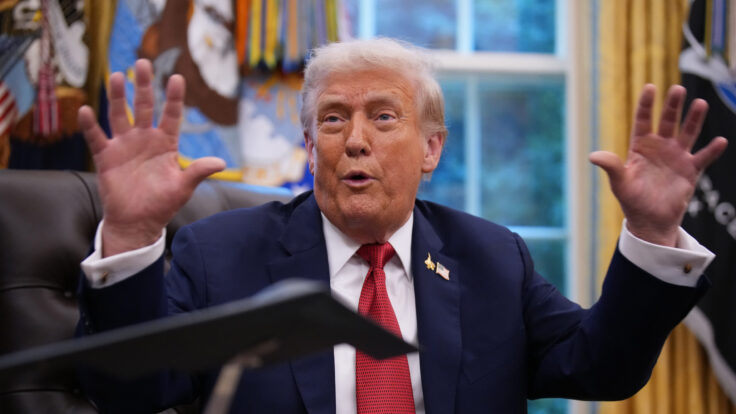
But the shocking events that have unfolded in recent months at both Twitter and FTX, with the concurrent bed-soiling of the world’s richest man and the world’s richest manchild, might be enough to convince our culture to reduce our blind reverence. They are neither the saviors nor the inspirational leaders we’d like them to be, or think that they are. In fact, they may be closer to buffoons and criminals than some sort of heroes.
We may, in fact, have also allowed our lust for their narrative arcs to blind us to the reality that they may actually be pretty lousy businessmen. At the start of the year, according to Bloomberg, Elon was worth something like $270 billion, more wealth than any single human being has ever accumulated. (Though who knows for sure what riches the tyrants M.B.S. or Vladimir Putin are sitting on?) He’s down around $90 billion, though, from the start of the year. |
| A MESSAGE FROM OUR SPONSOR |
 |
Potential investing opportunities from the Inflation Reduction Act
Recently, the landmark Inflation Reduction Act was signed into law, directing hundreds of billions in funds to advance climate and green energy priorities.
Explore potential investing opportunities and other takeaways in our full breakdown of the law’s funding priorities.
Learn more.
|
|
|
|
|
The chief source of Elon’s wealth is Tesla, of course, but he derives something of substance from his ownership of SpaceX, which is truly a marvel, and from the Boring Company, which is mostly just unfulfilled promises. Until recently, Tesla made most of its money from selling carbon credits to other companies looking to offset their carbon usage. That’s very different from selling electric cars profitably, although that seems to be starting to happen. It’s also important to recall that Elon did not start Tesla. He took it over when it was struggling, both operationally and financially, by injecting a bunch of capital from his Paypal winnings. He and his team obviously turned the company around and then some, and for that he has fairly become the avatar of its unprecedented success in revolutionizing the EV market in the U.S. and around the world. But did Tesla deserve to be worth $1 trillion, as it was at one point in 2021? Probably not, although that is not particularly relevant. What is relevant is that investors, for whatever reasons, believed Tesla to be extremely valuable and continued to bid up the stock until it was erroneously worth more than $1 trillion, last November. (These days Tesla is worth around $600 billion, down some 42 percent in the last year.)
Tesla rose to an extraordinary market cap, in part, by being a first mover in an enormous and transformative category, and also because of having a leader who showed a preternatural ability to be a memelord before we even knew such a thing existed. But for reasons that aren’t entirely clear, Elon couldn’t leave well enough alone: he didn’t want to project to Wall Street a singular focus on enhancing Tesla’s production and distribution capabilities in a market that is increasingly crowded. Apparently, it wasn’t sufficient for him to be the C.E.O. of three companies at the same time as well as the world’s richest man. He needed, or wanted, more attention, more focus… on him.
There’s no point in rehashing the various phases of Elon’s Twitter consummation—the careful accumulation of shares early in the year, followed by his hostile takeover bid, or his field-clearing offer of $44 billion, $24 billion of which came from his own pocket. Instead, by the spring, he had an extreme case of buyers’ remorse. He started acting like a petulant adolescent, kicking and screaming and making pathetic arguments about how he was going to walk away from the deal for the stupidest reasons. The two sides ended up in court, in Delaware, exactly where they should have ended up. Somehow, someone, somewhere—Alex Spiros, his lawyer at Quinn Emanuel?—got Elon to come to his senses. Not only was he going to lose his legal fight with Twitter in the Chancery Court but the release of the discovery and depositions would further tarnish his increasingly tarnished brand. He realized that the best choice among his bad choices was to consummate the Twitter deal, exactly as he had agreed to do on April 25. On October 28, Elon closed the Twitter deal. His Wall Street banks provided $13 billion of the cash, in the form of loans secured by Twitter’s assets; he and his investor group provided a stunning $31 billion of equity, more equity than individuals have ever provided to a leveraged buyout.
Despite all that equity, though, the company was seriously overleveraged. Thirteen billion dollars of debt on a company barely making $1 billion of EBITDA is on the bleeding edge of deal-structuring wisdom. Elon’s path forward was sure to be precarious.
He wasted little time in proving that thesis right. Throughout November, he was a metaphorical Tasmanian devil, wreaking havoc wherever he went. As expected, he fired Twitter’s top executives. Then he fired around half of Twitter’s workforce. He picked fights with advertisers, many of whom promptly stopped advertising on the social media platform—a curious decision on Elon’s part considering the vast majority of its $5 billion in revenue and roughly $1 billion in EBITDA came from advertising. The ads on Twitter these days seem pretty random. “May buy that ear canal cleaner that twists though,” Sam Stein, the Politico journalist, tweeted the other day.
Now a private company with $13 billion in debt, and with annual interest payments of around $1 billion, it remains anyone’s guess as to what Twitter’s revenue and EBITDA will amount to under Elon’s leadership. He invited Twitter renegades, such as Donald Trump and Kanye West back onto the platform—Ye was kicked off again promptly and Trump has yet to return to Twitter—and seemed to want to get into it with Apple, which of course is one of the major sources of Twitter users through its app store. All sorts of trial balloons were floated—most pathetically about how users would earn a “blue check” certification or not—and then promptly discarded.
Twitter has also become an operational mess. Musk promised departing employees three months severance and then, apparently, has not followed through on that promise, prompting class-action lawsuits. As I discussed on Sunday, Twitter’s banks decided not to syndicate their loans. They would rather hold onto the debt for now and hope for a better day rather than sell them off at a serious discount—of as much as 50 percent, I’m told—and perfect their losses. There is now a serious question as to whether Twitter will be able to make its first $500 million interest payment to the banks in April.
If Twitter doesn’t, or can’t, and Elon does not step up to make the payment out of his own pocket, or some other face-saving deal is reached with the banks, then the banks can initiate an involuntary bankruptcy process against Elon and Twitter. In that instance, there would be a long fight between creditors and the debtor, to be sure, but chances are Elon would lose control of Twitter, unless he somehow buys the debt back from the banks or infuses new equity into the company to pay the banks off. As it stands now, little more than a month after closing the deal, Twitter’s debt, held by Twitter’s banks, is worth around 50 cents on the dollar and Elon’s $24 billion of equity plus the $7 billion of equity invested by Friends of Elon is pretty much worthless, save for the nominal option value the equity has on the small chance that Elon is some sort of genius and can turn around an operational and financial situation that looks increasingly doomed. And this is the man we hold up as a paragon of virtue? I think not. |
|
|
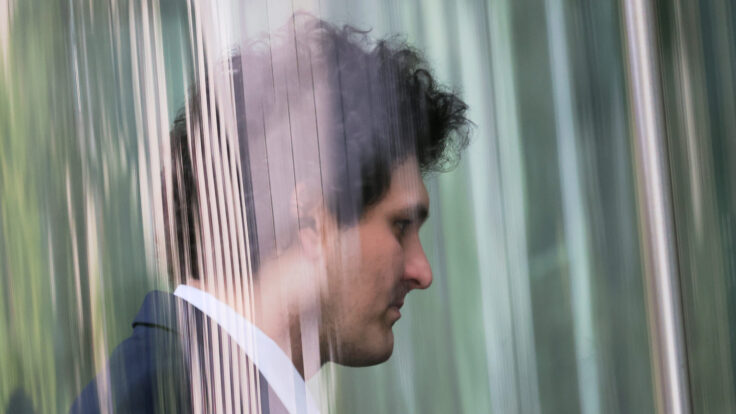
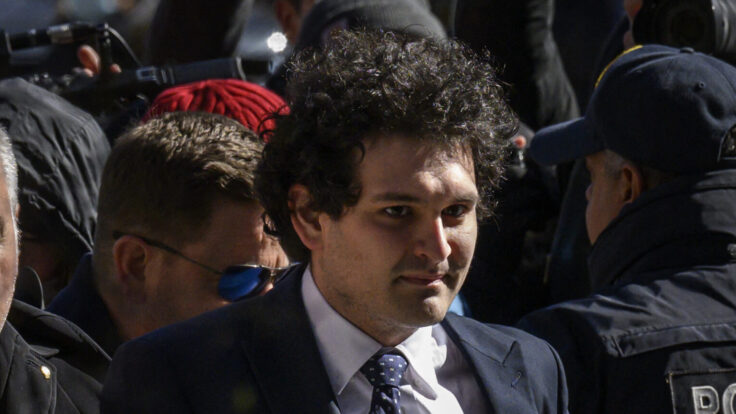
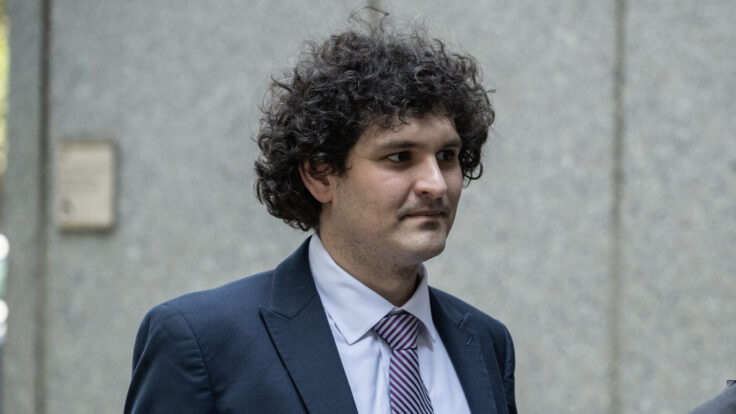
Bankman-Fried’s implosion at FTX and Alameda Research, his hedge fund, is even more spectacular and freakish. Unlike at Twitter, the option value on FTX, Alameda, and the other 100 or more debtors in the bankruptcy is long gone. Customers will be very lucky to get their money back, let alone creditors and equity investors, including some other supposedly smartest venture capitalists in the world, including Sequoia Capital, Paradigm, Temasek and the Ontario Teachers’ Pension Fund.
A year ago, when I spent 90 minutes interviewing S.B.F. for the crypto documentary I’ve been working on, he was literally the toast of the town. He was then 29 years old and the richest person under 30 in the world, with a net worth of around $25 billion. He was a graduate of M.I.T., with a degree in physics, and was heavily recruited to go to Jane Street Capital, the hedge fund, where he found some success supposedly arbitraging the price of Bitcoin in different markets around the world. (Some S.B.F. skeptics have cast doubt on his ability to actually succeed at this trade.) His parents were both law professors at Stanford.
In retrospect, not much of what he said to me that cold December night made a whole lot of sense, but he seemed like a person of high integrity and high principles. It didn’t seem like an act. But maybe it was? How was I to know? To be sure, he was one of the richest people in the world, not me, and supposedly was one of the smartest. Of course he was not to be doubted, right?
S.B.F.’s non-stop blithering has also become legendary. (He recently gave a fascinating confessional interview to my partner Teddy Schleifer.) He won’t stop talking and trying to explain what happened. But, to be honest, once again very little of what he’s been saying makes any sense, except for the fact that his fortune is gone—he says he’s got about $100,000 left in the bank and a credit card or two—and that he’s not sure whether he’s going to end up in prison like a Madoff or a Holmes, or whether he’ll somehow skate by like Adam Neumann did.
Needless to say, the S.B.F. comeuppance has played into Wall Street’s ongoing skepticism of the crypto “space.” On CNBC yesterday, Jamie Dimon likened Bitcoin and cryptocurrencies to “pet rocks” and said he wasn’t sure the market for cryptocurrencies was “a real market.” Others have likened the spectacular bankruptcy of FTX to that of Lehman Brothers 14 years ago, with the extent of the volcanic repercussions still to be fully realized. It’s also been compared to all of the Enron, Madoff and MF Global financial disasters. Nice company.
What is already clear, however, is that the consequences of the billionaire hype machine are once again becoming all too apparent. Investors have lost billions and billions of dollars buying into the glorification of both Elon and S.B.F., and billions more have been lost by those thinking there was something extremely valuable to companies such as Facebook/Meta, (down 61 percent in the last year), Coinbase (down 82 percent in the last year) and Snap (down 78 percent in the last year) or to various cryptocurrencies such as Bitcoin (down 65 percent in the last year) or Solana (down 93 percent in the last year.) S.B.F.’s house token, FTT, which he used to stuff the balance sheet of his firms, is down 97 percent in the last year.
Does anyone care? Any regulators? Any prosecutors? You’d think that these kinds of monetary losses would wise people up to the dangers of such risky ventures and the charlatans who propagate them. On the other hand, we live in a free country. If people want to make these kinds of silly bets, despite knowing better or being warned against them, then by all means go right ahead. The price to be paid is always high but maybe that’s what it takes to learn a valuable lesson, or to choose to ignore it and take the rollercoaster ride anyway. But based on the random Twitter Spaces event that S.B.F. participated in on Saturday, there are a whole bunch of angry people out there, some even said to be suicidal, as a result of the money he lost them.
The professionals—Sequoia, Paradigm, and a16z, among them—know better, and yet if the FTX and Twitter disasters tell us anything, it’s that FOMO has replaced good old-fashioned due diligence, the simple act of asking intelligent and penetrating questions until you get answers that make sense. And if you ask, and don’t get answers that make sense, you pass and know that you made the right decision, instead of just going for it to be part of the senseless inflation of the bubble. Correct me if I’m wrong, but as a fiduciary, you owe your limited partners nothing less. That’s how it worked in the Rohatyn and Wasserstein era, and how it used to work on Sand Hill Road. |
|
|
|
|
S.B.F. told Teddy, as he’s told nearly everyone who’s asked, that he’s que sera, sera on whether or not he’s going to Butner anytime soon. He’s more focused, he’s been saying, on trying to find the money lost by FTX’s million or so customers and returning it to them. Good luck with that, S.B.F. His fate won’t be known until we hear from the soon-to-be-appointed examiner in the bankruptcy case as well as the S.E.C. or the Justice Department, assuming they have anything to say. As for Elon, he’ll still be plenty rich whether Twitter survives him or not. Or whether Tesla survives him or not. It’ll just be a relief not to have to listen to his blithering on a daily basis, should it ever stop, just as it was a relief to be able to tune out The Donald, finally.
We’ll have to see, of course, what S.B.F.’s fate turns out to be. But you can’t go wrong enjoying a part of the conversation that my friends Kara Swisher and Scott Galloway had about S.B.F. on last Friday’s Pivot podcast. Galloway said he thought there would be plenty of documentary evidence (texts and emails, etcetera) that show that S.B.F. knew what was going on. “People come up to me and say, ‘Well, what did you think? Do you believe him?’ That was the question. Everyone said, ‘Do you believe him?’ And my answer is: ‘One, yes, I believe him, and two, he’s going to jail.’” But Kara said she didn’t believe him. “No one gets to this level and does this amount of trickery without knowing what he's doing,” she said. “...His whole unmade bed act, like ‘I’m a big unmade bed. I don’t know what happened. I didn’t write down when they gave me money.’ It’s just crap.”
Scott said he could understand how something like this could happen. “When you’re in a Bahamas apartment,” he said, “hanging out with your friends, only occasionally taking breaks to go up to New York to be with the financial titans, literally the titans of the world who take a break from their day to fellate you, what do you know? You start believing that no, you’re not ‘commingling funds.’ You are ‘cross-collateralizing assets’ that will make everybody rich and you'll make the world a better place.”
Scott tried again to pull the camera lens out a bit further. “You’re all of a sudden gone from zero to whatever, $30 billion in wealth,” he said. “You’ve made a ton of other people a lot of money and everyone in the world is telling you, ‘You are a genius.’ I mean, this all unraveled pretty fast. And I think he’s gonna go to jail. I think he deserves to go to jail… [But] society kind of fostered this. They didn’t put in place regulations. We all want to believe in false idols. We all want to convince them they're above the law… There are a preponderance of people that are tech billionaires, that the world creates this idolatry around them that are more subject to doing this. They should, and in this instance, will pay a price.” |
|
|
|
| FOUR STORIES WE’RE TALKING ABOUT |
 |
|
 |
| Putin’s Shadow Fleet |
| The West’s economic chokehold on Russia could rattle the global oil market. |
| JULIA IOFFE |
|
 |
|
 |
|
|
|
|
|
 |
|
|
|
Need help? Review our FAQs page or contact us for assistance. For brand partnerships, email ads@puck.news.
|
|
|
|
Puck is published by Heat Media LLC. 227 W 17th St New York, NY 10011.
|
|
|
|