 |
 |
|
Happy Sunday, and welcome back to Dry Powder.
|
|
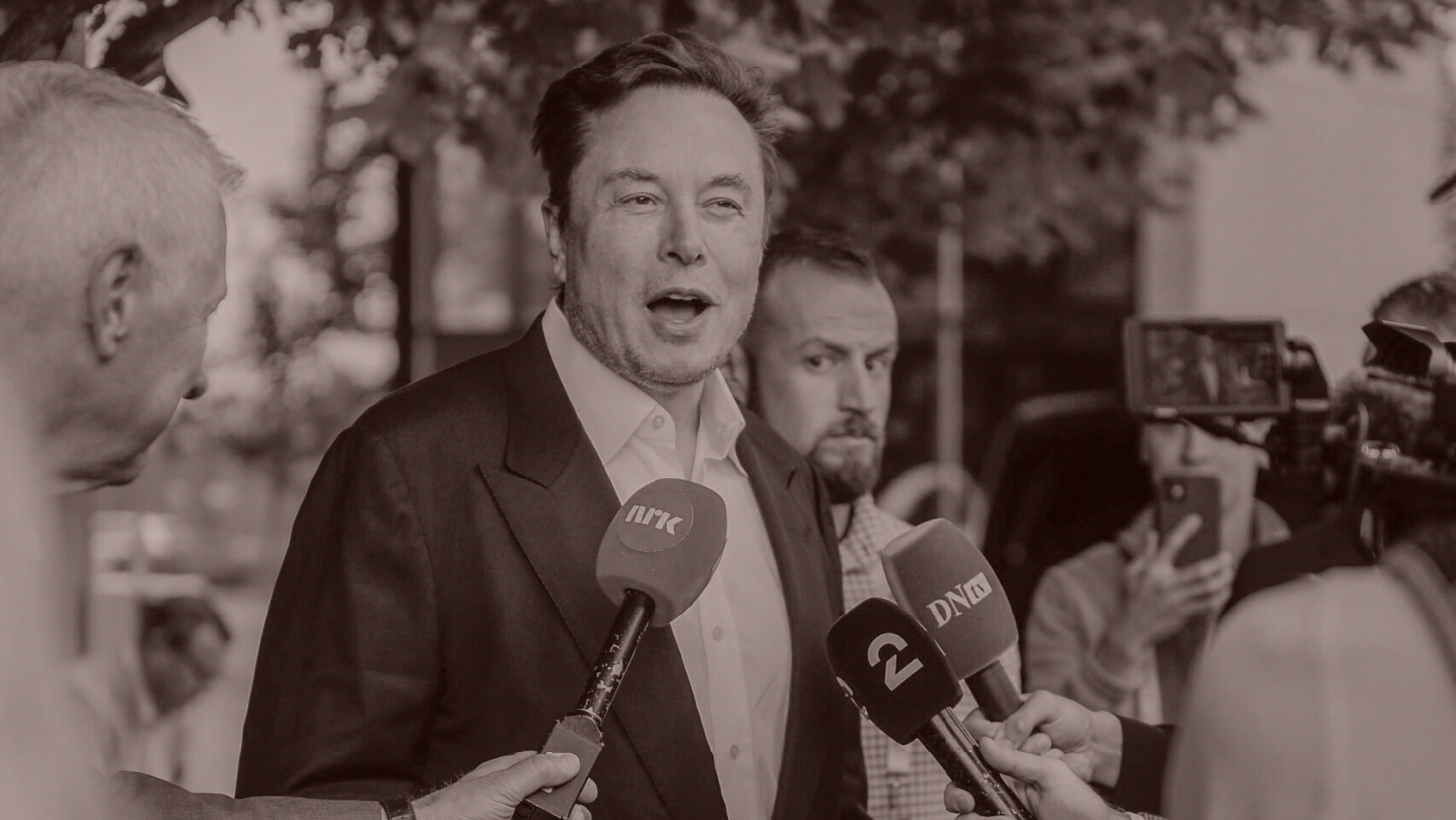
At long last, we seem to have reached the end of the beginning of Elon’s drawn-out Twitter takeover. But in signature fashion, the world’s wealthiest man is mixing things up until the very end. In today’s issue of Dry Powder, my analysis of Elon’s proposed, cold-blooded culling of 75 percent of Twitter’s workforce; notes on Bill Ackman’s Netflix misery; and why BlackRock’s Ukraine “reconstruction fund” might be more than just a reputation-burnishing maneuver. Thanks for reading.
Bill
|
 |
| Elon Shock Therapy & Ackman’s Mistake |
| Massive cost-cutting is only the first of the palliatives planned for Musk’s privately-owned Twitter. Plus, the inside conversation on Wall Street about Netflix’s stock rebound and Larry Fink’s Marshall Plan. |
|
|
|
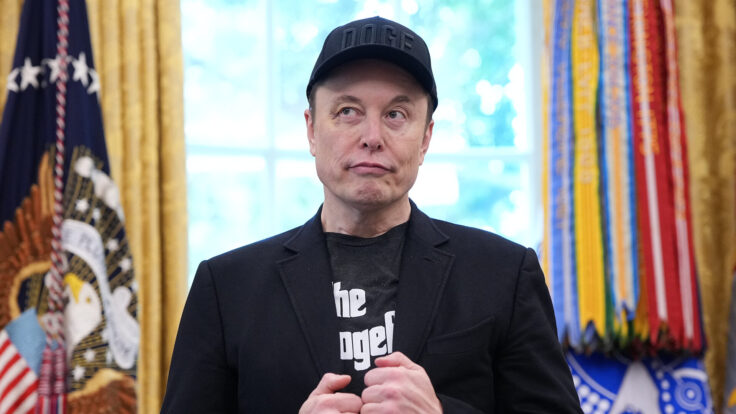
| After six months of delays and high drama, Elon Musk’s takeover of Twitter is expected to close no later than Friday, the final deadline that judge Kathaleen McCormick has given him to complete the $44 billion transaction, unless he wants to find himself back in court. Of course, this is just the end of the beginning as it pertains to Elon’s real headache, which will be to wring more cash out of a company for which he obviously overpaid and, presumably, to eventually make himself and his investors whole and then some.
That’s no easy task. Twitter is a 16-year-old company that didn’t turn its first profit until 2018 and is barely generating enough free cash flow to keep its new crop of creditors at bay. If the deal closes, Twitter’s leverage will be a massive 13x EBITDA and, at least for now it seems, the Wall Street banks will hold onto the debt rather than sell it off and perfect their losses.
Apparently, Elon’s first order of business will be to cut some 75 percent of Twitter’s 7,500 employees, according to The Washington Post. I saw one estimate—on Twitter, natch—that figured this would generate savings of around $500 million a year, equal to roughly half of Twitter’s EBITDA and probably a greater percentage of its free cash flow. It’s difficult to know for sure how accurate this is: In 2021, Twitter had $3.1 billion in non-cost of goods sold costs and expenses, some of which obviously comprised salaries and benefits, but just how much can’t be deciphered from Twitter’s financial statements. In any event, assuming Elon is not just being provocative, cutting 75 percent of the workforce, or even talking about doing it, will be devastating for employee morale, to put it mildly, and that’s for a company that’s already been put through the ringer for much of 2022. It’s also an extraordinary indictment of existing management if three-quarters of the workforce is irrelevant, or expendable, at least in Elon’s assessment, which tells you how little faith Elon has in the existing leadership team.
If you are a Twitter employee, Elon’s comment is obviously more terrible news. He envisions a very different future for the company than its present configuration, which may or may not be a good thing. For instance, I’m not sure what happens to the $1 billion in Twitter EBITDA if 75 percent of the workforce is spiked. Does that mean EBITDA grows to $1.5 billion, assuming those layoffs result in a savings of $500 billion? Or did those people actually have a role in generating income, suggesting their departure would reduce that EBITDA materially? Who knows? I would love to see the PowerPoint presentation with Elon’s business plan for Twitter that he must have shared with his banks and his equity investors. (Anyone who has it, feel free to send along.)
This is important, as I discussed last week, because if Elon’s Twitter can’t pay the annual interest on the $13 billion of senior secured debt, and there is a payment default, or other technical default, then those creditors—even if the Wall Street banks hold onto the debt—can put Twitter into involuntary bankruptcy. If that debt, which will likely be sold by the banks at a material discount during some point in 2023—perhaps at 50 percent, just to get it off their books—gets into the hands of the distressed debt loan-to-own crowd, they will not hesitate to dig into their totally legal and well-trod vulture playbook to wrest Twitter away from Elon. And that’s a situation that could develop quickly, since interest payments on the debt are payable semi-annually. Miss one payment, and then the real fun begins for Elon. Perhaps cutting the workforce is Elon’s preferred way of generating the cash flow that Twitter will need to make its annual interest payments without him or his equity partners having to put in more money. |
| It’s brutal, and cruel, and of questionable judgment, but I can appreciate that he and his equity partners are pretty much tapped out at this point. “Obviously myself and the other investors are obviously overpaying for Twitter right now,” Elon said on a Tesla earnings call this past week, finally coming to grips, at least publicly, with the obvious. He also made it sound like he’s heading toward closing the deal. “The long-term potential for Twitter in my view is an order of magnitude greater than its current value… I’m excited about the Twitter situation because obviously I know the product incredibly well and I think it's an asset that has sort of languished for a long time but has incredible potential.”
The market has turned a bit more skeptical. On Friday, Twitter’s stock was trading around $50 a share, down some 4 percent on the day, probably because of the Bloomberg report that CFIUS—The Committee on Foreign Investment in the U.S.—might be looking at Elon’s Twitter deal, and could potentially block it, because of the fact that some of Elon’s fellow investors are foreign entities, including Qatar Holding LLC, which has pledged $375 million of equity and Vy Capital, a Dubai-based investment fund that has pledged to invest $700 million.
But, honestly, it seems highly unlikely, to me anyway, that CFIUS would step in and block the deal because some $1 billion of Elon’s $31 billion of equity is coming from foreign entities. (Another $1.9 billion, or so, of Prince Alwaleed bin Talal’s existing equity in Twitter is being rolled-over into Elon’s private Twitter.) So, in sum, while with Elon anything can still happen, it’s looking increasingly likely that the deal will close sometime next week and the pink slips will be issued. What a crazy way to start a deal. But, you know, that’s Elon. |
| A MESSAGE FROM OUR SPONSOR |
 |
| A solid wealth plan is critical for entrepreneurs at every stage. Read our guide to explore insights for building and sustaining your wealth. Learn More. |
|
|
|
|
| While they’re popping champagne in Los Gatos, perhaps prematurely, after Netflix added some 2.4 million subscribers last quarter, causing the stock to jump more than 30 percent, you can’t help but feel for Bill Ackman, the esteemed hedge fund manager who bought about $1 billion worth of Netflix’s stock in January and unloaded his position in and around April 21 at a loss of some $400 million after the company recorded a first-ever subscriber loss in that quarter.
I have a lot of respect for Ackman. Any bigtime investor who can recover from the twin debacles of his Herbalife short (a loss of roughly $1 billion) and the Valeant Pharmaceuticals long (a loss of $4 billion) and still be in business and doing relatively well deserves some praise. But I am not sure if I get Ackman’s short-fuse freakout on Netflix. To be fair, nearly everybody overreacted to that news. In the six months since Bill’s $400 million loss in Netflix, the stock is up 30 percent, surely making it one of the best performing stocks during that time period. In other words, Ackman’s original thesis about Netflix was probably right and his decision to blow out his position was a little too hair-triggered. He should have stuck with the company, as I wrote back then.
Not that Netflix doesn’t have its share of worries: as my partner Matt Belloni has so eloquently written, there is far more streaming competition now then there used to be; the cost of acquiring content, at $17 billion annually, remains breathtaking; and adding an ad-based tier is also not without its risks. But the company still has around 224 million paying subscribers and that is one hell of an army of people paying money to the company each and every month. And while some subscribers who now pay for Netflix without ads will downgrade to the cheaper ad-based service—effectively cannibalizing itself but in a negative arbitrage—it’s likely that many more people will sign up for Netflix at the cheaper monthly rate and suffer through the ads, which will also generate more profitable revenue for the company.
I have no idea whether Netflix is truly “back,” or not. (As always, this is not investment advice.) The competition from Disney+ and other streamers is formidable and the company is not exactly lighting it up on the content side. But with the stock down some 56 percent in the last year, it’s probably safe to assume that hype is out of the stock at the moment and that the company itself is taking the steps it needs to take to get back on track, in a sequel to what Reed Hastings did a decade ago, when he abandoned his ill-fated plan to split off Netflix’s nascent streaming business, ultimately creating some $300 billion in value for equity investors. I suspect that even Bill Ackman regrets his decision to sell the stock back in April, when that, it turned out, was the very moment he should have been buying more, or at least holding on to what he had. |
|
|
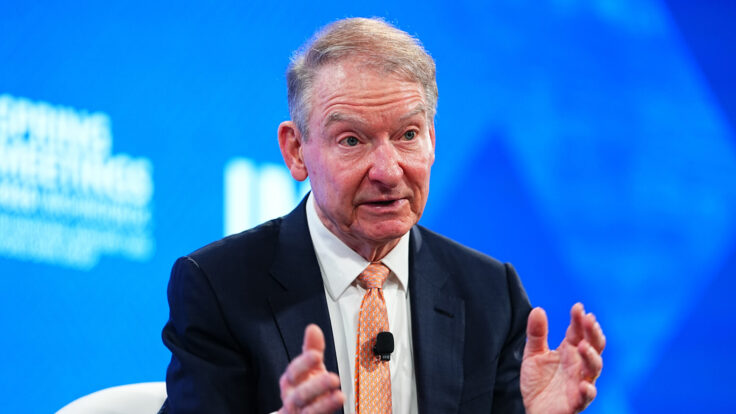
| Someone asked me the other day what Larry Fink might have been thinking when he promised Volodymyr Zelensky that BlackRock is prepared to assist Ukraine in creating a “reconstruction fund” to rebuild its war-torn country. A reputation-burnishing maneuver, perhaps? Or, as this person posited, is there money to be made?
Probably a little of both. There is something to be said for doing well by doing good. And helping rebuild Ukraine once the devastating war ends—how and when, who knows?—is the kind of thing that one of the world’s largest money-management firms should be doing. It has the whiff of the Marshall Plan, which is generally regarded as one of the most successful economic and geopolitical strategies that our country has ever enacted. So if Fink & Co. have in mind a mini-Marshall Plan for Ukraine, I think that’s a splendid idea.
Whether the fund’s investments in rebuilding the company’s infrastructure “makes money” in the traditional sense of a “return on investment” or on an “internal rate of return” basis is really not the point. In the long run, if BlackRock figures in the rebuilding of Ukraine, the goodwill created from its government and its citizens will no doubt redound to its benefit, and that would make the effort worthwhile. And of course only some 250 of BlackRock’s more than 18,000 employees are focused on the effort of advising companies, governments, or municipalities on their various crises. Everyone else pretty much is in the less altruistic business of convincing individual and institutional investors to let BlackRock manage their money. And you can be sure that when BlackRock comes to the aid of corporations by agreeing to help during a crisis—as it did, for instance, when it helped GE and Kidder Peabody unwind various toxic bond positions in the 1990s—it gets paid well for its services and the rental of its balance sheet.
So regardless of whether the BlackRock unit makes money or not, it helps create an aura of stature around the company when other sovereign countries, or the Federal Reserve or the Treasury or companies like GE, turn to it for aid. If BlackRock is good enough for them, the thinking goes, it’s good enough for you, too. That’s the kind of reputational burnishment that money alone just can’t buy. |
|
|
|
| FOUR STORIES WE’RE TALKING ABOUT |
 |
| Tapper Troubles |
| Notes on the Tapper experiment, Murdoch curiosities, and Semafor’s launch. |
| DYLAN BYERS |
|
 |
| Netflix Claps Back |
| The recent earnings call was an F-U to critics, but some arguments landed more solidly than others. |
| MATTHEW BELLONI |
|
 |
| Post-Squad Goals |
| Considering The Squad’s message in a post-Trump, pre-possible-mini-red-wave world. |
| TARA PALMERI |
|
 |
| The Lake Equation |
| Is Kari Lake the new Mike Pence? Plus, notes on Kanye’s Parler flirtation. |
| TINA NGUYEN |
|
|
|
|
|
 |
|
|
|
Need help? Review our FAQs page or contact us for assistance. For brand partnerships, email ads@puck.news.
|
|
|
|
Puck is published by Heat Media LLC. 227 W 17th St New York, NY 10011.
|
|
|
|