 |
|
Welcome back to Dry Powder.
|
|
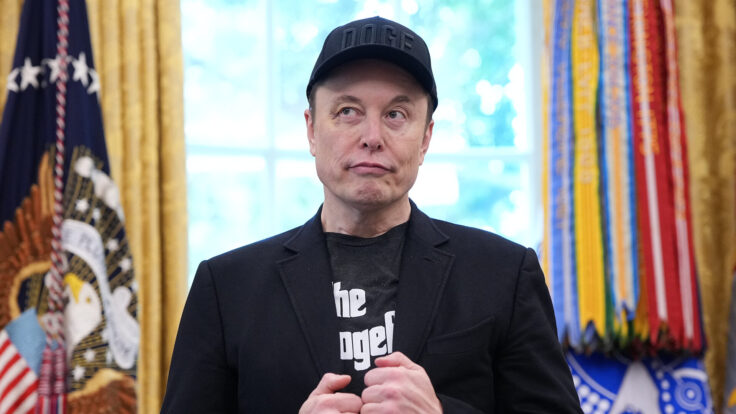
Yes, Elon Musk will own Twitter (or owe $1 billion to walk away). The historic financing package, as I predicted last week, is a mix of Elon’s personal equity, senior debt, and margin loans from Wall Street—with millions of his Tesla shares as collateral. If things go south at Tesla, the world’s richest man could face a world-historical margin call. How the hell did Tesla’s board let this happen? This and more, in today’s email.
Bill
|
|
|
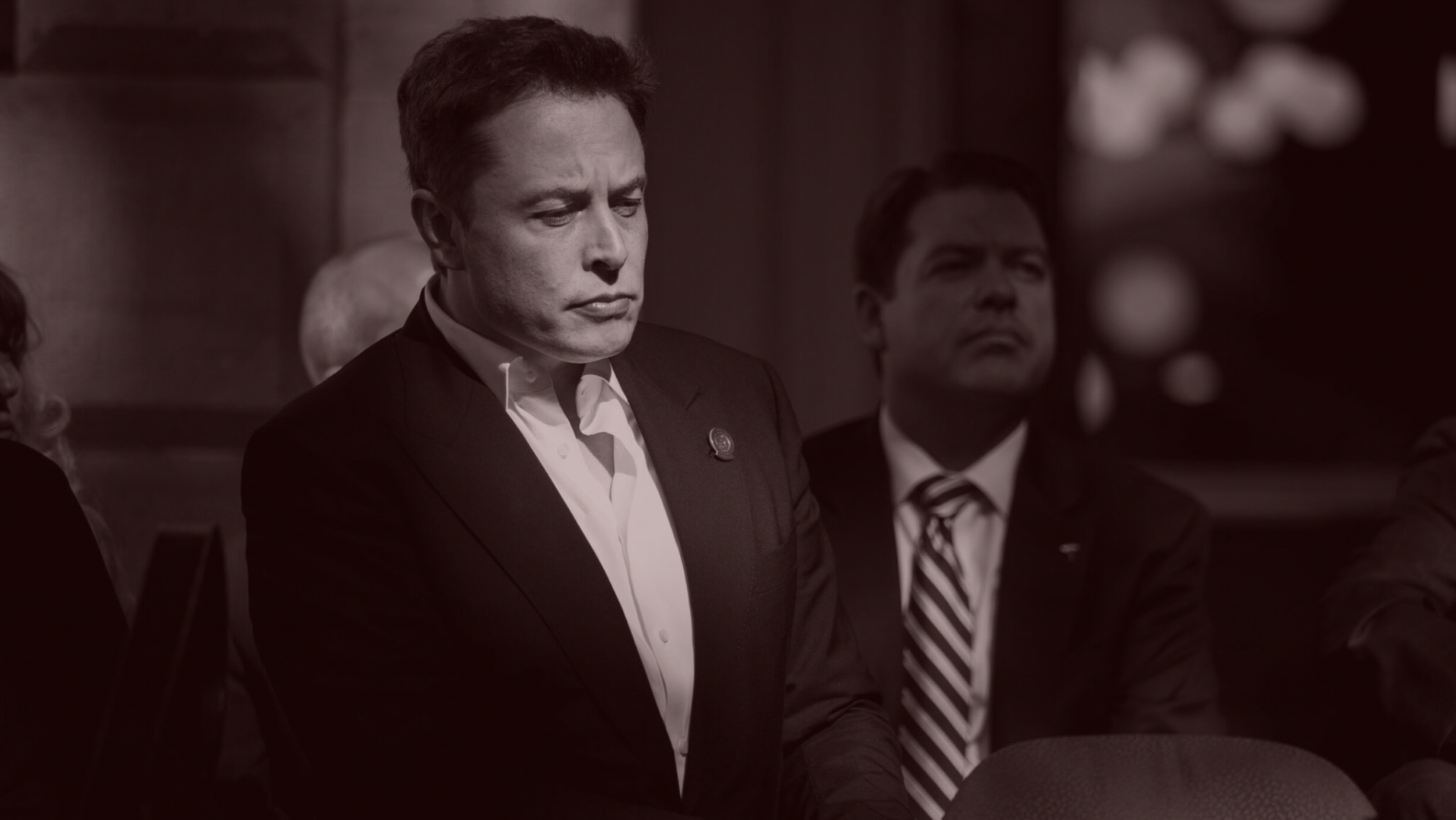
Since about midday on Monday, much of the media, along with the extremes of our political spectrum, have been losing their collective lunch over what Elon Musk’s acquisition of Twitter will mean for Twitter, for open debate, for “free speech,” for Trump and Alex Jones and other disinformation artists, for Bezos and Gates, and so forth and so on. Sure, these are all valid questions pertaining to Musk’s decision to take Twitter private for $44 billion and to becoming its sole owner, at least until he can find some equity partners. But one key constituency has thus far been ignored, and, on some level, it might be the most important: the Tesla shareholders.
Musk’s bid, after all, is financed by $25.5 billion of debt that Morgan Stanley and its Wall Street brethren are underwriting. Those banks, of course, will syndicate the loans to other banks and to other buyers, or will sell the various senior notes to investors, at a price. But to get $12.5 billion of the $25.5 billion, Musk secured a “margin loan,” meaning that he pledged his Tesla stock as collateral. Usually, such a loan is made at a 50 percent loan-to-value ratio. In order to get the banks to pony up a $12.5 billion margin loan, Elon probably had to pledge $25 billion of his Tesla stock to the banks. That means if the value of the Tesla stock falls by a certain amount, the banks can seize the collateral, in this case the Tesla stock, and sell it into the market at whatever price it will fetch to pay down the loan. Elon will have no say in the matter.
A forced sale of stock by a company’s largest shareholder and its C.E.O. is never a good look, and typically will drag down the stock price further, occasionally into some quasi-death spiral. Elon may not care so much about this. He has more money than he can ever possibly spend, regardless if the banks end up taking over his 17 percent stake in Tesla. But the retail shareholders who have gone along for the ride will get burned if the Tesla stock winds down. And unless you think that a trillion dollar company, whose market cap has essentially quintupled during the pandemic, is immune to a broader trend in the public markets, some form of gravitational pull back to earth seems inevitable. (This is not investment advice.)
The smart money on Wall Street sees what Elon is doing here. “Since Elon Musk is actually buying Twitter,” the Wall Street veteran Peter Schiff tweeted on Monday, “the smart move is to sell $TSLA. At some point the #TSLA bubble will pop, and Musk’s shares will be force-sold after the collapse to cover his margin debt. Given the size of his position the block will likely trade at a large discount.” Schiff could have added that the forced sales will exacerbate and accelerate the downward spiral. (Again, this is not investment advice.)
|
|
|
Where is Elon getting the $21 billion of cash, in the form of his personal equity, that he has pledged to invest to help him buy Twitter? His April 25 “Equity Financing Commitment” letter, sent to the Twitter board from his Austin address, and then filed with the Securities and Exchange Commission, is surprisingly vague about the source of the money. All the letter confides is that Elon “has the financial capacity to pay and perform his obligations under this letter agreement.”
Alas, we don’t yet know one way or the other the source of that $21 billion. But we’ve learned over the years that Musk is notoriously cash poor, while also being asset rich, so it’s probably also likely that he got another margin loan to provide the $21 billion. If he did, it would mean he probably needed to pledge another $42 billion of Tesla stock as collateral for the margin loan for that equity contribution. By my count, that’s $67 billion of Tesla stock pledged as collateral for loans needed to fund Elon’s Twitter acquisition.
Some more math: His 173 million Tesla shares are worth around $150 billion these days. If he’s pledged $67 billion of that $150 billion, or nearly 45 percent of his holdings, as collateral, then that’s serious business. A potential bursting of the Tesla stock-price bubble, as Schiff tweeted, could cause margin calls, sending the Tesla stock down further, leading to more margin calls. According to a regulatory filing, if the Tesla stock falls 40 percent, then Elon would have to repay the $12.5 billion margin loan. If he further margined his Tesla stock to come up with the $21 billion of equity, that would be even more problematic. According to Reuters, Elon has already pledged yet another $88 billion of his Tesla stock as collateral for other loans to him. If true, that would mean he’s pledged nearly all of his Tesla stock.
The market has clued in to this. Tesla’s stock is down about 16 percent in the last five days, as it has become increasingly clear that Elon would be using his stock in the company as the principal source of his financing to buy Twitter. That’s a large percentage drop on a $1 trillion company, making Tesla now worth a little north of $900 billion. My question, and one to which I won’t be getting an answer in my lifetime, is why the Tesla board of directors has allowed Elon to push so many cards onto the table to enable him to personally buy a company that has nothing to do with Tesla. And by allowing him to do it, or by not preventing him from doing it, why has the Tesla board risked dragging down with him the other unsuspecting Tesla shareholders? What happened to the Tesla board’s fiduciary duty to all shareholders, not just to Elon Musk?
Whether that was a fatal mistake for Tesla, and for Elon, remains to be seen. If that were to happen, the irony of the situation would be that Tesla shareholders would have paid the ultimate price for Elon’s Twitter folly, while the Twitter shareholders, who enjoyed a 38 percent premium with his $54.20 per share offer, would have made out like bandits. It’s funny how the pebble can ripple.
|
|
|
There are other aspects of the Elon deal for Twitter that I also find fascinating. First, it must be the single largest outlay of cash by one individual to buy a company in the history of dealmaking. Don’t forget, even though he’s pledging his Tesla stock as collateral to buy Twitter, he is buying Twitter himself, through what he is calling X Holdings I, Inc. There have been bigger corporate deals, of course, and bigger deals by buyout firms or a consortium of buyout firms, but there has never been a bigger going-private deal by a single individual before.
It makes sense that the person to do that is Elon Musk, the world’s richest man (unless of course Vladimir Putin or M.B.S. are richer and we just don’t know). Regardless of whether Twitter unwinds from here, and Tesla with it, Elon’s take-private deal for Twitter will forever be one for the record books. The fact that he pulled together this amount of financing without the participation of any of the big buyout firms is also kind of mind-blowing.
Then there are the paydays coming for Wall Street. The biggest winner by far will be Morgan Stanley. The fees coming the bank’s way for arranging the $25.5 billion of financing alone will easily run into the hundreds of millions of dollars. Then there are the fees the bank will garner for advising Elon on the deal. That could well be another $100 million.
Morgan Stanley is not working alone, of course. There’s Bank of America, Barclays and a few other foreign banks. But it is the lead bank on the financing and on the advisory assignment. That means it will get the lion’s share of the fees, for which it will have to work decently hard and take some meaningful risks. I’m not saying the huge fees are deserved—they will likely be too large for that—but the bank does deserve to cash in from helping Elon succeed in what too many people thought was a longshot gambit. Ka-ching.
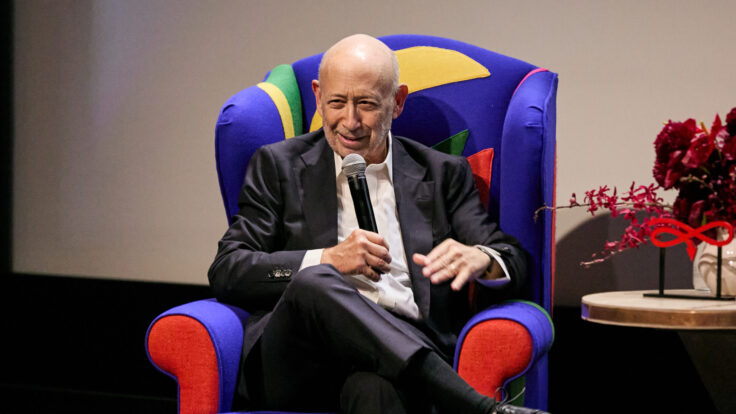
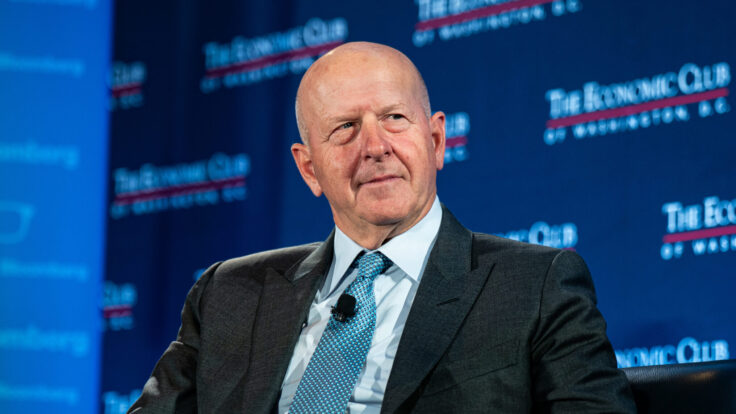
But on a dollar per risk-taking hour, the biggest winner in this whole saga will likely be—no surprise—Goldman Sachs. Goldman was the first bank that Twitter hired after Elon made it known three weeks ago that he had bought his stake in the company. (Twitter has since added both JPMorgan Chase and Allen & Co. to its roster of advisors.) We’ll find out at some point soon how much these three banks will make in fees for “advising” the Twitter board on its sale to Elon Musk. But I would not be the least bit surprised if Goldman, as lead advisor, was making somewhere around $50 million for three weeks work. Bloomberg estimated that the three banks advising Twitter will split $130 million.
Has there ever been an easier assignment? Goldman had three tasks, as I’ve written previously. First it needed to try to find another buyer willing to pay more than $54.20 a share. That assignment was pathetically simple. There was no other buyer for Twitter aside from Elon and there never was going to be. Make a few phone calls. Get your “no” and be done. The second task was to see if Elon’s financing was real. The hard part of that task, as discussed above, fell to Morgan Stanley. All Goldman had to do was review the various commitment letters from the Wall Street banks and from Elon, and then determine if they were legitimate and legally binding. Another day of work.
Then there was the “fairness opinion” that Goldman (and the others) had to deliver to the Twitter board on Monday in order to get approval for the deal. That was probably more work—an actual presentation had to be pulled together and choices made about logos and type-styles—but it wasn’t the slightest bit difficult. There was no question that the price was fair to the Twitter shareholders from a financial point of view. In fact, it’s a near certainty that when Musk and Morgan Stanley proposed the price, they already knew it was “fair” and there would be no way that Goldman could professionally argue otherwise. You’ll notice that the Twitter board did not even take the often de rigeur step of telling Elon that his offer was “inadequate.” (Maybe this will make up for the fact that Warren Buffett refused to pay Goldman’s $27 million fee for representing Alleghany, the big insurance company, in its sale to Buffett; instead, Goldman’s fee came out of the price Buffett agreed to pay to Alleghany shareholders. Elon hasn’t tried to pull that trick.)
There is a silver lining here. Elon may have bet the farm to acquire Twitter. And while that certainly does seem capricious on some level, all his collateralized stock does make one thing clear: he is motivated, and fully incentivized, to make Twitter a financial success.Even though so far he’s said he doesn’t care whether Twitter is profitable or not, he will probably have no choice but to find some more EBITDA at Twitter somewhere, or else ratchet up the risk exponentially that both Twitter and Tesla will be owned by Elon’s bankers. And that’s an outcome no one had on their bingo cards. On the other hand, according to the merger agreement, Elon can pay a mere $1 billion and walk away from the Twitter deal if things start getting too hairy, either at Twitter, or with raising his $21 billion of equity, or if the Tesla stock continues its plunge.
|
|
|
|
| FOUR STORIES WE'RE TALKING ABOUT |
 |
| Biden’s New Calculus |
| Providing too many weapons to Ukraine wouldn’t stop the inevitable, the thinking went. Now, the calculus is different. |
| JULIA IOFFE |
|
 |
| NBC News Blues |
| 30 Rock is aflutter with eye-rolling over the NBC News chairman’s recent trip to Lviv. Are larger frustrations afoot? |
| DYLAN BYERS |
|
 |
| The Termination Loophole |
| Matt and lawyer Aaron Moss discuss a freshly-relevant legal loophole called “termination rights." For Marvel, it could mean trouble. |
| MATTHEW BELLONI |
|
 |
| HBO's Lakers Headache |
| NBA legend Jerry West is demanding a retraction over Winning Time and is hinting at a lawsuit. |
| ERIQ GARDNER |
|
|
|

|
|
|
You received this message because you signed up to receive emails from Puck
Was this email forwarded to you?
Sign up for Puck here
Sent to
{{customer.email}}
Unsubscribe
Interested in exploring our newsletter offerings?
Manage your preferences
Puck is published by Heat Media LLC
64 Bank Street
New York, NY 10014
For support, just reply to this e-mail
For brand partnerships, email ads@puck.news |
|
|