{{ 'now' | timezone: 'America/New_York' | date: '%b %d, %Y' }}
|
|
|
|
Welcome back to Dry Powder. I’m William D. Cohan.
Loyal readers are
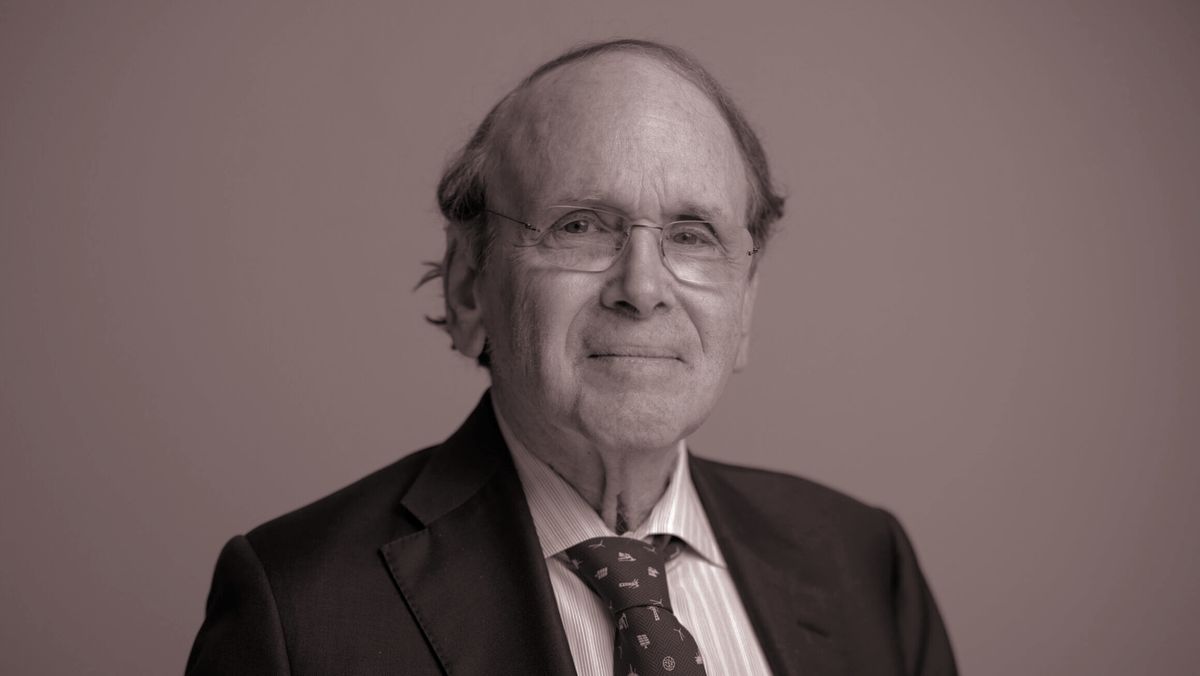
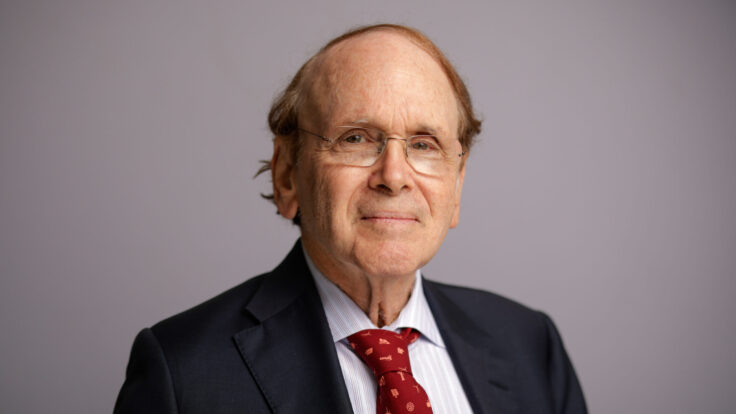
undoubtedly familiar with one of Dry Powder’s most popular seasonal pastimes: my annual chat with Dan Yergin, the world’s foremost expert on the energy markets and vice-chairman of S&P Global, who also happens to be my neighbor.
I’ve always enjoyed my tête-à-têtes with Dan, but this year’s chat was more timely and provocative than ever as he dug into the whole Iran enchilada: M.O.U.-gate, the Hormuz crisis, Saudi Arabia’s backup plan, and the
resulting turmoil in Asia. Also, up top, I have some notes on SpaceX’s descent and Trump’s latest monetizable grift.
Also mentioned in this issue: Paul Atkins, George Conway, Jane Mayer, Three Mile Island, Joe Biden, Google, Alphabet, George Noble, Truth Social, the Dutch auction method, and more.
|
- Well,
that didn’t take long…: On Friday, a little more than one month since SpaceX ended its opening day on the public market with a $2.1 trillion market cap and a share price of nearly $161, the company returned to gravitational orbit: The stock closed at $124 a share, 8 percent below its vaunted I.P.O. price of $135. So pretty much everyone who bought SpaceX after it went public has lost money as the pre-I.P.O. investors raked it in. SpaceX is now valued at $1.6 trillion, but as the
legendary investor George Noble recently told me, it could tumble further. For his part, he thinks the stock should be trading at $30 a share. (This is not investment advice.)Anyway, this unfortunate scenario in which institutions benefit at the expense of retail investors is primarily the result of the Wall Street underwriting system. You
might not remember, but there are alternatives to this system, though little used. When Google went public nearly 22 years ago, at a price of $85 a share, the company deployed the so-called Dutch auction method, which basically allows investors rather than bankers to more or less set the price of the stock. (Although Morgan Stanley and Credit Suisse First Boston, now part of UBS, were still involved.)
At its I.P.O., Google’s market cap was roughly $23 billion; these days parentco
Alphabet is valued at $4.2 trillion, an increase of roughly 18,248 percent and an internal rate of return for investors of 26.7 percent—well above equity return averages of around 10 percent a year. So how about we stop screwing retail investors and take a page from the Google playbook? What… too soon?
|
|
|
|
A MESSAGE FROM OUR SPONSOR
|
|
|
|
- Trump
market-manipulation payola: Trump’s Truth Social announced this week that it’s going to start selling Wall Street traders early access to the president’s postings for $100,000 a month, thereby monetizing all the potentially market-moving fulminations coming out of the Oval Office (and, alas, merely encouraging the president to
extend his enemies list and log rolls to his pals). “People will pay because they have to,” an executive at a hedge fund told the FT. “If you’re behind on that news, you’ll get crushed.” My friend Jane Mayer wondered on Friday’s The Political Scene podcast whether there is “an option” wherein you can pay “not to hear” what Trump has to say—another fascinating business idea for a different crowd.Of course, this simply cannot stand, and
nothing less than the integrity of the financial markets is at stake. The problem is that the Securities and Exchange Commission has lost any semblance of independence under its current chairman, Paul Atkins, who is just another Trump collaborator (and whom Trump can fire, apparently, at any given moment). I wouldn’t expect Atkins or his commission to push back on this absurd idea, even though he obviously should. The only hope is for this product to flop in the
marketplace, either because traders control their impulses (unlikely) or because Trump’s subscription-only “insights” often prove to be useless—or worse, money losers (better chances here).
As George Conway, the former Wachtell Lipton partner, posted on X, “Essentially, this would be (1) paying Donald Trump to (a) make market-moving
statements, and (b) provide inside information about those statements—and hence (c) setting up a market manipulation scheme and giving Trump his cut of it.” Yep, disgusting.
|
|
|
|
It’s time again for my annual summer conversation with the great Dan Yergin, the world’s
leading expert on energy and the energy markets—and our latest tête-à-tête couldn’t have arrived at a more appropriate moment, now that the so-called ceasefire in the war with Iran has unraveled.
|
|
|
|
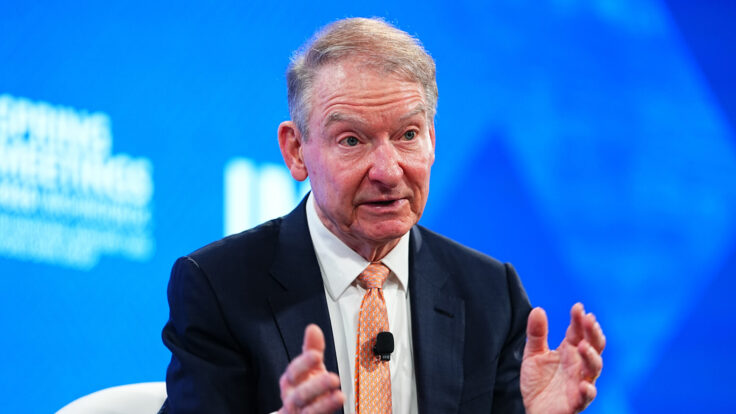
Dan Yergin, the vice-chairman of S&P Global and author of the Pulitzer Prize–winning The
Prize: The Epic Quest for Oil, Money, and Power, published in 1990, is the world’s leading expert on the oil markets—a scholar and financial wizard who has also memorialized his thoughts on this vast and consequential topic more recently, in The Quest, from 2011, and The New Map, from 2020. Fortunately, he’s also my neighbor. For the past few years, since shortly after I joined Puck as a partner, we’ve had annual conversations regarding his perspectives on the
modern energy markets. This year, of course, our chat was particularly timely.
Naturally, our discussion immediately turned to the fast-evolving events in the Middle East, where the war has resumed after Iran attacked two oil tankers and a liquefied natural gas (L.N.G.) carrier, which the U.S. was escorting through the Strait of Hormuz, killing some of the crew members and injuring others on one of the ships. “Iran has made clear that it wants to assert its sovereignty and
control over the strait,” he said, thereby forcing other countries to navigate the maritime territory “with the permission of the Persian Gulf Strait Authority, which is an Iranian organization that has been set up and that intends to charge tolls.” This would effectively replace “what was freedom of navigation in an international waterway to an Iranian canal,” he said.
Before the war, some 130 ships passed through the strait on any given day. On Wednesday, Dan said, only 16 ships made it
through. (He said he spoke with one shipowner with a largely Filipino crew, whose vessel was stuck inside the Persian Gulf and who received a call from the government of the Philippines, warning him not to take any chances that would put the crew in danger—which meant don’t try to go through the strait.) Now that the fighting has recommenced, the amount of oil passing through the strait is once again a piddling fraction of the 21 million or so barrels of oil that were moving out of the
Persian Gulf on a daily basis in late February, or about 20 percent of the world’s supply.
While the war has sent the world economy into turmoil—with Asia hit especially hard, since 80 percent of gulf oil and 90 percent of L.N.G. is exported from there—Dan explained that the resulting situation hasn’t been quite as bad as expected due to several somewhat unexpected factors. First, the Saudis built a pipeline system in the 1980s, following another tanker crisis, and that distribution
system has been used to move oil to the Red Sea during this conflict. Second, the U.A.E. also has a pipeline that skirts the strait and is able to get out about half its usual production of oil. Dan said that Iraq is also working on a pipeline that goes through Syria. “A few years ago, if you said that Syria would be a secure alternative to the gulf, it would have been seen as madness,” he said. “But alignments change.” Also, the United States and the other main consuming countries released oil
stored in their strategic petroleum reserves.
|
|
|
|
A MESSAGE FROM OUR SPONSOR
|
|
|
|
The U.S., which is the leading international consumer and producer of oil, is in “a favorable
position vis-à-vis virtually everybody else in the world because of our domestic production,” he noted. Other oil-producing countries, such as Kuwait and Qatar, have had great trouble getting their energy supply into world markets because of the Iranian takeover of the strait.
More than anything, though, Dan said he was struck by China’s response to the Iran war. The People’s Republic is the largest importer of oil in the world but has somehow cut its oil imports virtually in half
in recent months. He said he’s not exactly sure how they did that—after all, the Chinese don’t exactly publicize their centrally mandated decisions or the size of their strategic reserves. “But that reduction took a lot of the stress out of the world oil market,” Dan continued, “so we never got to the $150-, $200-a-barrel oil that people thought we might get to.” He said the Chinese have built up roughly a reserve of 1.5 to 2 billion barrels of oil, “which is huge.” As a result, a barrel of oil
is trading for around $80 these days.
|
Nevertheless, there is growing concern about world oil inventories: gasoline, diesel, and jet fuel are again
heading into short supply, even though Trump pledged during the recent G7 Summit that he was signing the so-called memorandum of understanding with Iran to manage oil prices. Meanwhile, the Ukrainians have knocked out several Russian oil refineries, and many of the refineries in the Persian Gulf are operating at far below full capacity. Dan said that if this level of conflict continues and the strait remains closed, he wouldn’t be surprised to see gasoline prices at the pump
heading toward $5 a gallon on average, and at that level, gasoline prices would figure in the upcoming November elections. “After all,” he said, “gasoline is the most politically sensitive price in America.”
Dan added that it’s very hard to predict outcomes in this situation. On the one hand, the Iranian government is as committed as ever to its “Death to America” campaign and its 47-year-old goal of driving the U.S. out of the Mideast. On the other, Trump has domestic issues to consider,
including the economic implications of the conflict and the impacts for his party. “The question is who can outlast whom?” Dan said. “Tehran’s calculation is that Trump, because of domestic politics, will have to sort of give in. Also, Iran wants revenge. Trump’s view is that if you hit them hard enough, they’ll give in.”
Alas, the other Gulf States feel like they are caught in the middle, and they are suffering the consequences. “They’re worried about their power plants being hit,” he
said. “They’re worried about Iran’s potential targets—their desalinization plants, their refineries, their power plants, and all of that. And they are worried about their people. This is not what they expected.” I wondered if these countries were now angry at the U.S. “I don’t know that they’ll express that publicly, because they look to the U.S. to protect them and they can’t directly do anything about it,” Dan said. “I think it varies from person to person. But certainly some of them said, ‘We
were not consulted.’”
We also discussed the prospects for various alternative sources of energy. Dan said he was struck by the growing interest in geothermal energy as a macro source of electricity, which involves using heat from the Earth’s core to turn electricity-producing turbines. He said the companies working on geothermal are using the drilling techniques developed during the shale revolution. “This would be like drilling for oil in Utah,” he said. “Except instead of drilling for
oil, you’re drilling for heat.” He said that over the last year, geothermal has gone from a “fringe idea” to a mainstream idea—one that is getting “a lot of government support.”
He is also struck by the rising popularity of nuclear power as a source of energy. “Six or seven years ago, nuclear seemed to be on its way out,” but now it’s back, he said, with “large amounts” of venture capital money going into the pursuit of fusion, which has always been 50 years away. But the goalposts are
getting closer. He said that “perhaps” by 2034 “there will be a significant project in Virginia that would be producing electricity with fusion.” He noted that Microsoft and Constellation are working together to reopen the nuclear reactor at Three Mile Island that was not damaged during the 1979 accident. As for the prospects for hydrogen—the energy solution darling just a few years ago—interest has cooled. “The market demand was not here,” he said. “The costs were higher, and it turned out that
it was not this easy route.”
He also noted the 180-degree change in energy policy between the Biden and Trump administrations. Biden, of course, didn’t want to approve any new oil or L.N.G. pipelines, but “this administration is all in favor of those,” he said. Biden said that by 2035, all of our electric generation should be renewable, which Dan said is “not going to happen.” At the same time, wind and solar power seem to be very low on Trump’s priorities, to put it
mildly.
For corporate energy executives, the shifting political winds make it very difficult to plan. “It makes long-term investing very hard if the agenda changes so radically every four years,” he said. “These projects take time.” And needless to say, the Trump administration seems utterly indifferent to climate change and the onetime goal of trying to reduce carbon emissions to try to cool down the heating planet. “The world has been getting warmer for many decades,” Dan said. (As I
experienced firsthand during my June sojourn in Paris.)
Anyway, at the moment, the war with Iran remains the most acute problem for the global economy. Dan said the “disruption” is causing inflation and rising prices in ways people would not normally have considered. “No one would have said, ‘Oh, we’ve got to keep the Strait of Hormuz open because of fertilizer,’” he said. And yet for the government of Iran, he said, the war is “existential” and “ideological,” and one way or another, this
regime will continue its campaign to reach the point where the Americans are gone from the region. “You know, before the war began, the western hemisphere was producing more oil than the Middle East,” he said. “One of the best-kept secrets in the whole world energy industry is that Canada is the world’s fourth-largest oil producer, and it’s our neighbor.” And of course, thanks to Trump’s tariffs, Canada doesn’t like us that much anymore, either.
|
|
|
|
Join Puck’s chief political columnist, John Heilemann, as he roams the corridors of power and influence in America on this
twice-weekly interview show, taking you beyond the headlines with the people who shape our culture: icons and up-and-comers, incumbents and insurgents, moguls and machers in the overlapping worlds of politics, entertainment, tech, business, sports, media, and beyond. The conversations are rich and revealing, unrehearsed and unexpected… and reliably impolitic. A Puck-Audacy joint, new episodes drop every Wednesday and Friday.
|
|
|
|
Puck’s daily political newsletter from Washington on what’s really happening in this town, from the White House to the Pentagon
to Capitol Hill, K Street, the campaign trail, and beyond.
|
|
|
|
Need help? Review our
FAQ page or contact us for assistance. For brand partnerships, email ads@puck.news.
You received this email because you signed up to receive emails from Puck, or as part of your Puck account associated with {{customer.email}}. To stop receiving this newsletter and/or manage all your email preferences, click here.
|
Puck is published by Heat Media LLC. 107 Greenwich St., New York, NY 10006
|
|
|
|
|