Welcome back to Dry Powder. I’m William D. Cohan.
On Friday, as you know,
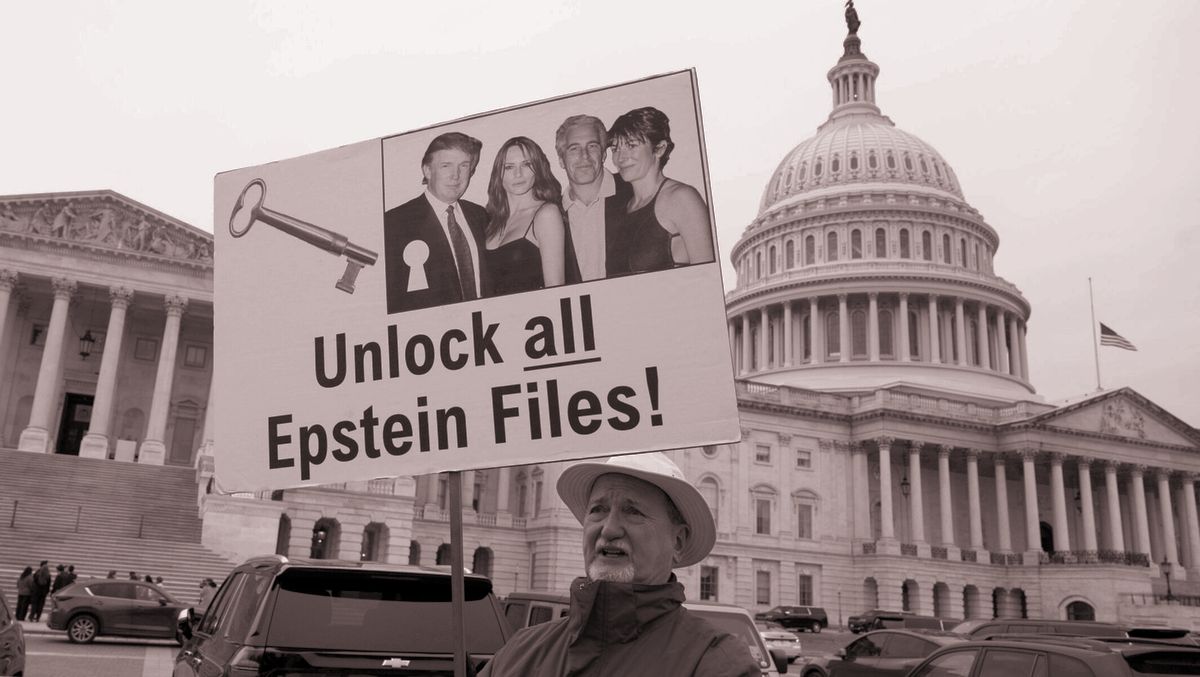
the Justice Department released what it claims will be the final tranche of files related to Jeffrey Epstein and his interactions with dozens of powerful men, and a few powerful women—leaving millions of documents still hidden or redacted. And yet the Epstein saga may not be finished. While the general public and enterprising journalists rifle through the new document dump, attorney Dan Novack is continuing the fight to get everything released. More on
all that below the fold.
Also mentioned in this issue: Kathy Ruemmler, Todd Blanche, Bill Gates, Elon Musk, Satoshi Nakamoto, James Robertson, Marc Rowan, Steve Schwarzman, Henry Kravis, George Roberts, the Ellisons, Ghislaine, Paul Gardephe, Allison
Rovner, Ro Khanna, and more.
But first… |
- Rowan’s
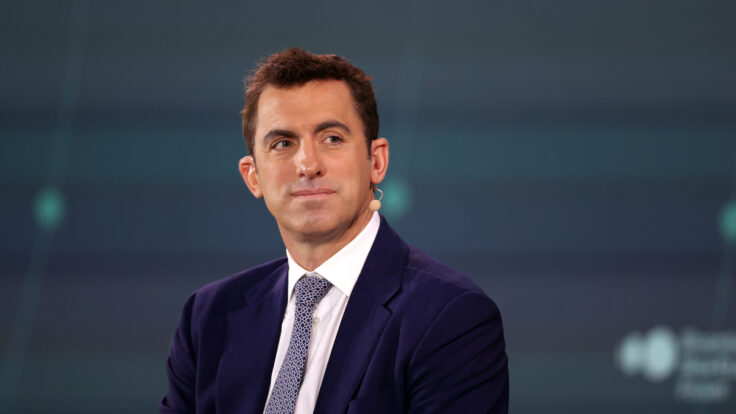
philanthropic windfall: I was recently apprised of something I had missed a year ago, when Apollo C.E.O. Marc Rowan signed his new five-year employment agreement. The deal contains a number of intriguing deal points: First, Marc’s salary is only $100,000 per year, without an annual bonus, but inclusive of a chauffeur and the use of a private jet. Phew. He is also entitled to an annual $10 million “supplemental partner program award” that shares in the total gross
realized performance fees from various Apollo funds. (Notably, Marc was briefly in the running to become Trump’s Treasury Secretary, and might conceivably get tapped for the job yet.) Indeed, these are all rather modest for a man of his station—especially compared to the total comp enjoyed by Steve Schwarzman at Blackstone, or Henry Kravis and George Roberts at KKR. (Of course, Rowan also owns
millions of Apollo shares, which are together worth billions.)
However, there is one very unusual provision in Marc’s new contract: At his request, Apollo set up a $200 million donor-advised fund, in “partnership with Apollo,” that allows him to direct up to $40 million a year to the charities and philanthropic organizations of his choice (with credit to Marc, if he’d like). Most charitable initiatives from corporate executives come from their own after-tax wealth, rather than a fund
set up by a corporation for the benefit of its C.E.O. In 2025, Marc’s $200 million D.A.F. did not make any donations. That means 2026 could be a big year for his philanthropic giving, courtesy of Apollo. - Have the Ellisons hit their WBD ceiling?: Also notably, the Ellisons still haven’t raised their bid for Warner Bros. Discovery since December 4, despite claiming that the offer was not the “best and final.” And
yet word is leaking out that the Ellisons won’t raise their bid beyond $30 a share, all cash, for the whole company. Perhaps this is the result of financial prudence or a confidence that Netflix’s deal will hit the skids during the European regulatory review gauntlet. But this newfound frugality might have another antecedent. Since The Wall Street Journal first published the rumor that the Ellisons might want to buy WBD, on September 11, the PSKY stock is down 36
percent and Oracle stock is down 44 percent. That’s not nothing, and may be affecting the way the Ellisons are thinking about the deal these days.
|
|
|
There are still another 3 million or so Epstein documents that the D.O.J. has yet to
release, despite claiming its obligation has been fulfilled. Dan Novack, the enterprising First Amendment attorney who has been waging a FOIA war on the F.B.I., still has at least one last trick up his sleeve to unleash the mother lode. |
|
|
On Friday, some 45 days later than legally required, the Justice Department finally released
something like 2.7 million documents and emails related to Jeffrey Epstein and his interactions with dozens of powerful men, and a few powerful women—including Kathy Ruemmler, the general counsel at Goldman Sachs. Many of the emails and documents were partially redacted, or quickly disappeared from the Justice Department’s website, including a spreadsheet that enumerated various alleged, appalling interactions regarding Donald J.
Trump. (Trump has repeatedly denied wrongdoing related to Epstein and has called the files a “hoax.”) And there are still another 3 million or so documents that have not been released to the public. Nevertheless, Deputy Attorney General Todd Blanche says the D.O.J. is now in compliance with the Epstein Files Transparency Act. In other words, c’est tout.
And yet, the saga may not be finished. While the general public and
enterprising journalists search the new document dump for their favorite Epstein buddy—e.g., Bill Gates, Elon Musk, even Satoshi Nakamoto—one of my favorite attorneys, Dan Novack, is continuing to fight the good fight to get the rest of the files released, including unredacted versions of the ones that have just been made public. (Novack, a First Amendment lawyer with
his own firm, is also associate general counsel at Penguin Random House, my book publisher.)
This past Wednesday, the Second Circuit Court of Appeals heard arguments from Novack and the F.B.I., via the Justice Department, over whether his FOIA request should be treated separately from the new Epstein Files Transparency Act. It was a fascinating hearing, which lasted about 30 minutes. The debate sought to determine whether the F.B.I. could hide behind the Epstein Files Transparency Act, or
if the justices could force the F.B.I. to comply with Novack’s FOIA request.
It’s possible that the release of the files and the timing of the hearing were coincidental, although I don’t think so. But Novack’s relentless, frustratingly circuitous pursuit of documents relating to Epstein demonstrates how challenging it has been for lawyers, journalists, victims, and plenty of others to pry useful information related to the matter from the hands of the federal government. |
There’s a certain Don Quixote–like verve to Novack, who has been trying to extract Epstein files from the
F.B.I. since April 2017. Nearly a decade ago, on a pro bono basis, Novack filed a FOIA request on behalf of RadarOnline and James Robertson, one of the three authors of the 2019 book Epstein: Dead Men Tell No Tales, to force the F.B.I. to turn over relevant documents to help him research the book. After a month passed without any response, Novack filed a lawsuit in the Southern District of New York. In October 2017, the court ruled that the F.B.I. had to produce
the Epstein material at the rate of 500 pages a month—which it did, for the next 21 months, although many of the documents were heavily redacted.
In July 2019, Epstein was arrested at Teterboro upon returning from Paris, and charged with sex trafficking. A month later, the F.B.I. explained to Novack why it had redacted
so much of the material it had been handing over: FOIA regulation 7A, which attempts to guard against the release of documents that might interfere with a potential or ongoing legal proceeding. But even after Epstein committed suicide in prison, in August 2019, the F.B.I. continued to cite 7A. Then the F.B.I. began redacting almost all of the materials that Novack received. In January 2020, the bureau stopped producing documents altogether.
Novack didn’t learn why until federal
prosecutors announced they were building a case against Ghislaine Maxwell. That summer, Maxwell was arrested, and in December 2021, she was convicted of recruiting and grooming teenage girls for Epstein to abuse. In June 2022, she was sentenced and transferred to FCI Tallahassee, a low-security women’s prison. (She has since been transferred to a minimum-security prison for women in Texas, and many people expect Trump to shamelessly pardon her.) By that point,
the F.B.I. had processed more than 11,500 pages of documents pursuant to Novack’s FOIA request. Of those, only 181 were released in full, with the rest being partially or entirely blacked out.
But in June 2024, U.S. District Judge Paul Gardephe tossed out Novack’s case. The judge ruled that Novack’s “public interest” argument did not override the FBI’s 7A exemption, even though Maxwell had already been tried and convicted, and had already seen much of the
evidence against her that was used to convict her. (Maxwell’s own attempts to overturn her conviction hit a dead end last October after the Supreme Court declined to hear her case.) In July 2024, Novack appealed Gardephe’s ruling to the Second Circuit Court of Appeals.
As we know, the wheels of justice move slowly. Novack’s appeal wasn’t heard until this past Wednesday, when he essentially argued that the F.B.I. was overwithholding Epstein-related documents by claiming the 7A
exemption—especially since there had been no Maxwell prosecution in 2017, at the time of his original FOIA request—and that it was no longer reasonable for the F.B.I. to withhold or redact the documents. He asked the court to void the F.B.I.’s ongoing use of the 7A exemption, or to remand the case back to Gardephe for a page-by-page analysis of what can be released to Novack. “In 2017, when Radar first filed their FOIA request, Jeffrey Epstein was alive and well, a free man, not under any
investigation for two years,” Novack told the appeals court. “The F.B.I. withheld materials from disclosure out of stated deference to Epstein’s person.”
For its part, the F.B.I.’s attorneys at Justice essentially asked the appeals court to wait and see what Justice would release, and then decide what is still under dispute with Novack’s FOIA case. The F.B.I. was also willing to remand the case back to Gardephe to see what could be released to Novack when, and if, the Justice
Department coughed up more documents. “The government believes that the proper procedure is for this court to remand this case to district court for further proceedings,” Assistant U.S. Attorney Allison Rovner told the judges. “That’s because this case is materially different than the case that was briefed before this court or in district court… We’ll see what’s released under the Epstein Act. And it’s very possible that once the documents are released, then the
arguments being made in this FOIA case will be moot because the documents will have been released, right?”
During the hearing, it seemed like the appeals court was leaning toward vacating Gardephe’s ruling and remanding the case back to him for reevaluation in light of the Epstein Files Transparency Act. But that was before the release of the roughly 2.7 million new documents on Friday. As a result of the release, it now seems pretty much certain that the appeals court will force
the district court, along with Novack and the F.B.I., to analyze the latest dump and see how much material, if any, is responsive to his FOIA request, and what might still need to be released. Meanwhile, as of last week, the government was still claiming, in the Blanche press statement, that it wouldn’t release documents that might be useful in further prosecutions, again claiming a 7A exemption. |
Novack isn’t the only Epstein warrior who believes this explanation strains credulity. Ro
Khanna, the Democratic congressman from California and one of the architects of the Epstein Files Transparency Act, said on Saturday that he’s not going to stop pushing for the release of the Epstein files until all 6.5 million are public. “It’s been over a month since the December 19th deadline for the full release of the Epstein files,” he wrote in a fundraising email. “Attorney General Pam Bondi and the Department of Justice have flagrantly
violated the law that President Trump signed and are engaging in a cover-up to protect pedophiles.”
On Friday afternoon, I emailed a spokesperson for RadarOnline to see whether the new document dump resulted in anything relevant for the publication, or for Robertson. “Seems like lots of interesting stuff is coming out,” the spokesperson replied, while also noting that it is “impossible to understand why it would have interfered with a Maxwell retrial.” Did the latest Epstein release moot the
FOIA case, I wondered? The spokesperson, for their part, said RadarOnline “can fight for the redacted and withheld material and ensure they are actually releasing everything.” What’s clear is that—notwithstanding Blanche’s desire for the end to be near—there is still more to come, one way or another. |
|
|
Join Puck’s chief political columnist, John Heilemann, as he roams the corridors of power and influence in America on this
twice-weekly interview show, taking you beyond the headlines with the people who shape our culture: icons and up-and-comers, incumbents and insurgents, moguls and machers in the overlapping worlds of politics, entertainment, tech, business, sports, media, and beyond. The conversations are rich and revealing, unrehearsed and unexpected… and reliably impolitic. A Puck-Audacy joint, new episodes drop every Wednesday and Friday. |
|
|
Puck’s daily political newsletter from Washington on what’s really happening in this town, from the White House to the Pentagon
to Capitol Hill, K Street, and the campaign trail. |
|
|
Need help? Review our
FAQ page or contact us for assistance. For brand partnerships, email ads@puck.news.
You received this email because you signed up to receive emails from Puck, or as part of your Puck account associated with {{customer.email}}. To stop receiving this newsletter and/or manage all your email preferences, click here. |
Puck is published by Heat Media LLC. 107 Greenwich St., New York, NY 10006 |
|
|
|