Welcome back to The Varsity, where speculation of the NFL’s coming rights negotiations continues to be
front-of-mind for everyone. During Versant’s Q4 earnings call today, C.E.O. Mark Lazarus addressed the topic in response to a question from BofA Securities analyst Jessica Reif Ehrlich, who asked how the deal would affect Versant’s sports strategy. Laz: “We believe that there will be a rebalancing of the sports portfolios, and that will leave opportunity for us.” Laz highlighted USA Network, which has a long history in sports, as a potential outlet for
sports properties “that we might not have otherwise gotten involved with.”
In today’s issue, Julia Alexander goes under the hood to inspect F1’s five-year, $750 million rights deal with Apple. The deal may put a lot more cash in F1’s pockets, but can it help the league to grow? Could that elusive growth be a reason why Apple is in the market to hire
someone with 15-plus years of experience as a programming lead, who will develop shows to complement live sports? As you surely know by now, you need to be an Inner Circle member to read Julia’s work, so click here to upgrade.
Take it away, Julia…
Mentioned in this issue: Stefano Domenicali, Neal Mohan, Jimmy Kimmel,
Rick Cordella, David Ellison, Gerard Piqué, John Ternus, Mark Goldbridge, Lionel Messi, Brian Roberts, Max Verstappen, Jimmy Pitaro, Don Garber, Tim Cook, Brad Pitt, Eddy Cue, Gary Neville, Brendan Carr, Charles Leclerc, and
more... |
Stat of the Week: 7.6
Million
|
Assuming Paramount clears the regulatory hurdles to acquire Warner Bros. Discovery, one of David
Ellison’s first moves will be to combine Paramount+ and HBO Max—creating a streaming mini-behemoth that should claw market share back from the other services. The data really puts things into perspective: The two services have 7.6 million overlapping U.S. subscribers, per Antenna—about a quarter of their respective domestic audiences, not including linear HBO subs. Globally, the combination should have slightly more total subs than Disney+ and Hulu. Nothing to sneeze at, but
the combined service will still only have about a 3.7 percent share of all connected TV engagement in the U.S.—about 5 percentage points less than Netflix, and about a quarter of YouTube’s share. |
|
|
A MESSAGE FROM OUR SPONSOR |
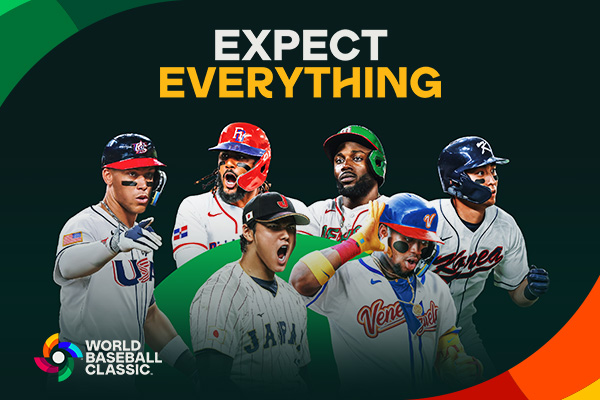
The sixth World Baseball Classic starts this week with 20 countries and territories competing for the coveted
international baseball championship. With an all-time high of 78 MLB All-Stars competing, this year’s tournament features the most talented rosters in history along with more than 150 global brand partners and distribution to 172 countries on six continents. Can Shohei Ohtani and Samurai Japan defend their title? Can Aaron Judge and Team USA return to glory? Tune in to the FOX family of networks to watch all the action and find more information at
WorldBaseballClassic.com. The World Baseball Classic…..Expect Everything. |
|
|
- YouTube’s
soccer loophole: YouTube’s executive team seems intent on finding ways for premium sports content to land on their platform without having to pay for massive rights fees. So far, the approach has had some success. To wit: Bundesliga’s partnership with creators Mark Goldbridge and Gary Neville to stream matches, and Brazilian streamer Casimiro’s CazéTV, which broadcast all of the FIFA Club World Cup games in 2025 while generating
more than 1 billion views across his nearly 25 million subscribers.
A recent internal report on sports consumption in international markets points at how the platform’s executives are thinking about future growth. Some interesting data points: 66 percent of Mexican sports fans between 14 and 49 years old watch sports commentary from creators on a weekly basis; 63 percent of Mexican sports fans enjoy watching online challenges, games, and events created by, uh, creators; and
there’s rising interest in new sports leagues, such as Kings League from former Manchester United superstar Gerard Piqué, which generated more than 245 million views in Brazil last year. These are all signs that C.E.O. Neal Mohan might not exactly need to bid on “big” sports rights packages—especially if his creators are making their own events and audience moments. - Carr’s sports focus: Brendan Carr,
President Trump’s pugnacious F.C.C. chairman, may be turning an eye to sports. Last week, he said there is a “role for the F.C.C.” in addressing the number of platforms that have fragmented the sports world and forced fans to sign up for multiple services. “As more and more games start to go behind paywalls, it begins to tug at some of the underpinnings of that Sports Broadcasting Act,” he said, adding that “people are right to start asking whether we have the right regulatory
framework in place right now.”
Of course, Carr is far from the first D.C. official to consider whether moving games and events behind streaming paywalls is anti-consumer. Last May, the Senate Commerce Committee held a hearing on potential monopolistic practices in sports streaming, an issue that unites both sides of the aisle. In a conversation at a recent Semafor event, Carr echoed these sentiments, arguing that sports are critical to affiliate network partners, and that “we need healthy
affiliates, healthy local TV stations.” That may be true, but around 70 percent of U.S. consumers already watch sports via streaming, per the latest Hub Research report. Good luck trying to put that genie back in the bottle. - Premier League’s D.T.C. ambitions: Ask any major pro sports executive whose business they most envy, and the nearly unanimous answer will be the English Premier League. After all, soccer is the only truly global sport,
which is at least one of the reasons why EPL rights run extremely high in almost every market. (Good luck to Comcast’s Brian Roberts and Rick Cordella, who will try to re-up on those rights after inevitably shelling out to keep the NFL…)
But last week, the EPL announced it will launch its first ever D.T.C. platform—starting in Singapore, with plans to expand throughout the season—in a bid to create a more direct relationship with its audience. The
question is, why now? Streaming has penetrated even more international markets since the league first considered launching Premier+ a few years ago. Streaming technology has also come a long way since then, and pay TV channels are starting to explore opportunities to bundle streaming services with their plans (à la Charter and Disney+ or Hulu), which gives the Premier League a new way of generating revenue while also going D.T.C. For a league with geographically scattered,
hyper-invested fans; advertising potential; and plenty of upsell opportunities through merchandise and ticketing, it’s the right time to develop a streamer while the industry itself continues to consolidate.
|
|
|
F1 executives are praying their nine-figure Apple partnership will boost their domestic
audience and increase the league’s relevance—but streaming scale and audience growth aren’t always correlated. Just ask Major League Soccer. |
|
|
There are plenty of reasons why a sports league might want to partner with Apple, not least because the
nearly $4 trillion market cap company can pay more cash than other partners for global, exclusive, end-to-end rights. This is why the MLS was able to lure over Lionel Messi, and why anxious league partners can sleep soundly without worrying too much about their P&L. However, one thing Apple can’t necessarily provide—and, yes, this isn’t unique to Apple—is a proven ability to grow an audience through its streaming service.
Alas, someone should
probably explain this to Stefano Domenicali, Formula One’s C.E.O. He recently argued that because Apple’s technology “is in the hands of the majority of people,” the five-year, $150 million-per-year partnership, which was signed last October, will help the league reach new audiences and boost its relevance. Of course, MLS commissioner Don Garber thought the same thing when he signed his Apple deal back in 2022, and fantasized about getting “ahead of the
business” by moving to a modern distribution platform. But the partnership ended prematurely, three years later, following several seasons wherein team owners complained about the lack of audience reach, minimal data about how many subscribers Apple TV+ (now just Apple TV) drove to the league, and scant evidence of the innovation many expected from the creators of the iPhone, iPad, AirPods, and Vision Pro. |
|
|
A MESSAGE FROM OUR SPONSOR |
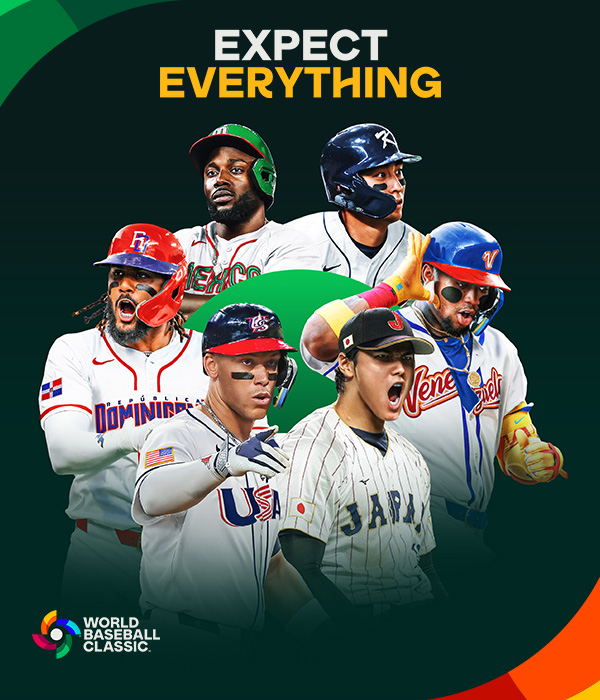
The sixth World Baseball Classic starts this week with 20 countries and territories competing for the coveted
international baseball championship. With an all-time high of 78 MLB All-Stars competing, this year’s tournament features the most talented rosters in history along with more than 150 global brand partners and distribution to 172 countries on six continents. Can Shohei Ohtani and Samurai Japan defend their title? Can Aaron Judge and Team USA return to glory? Tune in to the FOX family of networks to watch all the action and find more information at
WorldBaseballClassic.com. The World Baseball Classic…..Expect Everything. |
|
|
Instead, the last few years have demonstrated that Apple’s hallowed innovation on the hardware side doesn’t
necessarily translate to streaming. Apple TV is just a part of the company’s overall business, and a component of Apple’s Services division, which primarily makes its money through in-app purchases in games like Candy Crush. One executive I spoke with suggested that if hardware boss John Ternus ends up succeeding Tim Cook, Apple’s streaming experiment might even fizzle out, joining the product graveyard that includes the Newton and iBook. (Though
Eddy Cue’s recent appearance on my colleague Matt Belloni’s podcast, The Town, may suggest Apple is in it for at least the medium haul.) However, for league executives determined to secure the dollars that come with an Apple deal, there are a number of options to increase viewership despite the limitations of streaming—and F1 might be well positioned to reap the benefits. |
F1 is actually coming off its best season in years. In 2025, F1 drove about 1.3 million viewers per
race in the U.S., on average, across 24 races—a 140 percent jump from 2017, when races aired on FS1. Even factoring in the ratings boost that resulted from Nielsen’s new-and-improved methodology for measuring out-of-home viewing—which gave almost every league a record-breaking year—it’s clear that being on ESPN, with five races airing on ABC, actually increased overall viewership.
But comparing those numbers to F1’s biggest rivals reveals why a streamer might diminish overall
audience: IndyCar averaged 1.36 million viewers per race on Fox, and NASCAR’s Cup Series averaged 2.48 million viewers across Amazon, Fox, FS1, TNT, NBC, and USA. And while it’s tempting to look at those NASCAR numbers and think that Amazon, which reaches more than 130 million viewers in the U.S. each month, is responsible for that reach, the league’s ratings for Cup races on the streamer were actually down 17 percent compared to last year.
Meanwhile, one of the
takeaways from ESPN chairman Jimmy Pitaro’s decision to walk away from F1 might be that the league has reached its total addressable market in the United States—and iPhone push notifications aren’t going to change that. After all, domestic growth has always been a problem for F1. Even expanding to three races in the U.S. (most other circuit countries get about one race per season) hasn’t moved the needle significantly in the U.S. market. While F1 owner Liberty Media may have a
vested interest in making the league more compelling in a market where household income is higher and streaming penetration rates are stronger, taking attention away from core international might not be the best strategy. |
When it comes to reach, however, Apple is clearly learning from its own mistakes. Last week, MLS announced a
nearly 60 percent increase in viewership across all opening weekend matches, bringing in roughly 9.7 million viewers. Perhaps it’s no coincidence that this is also the first season that Apple and MLS dropped the MLS Season Pass paywall ($15 a month or $100 for the season), effectively making games accessible to all the platform’s estimated 40-plus million subscribers.
It’s hard to say definitively that dropping the paywall was responsible for the viewership boost, but it’s a
perfect example of what Apple should be doing to help league partners. At the same time, Apple is co-streaming the eighth season of Netflix’s Drive to Survive to gin up interest in the upcoming F1 season, even though the show came down from the heights of its pandemic popularity long ago. Netflix, in turn, will get to co-stream the Canadian Grand Prix in May. Surely Apple Studios is already eyeing the marketing possibilities for its in-development sequel to the $630
million–grossing, Brad Pitt–starring F1 movie.
There are other options on the table, too. Simulcasting select races on, say, ESPN, which carries races internationally, could boost viewership and drive a percentage of those fans back to Apple. The company could also use its technology to better monetize and engage the league’s most intense fans. Why not attach spatial cameras to the cars, which may drive adoption of higher-priced tier plans on Vision Pro headsets?
Or it could throw workout routines from popular drivers, like Charles Leclerc or Max Verstappen, exclusively on Apple Fitness. There’s potential here to drive more Apple One subscriptions while retaining those customers beyond the race season.
It’s also possible that Apple is viewing any success with F1 in the domestic market through the lens of a potential global expansion in years ahead. Although Apple products dominate in the United States, Android
devices are more commonly used in foreign territories. And while there’s no real evidence of a correlation between gaining streaming subscribers and users purchasing products, being able to tap into an audience that is primarily international might help, or at least can’t hurt.
In the end, Apple and F1 may want fundamentally different things: The league wants to reach the largest audience possible while growing its impact in the United States, while Apple wants to monetize F1 fans’
end-to-end journey. Anyway, there are only so many Brad Pitt movies that are going to move the needle—and Apple may need more than a gimmicky tie-in to make the deal worth it on paper. Even for a $3.8 trillion company. |
Thanks, Julia. See you all on Thursday,
John |
|
|
Puck sports correspondent John Ourand and a rotating cast of industry insiders take you inside the executive suites and owners boxes where
the decisions that shape the entire sports business are made. You’ll hear interviews with players, network execs, and everyone in between. The Varsity is an extension of John’s private email for Puck by the same name. New episodes publish every Wednesday and Sunday. |
|
|
Ace media reporter Dylan Byers brings readers into the C-suite as he chronicles the biggest stories in the industry: the future of cable
news in the streaming era, the transformation of legacy publishers, the tech giants remaking the market, and all the egos involved. |
|
|
Need help? Review our FAQ page or contact us for assistance. For brand partnerships, email ads@puck.news. You received this email because you
signed up to receive emails from Puck, or as part of your Puck account associated with {{customer.email}}. To stop receiving this newsletter and/or manage all your email preferences, click here. |
Puck is published by Heat Media LLC. 107 Greenwich St., New York, NY 10006 |
|
|
|