{{ 'now' | timezone: 'America/New_York' | date: '%b %d, %Y' }} |
|
|
|
Welcome back to Wall Power’s Inner Circle. I’m Marion
Maneker.
Tonight, my conversation with Kara Vander Weg, a senior director at Gagosian, about her artist Anselm Kiefer, whose show closes this weekend. The 81-year-old Kiefer is a giant of European art, having emerged in the postwar generation that grappled with the devolution of German culture into Nazism and the destruction caused by the Second World War. His long career and substantial personal wealth have afforded him the kind of freedom that few
artists achieve. Kara’s insights are available only to Inner Circle members, so trade up here if you haven’t already.
Up top, Jonathan Anderson, the creative director of Christian Dior, is showing a collection of drawings by an anonymous gay artist from the 1950s at his namesake brand’s store in the Soho neighborhood in London. And the Barnes has a new curator. Plus, the
Joe Lewis sale was a blowout success. I have some early color on what happened in the room.
🚨 Just a reminder…: Puck’s Inner Circle subscribers get a discount on ARTDAI’s auction database and market intelligence platform, ArtQ One. If you sign up for the monthly package here using promo code INNERCIRCLE, you’ll get the first month for $26, then pay $95 a month thereafter. Or
just sign up for the yearly rate, which works out to only $79 per month. It’s an even better deal. (You just won’t get a discount from us.) I use ARTDAI. It’s the best tool available.
Also mentioned in this newsletter: Robert Mapplethorpe, David Hockney, Tom of Finland, George Quaintance, Dom
Orejudos, Bob Mizer, Connie Choi, Rainer Maria Rilke, Caspar David Friedrich, Gustav Klimt, Waltraud Forelli, and more. |
|
|
|
A MESSAGE FROM OUR SPONSOR |
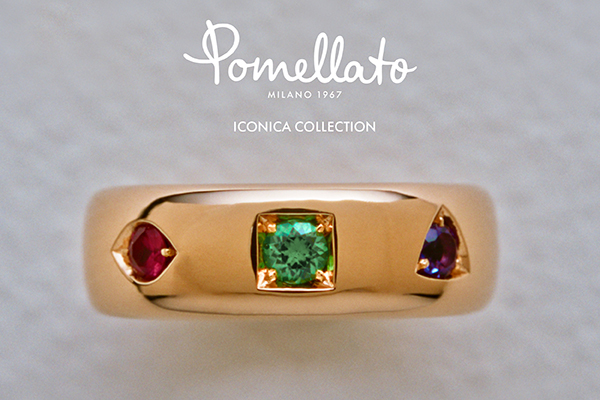
A New Facet of Iconica Long celebrated for its bold volumes and sculptural gold, Iconica reveals a new expression with vibrant gemstones. Crafted and polished by hand, each ring maintains the collection’s signature form while introducing flashes of ruby, emerald, sapphire, amethyst, and tsavorite. Set in carefully composed trios, the stones add depth, movement, and a contemporary edge to Iconica’s unmistakable silhouette. |
|
|
|
-
J.W. Anderson says, I’m Spartacus!: Beginning tomorrow through July 6, the J.W. Anderson store in London’s Soho will show an exhibition of 40 illustrations by the artist Spartacus, who inspired figures like Robert Mapplethorpe and David Hockney and whose identity remains unknown. These Spartacus images, which were created in the 1950s, are included alongside works by Tom of Finland, George Quaintance,
and Dom Orejudos for Physique Pictorial, a magazine published by Bob Mizer as an ostensible bodybuilding guide in order to skirt censorship of homosexual imagery. The works in the show were once held in Mizer’s own collection.
- The Barnes makes a big hire: On Tuesday, the Barnes Foundation in Philadelphia announced the appointment of Connie Choi as chief curator and
vice president for art and education. Choi was previously curator of the Studio Museum in Harlem.
- A £296 million Joe Lewis knockout: The top of the art market continues to show real strength and confidence. At Sotheby’s Joe Lewis auction this afternoon in London, the Nahmad family was quite active, with David taking his usual front-row position and his sons, Helly and
Joe, and nephew (also named Helly) in attendance. Bill Acquavella and his son Alex were seated right behind them, along with their colleague Jean-Paul Engelen. The two clans were consulting each other during the early lots, as the senior Acquavella bid on a Picasso to £19.5 million but dropped out in favor of a phone bidder who paid nearly $23.9 million with fees.
Another
dealer seated nearby believes the Nahmads won the Picasso through Sotheby’s Julian Dawes. They may have come to an understanding with the Acquavellas, because both tribes were visibly satisfied after the hammer fell. If the Nahmads were the winning bidders on the Dora Maar painting, then the family also bought the Edgar Degas classic work Petite danseuse de quatorze ans, which sold for just above $25 million to the same
paddle number as the Picasso winner.
When the Nahmads and the Acquavellas are bidding at auction, it’s a sign of market confidence. The sale totaled £296 million ($392 million).
|
Now, here’s Kara Vander Weg… |
|
|
|
The Gagosian senior director offers a behind-the-scenes look at the gallery’s show
of German artist Anselm Kiefer—and the erudite collectors and institutions who seek him out. |
|
|
|
Gagosian gallery’s New York
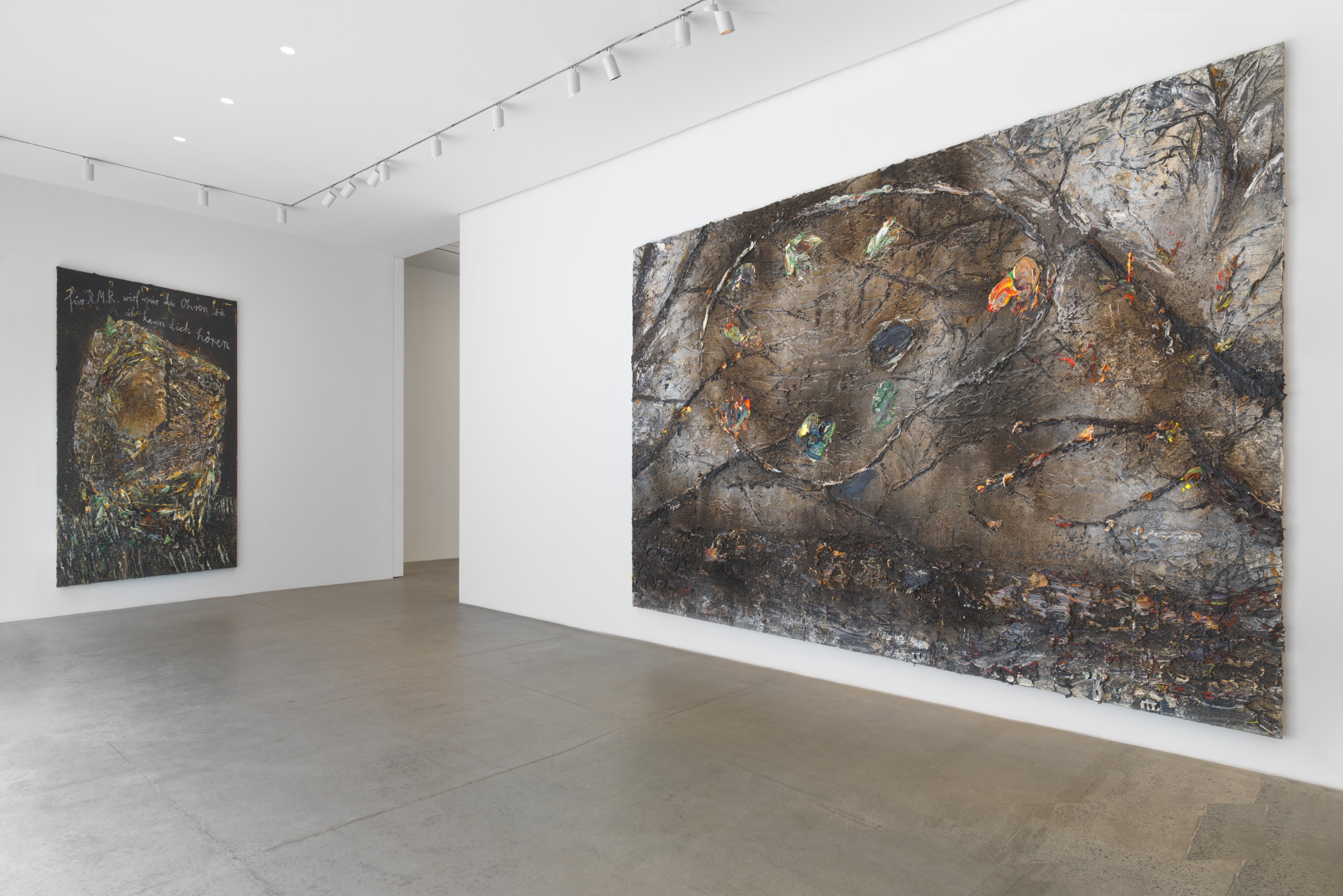
show of paintings by the German artist Anselm Kiefer, Seal My Ears Shut and I Shall Hear You Still, features work inspired by Kiefer’s reading of Rainer Maria Rilke, the paintings of Caspar David Friedrich, and women in mythology who “connect landscapes with allegorical
narratives.” The show has been on view at Gagosian’s West 24th Street gallery since mid-May and closes this Saturday.
Meanwhile, four of Kiefer’s paintings—from the 1980s, ’90s, and early 2000s—are on offer in London; a retrospective was just held at the Saint Louis Art Museum; and a major bank recently commissioned work from the artist for its new headquarters. I spoke with Kara Vander Weg, a senior director at Gagosian, about the artist’s interest in
mythology, literature, and the idea of alchemy. As always, this conversation has been edited for clarity and length. |
|
|
|
A MESSAGE FROM OUR SPONSOR |
In Living Color Within
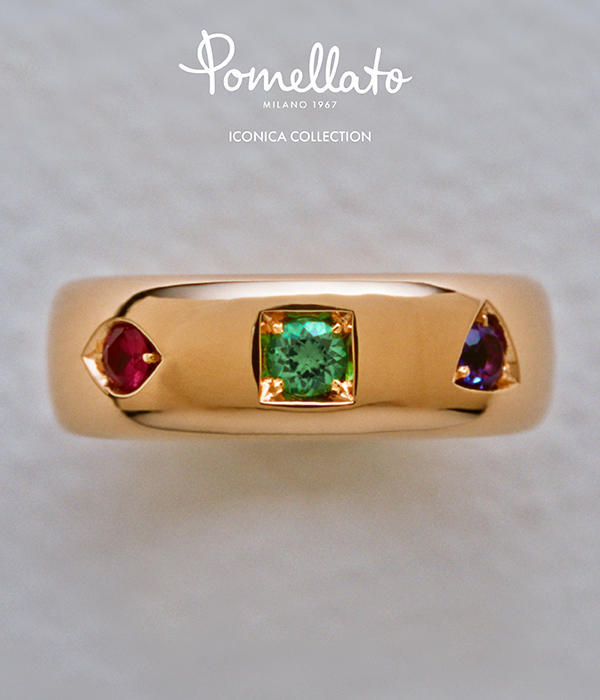
Iconica’s radiant curves, color becomes a clear expression of personality. Saturated gemstones create a vibrant contrast with warm polished gold, balancing design precision with wearability. Both playful and refined, these compositions reflect Pomellato’s distinctly Milanese approach to modern elegance—pieces designed for self-expression and everyday wear. |
|
|
|
Marion Maneker: Kara, could you give us a little
context for how the show fits into Anselm Kiefer’s career?
Kara Vander Weg: The title of the exhibition is a translation of a quote by Rainer Maria Rilke, a poet whom Anselm is a big fan of. As many people know, he is very well-read as an artist and has an enormous library in his home. These paintings have come out of a sequence of works that have evolved over the past couple of years—from an
exhibition at the St. Louis Art Museum, which closed in January, but also with works that are on view right now at the Palazzo Reale in Milan. These works focus on female figures out of mythology, like nymphs. He’s giving them certain attributes, so you see faces amid nature. They have a beautiful green-gold palette.
Some people have noted that it’s kind of like Gustav
Klimt. They evoke nature, but also the mystery of these female beings. The show in Milan has images of female alchemists throughout time whom he’s kind of pulled out of history. And in St. Louis, he began making some very large paintings that are still on view in the Great Hall; those focus on nymphs thinking about the natural environment of the Mississippi River, and these mostly female figures who are inspiring nature and solving problems. |
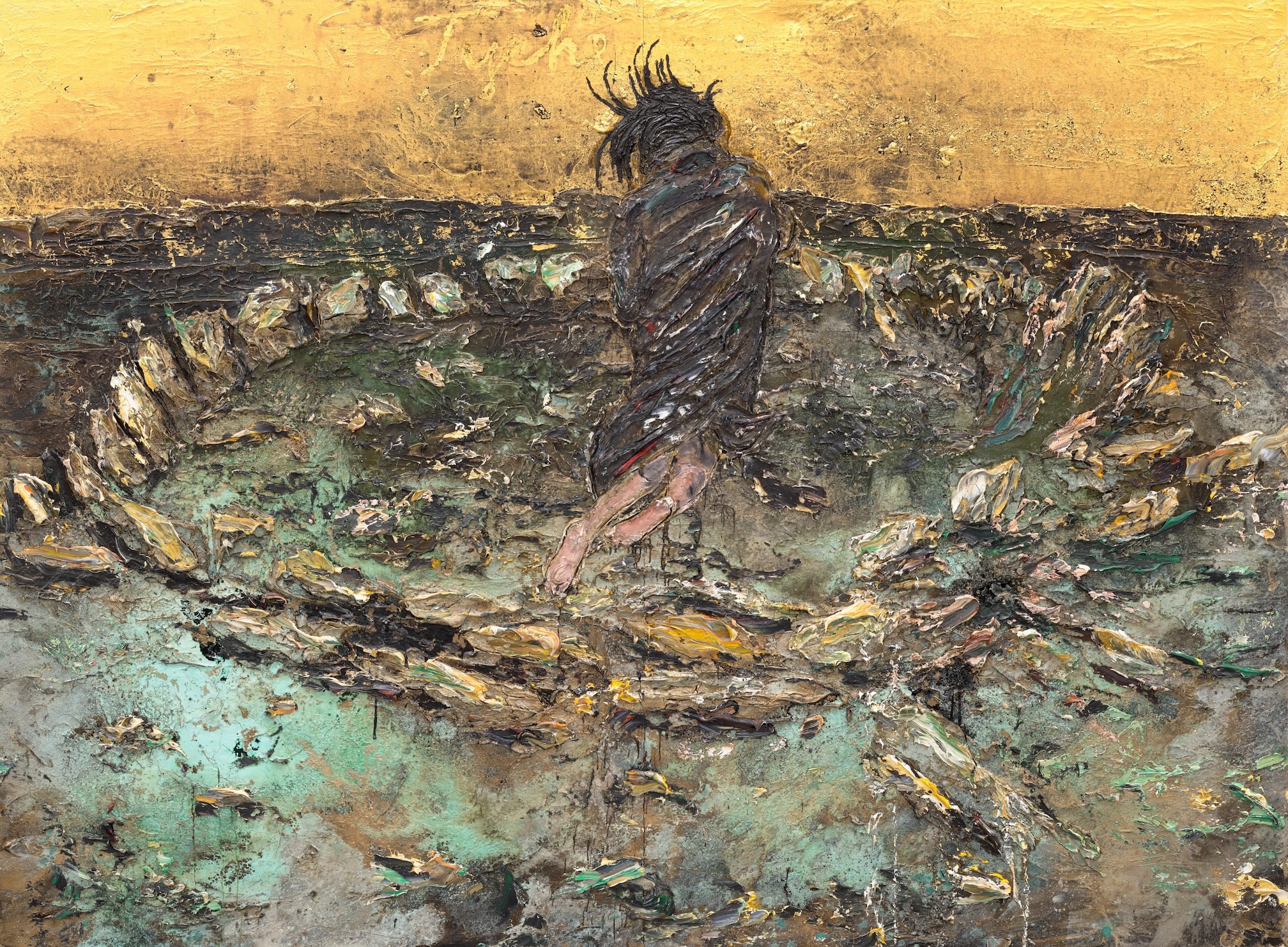
Anselm Kiefer, Tyche (2024). Photo: Nina Slavcheva/Courtesy of Gagosian |
You mentioned the gold background, which is particularly prevalent in the last piece,
Tyche, which has its own room at the gallery. The idea of alchemy is a big theme for Kiefer. Earlier in his career, he often worked with lead, which seems to have introduced this interest in alchemy, the turning of lead into gold.
I think the reason that alchemy, in its most fundamental sense, interests Anselm is because it’s about transformation. It’s about turning something, maybe nothing, into
something good. He’s talked about destruction in his beginnings as a young boy in Germany after World War II. He’s taking destruction and making it into creation, building something back from it.
This idea of transformation runs through his work. Gold has been thought of in many cultures as an alchemical material. So that is often why he uses the color gold in his work—one of the many reasons.
I think of him as an artist who generally creates very large works that require a
lot of space. Gagosian is very much a commercial gallery. How do those two things intersect—dealing with an artist of his stature making these big paintings?
The paintings in our exhibition are what Anselm considers to be domestically scaled: They are 10 feet by 14 feet or so. I guess different people have different-size houses. His is very large. But the idea that he’s more of an institutional artist, rather than an artist for
individual collectors, is kind of a misconception, because he’s collected on both sides. He makes works in so many different scales and so many different media.
For instance, we did a photography show in New York several years ago. All of those works went to private collectors, not to museum collections. He’s also making sculptures on a smaller scale. There’s a series called Women of Antiquity, and we’ve sold a number of those to private collectors because they’re of a scale
that’s really manageable for a lot of people, and also a weight that’s manageable. There are very, very devoted Kiefer collectors out there, which we have been grateful to have.
Tell me more about those collectors.
I think they are very educated, very erudite, and they enjoy the stories behind the works. I think one of Anselm’s many gifts is that he creates work that can be understood on several different levels. There’s the
meaning that he attributes to it in the title—in the characters he portrays, often with the language that’s part of the painting. And you, the collector, can read all of that. You can read about those characters, just as he is constantly reading. But you can also look at its face value as a painting—there’s a beauty to it, there’s a complexity in terms of the layering of paint. You can think about who he’s drawn from stylistically. |
Anselm Kiefer, Seal My Ears Shut and I Shall Hear You Still at Gagosian Gallery, New York.
Photo: Maris Hutchinson/Courtesy of Gagosian |
There is a steady, growing interest in Kiefer’s work. I don’t know if that’s because he’s recently
had a lot of big, public presentations that then put him more in collectors’ minds, or because the subject matter of Kiefer, this idea of regeneration coming out of destruction, has never been more timely, maybe, than right now. And so I think there’s a resonance. |
|
|
|
You mentioned earlier having a collector base that’s erudite. Kiefer’s emphasis
on classical poetry, his interest in myths and mythology—these are things that people aren’t conversant with these days.
It’s encouraging that collectors are still drawn to it. It does sometimes require more education, because they have questions about, What does this mean? Where does this come from? But again, Kiefer is constantly educating himself and reading, so that is how some of this content comes into the work, his very
process of reading and learning about these different mythological figures and these different female alchemists, and wanting to somehow take that newly acquired information and put it out there visually in the world, so other people can learn about it. |
“He
Goes For It 1,000 Percent”
|
You mentioned these institutional projects. What’s the next set that comes after
this?
There are several things in the works. There’s something with photography that you’ll be hearing about eventually, then there are some other museum projects and foundation projects. Anselm can keep himself busy like nobody I’ve ever met, and for somebody in his ninth decade, I don’t know how that man has more energy.
To be honest, that’s why I’ve always assumed he doesn’t have quite that secondary market that others do—that
he’s so productive, that you guys are able to satisfy the demand.
Yes, and he’s also got projects that are just for himself internally—and other things like his foundation in Barjac, which is really a nonprofit. Running that, designing new buildings—it’s pretty incredible. It’s like really going deep into Anselm Kiefer’s brain. There are more than 60 buildings with Kiefer works inside of them.
I think what’s really wonderful about Anselm
is that, like any good artist, he has these visions for something he wants to create, and he goes for it 1,000 percent. He finds a way to make it possible, whether that’s the Palazzo project or the Barjac. He figures it out, but they’re balanced by the commercial side of things, so it all works.
Is there a legacy effect of that? There are things that now need to be paid for, cared for, maintained?
I am talking all the time to the
wonderful head of his studio and head of the foundation that runs Barjac, Waltraud Forelli. I know that’s very much in discussion, how all of that will happen, what the maintenance plan is, what the financial plans are. But I think for Anselm, he has a legacy in place through this entity. The idea that you could go to one place and see a history of Kiefer’s work, potentially from the beginning until the end, is really incredible, because you’ll never get that in a museum, of
course. |
Thank you, Kara. That was really interesting. I’ll be back on Friday with results from the London
sales. Stay tuned for that.
M |
|
|
|
Puck founding partner Matt Belloni takes you inside the business of Hollywood, using exclusive reporting and insight
to explain the backstories on everything from Marvel movies to the streaming wars. |
|
|
|
Unique and privileged insight into the private conversations taking place inside boardrooms and corner offices up and
down Wall Street, relayed by best-selling author, journalist, and former M&A senior banker William D. Cohan. |
|
|
|
Need help? Review our
FAQ page or contact us for assistance. For brand partnerships, email ads@puck.news.
You received this email because you signed up to receive emails from Puck, or as part of your Puck account associated with {{customer.email}}. To stop receiving this newsletter and/or manage all your email preferences, click here. |
Puck is published by Heat Media LLC. 107 Greenwich St., New York, NY 10006 |
|
|
|
|