 |
|
Welcome back to Dry Powder, I’m Bill Cohan.
|
|
It’s an open question whether the latest rash of disappointing I.P.O.s will diminish the equity offerings available this fall, but there are clues available for inquiring minds. In today’s issue, a look at how the Instacart, Arm, and Kaviyo debuts are reverberating through Wall Street, whether Bob Iger’s $60 billion investment in Disney’s parks was yet another misfire, and a few parting words on Rupert Murdoch’s legacy.
|
|
|
| Does it matter, from an investment banker’s perspective, how a stock trades after its initial public offering? It’s a relevant question for Goldman Sachs, which played a leading role in the recent I.P.O.s of Instacart (down nearly 25 percent from its high), Arm (already trading below its I.P.O. price), and Klaviyo (trading 15 percent below its high already), all of which were supposed to be the catalyst for a new pipeline of equity offerings this fall. (Goldman is also one of the lead underwriters on the large Birkenstock I.P.O. that’s coming in the next few weeks.)
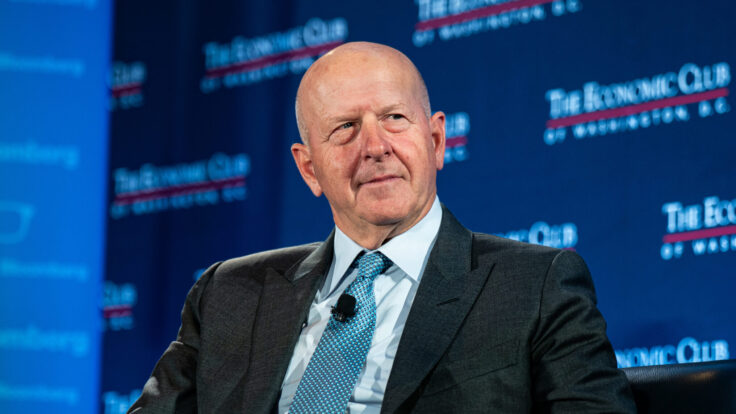
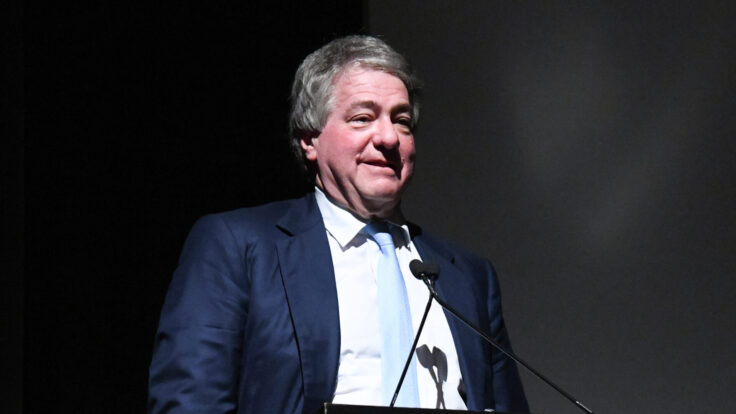
The good news for the Goldman crew is that the I.P.O.s got done, and generated hundreds of millions of fees for the bank. After all, the first priority for an equity capital markets banker is to raise equity dollars for his or her clients, and it would be hard to argue that David Ludwig, the head of equity capital markets at Goldman Sachs, hasn’t succeeded at that. In fact, the three big I.P.O.s raised a combined $6.2 billion or so from equity investors. That means hundreds of millions in fees to the Wall Street underwriters, most of which can be turned into banker bonuses, or maybe even more important, expectations about banker bonuses. So that, at least, has to be considered a success for Goldman et al.
The next constituency that Goldman and the other Wall Street underwriters care about when it comes to I.P.O.s are their institutional investors. There’s no question Ludwig was laser-focused on ensuring that Goldman’s big institutional clients got their fair share of these hot I.P.O.s, and making sure the I.P.O.s were priced low enough to give the favored clients the chance to sell their allocation to a rising wave of retail investors also hoping to get in on the hot stock. It’s safe to say that Goldman fulfilled this priority too: the Arm I.P.O. popped 25 percent on day one; Instacart’s first trade was 40 percent higher than its I.P.O. price; and, Klaviyo jumped 23 percent too. Mission accomplished.
But what of the masses? Retail investors are rarely the concern of the big Wall Street underwriters, and if they are, they are way down the priority list. (The possible exceptions might be Morgan Stanley and Bank of America/Merrill Lynch, both of which have big brokerage arms that cater to retail investors.) As ever, when it comes to most I.P.O.s, the retail investors get left holding the bag. Anyone who bought Instacart or Arm in the first few hours of trading last week has already lost a considerable portion of their investment.
In the short run, of course, the Wall Street underwriters get paid for doing their job: raising equity capital for their clients. What happens from here is anyone’s guess. Will Instacart be the next Google? Or the next Peloton? What is likely to happen though, as these three big I.P.O.s kind of flopped, is that after the Birkenstock public offering—due the first week of October—the I.P.O. window will probably shut down again, at least until the first of the year and maybe longer, or until this last batch of I.P.O.s begins to trade better, potentially making money for the retail investors who, as usual, take the hit in this little parlor game. |
| Disney’s $60B Parks Gamble |
|
| Disney’s enormous $60 billion investment in its parks unit is certainly eye-catching, even though that money is to be doled out evenly over a 10 year stretch. Of course, it also begs the question whether this is a better use of Disney’s precious cash than paying down some of its $35 billion of net debt, or buying Candle Media (to get Tom Staggs and Kevin Mayer back into the succession hunt), or acquiring another film studio in order to bolster its flagging movie production pipeline. There is also the $10 billion that Disney is going to have to spend to buy the one-third stake in Hulu it doesn’t already own from Comcast (as you know, I have proposed a creative solution for this obligation).
But with the theme parks division metaphorically hitting it out of the park in the last year, this large investment seems like the obvious no-brainer, at least during this challenging moment for the other parts of Disney. In the last 12 months, under Josh D’Amaro, the Disney parks division has generated $32 billion in revenue and around $9 billion in operating income, up something like 15 percent since Disney’s last fiscal year. It’s the division keeping the Disney boat afloat at the moment. So now Bob Iger loves Disney’s parks business and wants to invest $60 billion in it? OK, fine. Maybe this is a good use of Disney’s precious $60 billion. But I’ve seen this movie before—and it didn’t work out particularly well.
Once upon a time, back in the early 1990s, I worked for Disney (and with Staggs, and Eisner and Wells and Nanula) on the restructuring of EuroDisney, the theme park that Disney had spent many billions building in Marne-la-Vallée, a short train ride east of Paris. Needless to say, Disney did pretty much everything wrong in the building of EuroDisney—spending way too much to build it; borrowing way too much from banks and the market that the park alone could not pay back; taking the whole thing public way before the financials justified a public offering of equity; charging way too much for admission and forbidding the consumption of alcohol on the park grounds. It was a financial and operational disaster, pretty much from the beginning, although the physical park itself was impressive.
The park lost around $1 billion in the first 18 months of operations. It was also a political disaster for Disney. The French government was none too pleased with Eisner and Wells for the fiasco. In the end—after Wells’ unexpected death in a heliskiing accident—Disney and its equity partners had to step in and put in another $1 billion, or so. There have been several more $1 billion-plus restructurings and capital infusions since then. Saudi Prince Alwaleed even turned up as an investor in EuroDisney. There’s no way to tell from Disney’s public filings if the many billions of dollars Disney has invested in what it now calls Disneyland Paris has paid off. (Disney’s “international theme parks” in total, including Disneyland Paris, were not profitable in fiscal 2022, according to Disney’s financial statements.)
So while we can stipulate that Disney knows how to make money running theme parks, I’ve seen firsthand that there have been occasional stumbles along the way. Meanwhile, investors seem to be viewing the $60 billion announcement with a big yawn. This past week, Disney’s stock was down 3.4 percent (and now is down more than 7 percent for the year, and some 19 percent in the past year)—hardly a ringing endorsement for Iger. What investors seem to want now, instead of billions plowed into parks, is action on the asset-sale front, assuming there are any serious bidders out there for Disney’s linear TV portfolio, and by serious I mean those that are willing to pay more than 2x EBITDA.
Investors need to see that the lights are on in Burbank, and so far, in Iger’s return engagement, there is very little evidence of that. Increasingly, it looks like the better solution for Disney would be to package up ABC and Disney’s other TV assets, along with ESPN, and float it off on its own boat, loaded up with a $10 billion or so (and maybe more) of Disney’s debt. I’d have no problem if the capable ESPN chief Jimmy Pitaro were named C.E.O. of that new, publicly traded enterprise.
But this kind of idea doesn’t seem to have much traction in Iger’s circles. Instead, even though it’s the “everything is on the table” era at Disney, I’m not seeing much evidence that anything clever is going on the table. And I’m not the only one who has noticed; Disney’s equity investors seem to be seeing the same thing. |
|
|
| You’ve got to hand it to Rupert. He’s been a helluva brilliant seller. He sold 21st Century Fox to Iger and Disney for $71.3 billion in 2017—great timing—and even got Brian Roberts, at Comcast, to join the bidding for the assets, forcing Iger to pay nearly $20 billion more than he had agreed to pay originally. Disney still hasn’t been able to shake that extra burdensome debt.
And then Murdoch did the same thing to Roberts when he sold him control of Sky News, in 2018, for $39 billion, after making a bid for the rest of Sky that Murdoch didn’t already own—forcing Roberts’ hand on that deal. Roberts either had to pay up for Sky or lose it to Murdoch. (Whether Murdoch ever intended to buy the rest of Sky is something perhaps his numerous biographers can answer.) Comcast is still trying to figure out how to get out of, or manage through, the Sky News financial debacle.
Given Murdoch’s windfall from these two sales—totaling more than $110 billion for him, his family and his shareholders—it almost is irrelevant what happens, at least economically, at the two companies that Murdoch still controls, Fox Corp. and News Corp., through his roughly 40 percent voting interest. Since he sold 21st Century Fox and Sky News, he’s been pretty much playing with house money at this point.
Bloomberg pegs Murdoch’s net worth these days at $8.4 billion, and that’s after he gave $2 billion each to four of his children, Lachlan, James, Elizabeth and Prudence. Despite the endless media focus on Fox News, it really hasn’t been much of an investment since he sold off the entertainment assets. In the last five years, the stock is down nearly 24 percent, while the S&P 500 is up almost 50 percent. Fox these days is a $15 billion market value company, about twice the value of Shari Redstone’s Paramount Global, but only 10 percent of the value of Iger’s Disney and 8 percent of Roberts’ Comcast. Murdoch definitely has the Fox crew punching above its weight, at least in terms of cultural and political impact.
The situation is much better at News Corp., at least from a stock market perspective. Unlike Fox, which is run by Lachlan, News Corp.’s C.E.O is Robert Thompson, who is obviously not part of the Murdoch family. That might be a good thing from an investor perspective. In the past five years, News Corp.’s stock is up nearly 50 percent, just like the S&P 500. The company, comprising The Wall Street Journal, Harper Collins, and other media properties, has a market value of around $11.4 billion.
Of course, just because he is turning the chairmanship of both companies over to Lachlan, no one believes Rupert is either giving up control of Fox or News Corp. He remains the controlling shareholder of both companies, and if he’s to be believed that he remains in good health, at 92, we can expect him to continue micromanaging. But when he dies, which, alas, is inevitable for all of us, then I expect all hell to break out, in a very Succession kind of way.
Upon his death, Rupert’s voting control of both companies moves to a trust that the elder four Murdoch children control in equal measure. If the expert Murdoch watchers are right, then it looks like sometime after Rupert dies, the three non-Lachlan siblings will be banding together to usher in radical change at Fox, gutting its pro-MAGA proclivities and trying to return the network to a measure of more civil behavior. (Chances are the Wall Street Journal gets left alone in this scenario.)
People seem to think that if Fox abandons its radical rightwing posture, it will not only mean the departure of many of its evening stalwarts, but also that it could cost the company billions in profitability, but I’m not so sure about that. I think the American public is longing for a mainstream alternative to MSNBC and CNN. A more mainstream Fox, if it can restore a semblance of credibility, could be very appealing to viewers and to advertisers and it will remain necessary in most cable bundles, if for no other reason than that the carriers won’t want to look like they’re censoring the right. Will all this work? Who knows, but it would be fun to watch the Murdoch kids give it a try.
If instead the three siblings decide to sell Fox and/or News Corp., to be able to enjoy their money free of these two albatrosses, then the question becomes who would be interested in Fox, and who would be interested in the News Corp. assets. Or whether the three siblings would again try to merge the two companies, as Rupert tried to do unsuccessfully last year, before a shareholder revolt occurred at News Corp., squelching the deal. (Was Rupert supporting this merger to further inoculate Lachlan from his siblings? We’ll never know…)
But my gut tells me that the failure to combine these assets was the best possible financial outcome: the three siblings should avoid doing what Shari did when she merged Viacom and CBS into Paramount Global, thinking it would be easier to find a buyer for one company, rather than two. That idea failed miserably, and now Paramount Global is worth a fraction of its former self.
I think it would be easier to sell the Murdoch family assets in parts, as they are now structured. Plenty of people would be interested in the Wall Street Journal, although whether it would fetch more than the $5 billion Murdoch paid for it is an interesting question. There also would be buyers for Harper Collins. Would there be buyers for Fox News and Fox Business News? That remains the big, open question.
Of course, that may be a question that doesn’t need to be answered. Once Rupert is gone, the Murdoch children could just sell down their economic and voting stakes in both companies for cash and just simply be done, done, done. |
|
|
|
| FOUR STORIES WE’RE TALKING ABOUT |
 |
| Lachlan’s Dowry |
| Lachlan is the last Murdoch standing. What now? |
| DYLAN BYERS |
|
 |
|
 |
|
 |
|
|
|
|
|
 |
|
|
|
Need help? Review our FAQs
page or contact
us for assistance. For brand partnerships, email ads@puck.news.
|
|
You received this email because you signed up to receive emails from Puck, or as part of your Puck account associated with . To stop receiving this newsletter and/or manage all your email preferences, click here.
|
|
Puck is published by Heat Media LLC. 227 W 17th St New York, NY 10011.
|
|
|
|