Welcome back to Dry Powder. I’m Bill Cohan, looking forward to watching the
Knicks tear the Spurs apart tonight, even though I’m a Celtics fan. Zaz, let me know if you have an extra courtside seat for Game 3, on Monday, when the series returns to the Garden.
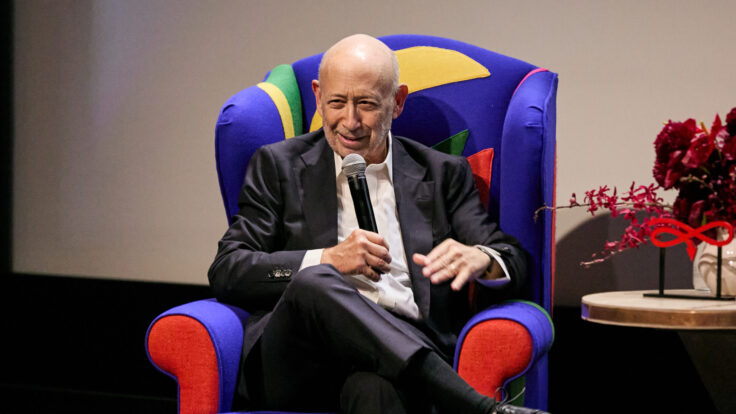
The following night, on the evening of June 9, I’ll be sitting down with Lloyd Blankfein at the Whitby, in Midtown, to discuss his memoir, Streetwise: Getting to and Through Goldman Sachs. This special evening is part of Puck’s new literary series in
partnership with Mayer Brown. There will be lively conversation, cocktails, and crudités—you won’t want to miss it! Please email my colleague Meg Phillips at MPhillips@puck.news if you’re interested in attending—space is obviously limited, but the event is free for Puck subscribers.
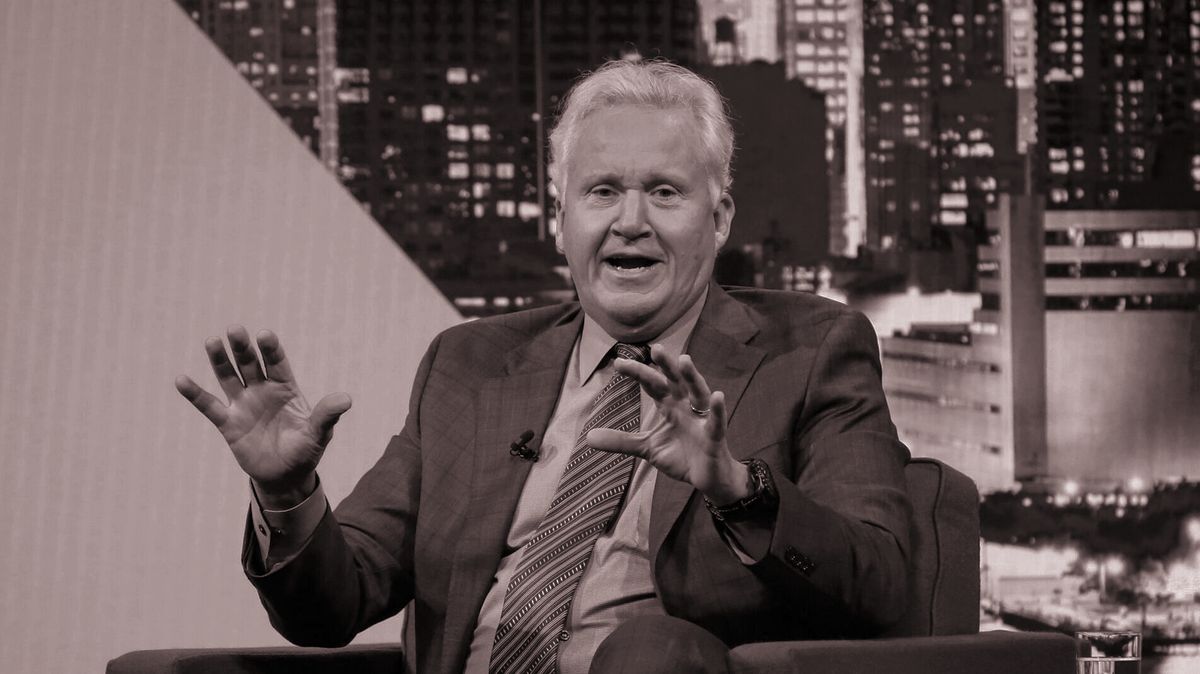
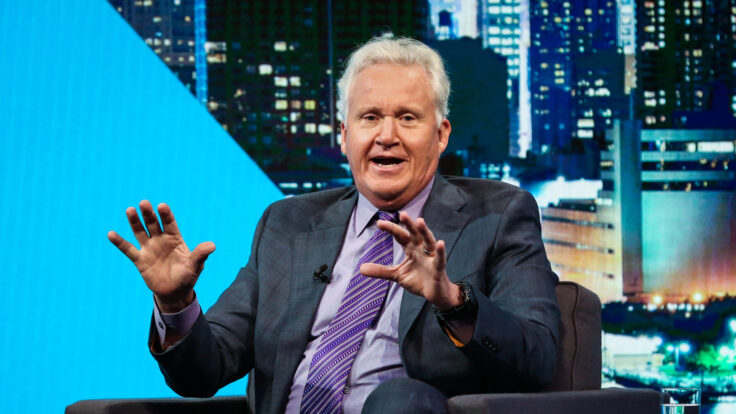
In today’s issue, news and notes on the attempted self-rehabilitation of Jeff Immelt,
the former GE chief executive who oversaw the slow-motion collapse—and slipshod disarticulation—of Jack Welch’s industrial empire. Nearly a decade after his ouster, Immelt is feeling self-reflective, even as he tries to move on. But not all of his former colleagues are ready to forgive and forget.
Also mentioned in this issue: Marty Siegel, Margaret Keane, Tom Steyer, Bob Nardelli, Steve
Hilton, David Solomon, Paul Atkins, Anthony Scaramucci, Dan Loeb, Bob Rubin, Larry Culp, Rudy Giuliani, Russ Stitt, Michele Dunn, John Donahoe, Steve Ballmer, Bob Freeman, Xavier Becerra, and more.
But first… |
- Shelf
registration envy…: You’re probably aware of S.E.C. chairman Paul Atkins’s “Make I.P.O.s Great Again” campaign, specifically his misguided proposal that would allow companies to report their financial results only twice a year. Now he’s proposed a capital-raising reform that some on Wall Street have described to me as potentially the most significant regulatory change in 20 years, if approved. To wit: The S.E.C. wants to make it easier for smaller public companies to raise
money using shelf registrations, which allow companies to file paperwork with the S.E.C. for an offering in advance, then raise the capital when the market timing feels right to them.
Until now, smaller companies couldn’t use Form S-3—the streamlined shelf registration form—unless they had been public for at least a year or maintained at least $75 million in public float. Atkins’s proposal would essentially eliminate those restrictions. If adopted, roughly 1,000 companies could
use shelf registrations almost immediately after going public, without $75 million in float, provided they were current in their S.E.C. filings.
The S.E.C. has argued that the old limitations are obsolete because corporate financial information is now instantly available on the internet once it’s filed with the agency. The new latitude would not apply to blank-check companies—sorry, Chamath and the SPAC bros—or to shell companies or penny-stock companies. “These
proposals build upon the legislative and regulatory concepts that have proven successful in the past and aim to extend that success to more companies—particularly small and mid-sized companies—and incentivize them to go and stay public,” Atkins said in an announcement.
I suspect Atkins is responding to the long decline in the number of U.S. public companies, many of which have disappeared through M&A deals, private equity buyouts, restructurings, and delistings. In the 1990s, some 7,500
companies were listed on the major U.S. stock exchanges, and many more traded “over-the-counter.” That number has fallen to around 5,000.
But I’m not sure why this is a problem, or whether anyone should see the total number of U.S. public companies as some sort of K.P.I., or whether these changes will actually persuade more private companies to go public. After all, the astonishing robustness of the private market for capital has obviated much of the need for a public float. Yes,
SpaceX, OpenAI, and Anthropic are all headed to the greater glory of the public markets—but only after raising hundreds of billions of dollars and achieving trillion-dollar valuations. And we are about to be inundated by those I.P.O.s in the coming months. If it ain’t broke, don’t fix it. But regulators, I guess, always feel compelled to tinker.
|
|
|
|
A MESSAGE FROM OUR SPONSOR |
INSPIRE AWE
Revered by all. Driven by those who lead by example. Elevate every move you make in a Range Rover.
EXPLORE
|
|
|
|
- The
eye of the Steyer: With about half the vote counted in the California gubernatorial primary, the race remains too close to call. It looks like the November runoff will pit MAGA Republican Steve Hilton against Democrat Xavier Becerra, Biden’s former secretary of Health and Human Services. But there’s still an outside chance that former presidential candidate Tom Steyer, who has poured something like $200 million of his own
money into the race, could sneak onto the runoff ballot. He trails Becerra by roughly 300,000 votes.
Steyer, of course, is the former Goldman Sachs arbitrageur who used to work for Bob Rubin, the former Goldman co-senior partner and Treasury secretary. Back in February 1987, Rubin was the head of Goldman’s risk arbitrage group when then-U.S. Attorney Rudy Giuliani’s federal agents arrested one of the department’s partners, Bob Freeman,
for alleged insider trading. (Steyer had left the group a year earlier to start his hedge fund.) Freeman, readers may recall, was the one who heard from Marty Siegel, the once-prominent investment banker, that his “bunny had a good nose.” (It was all incredibly unfair to Freeman, the details of which I’ve written about previously.) Anyway, the Freeman incident didn’t pose existential
challenges for the firm or the department (although it was plenty scary), which went on to become Goldman’s massively successful proprietary trading operation. And it didn’t hinder Steyer, who went on to found a successful hedge fund, Farallon Capital Management, and become a billionaire in the process before turning his attention to public office.
Apparently, he also made a few enemies in the hedge fund community along the way. Last night, before the California polls closed, he posted on
X: “I know a lot of people have reservations about voting for a billionaire. I see the ways so many billionaires lie, cheat, and steal to get whatever they can out of the system—and then do everything they can to hoard their wealth and avoid paying taxes. Screw that.” But what caught my attention was the response on X from fellow hedge fund billionaire Dan Loeb: “It’s not that you’re a billionaire, it’s that you are insufferable and insincere.” Wowza.
|
|
|
|
The disgraced-ish former GE executive has been on a journey of personal discovery to
reinvent his legacy and perhaps make amends—even when the facts don’t fit his new narrative. But not everyone who worked with him is ready to forgive or forget. |
|
|
|
Nine years after stepping down as chief executive of GE, Jeff Immelt, the largely
underwhelming heir to Jack Welch, is still trying to rewrite his legacy. Since 2018, he’s reinvented himself as a Silicon Valley type, becoming a partner at New Enterprise Associates, the major Menlo Park venture capital firm, and teaching a class on executive leadership at Stanford Business School—a perch that has allowed him to pontificate on the merits of disruption, which he definitely achieved at GE. During his 16-year tenure, Immelt systematically dismantled the
conglomerate, selling or spinning off GE’s finance arm, appliance business, plastics division, and more. Perhaps most famously, he sold NBCUniversal at the height of the financial crisis for pennies on the dollar.
Since then, Immelt has made various attempts to recast his GE story in a more rose-colored light, nudging people to notice that the parts of the
business he assembled as C.E.O.—and was roundly criticized for, including by me, in my book Power Failure—are faring better now. Last year, the GE stock finally reclaimed the share price it had last achieved in late 2000, assuming you add up all the individual pieces that were blown apart. And Immelt now appears ready to step back into the spotlight.
To that end, Jeff recently launched a Substack, appropriately titled The Long View—an executive diary of sorts filled with personal
reflections and just a hint of professional whitewashing. “There were dark days,” he wrote in early May. “You spend three decades defining yourself by a job, and when it’s gone, you have to figure out who you actually are.” But, as he posted a week later, moving to California provided a new perspective. “Silicon Valley is now the capital of the global business world,” he noted. “Disruptive startups are crushing legacy companies every day”—and, by the way, he added, “Venture people don’t follow
New York media.” |
|
|
|
A MESSAGE FROM OUR SPONSOR |
INSPIRE AWE
Revered by all. Driven by those who lead by example. Elevate every move you make in a Range Rover.
EXPLORE
|
|
|
|
Immelt’s attempt to refresh himself seems sincere, if also somewhat self-serving. (He did not respond to a
request for comment.) Perhaps Immelt, who recently turned 70, is simply mellowing. But in light of his new Substack, as well as his score-settling 2021 memoir, Hot Seat, it’s worth examining his assertion that what he set in motion at GE has turned out well. Because while it’s true that “the world has changed,” as he writes, Wall Street has a long memory. |
In some ways, Immelt was unlucky: He took over GE just four days before the September 11 attacks, and more
than a year after the company’s dot-com-era peak. But the poor timing was compounded by a series of ridiculous business decisions. Amid the depths of the financial crisis, Immelt began the long project of dismantling GE, first by selling off NBCUniversal to Comcast on the cheap. He then sold off GE Capital in parts after deciding the regulatory burden of running a SIFI, or systemically important financial institution, was too much to bear.
But the true nail in Immelt’s coffin was that
none of these moves managed to resuscitate the stock. His fate was sealed by the confluence of the company’s tanking stock price, a poorly performing power business, unacknowledged long-term health insurance liabilities, and a raft of promises he made about GE’s earnings that he couldn’t keep—especially without the power of GE’s financial arm to bolster the P&L. Jeff left GE in 2017 involuntarily, or, as he liked to say, a few months before he planned to retire anyway. (During this time, he was
briefly in the hunt to become the C.E.O. of Uber.)
In a Substack post on May 26, Jeff wrote that leaving GE was “one of the saddest moments” of his life. “GE was my second family. It still is. Over nearly four decades, I worked with thousands of the smartest and most interesting people in the world. The phone rang constantly with invitations from world leaders, business C.E.O.s, entrepreneurs, investors, journalists, and celebrities. Many became friends.”
In Jeff’s telling,
everything changed overnight. “When I left—and in the way I did—it all vanished,” he wrote. “People looked at me differently, avoiding eye contact. … Others just ignored me. My phone calls went unanswered. Board offers were withdrawn.” Along the way, he wrote, he realized that no one has “a perfect career” or “dismount.” He cited the tribulations of fellow C.E.O.s: “My friend, David Solomon, was doing a terrific job as C.E.O. of Goldman Sachs, but still takes shit from its
alumni,” he wrote. “Steve Ballmer helped build one of the world’s great companies but receives no credit. John Donahoe was a massively successful C.E.O. with a tough, final run at Nike. … Margaret Keane, after retiring as C.E.O. at Synchrony, lost her husband to cancer. Sometimes life is hard.”
To pull off what he calls a “turnaround” during his own “bad personal cycle,” Jeff wrote that he decided to be “anonymous without hiding” and
“vulnerable, but not weak,” and to “accept criticism from some you don’t respect.” He revealed that “sharing the rawness of my story strengthened relationships with peers,” and that “shining a light on my flaws ignited a decision to get better.”
That’s certainly a different, and more estimable, tone than Immelt took in 2021, when he told Anthony Scaramucci on a podcast promoting Hot Seat, “Basically, we did more good things than bad things, but people were
dwelling on incomplete truths.” |
It’s true that some of Immelt’s decisions, which were disasters at the time, have sort of worked out
in the long run. During Immelt’s final years, GE’s power business was under considerable pressure. But thanks to being spun off as GE Vernova in April 2024, and the extraordinary demand for electricity driven by the A.I. boom’s insatiable desire for data centers, its market cap is around $260 billion these days—up more than 600 percent since the spinoff. As Jeff wrote on his Substack, “In 2018, board members went on CNBC saying, ‘The power business is shit…’ Now they love
it.”
Immelt was also criticized for overpaying for Amersham, a healthcare company, that GE acquired in 2004 for $9.5 billion. In 2019, then-C.E.O. Larry Culp—now C.E.O. of GE Aerospace, its jet engine business—sold Amersham’s BioSciences business alone to Danaher (Culp’s former company) for $21.4 billion. “Critics said GE had no capability in Life Sciences, but they ran it well,” Immelt argued. “Today Amersham’s bioprocess manufacturing business is worth
more than GE Healthcare.” I’m not entirely sure how he reached that conclusion: GE Healthcare is valued at $28 billion, up about 10 percent since it was spun off. Regardless, I suspect Immelt wants some of the credit that has eluded him and landed on Culp—but much of which belongs to Immelt’s successor (and my friend) John Flannery. “Critics are always welcome, but frequently wrong,” he concluded on his Substack. “Push back.”
Several commenters on the post agreed. A
follower named Amar Barua wrote, “Just know that a lot of people (and I mean a LOT) reminisce about the GE that was. I am sure the various GE spinoffs of today are great companies too, but that GE I grew up in was something special. And it was special because of leaders like you.” Another follower, Nabiha Yousef, posted, “Jeff Immelt, this touched me more than words can explain. I almost teared up reading this because I’m currently going through a very similar
season in my own life!”
Of course, a few of Jeff’s former colleagues have not been so sanguine. “My stock with GE did very well with Jack’s leadership,” wrote Russ Stitt, a 30-year GE veteran, on LinkedIn. “However, upon the Board’s recommendation [for you] to take over leadership, my GE stock performance suffered because of, I would say, bad decisions made by you. I suffered as well as other share owners. I believe Bob Nardelli would have been a better
choice to lead GE after Jack stepped down.” Michele Dunn, who taught at Crotonville, GE’s now-defunct management training facility some 45 minutes north of Manhattan, wrote that she was devastated when its “world-class” program was disbanded. “I am still sad for all of the 10,000 people I taught around the world who saw the deterioration and demise of a once-great company,” she wrote. “You can’t change that with reflection.”
Then there’s the former GE executive who worked
for Immelt and wrote to me that his former boss is “more Trumpian than ever … asserting reality, nursing grievances: I was right about Amersham, I was right about Power, etcetera… And he wraps it in this sanctimonious self-discovery crap about his fall from grace and then redemption.”
A little bit too on the nose, perhaps, given that Jeff seems to be doing the work, as they say, to make amends—even as he glosses over the valuation destruction and career immolations he left in
his wake. “There are many ways to measure success in a business career: money, title, and impact,” he reflected in his most recent Substack. “Early on, in my recovery, I decided that people would be my legacy. I will be there for the people I developed at GE… founders I met… the communities I cherish… and my friends. I cheer for their success.” As well as for his own. |
|
|
|
Join Puck’s chief political columnist, John Heilemann, as he roams the corridors of power and influence in America on this
twice-weekly interview show, taking you beyond the headlines with the people who shape our culture: icons and up-and-comers, incumbents and insurgents, moguls and machers in the overlapping worlds of politics, entertainment, tech, business, sports, media, and beyond. The conversations are rich and revealing, unrehearsed and unexpected… and reliably impolitic. A Puck-Audacy joint, new episodes drop every Wednesday and Friday. |
|
|
|
Need help? Review our
FAQ page or contact us for assistance. For brand partnerships, email ads@puck.news.
You received this email because you signed up to receive emails from Puck, or as part of your Puck account associated with {{customer.email}}. To stop receiving this newsletter and/or manage all your email preferences, click here. |
Puck is published by Heat Media LLC. 107 Greenwich St., New York, NY 10006 |
|
|
|
|