 |
|
Welcome back to Dry Powder. I’m Bill Cohan.
|
|
In about two months, GE will split into three pieces, all in the hope of creating more value for shareholders. It’s a dramatic denouement for a historic business that, under Jack Welch, was worth around $650 billion at its peak in 2000. In today’s issue, a look at the cinematic prelude that set Larry Culp’s plans in motion, and, of course, the winners and losers of his new GE.
But first… an update from Eriq Gardner on what the asset-recovery process at FTX could mean for S.B.F.’s sentencing…
- DealBook had an interesting take last weekend on the possibility that FTX C.E.O. John Ray III, who has been working diligently to recover and liquidate company assets, may be able to repay the crypto exchange’s customers in full. As the Times reporters note, that outcome might complicate ongoing clawback lawsuits, such as those against Sam Bankman-Fried’s parents and Michael Kives’ K5. Sounds plausible. However, it seems less likely to impact S.B.F.’s imminent criminal sentencing. Throughout the trial, I listened to enough analogies from Judge Lewis Kaplan involving bank robberies to know he believes one can separate a criminal act from its aftermath. Nevertheless, it’s probably true that S.B.F.’s lawyers will likely argue on appeal that a jury didn’t hear the complete picture. –Eriq Gardner
|
 |
| Culp Fiction |
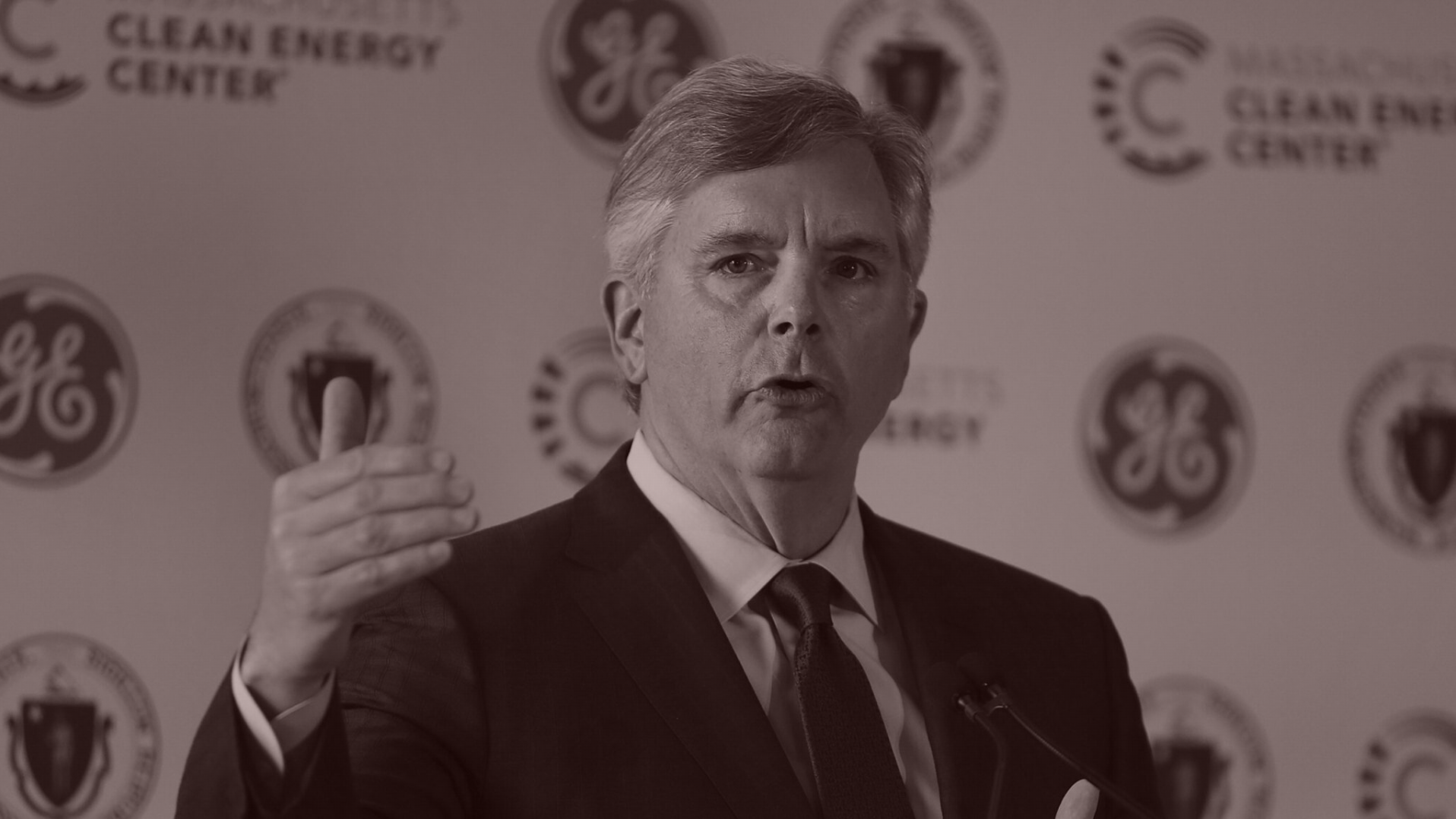
| In two months, GE, which Jack Welch once steered to a $650 billion market value, will officially be split into three public companies—the final act of its last C.E.O., Larry Culp. It didn’t have to be this way for America’s formerly most iconic company. This is how we got here. |
|
|
|
| Sometime in April, after 132 years, the General Electric Company will be no more. GE, once the world’s greatest conglomerate, will be split into its component parts. The aerospace and energy businesses will be spun off, following the healthcare division that C.E.O. Larry Culp amputated last year. Time will tell whether breaking up GE and abandoning the conglomerate structure was a good thing or a bad thing. But one thing is for sure: When Jack Welch ran GE, it was often the most admired and most valuable company in the world. How it reached this fateful denouement is a saga both simple and complex.
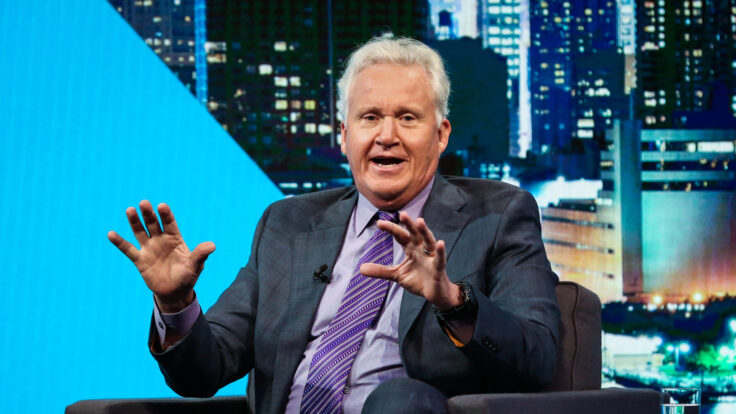
Alas, things started going awry at GE one business day after Jeff Immelt took over from Jack—on September 10, 2001. Jeff once told me that was the only good day he had in his first year running the company. The next morning, when all hell broke loose, GE lost some $1 billion in a matter of hours. GE, after all, had made the engines on the jets involved in 9/11. GE had reinsured 7 World Trade Center. Two of its employees were killed. At the time, GE also owned NBC, which ran essentially commercial-free for three days, costing the company several hundred million dollars. Ironically, Jeff himself was in Seattle that morning, having flown out the night before, for a long-scheduled meeting with the C.E.O. of Boeing. He was on the StairMaster when the planes hit the two towers.
Two days later, as he was sitting in the Signature terminal waiting for a private jet to take him back to New York, Immelt received another distressing call. Denis Nayden, then the C.E.O. of GE Capital—which Jeff would later sell off in pieces—told him that the company’s aircraft leasing business owned a few pilot training centers, and that one of them had trained a guy named Mohamed Atta, one of the leaders of the September 11 plot. “I get on the plane thinking, ‘Oh my God, we’re fucked. We are so fucked. We were fucked before, but now we’re triple fucked,’” Jeff told me during one of our many chats for my book on the company, Power Failure. “By the time I landed, they had seen that ‘Mohamed Atta’ is like ‘John Smith.’ There’s a bunch of Mohamed Attas out there, thank God. There was a whole series of things like that.” GE had, in fact, trained a different Mohamed Atta.
He had been the C.E.O. for a total of four days and found himself facing a near-existential crisis that had never been even remotely contemplated by any GE contingency plan. “If you’re in the commercial aviation business at that moment, you really had no idea that there would ever be an industry ever again,” he said. “You really felt like this business will never be the same. Who will fly? How will they fly? What’s gonna happen?”
Jeff actually had seven pretty good years, until the 2008 financial crisis threw him and GE for a loop. GE Capital had to be quietly bailed out by the federal government not once but twice, jeopardizing GE as a whole, which had cross-collateralized GE Capital’s massive debt. Most people never had any idea the company was in such peril given what was happening on Wall Street, at AIG, and in the auto industry. But GE almost went kaput, itself, when it could no longer roll over its commercial paper financing.
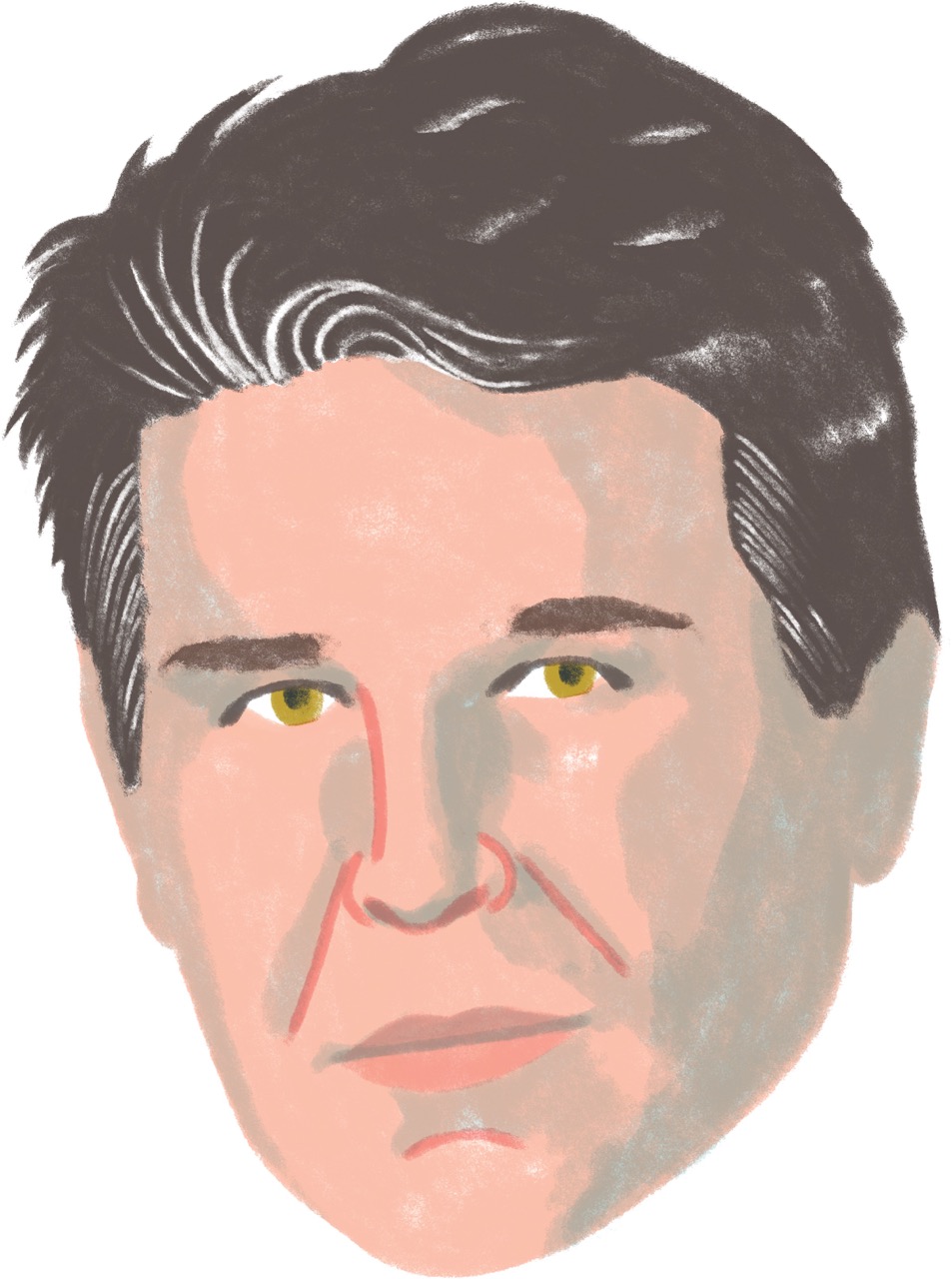
And this is truly where GE’s undoing began. Jeff raised badly needed capital via a $3 billion equity infusion from Warren Buffett and the sale of $12 billion in GE stock. He then decided to offload NBCU to Comcast, for roughly $30 billion, in what turned out to be a massive strategic error for GE—at least at that price. More mistakes followed: overpaying for the power business of Alstom, in France; dismantling GE Capital and using the proceeds to buy back GE’s overpriced stock, instead of paying down debt; and, the biggest mistake of all, inviting our friend Nelson Peltz and his activist hedge fund, Trian, to become a big investor in the company. Immelt thought Peltz would ratify his strategic moves and support him as C.E.O. It didn’t work out that way.
Instead, the Smiling Crocodile turned on Jeff and forced him to resign—or retire, in more collegial parlance—in June 2017, some three years before he had initially planned to leave. John Flannery, the C.E.O. of GE’s healthcare business, replaced Jeff. But 15 months later, Peltz & Co. struck again, engineering a boardroom coup that replaced Flannery with Larry Culp, a Peltz favorite whom Flannery had recruited to the board a few months earlier.
Flannery admired Culp, too, as the former C.E.O. of Danaher, another corporate conglomerate but one run with a very small corporate office, unlike GE, and more in the mold of Buffett’s Berkshire Hathaway. John was hoping to reduce GE’s corporate overhead and believed Larry could help him do it by sharing his experiences at Danaher. Instead, Culp and Peltz defenestrated Flannery. |
|
|
| Some 10 months before that happened, though, in December 2017, Flannery conceived of the plan to break up GE into three pieces, dubbed “Project Eisenhower,” in the first class cabin of a commercial flight to Salt Lake City. By then, Flannery had sold off GE’s fleet of private jets. He was the C.E.O. of GE, working on his laptop, on a commercial flight. He couldn’t exactly start typing up a white paper with “GE” sprayed all over it, so GE became “Eisenhower.” It was his equivalent of the Port Huron Statement.
The message of the Eisenhower document was clear: If increasing cash flow and margins across GE’s businesses, and specifically the power business, could not be achieved, GE needed to be broken up. John wrote that he was “confident” power could be fixed—a scenario he dubbed “Plan A.” But just in case it couldn’t, Plan B was to break up GE. He and his team had concluded that GE’s “current structure does not maximize the value of the underlying businesses, assets, and technologies we possess.”
Essentially, John’s argument was that, as stand-alone entities with their own publicly traded equities, GE’s businesses—certainly aviation and healthcare—would trade for higher multiples than GE did. The businesses could then use that more valuable stock to make important acquisitions that GE had missed out on, something that rarely happened in the Jack Welch era, when GE could pretty much buy whatever it wanted. In particular, GE had wanted to buy Rockwell Collins for the aviation business but could not compete effectively for it; instead, it went to GE rival United Technologies. The white paper also addressed the fact that GE’s depressed stock had cost its top executives real money, especially when compared with stand-alone companies whose stock had performed better. “The longer-term implication on retention is obvious,” John wrote.
He had stated his other concerns publicly: that GE was too complex; that the company (read: Jeff Immelt) had wasted something like $5 billion on GE Digital with little to show for it; and that investor appetite for conglomerates had declined dramatically in the past five to 10 years. He wrote that he believed Plan B would achieve greater results for GE shareholders than Plan A. He recommended that GE “explore the option” of spinning off the aviation and healthcare divisions into stand-alone public companies. Power needed to be retained, he argued, until its operating performance improved.
Finally, he proposed reducing corporate overhead by another $1 billion and having the corporate suite focus only on governance, emerging-market support, research, digital, and GE’s additive business. He noted that GE’s corporate expense during the previous five years was a whopping $13.6 billion. “While there are significant complexities to work through—including pension, debt structures, carve out issues, etc.—we believe the core idea is clear and that we should move quickly to drive the pace and control the narrative,” he concluded.
He sent the Eisenhower manifesto to the board before the new year. But given the need for new board members to be elected and then seated in April—after the annual meeting—and for them “to get up to speed,” nothing happened on Project Eisenhower for a crucial six months. |
|
|
| Flannery, of course, didn’t get the chance to implement Eisenhower—Peltz defenestrated him before he had the chance. But Culp did, although without crediting Flannery. In November 2021, Culp announced he was implementing Eisenhower and splitting the company up, ending GE’s reign as the premier American conglomerate. And that’s where GE is now. The split-up is upon us, after much lawyering and many S.E.C. filings.
In January 2023, GE spun off its healthcare business into a separately traded company, GE HealthCare Technologies, with a market value of $36.5 billion, up some 42 percent since it went public. GE Vernova—the crazy name given to GE’s power and wind turbine businesses—will start trading publicly in April as another separate company. Matthew Akers, a defense and aerospace research analyst at Wells Fargo, pegs Vernova’s expected market value at $34 billion in his base case analysis. That’s a fraction of what the business was worth during its heyday some 20 years ago, and there is also the risk of the “performance guarantees”—a monetary obligation that promises a certain amount of power output to Vernova’s customers. (Similar guarantees almost sunk the power joint venture between Siemens and Gamesa, in Spain; it had to be bailed out in November 2023 by the German government.) “It turned out Power was not fixable,” a former GE executive told me.
That will leave GE Aerospace as the last remaining piece of what was once GE. It is, of course, the crown jewel of GE, the world leader in the development and manufacture of jet engines. And that’s the business that Culp will continue to run, as he has since June 2022, when he was named to that position in addition to being C.E.O. of GE, as it dismantled itself. (It never quite made sense to me that Culp would take the Aerospace job since he had no background in that business, but I guess he had to pick one of the three and chose the tastiest chicken.) Akers, at Wells Fargo, values GE Aerospace at around $150 billion, or roughly 11x his estimated 2025 EBITDA of $13.6 billion for the business. He also has a base case price target for GE Aerospace of $163 per share, or 18 percent higher than GE stock is trading these days.
This whole exercise has been done in hopes of creating value for shareholders, as Flannery wrote in his Eisenhower paper in 2017. At its peak under Jack in August 2000—11 months before he turned the company over to Jeff—GE was worth around $650 billion and was the most valuable company in the world. What about now? It’s apples to oranges to some extent, given the various spinoffs, asset sales, etcetera. But let’s give it a whirl, for old times’ sake.
At the moment, GE, which still includes GE Vernova, is valued in the market at $150 billion. Add in GE Healthcare, at $37 billion, and that gets you to $187 billion. Then there are the spinoffs of Baker Hughes and GE’s transportation business into Wabtec, and the merger of GE’s aircraft leasing business into AerCap. There was also the sale, engineered by Culp, of GE Healthcare’s biopharma business—to Danaher, of all companies—for $21.4 billion in cash (used to pay down debt), which some ex-GE folks think would be worth much more today. And then, of course, there were all the various sales of NBCU, GE Capital and on and on along the way. In short, I have no idea, really, what the apples to apples comparison with the GE of old would be today. Maybe it’s $250 billion, maybe $300 billion. It’s certainly not $650 billion, anyway.
In September 2000, GE stock was trading at nearly $363 per share (that’s after Culp engineered an 8:1 reverse split; in Jack’s day, the stock was trading at around $45 per share). Now it’s trading at $138 per share, a decline of 62 percent from its peak.
Among the biggest losers—at least on a time value of money and opportunity cost basis—is certainly Peltz, whose hedge fund bought 98.5 million GE shares in 2015, at the urging of Immelt, at around $25 per share—or the equivalent of about $200 a share today, accounting for the stock split. According to Trian’s latest S.E.C. filing, from last November, Peltz still owns 4 million GE shares, worth around $550 million, and 1.3 million GE Healthcare shares worth another $107 million or so. It’s hard to know for sure, of course, but after an investment of nearly nine years, and being the catalyst for the departure of two C.E.O.s and the arrival of the current, third C.E.O., Trian would have been much better investing that $2.5 billion in the S&P 500 index, which has more than doubled during the same period. (I’m told that, after nine years and all the buying and selling, Trian is about break-even on its GE investment and that it’s evidence of the firm’s commitment to its portfolio companies. Maybe.)
At least Culp has found a way to benefit. When the GE stock dropped even further, in and around August 2020, amid the pandemic, Culp recut his incentive deal with the GE board of directors—and has seen his personal net worth soar with the company’s (relative) economic recovery ever since. Assuming he’s still with the company in August 2024—and he will be, as C.E.O. of the jet-engine business—his roughly 2 million shares of GE will be fully vested. At the moment, those shares are worth $276 million. (Culp’s incentive compensation is, of course, extremely confusing to decipher fully from public filings; Tara DiJulio, the GE spokesperson, did not respond to a request to confirm my understanding of it.) He’s also received about $21 million in annual compensation, although during the pandemic he voluntarily gave up some of that. When he took over as C.E.O., on October 1, 2018, the GE stock was trading at roughly $80 a share; now it’s trading at $138 per share, up some 72 percent. So anyone who bought GE’s stock when he took over should be happy enough, even if the S&P 500 is up 83 percent during the same period.
Of course, anyone who bought GE stock during the Jack or Jeff years and held on would not be particularly happy with Culp’s stewardship. And what’s also clear is that if Culp hadn’t recut his option package in August 2020, when the stock was at its nadir, he would likely have only achieved roughly one-third of the stock incentive award he has received since. “He gets the credit for the relative performance off the trough,” the former GE executive told me, “but if you look at the arc of history, it's not a great outcome.”
This executive does give Culp credit for engineering a “hard-core” operational turnaround at GE since he arrived. “Culturally, the guy is a ‘shop floor’ guy.” The former GE executive added that he didn’t think Larry was particularly well liked at the company. “He won’t be leaving with a lot of friends,” he said. “But he’d be like, ‘Get a dog, right? I’m not there to be everybody’s friend.’” |
|
|
|
| FOUR STORIES WE’RE TALKING ABOUT |
 |
| Zero Dark McGurk |
| Why everyone loves to hate the foreign policy star. |
| JULIA IOFFE |
|
 |
|
 |
|
 |
|
|
|
|
|
 |
|
|
|
Need help? Review our FAQs
page or contact
us for assistance. For brand partnerships, email ads@puck.news.
|
|
You received this email because you signed up to receive emails from Puck, or as part of your Puck account associated with . To stop receiving this newsletter and/or manage all your email preferences, click here.
|
|
Puck is published by Heat Media LLC. 227 W 17th St New York, NY 10011.
|
|
|
|