 |
 |
|
Happy Monday, everybody, and welcome back to The Best & The Brightest. I’m Peter Hamby.
Abby Livingston, Tara Palmeri, and I have plenty of politics to get into, because politics never slows down, even over the holidays. In today’s edition, I talk to Democratic strategist Amanda Litman about her “reverse coattails” theory of elections that could help Joe Biden win in 2024—and why younger voters could show up for Democrats even if the man at top of the ticket doesn’t make them fired up and ready to go.
🚨 But first, a quick programming announcement for the home team: As one of our resident sports junkies, I want to take a moment to plug our newest hire—John Ourand, the dean of the sports business beat—and announce Puck’s newest vertical. Yes, sports. The business of sports, that is, and the myriad ways that each of America’s favorite pastimes intersect with media, politics, fashion, culture, technology, and beyond. John’s work reflects the inside story within this half-trillion-dollar industry—the leagues, the agencies, the broadcasters, and the players, themselves, literally—including the boardroom conversations occurring far from the courts and fields.
John, who starts here around the Super Bowl, brings years of experience and insight to his coverage, and promises to deliver the goods. Sign up here to get on the waiting list for his private email, launching in early ’24.
Before we get to Abby’s report on the latest House dish, here’s Tara with a special dispatch on the ever-evolving Jeff Roe saga…
|
|
|
- On the Roe news: Over the weekend, the biggest news in American politics surrounded the departure of uber-consultant Jeff Roe from Never Back Down, the beleaguered DeSantis super PAC with a multi-hundred-million-dollar war chest. Roe, who spent the early months of the pre-campaign essentially running a silent auction for his services—would it be Youngkin, his old client? Or Trump, whom he seemed to air kiss through the press?—eventually settled on DeSantis, the young gun with all the cash on hand.
Alas, the writing has been on the wall for weeks. Never Back Down C.E.O. Kristin Davison was fired unceremoniously days before Thanksgiving, just days after replacing Chris Jankowski, who quit for unspecified reasons that he said went “well beyond a difference of strategic opinion.” The last straw was when super PAC chairman Scott Wagner, a longtime buddy of DeSantis, told The Washington Post on Saturday that Roe’s Axiom colleagues were fired for “mismanagement and conduct issues” including “unauthorized leaks containing false information.” Jeff resigned, tweeting, “I cannot in good conscience stay affiliated with Never Back Down given the statements in the Washington Post.”
Not even Trump, whose 2016 campaign was a train wreck run by Corey Lewandowski and Paul Manafort, experienced the damaging trail of process stories that plagued DeSantis during the past six months. The coordination between the DeSantis campaign and the super PAC, which was responsible for managing travel, get out the vote efforts and advertising, got too messy. And when DeSantis became unhappy, he seemed to favor loyal friends with less political experience like Wagner and Adrian Lucas; or Phil Cox, who recently rejoined as a senior adviser, overlooking the operation but at a distance.
As for Roe, he says his 2024 activities are done, at least for now. He may even be abandoning this campaign at an optimal moment for Axiom, which relies on a recurring revenue model of sorts: Every year, Republicans are hoping to win elections without going full MAGA. Roe has been a vendor of choice for this flavor of candidate. And his lack of success at the top of the ticket isn’t likely to change that any time soon, as embarrassing as this episode has been.
|
| And now, here’s Abby Livingston with the latest on Capitol Hill… |
|
A MESSAGE FROM INSTAGRAM
|
| |
 |
| New federal legislation will give parents a say in teen app downloads.
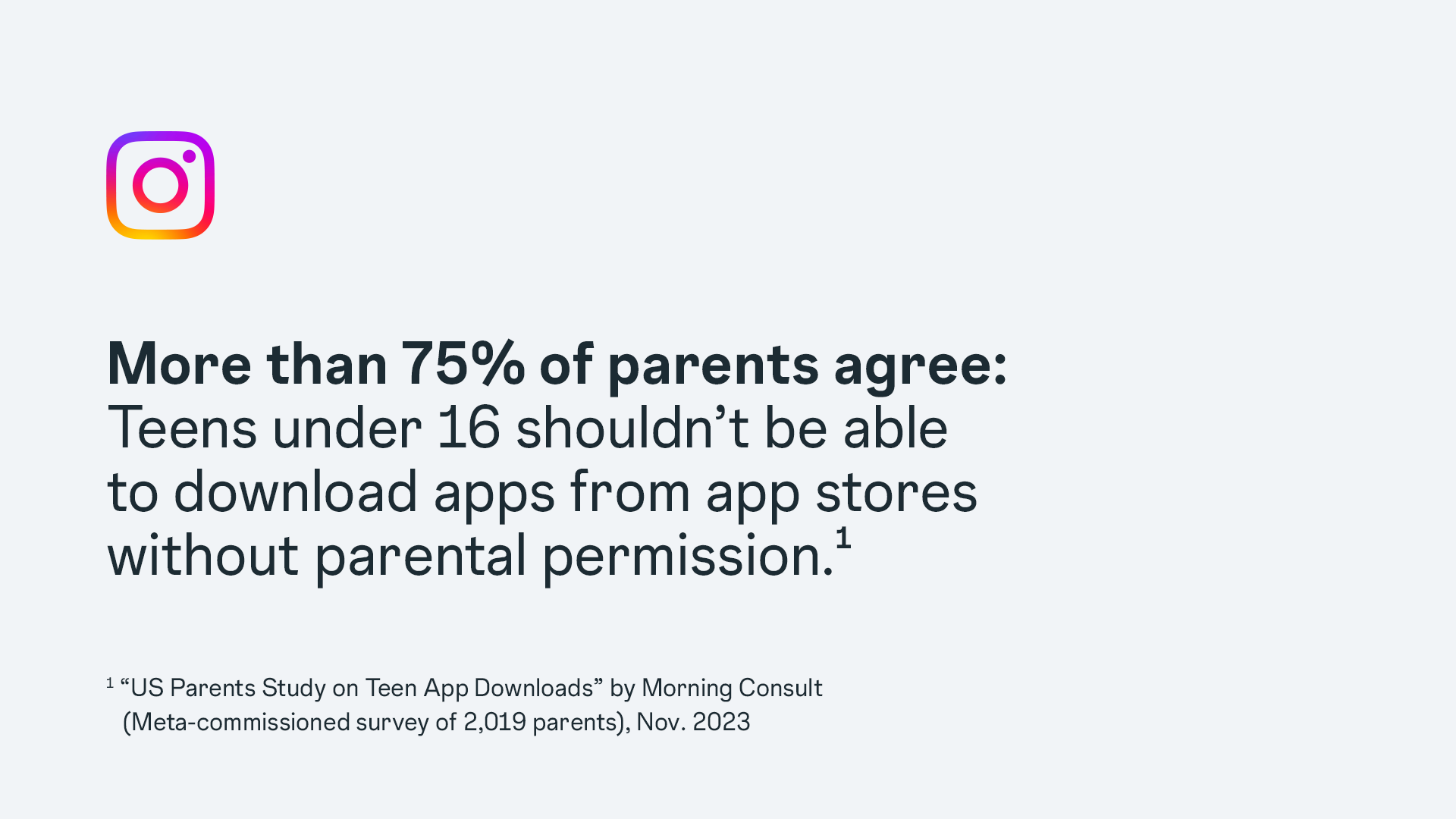
According to a new poll from Morning Consult, more than 75% of parents agree: Teens under 16 shouldn’t be able to download apps from app stores without parental permission.1
Instagram wants to work with Congress to pass federal legislation that gets it done.
Learn more. |
|
|
| Biden Impeachmentology & Divorce Politics |
|
Welcome to the checks and balances of modern government: The House has recessed for the holidays, the Senate has stalemated over a Ukraine-border deal, and one ex-Senate staffer made Santa’s naughty list. But plenty of other political intrigue and subplots played out elsewhere over the weekend and into Monday:
- Impeachment theater: Last week, House Republicans unanimously voted for an impeachment inquiry into Joe Biden, which was widely expected to be the first step toward a formal impeachment vote sometime in the first few months of the new year. On Sunday, however, Rep. Debbie Dingell appeared on Meet the Press to echo a sentiment that I’ve also heard muttered quietly among some Republicans recently: The impeachment of Joe Biden has hardly been a runaway success.
Dingell, one of the most politically plugged-in House Democrats, answered Kristen Welker’s question about the inevitability of impeachment by stating that she’d discussed the matter with “numerous Republicans” and noted the lack of evidence. “There were a lot of arms broken,” she said, regarding the G.O.P.’s effort to whip members. “I’ve talked to those members whose arms were broken about even voting for this on the House floor. And I think it will be much harder to get the number they will require to have an impeachment if they don't find something.”
Given the toxic atmosphere on the House floor, I tend to be a little skeptical of House Democrats who breathlessly relay the inner monologues of their Republican colleagues into the nearest MSNBC camera. But Dingell is old-school and has been a uniquely wired Washington fixture for decades. My sense is she tends to be a reliable narrator on this topic.
- Politics are forever…: A fresh Senate endorsement that really caught my eye this morning came via Phoenix Mayor Kate Gallego, who’s all in behind her ex-husband, Democrat Ruben Gallego, in his Arizona Senate bid against Republican Kari Lake and, presumably, independent incumbent Kyrsten Sinema (who has yet to officially launch her reelection bid).
Given how much Phoenix dominates Arizona politics, this is a pivotal (and perhaps obvious) Democratic endorsement. But it also comes about a month after Senate Republicans attempted to stir the pot by bringing up the Gallegos’ 2016 divorce—going so far as to alliteratively ascribe him as “Rotten Ruben” since the split took place while Kate was pregnant. Turning an old divorce into a central campaign theme is a dicey strategy. After all, I cannot even begin to count the number of glass houses on Capitol Hill when it comes to marriages falling apart in public. (Don’t get us started on Newt Gingrich…)
Prior to her time as the top Democrat in Phoenix, Kate is well-remembered in national political circles for making the D.C. rounds in 2014 while pitching Phoenix for the 2016 Democratic National Convention. Anyway, based on the language coming from both Gallegos—she is “proud” to endorse him, and he described her as “the best mom that our son could ask for”—the mayor made clear that she has her ex-husband’s back on this attack.
|
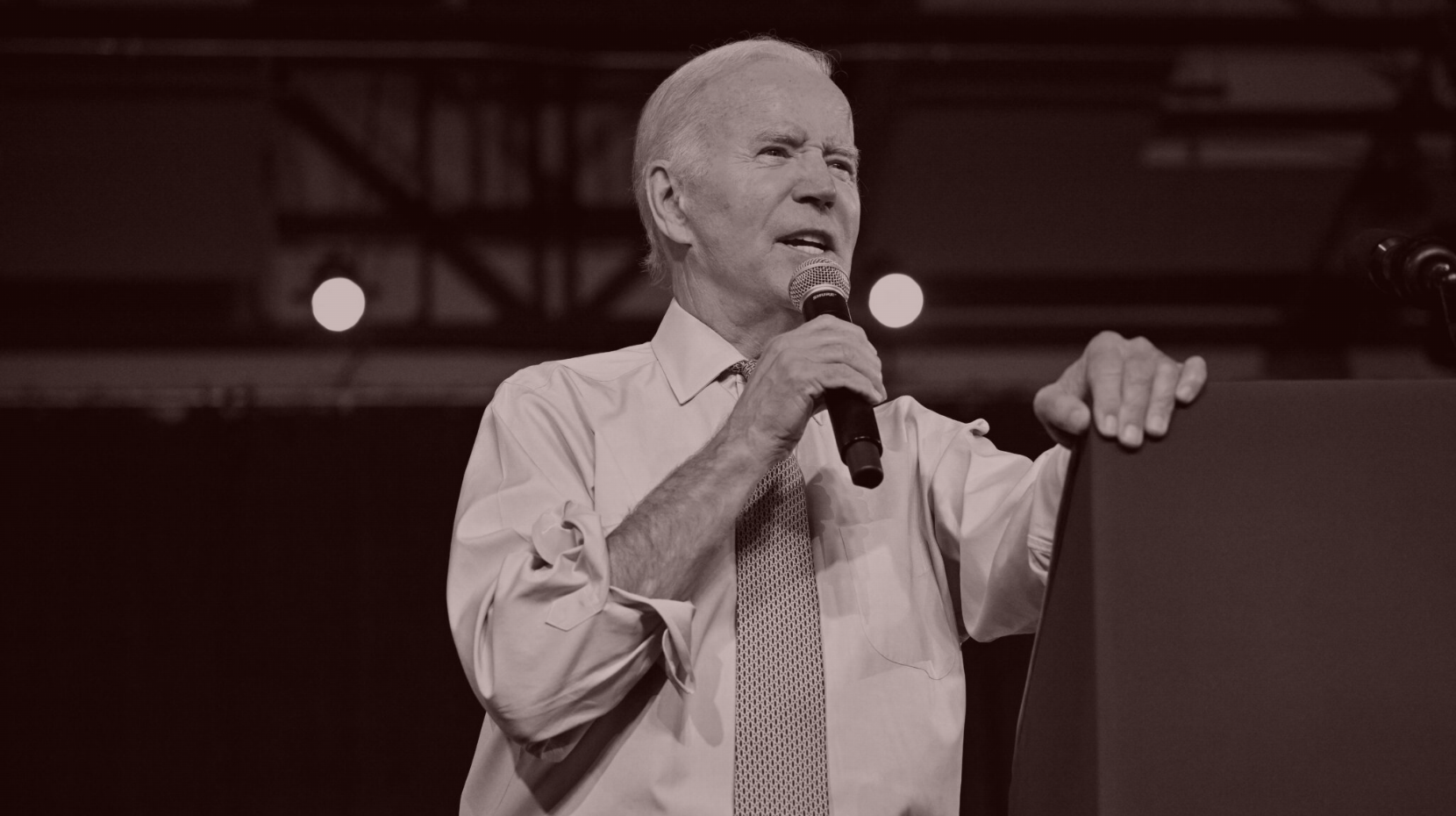 |
| Biden’s Reversal of Fortune |
| Yes, Gen Z has soured on the 81-year-old president. But Democratic strategists see a “reverse coattails” effect emerging in the data: an opportunity for the White House to tap local outrage to set up a national win. |
|
|
|
| After I wrote last week about Joe Biden’s slumping poll numbers—still slumping as of today, according to this new Monmouth poll—Democratic strategist Amanda Litman seized on an idea buried near the bottom of my piece. It offered a glimmer of hope for Democrats—the idea that the young voters who are currently sour on Biden will vote for him and the Democrats anyway come 2024 because they understand the stakes of the election. “A reminder that especially for young voters, reverse coattails will be THE story of 2024,” Litman tweeted. “They’ll show up inspired by state & local races and, yeah, also vote for Biden.”
Litman, who worked on the digital side for the presidential campaigns of Hillary Clinton and Barack Obama, is the founder of Run for Something, a progressive group that recruits young people to put themselves forward for local offices down ballot in all 50 states. Like, wayyyy down the ballot from Biden—school board, county commissioner, state legislature, etcetera. Her theory of “reverse coattails” jumped out at me because it jibes with much of the polling and focus-grouping I’ve seen about Gen Z. They’re overwhelmingly progressive, they hate MAGA politics, and even if they aren’t enamored with Biden, they still show up to vote. For young voters, too, local races often feel more relevant and consequential than national ones.
So, I called Litman this week to talk about her “reverse coattails” theory—and how the very young people frustrated with Biden right now might actually come home to save him in the end. |
|
|
| Peter Hamby: So as I’m talking to you, a bunch of polls have come out showing Biden losing in battleground states, losing nationally—some by a lot, some by a little, some tied, some up a little. Are you nervous about next year?
Amanda Litman: I am nervous that we’re not gonna take the action we need to determine the outcome. I think it’s really easy to see polls as destiny, as opposed to something that should inform the actions we take. We get to decide if they’re right or not. We get to decide if we’re going to spend the money and knock the doors and run the candidates that will get voters to show up. So yeah, I think the polls tell us that we need to take action, but they’re not a prediction, if you know what I mean.
I’ve written a bunch lately about Gen Z and the softening youth support for Biden. Because of the nature of your work, you have some good insight into the brains of young progressives. Do you think that the polling and the commentary right now squares with actual youth opinion about Biden?
I do. Young people are pissed, and rightfully so. I think it’s not just about what’s happening in Israel and Gaza, although that’s certainly a part of it right now. It’s feeling disappointed by student loans, it’s the impact of inflation, which disproportionately affects young people. It’s the cost of housing, which even if that’s not something Biden can control, it feels like he is someone to blame. It’s abortion access, which if you’re 18 to 35 is directly and personally relevant. It’s all of it combined, and a sense that we thought we had fixed it.
You also have a background in digital campaigning. If you’re the president or you’re the Democratic Party heading into next year, how do you suggest communicating to young voters that Biden is at least trying on these issues, in a way that moves them to understand the stakes?
I do think it’s worth noting that he’s not the best person to be communicating to young people. That doesn’t mean he shouldn’t. He could be, you know, working with influencers—which I know the campaign is really being intentional about, along with the White House. He could be thinking about the ways he can tell the story of what he has done, but he alone is not going to be the reason that young people show up at the polls next year. They’re gonna be showing up because they want to make it clear where they stand on the issues. They’re going to be showing up for state legislative races, for school board races, for city council races, for candidates they really care about. And, yeah, most of them will probably vote for the president, too, because even if they are not excited about him, they really hate Trump.
So you might’ve just explained it, but for people who aren’t familiar with this “reverse coattails” theory, can you tell me what it is?
Well, to take a step back, people usually assume the opposite: that the top of the ticket has coattails; that the president or a governor or senator, or maybe a House race depending on the district—that’s what’s getting people to show up at the polls, and every other candidate is riding on their coattails. Reverse coattails is the opposite: It posits that these local races, the school board candidates and city council candidates, state legislative candidates, are the ones getting folks to show up for the polls. Run for Something has been operating on this theory since 2017.
In 2020, we actually did some research to prove it out. So we looked at state legislative districts where we had previously not fielded Democratic candidates, and worked to really home in on what the difference was simply between fielding a candidate and not—because there’s a lot of variability between how much money they raise, what kind of campaign they run, all of that. What we found is that simply fielding a state legislative candidate can yield an increase from half a percent to a 2.3 percent bump in the top-of-ticket vote share within that precinct. Those are the margins of victory.
Can you give a concrete example of where you think that had an effect in recent cycles? Any statewide race, even a House race, where you think this has made a bottom-up difference?
We have research on this. So we found that, for example, in Georgia in 2020, reverse coattails could have yielded Biden up to 22,000 additional votes, which was nearly double the eventual margin.
What kind of seats, locally, do you see alignment on, between those issues you mentioned earlier that young people care about? Abortion, student loans, climate? Because I assume school board races probably aren’t it.
State house and state senate for abortion access. It’s very concrete for them. They can be very specific about what the state of abortion is in the community and how a state legislator, even in a red state where it might already be banned, can help undo some harm. In places where a ban is likely, we’ve seen how one voice can really make a difference here.
On housing—county commissioners and municipal offices. It’s one thing for Biden to say, “I want to bring down the cost of housing.” It’s another for, like, a county commissioner to say, “Here’s the neighborhood I want to upzone, here are the places we wanna reduce parking minimums, here are the new buildings we will get done in the next two years that will lower rent by a certain percent.” The fact that we can elect people who are, more likely than not, renters… Working with millennials and Gen Z wildly changes the conversation around housing in government. When it’s not all homeowners, you have a very different tenor of debate.
Yeah, the economy is still the number one issue for Gen Z, so this is a good way to demonstrate the reverse coattails theory. Like, if you’re showing up to vote on a local housing measure next year, and you happen to live in an urban core in a swing state, that can net Biden a few extra votes.
That’s right. And it’s not just about Biden. Think about where the Biden campaign is likely going to be organizing, running ads, putting people on the ground. It’ll be maybe a half-dozen states that could affect the electoral outcome within those, you know, 10 or 12 counties maybe. There’s a bunch of other races we also need to win. So we’re thinking about where our local municipal candidates in Montana, for example, can help get people to turn out for Jon Tester. Or in New York, where control of the House is likely to be determined.
Anecdotally, I hear from young people that they’re more likely to show up to vote for somebody in politics who is their age, or who looks like them and talks like them—is of their generation. Is that borne out in what you see?
It’s tough to bear it out with data, but anecdotally, we hear this from our candidates constantly. It helps that their volunteer and donor networks are built up of their peers: friends, family, other younger people. And we know that the most meaningful way to get people to show up at the polls is a personal relationship between candidate and voter.
So the 25-year-old you play basketball with at the gym who also happens to be running for city council, you’re going to feel a personal obligation to show up for him. And it can also reach voters who might not otherwise feel that their voice matters, that the person who they’re voting for gives a shit about them.
So, bottom line, you don’t see a world in 2024 where some Zoomer or millennial shows up to vote for a state legislative seat on Election Day, and checks the box for a local Democratic candidate, but leaves their vote for president blank?
I mean, there’s certainly a possibility of under-voting, but I think you can affirm this in some of the opinion research: They don’t hate Biden, they’re just not excited by him. And they really hate Trump. So if we get them to show up at the polls excited about another race—and we have seen this in some of the local races over the last couple years, like, the state Supreme Court race in Pennsylvania, youth voter turnout was sky-high for those kinds of races—these generations understand why these races matter. They get it. If we get them to the polls, they will cast their ballot for the whole ticket. |
|
|
|
| FOUR STORIES WE’RE TALKING ABOUT |
 |
|
 |
| Old School |
| What should we expect from our elite institutions? |
| BARATUNDE THURSTON |
|
 |
| Times Flies |
| Notes on James Bennet’s screed about the Gray Lady. |
| DYLAN BYERS |
|
 |
|
|
|

|
 |
|
|
|
Need help? Review our FAQs
page or contact
us for assistance. For brand partnerships, email ads@puck.news.
|
|
You received this email because you signed up to receive emails from Puck, or as part of your Puck account associated with . To stop receiving this newsletter and/or manage all your email preferences, click here.
|
|
Puck is published by Heat Media LLC. 227 W 17th St New York, NY 10011.
|
|
|
|