{{ 'now' | timezone: 'America/New_York' | date: '%b %d, %Y' }} |
|
|
|
Happy Monday everybody, and welcome back to The Best & The Brightest. I’m Peter
Hamby, recovering from a wedding weekend in beautiful Los Olivos, where I had the honor of officiating the marriage of my sister-in-law, Johanna Warshaw, to her new husband, and my homie, Mike Schmandt. It was a pleasure in every way.
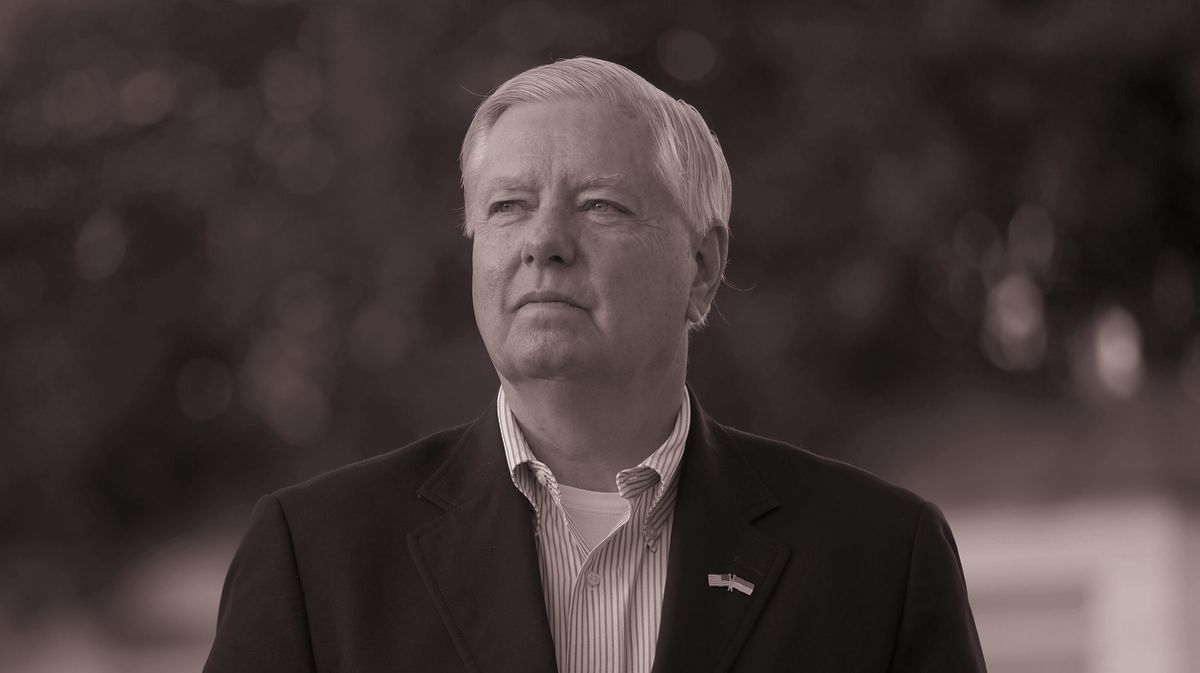
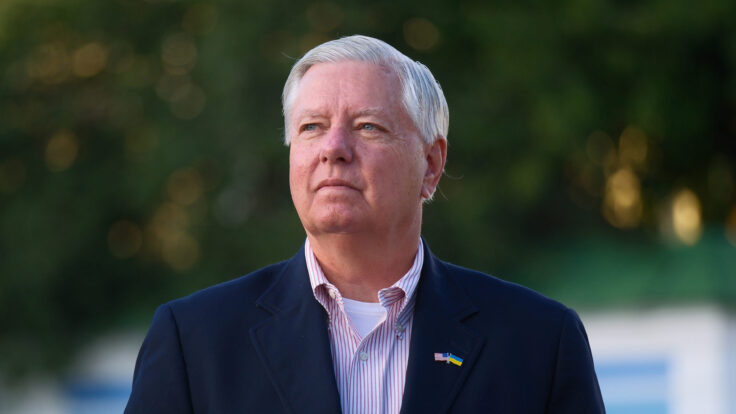
Tonight, with so many Lindsey Graham obituaries focusing on his long and captivating career in Washington, I thought I’d take a look at how he wielded political power back
home in South Carolina, where his old-school instincts and country work ethic set him apart from so many of the robotic politicians we see today. Graham’s death is an absolute body blow to a small state that has long punched above its weight in national politics.
Also mentioned in this issue: Henry McMaster, Darline Graham Nordone, John Calhoun, Mike Johnson, Richard Hudson, Anna Paulina
Luna, John McCain, Trey Walker, Fritz Hollings, Strom Thurmond, Dick Durbin, Jaime Harrison, Rob Godfrey, Richard Quinn, T.W. Arrighi, Jim Clyburn, Alan Wilson, Ron Paul, Sacha Baron Cohen, and more. |
|
|
|

| Leigh Ann Caldwell
|
|
- Darline, Darline: Before
the race to succeed him begins, South Carolina will spend the next several weeks closing the chapter on Lindsey Graham’s Senate career. Governor Henry McMaster officially appointed Graham’s sister, Darline Graham Nordone, to serve out the remainder of his term at President Trump’s public urging. She’s not expected to seek the seat herself, I’m told, but will retain Graham’s staff, ensure that constituent services continue, and
oversee the winding down of his office—a true placeholder. Candidates seeking to replace Graham on the ballot must file between July 21 and July 28, and the field ahead of the August 11 special primary is expected to be crowded—unless Trump clears the field. Meanwhile, as senators return to Washington today, Graham’s desk, the John Calhoun desk, stands draped in black, a bowl of white roses marking his absence.
- The president’s midterm purse
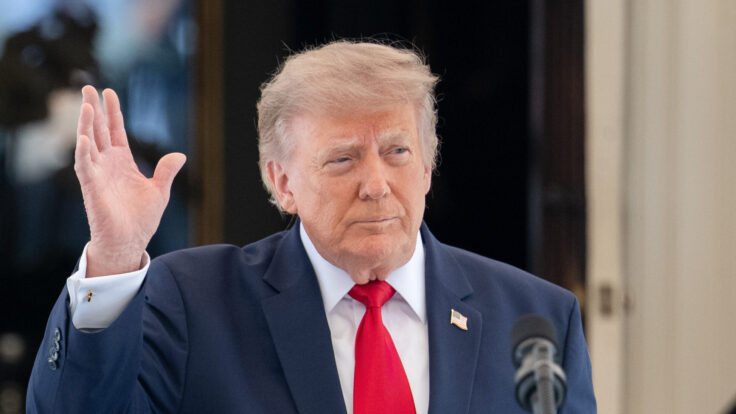
strings: Republicans had hoped that Speaker Mike Johnson and N.R.C.C. chair Richard Hudson’s meeting with Trump today would actually focus on the House map. With just over four months until the midterms, party leaders have struggled to keep the president’s attention on the task of electing Republicans to the chamber, and Marianna was told the discussion did include endorsements. Shortly afterward, Trump backed three House candidates who had
already won their primaries.
But the president’s attention span is notoriously fickle, and his willingness to spend on the races isn’t settled. Republican leaders in both chambers are still waiting to learn whether Trump will authorize MAGA Inc. to deploy its $382 million war chest on behalf of electing Republicans. PAC strategists have prepared plans, assembled their staff, and stand ready to execute a midterm campaign, but they need Trump to sign off on the checks. That may prove even
more difficult than getting him to talk about the midterms—Trump, of course, doesn’t like to spend his own money, especially on other people.
|
|
|
|
Stable jobs help build healthier
communities. That’s why UnitedHealth Group invests in job training programs for high-demand careers like medical coding across the country. So far, UnitedHealth Group has helped more than 300,000 people start or advance their careers, which means better health for them, and their communities. Learn more. |
|
|
|
| Marianna Sotomayor
|
|
- Luna orbit: House
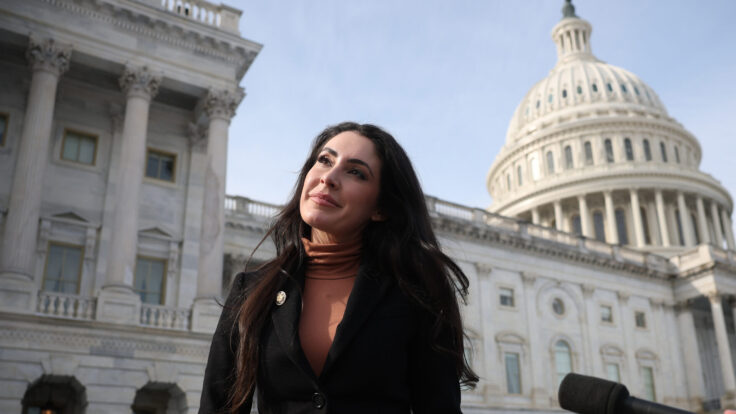
lawmakers returned to Washington today hoping to salvage two productive weeks before campaign season begins in earnest. Whether they succeed depends almost entirely on a handful of ultraconservative Republicans. Rep. Anna Paulina Luna is leading a rebellion to block consideration of nearly all legislation until the Senate guarantees passage of the SAVE America Act, the voter ID and proof-of-citizenship bill, a version of which the lower body has already passed. President Trump,
as we’ve chronicled, endorsed Luna’s push, but has also signaled that the blockade should stop.
Lawmakers plan to tack the SAVE America Act onto a State Department funding bill this week. But Luna and her allies have opposed coupling voter ID with other bills, for fear that it could be stripped out in the Senate. Luna may well hold her ground this
week, and others could follow, which is driving the rank and file mad. I’m told Speaker Mike Johnson spoke with her while Congress was away last week, but she remains unmoved. (Senators, of course, love the idea of taking direction from the House.)
On Monday, leadership aides told House communications staff to focus their messaging on attacking Democrats as communists. People in the room told me the directive drew eye rolls. They doubted that the branding would
persuade voters who are more interested in simply seeing Congress function. If the stare-down stretches into next week, House leaders are prepared to dare holdouts to oppose the final piece of Trump’s legislative agenda—a package expected to include the SAVE America Act, funding for the Iran war, and bills addressing the cost of living. Many House Republicans remain privately skeptical that such a package can pass. Leadership, however, believes rank-and-file members, and Luna’s crew, will
ultimately hesitate to defy not only the majority, but Trump himself.
|
|
|
|
The death of the senator from South Carolina closes the chapter on a vanishing breed of
politician who won power through handshakes, favors, late nights, and relentless retail politics instead of viral clips and social media warfare. His successor will inherit Graham’s seat, but not the political ecosystem that made his career possible. |
|
|
|
Lindsey Graham and John McCain were laughing their asses off together in
the back of a South Carolina campaign bus in 2006, and Trey Walker couldn’t figure out what was so funny. McCain was visiting the state campaigning on behalf of Walker’s boss, Henry McMaster—then South Carolina’s attorney general, now its governor—and Graham had been tagging along with his bestie from the Senate.
Graham was doing bits in a bizarre accent that Walker had never heard, sending McCain into fits of laughter. Confused, Walker asked McMaster
what the hell they were talking about. Turns out the two of them had gotten their hands on an early screener of Borat from the MPAA, and had been binging the Sacha Baron Cohen DVD in their free time. It became one of Graham’s favorite movies. “I have never seen pure joy like that on the faces of two grown adult males,” Walker told me on Monday from Columbia, where the state’s political class is reeling from Graham’s sudden death on Sunday morning at the age of
71.
“Overnight, South Carolina lost so much influence and power in Washington,” Walker told me. “South Carolina is a small state that has always punched above its weight in national politics, with senators like Fritz Hollings and Strom Thurmond in Washington for so long. Then you have Lindsey Graham come along and emerge as their peer in both stature and influence. I fear we have lost something very important.” |
|
|
|
Building healthier communities means addressing the 80% of health that happens outside the
doctor's office. By working with local partners, UnitedHealth Group is helping communities across America live healthier lives. For example, UnitedHealth Group partners with The Good Acre and local farmers to deliver over 45,000 nutritious meals in the Twin Cities. This partnership helps participants lower their A1C and manage chronic conditions like diabetes, helping to build a better system for
everyone. Learn more. |
|
|
|
Over the past 48 hours, obituaries of Graham have largely focused on his reputation in Washington, where, for
more than 30 years, Graham was a favorite quote for reporters and a main character in so many Capitol Hill dramas, from Bill Clinton’s impeachment to big fights over the federal judiciary to his willingness to cut deals with Senate Democrats on immigration reform. “He was a fierce Republican partisan one day and a key bipartisan ally the next,” Dick Durbin said Sunday. “His word was good—no cheap shots.”
Graham’s word wasn’t good for everyone. Plenty of
Democrats, #NeverTrump Republicans, and many in the liberal commentariat saw Graham as an apostate and a turncoat who abandoned his Reaganite principles and McCain-style independent streak to become one of Donald Trump’s most servile courtesans. “I respected the first Lindsey Graham,” said former D.N.C. chairman Jaime Harrison, who unsuccessfully challenged Graham for Senate in 2020. “I deeply resented what the second Lindsey Graham became.”
But for all
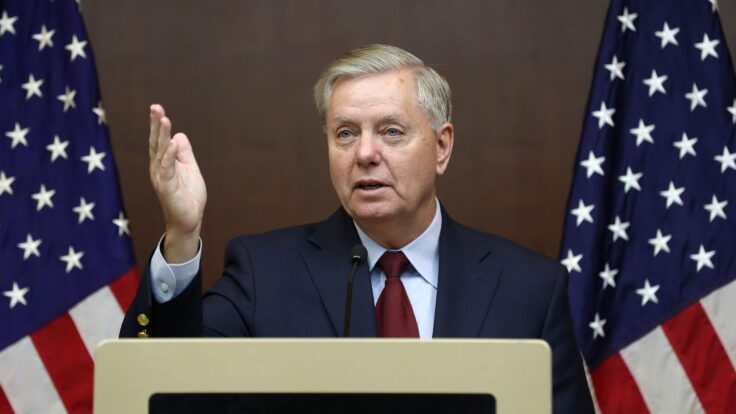
the CODELs, Meet the Press hits, and grinning thumbs-up photos with Trump on the golf course, Graham should also be remembered as a wily political operator who never lost a race and carefully tended to his parochial interests back home. He wielded remarkable political power in South Carolina, where he built a career on personal charm and relentless hustle—talents increasingly rare among the many negative-rizz robots who populate the warrens of Capitol Hill.
“Name another senator
who remained relevant and reelectable like Senator Graham, as he navigated the choppy political waters of a party that transformed from Bush to the Tea Party and then was taken over by Trump populism,” said Rob Godfrey, a veteran Republican consultant in the state. “Only a guy who was a master retailer, doing low-key events with longtime friends and supporters only a few hours after landing home from meeting with three heads of state. He made sure everyone felt
equally important.”
Throughout his career, Graham had a knack for seizing the spotlight at the right moment. That was true in his Washington tenure: During Clinton’s impeachment hearings, he gained fame for his one-liner, “Is this Watergate or Peyton Place?” But it was also true in his campaigns. When word got around in early 2001 that Thurmond was planning to retire from the Senate, opening up a vacancy for the first time in a half-century, Graham, then in the House, didn’t sit on his
heels. He was on the shitlist of the newly minted Bush administration because he had campaigned so hard for McCain in South Carolina the previous year, and was concerned the Bushies would prop up one of their own for Thurmond’s seat.
But McCain still had juice—and a network—in the South Carolina State House, where legendary political consultant Richard Quinn was the puppet master for about half of the G.O.P. caucus. With Quinn’s help, Graham whipped together a press
conference on the statehouse steps surrounded by dozens of state legislators and announced his campaign first. Graham ran unopposed in the primary and won in November. “Lindsey worked his tail off,” Walker told me. “That was his superpower.”
Graham was also attuned to the whims of the Fox News–watching, blue-haired ladies in the Upstate and the military families along the Lowcountry coast. Graham, who carried a flip phone for most of his career, didn’t care for social media or the
angriest voices on Twitter or Facebook. “He was very adept at reading the larger electorate, not just the loudest voices,” said T.W. Arrighi, his former communications director. That explains, too, his shift to Trump, a man he once called “unfit for office,” among many other epithets. Trump had become the pied piper of the Republican electorate in South Carolina, and so Graham would go on that journey, too. |
Graham was a bridge to the past, in many ways—one of the few remaining senators in Washington who accumulated
power via methods, visible and not, that now seem antiquated. Yes, he was great with reporters, local and national, always available for comment and frequently available for a few glasses of wine after a long day of campaigning. (In New Hampshire, during his brief 2016 run for president, I called him “Senator Riesling,” which he very much enjoyed.) But there were other old-timey routines that Graham committed to, even as younger politicians arrived in Washington believing only in the power of
nationalized partisan media and Trumpified name-calling.
He still cared about drive-time radio interviews, church barbecues, backroom coalition-building, after-hours drinking sessions, rubber-chicken dinners, V.F.W. halls, and collecting chits with local power brokers with the help of some federal largesse. “In the old-school respect, he was keenly aware of the needs of the community and the state,” Walker told me.
Graham learned from his predecessor, Thurmond, that constituent
services were of paramount importance—even when Democrats are involved. In the Biden administration, Graham worked alongside McMaster and Rep. Jim Clyburn to secure the largest-ever transportation grant to South Carolina—a $175 million award to replace several aging bridges. When the new Trump administration came in last year and tried to roll back the Biden grants, Graham stopped them. |
|
|
|
Harrison, the former D.N.C. chair, praised Graham for prioritizing South Carolina over D.C. partisanship when
he wanted to—like his efforts to deepen the Port of Charleston and create the Gullah Geechee Cultural Heritage Corridor, major projects that were also prizes for Clyburn. “If a veteran was having trouble getting benefits, a senior couldn’t get their Social Security check, or a family needed help dealing with a federal agency, Lindsey’s office would work with ours to get it done,” said Harrison, a former Clyburn aide.
But, he added, any of Graham’s remaining goodwill with Democrats
evaporated when the senator went all in on Trump. “That change is what makes his legacy so troubling,” Harrison said. “Some people will remember the senator who worked across the aisle. Others will detest someone who, in their view, chose power over principle. Both of those stories are part of his legacy.”
Even this year, running for his fifth term, Graham would work a county G.O.P. convention with the thirst of a politician half his age in New Balance sneakers and a golf polo, still
looking very much like the University of South Carolina frat bro he once was. “He was an absolute master on the stump. A master,” Arrighi said. “I work with candidates sometimes who can’t get their heads around how to work a room, a barbecue, a county G.O.P. meeting—but Lindsey was so good at it. The speeches were often the same, sure. But he had a keen awareness of the exact group he was talking to, could adjust and tweak, and put it all together like a great stand-up
routine.”
Graham could also deploy his sense of humor as a weapon, said South Carolina Attorney General Alan Wilson, the state’s G.O.P. nominee for governor this year. Wilson mentioned a G.O.P. unity barbecue in Columbia that he and Graham recently attended, following the state’s heated primaries in June. Wilson estimated that about a quarter of the 400 people in the room didn’t like Graham and hadn’t voted for him in the primary. Some were heckling when Graham took the
mic. “I know that there are people here who didn’t support me in the primary and do not like me,” Graham said, according to Wilson. “But if I’m being honest, I probably wouldn’t like you all, either.”
Despite his MAGA drift, Graham was still bedeviled by right-wing activists who never really trusted him. But where Republicans in other states fell victim to conservative primary threats, Graham swatted them away like deerflies. In 2008, at the state’s G.O.P. convention, Graham clashed with
libertarian Ron Paul supporters, who had been jeering Graham over his unapologetic militarism and hawkish record. “You’re a hypocrite!” one man yelled. “I’m a winner, pal,” Graham shot back. “Winning matters to me. If it doesn’t matter to you, there’s the exit sign.”
In 2014, Graham was up for reelection at the most vulnerable point of career, having just worked on the failed Gang of Eight immigration reform effort—a push that had infuriated hard-liners in his deep red
state. But Graham flexed his muscles to beat back any serious primary challenge, raising millions and lining up key endorsements that scared off would-be opponents. I spent several weeks in South Carolina following Graham that year, and his team never seemed nervous. “This idea that Lindsey Graham is in trouble is one of the biggest myths out there,” Quinn, Graham’s consultant and pollster, told me at the time.
Graham’s supporters were fond of peddling a charming bio point to reporters,
too. Graham grew up in his parents’ bar and pool hall in the town of Central, where he honed his street smarts and his ability to crack jokes with strangers, and got himself into the occasional scrape. “If you back him into a corner, he’s likely to break a bottle and come out swinging,” one donor told me. “He jumps in the big fights in Washington because he’s got a little country in him.” That part remained true until the end. |
|
|
|
Need help? Review our
FAQ page or contact us for assistance. For brand partnerships, email ads@puck.news.
You received this email because you signed up to receive emails from Puck, or as part of your Puck account associated with {{customer.email}}. To stop receiving this newsletter and/or manage all your email preferences, click here.
|
Puck is published by Heat Media LLC. 107 Greenwich St., New York, NY 10006 |
|
|
|
|