• Washington
  • Wall Street
  • A.I.
  • Hollywood
  • Media
  • Fashion
  • Sports
  • Art
  • Join Puck Newsletters What is puck? Authors Podcasts Gift Puck Careers Events
  • Join Puck

    Directly Supporting Authors

    A new economic model in which writers are also partners in the business.

    Personalized Subscriptions

    Customize your settings to receive the newsletters you want from the authors you follow.

    Stay in the Know

    Connect directly with Puck talent through email and exclusive events.

  • What is puck? Newsletters Authors Podcasts Events Gift Puck Careers
Welcome back to The Best & The Brightest, a day later than usual on account of the holiday. In today’s email, my conversation with fellow TBTB author Tina Nguyen about the making of the modern, Trumpified G.O.P., her early days in the trenches of the conservative media machine, and her new memoir tracing her upbringing and exit from Koch world.
 ‌ ‌ ‌ ‌ ‌ ‌ ‌ ‌ ‌ ‌ ‌ ‌ ‌ ‌ ‌ ‌ ‌ ‌ ‌  ‌ ‌ ‌ ‌ ‌ ‌ ‌ ‌ ‌ ‌ ‌ ‌ ‌ ‌ ‌ ‌ ‌ ‌ ‌  ‌ ‌ ‌ ‌ ‌ ‌ ‌ ‌ ‌ ‌ ‌ ‌ ‌ ‌ ‌ ‌ ‌ ‌ ‌  ‌ ‌ ‌ ‌ ‌ ‌ ‌ ‌ ‌ ‌ ‌ ‌ ‌ ‌ ‌ ‌ ‌ ‌ ‌  ‌ ‌ ‌ ‌ ‌ ‌ ‌ ‌ ‌ ‌ ‌ ‌ ‌ ‌ ‌ ‌ ‌ ‌ ‌  ‌ ‌ ‌ ‌ ‌ ‌ ‌ ‌ ‌ ‌ ‌ ‌ ‌ ‌ ‌ ‌ ‌ ‌ ‌  ‌ ‌ ‌ ‌ ‌ ‌ ‌ ‌ ‌ ‌ ‌ ‌ ‌ ‌ ‌ ‌ ‌ ‌ ‌  ‌ ‌ ‌ ‌ ‌ ‌ ‌ ‌ ‌ ‌ ‌ ‌ ‌ ‌ ‌ ‌ ‌ ‌ ‌  ‌ ‌ ‌ ‌ ‌ ‌ ‌ ‌ ‌ ‌ ‌ ‌ ‌ ‌ ‌ ‌ ‌ ‌ ‌  ‌ ‌ ‌ ‌ ‌ ‌ ‌ ‌ ‌ ‌ ‌ ‌ ‌ ‌ ‌ ‌ ‌ ‌ ‌ 
The Best & Brightest

Welcome back to The Best & The Brightest, a day later than usual on account of the holiday. In today’s email, my conversation with fellow TBTB author Tina Nguyen about the making of the modern, Trumpified G.O.P., her early days in the trenches of the conservative media machine, and her new memoir tracing her upbringing and exit from Koch world.

But first, here’s Abby Livingston with her latest dispatch on Capitol Hill…

McCarthy’s Last Gasp & Dem Civil War
It’s no secret that many political professionals are predicting that the chaos of the 2024 election will make 1968 look tame. But that assumption is usually centered on the presidential campaign, which is expected to be the ugliest ever. Underlooked is the unprecedented infighting in both parties at the House race level: not just the never-ending Matt Gaetz vs. Kevin McCarthy feud, which Politico identified in proxy fights across Ohio, Nevada, and Illinois; but also the progressive Dems vs. AIPAC battle, which has sharply escalated in recent weeks.

None of this is normal, but it’s worth considering how contentious House primaries could contribute to an already unstable political environment. Here are the questions to watch in the new year:

  • Where will the House primary conflicts happen?: Where these fights are waged matters immensely. If it’s a primary in a safe seat, it’s not a huge deal. But say it’s a primary to nominate a challenger in a seat that the party hopes to pick up next fall, like the Ohio 9th, currently occupied by Democrat Marcy Kaptur. A protracted, ugly primary on either side means that whoever wins the nomination will likely head into the general beaten up and broke.

    But the real escalation is when there’s an intraparty challenge to an incumbent, like Gaetz’s apparent intent to cause trouble for Mike Bost, or McCarthy’s allusion to ousting Nancy Mace, who voted to throw him out of the speakership in October. Members used to let colleagues they despised politically die by way of neglect. But endorsing and donating against colleagues is also happening more and more (see: Squad members going after Henry Cuellar twice). It’s a generational act of aggression against a colleague who may lie in wait for years to exact revenge. This is what Nancy Pelosi excelled at, and it’s also why those member-member intraparty primaries instigated by redistricting are so destructive.

  • Do members pick sides?: Politics is a world of tribes, and members will instinctively follow leaders or rally behind friends in trouble. That’s why it’s risky for any member to donate or endorse in a competitive primary—betting on a loser is a quick way to make an enemy of the winner. In the past, the calculation over whether to help a candidate was often based on relationships as opposed to ideology or personal squabbles.
  • Will this affect dues?: This is where civil wars can ripple through the rest of the party. Consider Bost, a typical rank-and-filer who is “helpful” in campaign committee nomenclature. Last cycle, he gave more than $200,000 to the N.R.C.C. and cut nearly $50,000 in checks to Republican challengers and vulnerable colleagues. But when incumbents are mired in fights for their own survival, their interest in helping others rapidly diminishes.

    On the other hand, not every member gives a damn about how the party fares in the general election. None of the Squad members potentially under threat from pro-Israel groups have given any money or time to the D.C.C.C., or to candidates who are gearing up to challenge Republican incumbents, or to vulnerable Democratic incumbents, according to the latest internal D.C.C.C. dues sheet.

  • Who wins here?: Whenever incumbents feel threatened, political consultants salivate. At the first sign of trouble, politically wise incumbents are quick to bolster their teams: fundraisers are retained, polls are commissioned, direct mail is dropped, and six-figure advertising buys are reserved.
God and Man and MAGA
In conversation with Tina Nguyen, author of ‘The MAGA Diaries,’ about the evolution of the modern conservative media machine, from Milton and Mises to Tucker and Trump.
PETER HAMBY PETER HAMBY
I first met Tina Nguyen when we overlapped for a brief time at Vanity Fair’s The Hive—both of us were brought there, of course, by our friend and fearless Puck leader Jon Kelly. But it wasn’t until I started working more closely with Tina at Puck that I started to appreciate her deep familiarity not just with Republican politics, but also with the behind-the-curtain machinations of the conservative movement that have powered Donald Trump, Ron DeSantis, and the next generation of MAGA politicians and media stars. Tina simply has sources in right-wing politics that other journalists don’t, an ability to write about the conservative movement without lazy contempt, and antennae for compelling stories about Republicans that other journalists either ignore or can’t sense in the first place.

After all, long before her time at Vanity Fair and then Puck, Tina spent much of her youth in the trenches of conservative activism—a journey through the world of reactionary politics that she has chronicled in her new book, The MAGA Diaries: My Surreal Adventures Inside the Right-Wing (And How I Got Out). At Claremont McKenna College, Tina was semi-indoctrinated in the ways of America First conservatism, attending think tank dinners and cocktail parties with the likes of Peter Thiel and John Bolton. She dated an ambitious conservative reb who would later become infamous in the Trump years. And, after college, having been recruited into the ranks of ideological journalism, she landed a gig at The Daily Caller under Tucker Carlson, at a time when conservatives were learning that anti-Obama clickbait was king.

With The MAGA Diaries debuting on January 16, I asked Tina if I could talk to her about the book—her views on how young conservatives have changed in the Trump era, what really happened to Tucker, and whether her old friends on the right are contemptuous of her pivot to mainstream journalism. It’s a well-timed conversation, too, because I know you Puck readers are itching to use that Amazon gift card you got in your Christmas stocking yesterday.

Peter: First off, congrats on the book. And I want to thank you for introducing me to the word “carbuncular,” which you use to describe a crusty old conservative activist from the pre-Trump era. I feel like that word perfectly describes a lot of Reaganite dead-enders I’ve encountered at CPAC conferences over the years, rocking bow ties and brushing dandruff off their shoulders.

Tina: It’s such an evocative word, right? It makes you think of barnacles and dust, which is also the feeling I get whenever I think of people in that era, even the young ones. I’ll give the Gen Z conservative activists this: They may be less wonkish, but they are more fashionable and better groomed.

Peter: I’ll get into more details from your story in a moment, but a major throughline in the book is your relationship with Tucker Carlson—from your brief time working under him at The Daily Caller, and later as something of a mentor who helped with career advice from time to time. You touch on something I’ve heard from CNN friends back in the day, when he was on Crossfire—that Tucker was actually a fun hang. He was good company when you knew him, right?

Tina: Oh, Tucker was an incredible hang. He has this maniacal high-pitched laugh that makes you feel like mischief is afoot, and quite often, there would be. Two of my core memories from that period were the times he’d come out of the office to practice his fly-fishing catches, or the time he grabbed my bike, which I’d brought up to the office, and rode it around the newsroom (in a button-down and khakis, no less). People at the Caller would tell me about this infamous party bus he hired for a company outing. (Tucker is sober, but he had no problem buying people drinks—or, for that matter, approving a permanent kegerator and full bar for the office.) And you’d know that you’d be able to play along with him, too: We once came up with a convoluted plan to throw him into a pool at another company party. We succeeded. And he loved it.

D.C. is a horrifically stuffy place, especially at conservative organizations, and Tucker was determined to prevent the Caller’s culture from becoming that way. To be quite honest, I still carry some of that anarchical instinct from those early days, and I think it makes me better at covering MAGA stuff: Being an anti-establishment populist means you can’t take Washington’s self-professed seriousness at face value.

Peter: You write about a conversation you had with him just last year, before he was fired from Fox News. He had gone from the charming Tucker you knew a decade ago to the Tucker everyone knows today—the angry nationalism, the conspiracy theories, MAGA to the core. How much has he changed, and how do you evaluate his transformation?

Tina: I recently watched a TED Talk from Peter McIndoe, the political performance artist who created the satirical “Birds Aren’t Real” movement. He spoke about how he found himself becoming immediately defensive whenever people tried to get him to give up the (fake) conspiracy theory, even though he knew himself that the whole thing was a joke. It reminded me of a story I’d heard about a piece of advice that the late Christopher Hitchens was said to have dispensed at a Weekly Standard party Tucker attended: “Don’t ever do television. It’ll bring out the worst in you.”

I don’t think Tucker’s core characteristics have changed, especially the ones that once made him a fantastic magazine journalist: He’s instinctively suspicious of the establishment, and willing to entertain wacky ideas to get a fuller picture. He deeply loathes hypocrites and people he believes have wronged him. He’s always leaned right of center when it comes to civil liberties and the influence of foreign cultures on what he views as the American way of life. (He’s personally not some sort of skull-measuring eugenicist, but he’d probably talk to a guy who is.)

But I think fame, influence, and Washington society’s rejection of his politics drove him straight into the world of MAGA—which has its own rules and information ecology and incentives—and amplified them to the extreme. He literally told me that one of the reasons that he left Washington in 2020 was that his neighbors in his wealthy neighborhood started hanging Black Lives Matter flags in their windows: “It was only about, ‘I’m a good person’; it was almost like going to SoulCycle for them.”

I’m sure he’s not happy that I’ve extrapolated these characteristics from these episodes. But I also don’t know if anyone from my current side of the political divide has spent enough time with him, or understands the environment of conservatism, to get a full sense of his character. I occasionally feel like when people ask me what Tucker was like, they wish that I’d respond that he was a white nationalist from the very beginning. The answer, unfortunately for them, is that it’s much more complicated than that.

Peter: The book is called The MAGA Diaries, but your time in the belly of the conservative movement really predated Trump, mostly during the Bush and Obama years. Can you give readers a sense of what the conservative movement—the youth-recruiting pipeline you swam in—looked like at the time?

Tina: I entered the movement in 2008 when two pivotal events happened: First, the Ron Paul revolution, which kicked off in the G.O.P. presidential primaries. Prior to him, partisanship meant that being pro-America meant being pro-Iraq war. But then here came this guy who was upholding our love of country while sticking it to the Republican establishment for dragging America into a senseless war. Ron Paul was articulating a contradiction that a lot of Americans were feeling, and beginning to formulate a response.

Second, the financial crisis plunged the college-educated millennial generation into an existential crisis: It felt highly unlikely that we would have jobs after graduating, much less a future, and so why was it that the Democrats wanted to borrow against our earnings to fund government bailouts, universal healthcare, and social programs?

I think the conservative movement prior to 2008 had the same mechanisms as it still has now. From a cynical point of view, the movement switched from being pro-war to being pro-Tea Party in order to remain relevant. But at its core, conservatism is about slowing the pace of societal change, if not stopping it altogether, and, if necessary, dragging it backward in time. What “standing athwart history” looks like, to paraphrase William F. Buckley, just shifts from generation to generation: Yesterday’s “stopping Obamacare” is today’s “stopping wokeism.”

Peter: I feel like your experiences at least had some ideological architecture to them. You were schooled in the tenets of classical liberalism, libertarianism, hawkish foreign policy. But young conservatives today aren’t really devouring Milton Friedman and Ludwig von Mises, are they?

Tina: For this new generation, Friedman and Mises are irrelevant thinkers: Classical liberal virtues like free markets, limited government, and civil liberties are now so cringe. In the context of today’s right, those principles failed them: Free trade led to NAFTA and the TPP, which led to American jobs and manufacturing being exported to China, which led to the growing dominance of the Chinese Communist Party. Freedom of expression meant that corporations began using their money as woke speech.

But I want to point out that the reason we were reading those authors in the first place was because the Koch network literally dropped them on our heads as required reading. And conservatism these days is almost purely reactionary, so the intellectual drivers of today’s movement aren’t Seminal Texts, but podcasts. They’re inevitably better suited to react to what’s happening today—sort of like conservative talk radio was in the ’90s. Once you get off Twitter and onto the hourlong streaming platforms, the right-wing ecosphere is quite sophisticated: Michael Knowles, Charlie Kirk, Megyn Kelly, Tucker. They set the agenda—and the reading lists.

Peter: And how has the world of young conservatism changed since you left? The opening scene of your book is from a rowdy Turning Point USA conference. Not exactly a cocktail party at the Claremont Institute.

Tina: I think one of the innovations that TPUSA brought to conservatism is that they’re meeting young people where they are, in terms of messaging, packaging, who they’re targeting, etcetera. Prior to them, the conservative movement was looking for miniature adults who weren’t part of the college scene, and for some reason they’d end up being the person I’d describe as that guy who wore suits to 8 a.m. classes. Maybe the clothes weren’t ironed, and they might have smelled a bit, but the point was that they wore a suit because they were that much more serious than other students. On the flip side, though, they were loser dweebs—and what young person would want to hang out with loser dweebs?

But Turning Point stuff is fun, and it’s relevant to what young kids are doing. They play the hottest music at their events. They have photo booths with ring lights. The influencers aren’t just well-groomed and wearing fashionable clothes, they’re also good at Instagram and social media. They love memes—I’ve interviewed young students and they’ll just casually name-drop online personalities they follow who are just good at memes. And this, I think, is crucial to their success: There’s an element of intellectual training and professional networking attached to it, but first and foremost, the brand looks cool as hell for a certain kind of young person who might be opposed to campus liberalism (and “blue-haired chicks,” as one student put it) but repulsed by the fustiness of being an old-school conservative. Ain’t no one smoking cigars for fun here. (This is shallow to admit, but as someone with a weakness for fashion and makeup, I think I’d have had a harder time leaving if TPUSA had been around.)

Peter: Originally, you were a product of a well-funded, decades-old right-wing machine—the Claremont Institute, the Institute for Humane Studies, the Leadership Institute, so many institutes!—that was created to recruit and develop right-leaning writers, thinkers, editors, and television pundits who could rival the mainstream media. Is that pipeline still going strong? Or has social media eliminated the need for those sorts of institutions? Today, you can get famous as a meme-maker or podcaster. You don’t have to apply to some Koch-funded outfit to get your toes wet as a young conservative.

Tina: It depends where you want your career to go. Not everyone wants to be on social media or become a public-facing, talking-head influencer, and there’s something to be said about learning to shape a message from behind the scenes in a structured environment or in a mentorship program. One of the most coveted fellowships on the right, for instance, is the Claremont Institute Speechwriters Fellowship: It’s very selective, and draws early-career professionals who want to take conservative, pro-Founding ideas and package them in modern political rhetoric. It’s such a career-boosting fellowship—the alumni often end up running comms for Republican officials—that I’ve run into 25-year-olds on the Hill who have told me straight-up that they hope they get it.

At the same time, the Koch network is becoming notably uncool among this next generation. After all, it’s funded by a billionaire who’s anti-Trump and anti-MAGA. I can’t see the network maintaining influence in the populist right, which is ironic considering it actively cultivated the anti-establishment Tea Party.

Peter: We both know plenty of mainstream journalists who used to work for Democrats or Republicans. But I really don’t know many who came out of the bowels of the conservative movement. Does it give you access to certain sources? It certainly feels like it, reading some of your reporting on the campaigns of Trump and Ron DeSantis.

Tina: I wouldn’t say it gives me a direct line because I personally know everyone in the gang, so much as it’s made me fluent in a second language that reporters generally don’t speak. The way I recently described it was like this: If you were to go to Japan and wanted to discuss current affairs, it’s easier if you know the culture, history, and societal quirks of Japan, the major players and influencers in Japanese politics, and so forth, than if you’ve just entered the country and are going, Wait, people eat raw fish here?!

Being a professional conservative is having an entirely different approach to civic and cultural values, intellectualism, the political process, and American history that isn’t generally taught at universities other than Hillsdale, Liberty, or Claremont. It also helps that I am genuinely passionate about discussing these things—I wouldn’t have gone to Claremont McKenna all those years ago if I wasn’t. The moment I say something like, I once took a semester to study how the founders and various presidents drew from their specific Christian denominations to inform their approach to governance, and the next semester with Charles Kesler studying natural law, it’s like I skipped 12 levels of right-wing Duolingo. The response is always, Oh, you get it.

Peter: On the flip-side, have you lost any old friends during your journey? Is anyone out there going to read this book and see it as betrayal?

Tina: I don’t think I lost friends until 2016, when I started reporting on the movement and immediately got frozen out by people who used to be quite kind to me. Admittedly, everyone on the right will be suspicious of me because I left the movement and work in what’s best described as East Coast mainstream media—in their eyes, the industry is its own partisan camp. But my exit from the movement was well before the Trump era began in 2016, when I was quite young and didn’t have a career and financial incentive to become a publicly declared Ex-Republican. (In fact, it made me even more broke, but a 22-year-old can better absorb that risk.)

And if there’s anything they can take away from The MAGA Diaries, I make it clear that I have severe emotional hang-ups over it. I don’t go into this in the book, but I had one very close friend inside the movement who refused to talk to me if I attempted to use them as a source. They would have been a really good source, but I just can’t betray them like that. So now we don’t talk about anything politics-related at all. I’d rather preserve that friendship.

Everything in this book relates to facts and phenomena that were already out in the open and that I’ve reported on for eight years. It’s just organized in the format of a coming-of-age memoir. That’s a risky format for a journalist, and my personal story could suggest that I’m biased against the right because I’m someone who rejected it. That perception alone is a good enough reason to make conservatives angry. But sometimes, it’s better to follow someone’s journey through a world in order to understand it intimately than to look at it from a distance and make assumptions about their motivations. And I hope that people on the right will read this and think: Well, she may not believe in what we do, but by golly, she got our world right.

FOUR STORIES WE’RE TALKING ABOUT
Zaz & Shari
Zaz & Shari
Zazmount possibilities, WaPo challenges, and CNN grumblings.
DYLAN BYERS
Bakish’s Smoke Signals
Notes on the Paramount chief’s leaked meeting with David Zaslav.
MATTHEW BELLONI
Matches on Fire
Matches on Fire
A close look at the great fashion correction of ’23.
LAUREN SHERMAN
Christie’s Intervention
A digest of pre-Iowa intel and machinations.
TARA PALMERI
swash divider
Puck
Facebook Twitter Instagram LinkedIn

Need help? Review our FAQs
page
or contact
us
for assistance. For brand partnerships, email ads@puck.news.

You received this email because you signed up to receive emails from Puck, or as part of your Puck account associated with . To stop receiving this newsletter and/or manage all your email preferences, click here.

Puck is published by Heat Media LLC. 227 W 17th St New York, NY 10011.

SEE THE ARCHIVES

SHARE
Try Puck for free

Sign up today to join the inside conversation at the nexus of Wall Street, Washington, A.I., Hollywood, and more.

Already a member? Log In


  • Daily articles and breaking news
  • Personal emails directly from our authors
  • Gift subscriber-only stories to friends & family
  • Unlimited access to archives

  • Exclusive bonus days of select newsletters
  • Exclusive access to Puck merch
  • Early bird access to new editorial and product features
  • Invitations to private conference calls with Puck authors

Exclusive to Inner Circle only


Latest Articles from Washington

Sen. Chuck Schumer
Leigh Ann Caldwell • December 27, 2023
Anti-Anti-Weaponizaton Blowback & What White Women Want
The G.O.P. mini-revolt continues, albeit with limited results. And a new poll shows that a crucial swing bloc is mighty concerned about corruption.
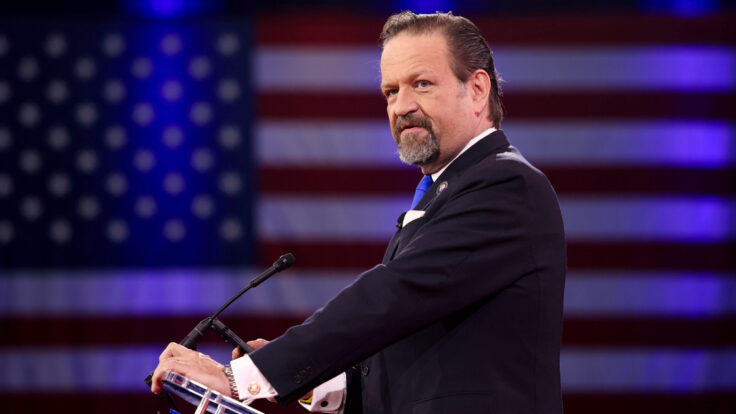
Sebastian Gorka
Julia Ioffe • December 27, 2023
Trump’s New Rules for Radicals
The State Department spent Tuesday trying to convince diplomats that antifa is the new Al Qaeda—but Foggy Bottom isn’t buying it.
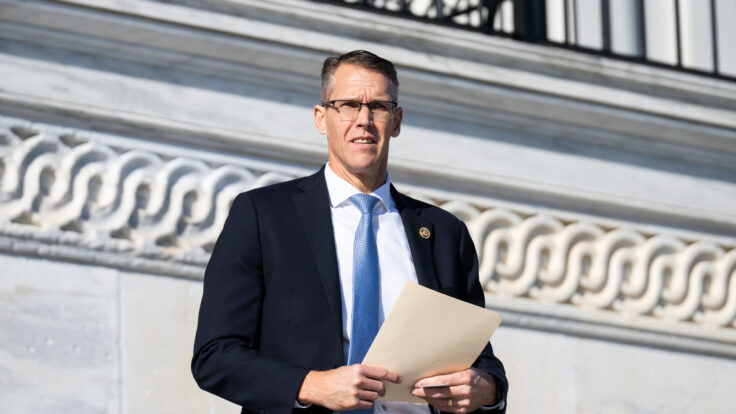
Rep. Randy Feenstra
Marianna Sotomayor • December 27, 2023
G.O.P. Jitters in Iowa and New Jersey
Trump’s endorsement streak comes to an end in the Hawkeye State, and an AWOL congressman gets an ex-Navy pilot challenger.


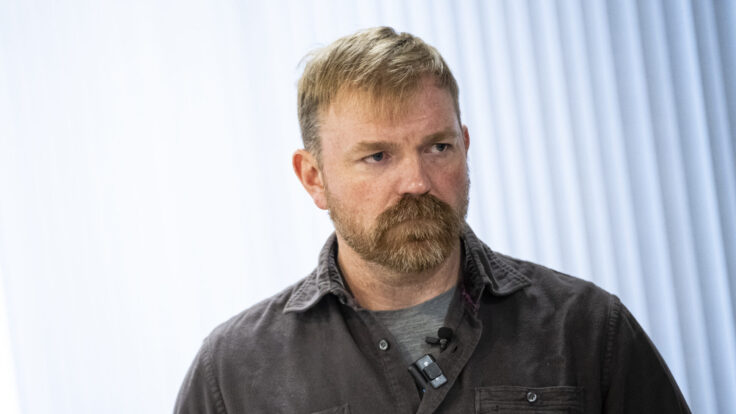
Maine Senate candidate Graham Platner
Leigh Ann Caldwell • December 27, 2023
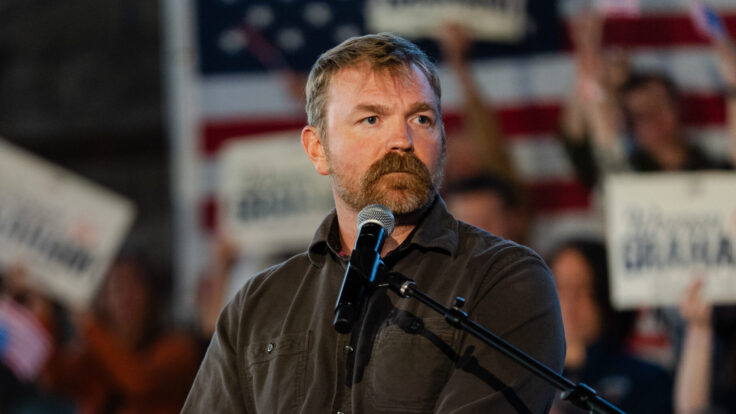
Hill Rebellion & The Platner Files
The House rebukes the president on two separate bills, and Maine’s Graham Platner assures senators there isn't worse oppo to come.
Xavier Becerra
Peter Hamby • December 27, 2023
Revenge of the Normie Libs
In California’s primaries, voters mostly chose pragmatism over progressivism: Tom Steyer’s class crusade fizzled, Saikat Chakrabarti got Pelosi’d, L.A. rejected its wannabe Mamdani, and Spencer Pratt—yes, Spencer Pratt—is still in the running.
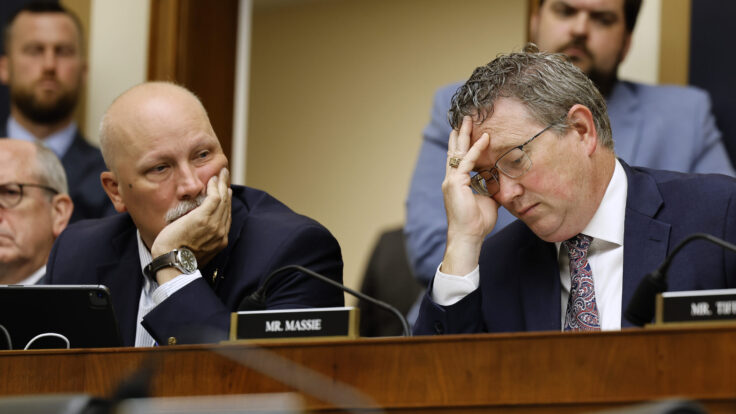
Chip Roy, Thomas Massie
Marianna Sotomayor • December 27, 2023
The Makings of a House YOLO Caucus
House Republicans are bracing for the return of members such as Thomas Massie and Chip Roy, who may come back as total renegades after losing primaries—and more Republicans may fall tonight.


Bill Pulte
Leigh Ann Caldwell • December 27, 2023
The G.O.P.’s Pulte Problem
It seemed like Donald Trump was trying to make amends with Republican senators after he backed off of some controversial demands. The bonhomie lasted about 18 hours.


Get access to this story

Enter your email for a free preview of Puck’s full offering, including exclusive articles, private emails from authors, and more.

Verify your email and sign in by clicking the link we just sent.

Already a member? Log In


Start 14 Day Free Trial for Unlimited Access Instead →


Latest Articles from Washington

Chris Murphy
John Heilemann • December 27, 2023
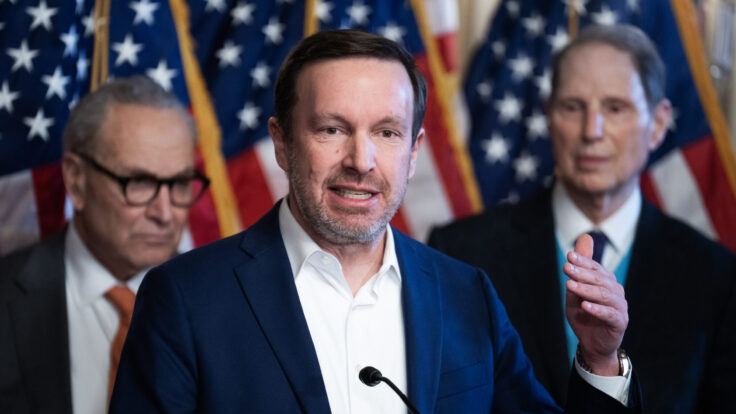
Murphy’s Law
A candid conversation with the junior senator from Connecticut, Chris Murphy, about the president’s slate of terrible Iran options and the blatant corruption that has marked his return to office.
Mike Johnson
Marianna Sotomayor • December 27, 2023
Slush Fund Showdown & Primary Tea Leaves
The White House may be walking back its “anti-weaponization“ gambit, and races in Iowa and California will test Democrats‘ taste for insurgent candidates.
Graham Platner
Leigh Ann Caldwell • December 27, 2023
Dems Reckon With the Platner Oppo
And Maine Gov. Janet Mills, who suspended her state's Senate primary, has reminded voters her name is still on the ballot.


Zohran Mamdani
Marianna Sotomayor • December 27, 2023
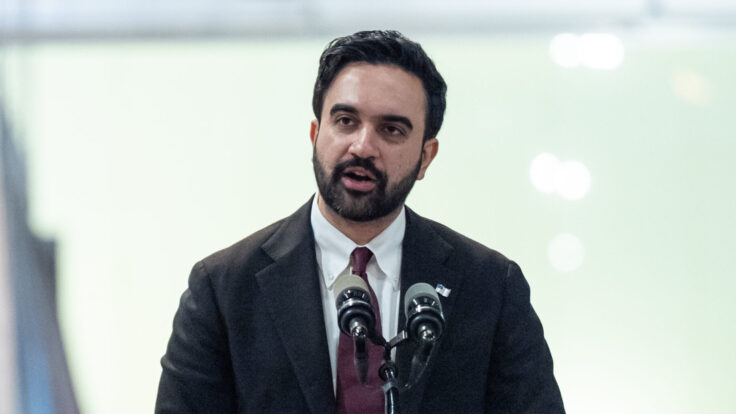
The Mamdani Betrayal & Trump Endorsement Games
Hill Dems are furious that the New York mayor has turned on one of their own, while the G.O.P. is feeling relieved about Iowa.
Donald Trump
Leigh Ann Caldwell • December 27, 2023
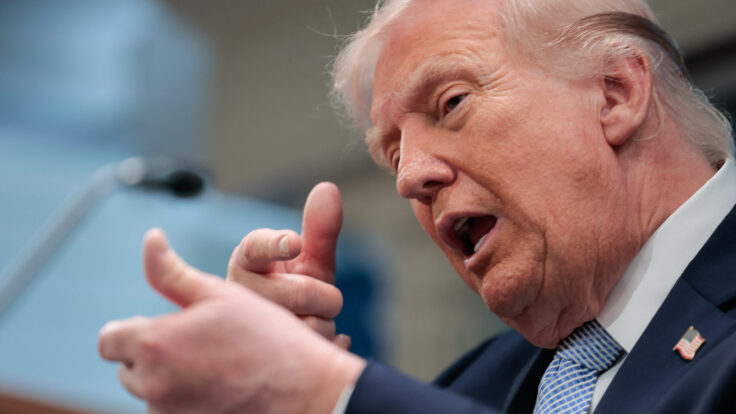
Senate Republicans Plot Their Revenge on Trump
After the president helped end the careers of two of their own, many in the Senate G.O.P. feel he’s broken their political contract. Now, instead of constantly bowing to the executive branch, they’re agitating to fight, or at least stand up for themselves.
Elizabeth Warren
Leigh Ann Caldwell • December 27, 2023
A.I. Hallucinations on the Hill
Democrats have started releasing a slew of remarkably similar A.I. action plans after being slow out of the gate on the issue. Republicans, meanwhile, are facing their own A.I.-related identity crisis.


donald trump
Julia Ioffe • December 27, 2023
Schrödinger’s War
Endlessly shifting goalposts and an increasingly violent ceasefire with Iran have created the perfect conditions for a new kind of forever war in the Middle East—a frozen conflict in which the only beneficiary may be Trump, himself.
Get access to this story

Enter your email to get access to one article and free previews of our private emails from Puck authors and editors.

OR

Already a Member? Sign in


Latest Articles from Washington

House Freedom Caucus, Chip Roy
Marianna Sotomayor • December 27, 2023
The Freedom Caucus Crossroads & The Lead Left Mystery
What happens to the most raucous caucus when many of its loudest members leave? Plus, the costly G.O.P. shadow operation that achieved... nothing much.
John Cornyn
Abby Livingston • December 27, 2023
Texas Hold ’Em
John Cornyn’s humiliating 28-point wipeout has Republicans spiraling over donor flight, Senate math, and whether scandal magnet Ken Paxton just handed Democrats their dream matchup.
Leigh Ann Caldwell • December 27, 2023
More From Georgia & Redistricting Whiplash
Things get even uglier in the G.O.P. primary to unseat Sen. Jon Ossoff, plus more developments in the gerrymandering wars.


Xavier Becerra mail advertisement
Peter Hamby • December 27, 2023
Is Xavier Becerra the Best California Can Do?
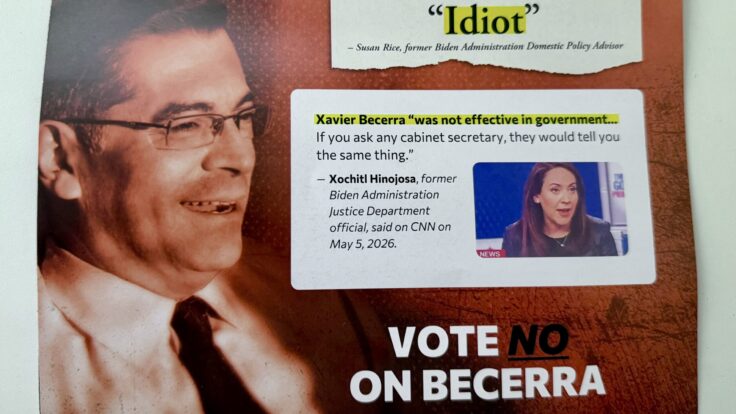
Among Democratic professionals in California, the prevailing sentiment about the governor’s race is a depressed shrug and a question: How did we end up with Becerra and Tom Steyer as Newsom’s most likely successors?
Vladimir Putin
Julia Ioffe • December 27, 2023
Putin on the Fritz
Russia is in deep, deep trouble, spurring renewed speculation about possible collapse. But we’ve seen this movie before, and Putin always manages to hold on. Is this time different?
John Thune
Leigh Ann Caldwell • December 27, 2023
The G.O.P. Mini-Resistance
Trump has spent his second term largely getting what he wants from Congress as he’s launched wars, imposed tariffs, and accumulated crypto wealth with little scrutiny. But last week, he encountered more resistance from his party on the Hill than at any point since his second swearing-in.


Ken Martin
Marianna Sotomayor • December 27, 2023
The D.N.C.’s Post-Autopsy Autopsy
Insiders knew they'd get blowback from the half-baked report whether it came out or not. But they also say that despite this latest fumble, Ken Martin isn't going anywhere.


  • Terms
  • Privacy
  • Contact
  • FAQ
  • Careers
© 2026 Heat Media All rights reserved.
Create an account

Already a member? Log In

CREATE AN ACCOUNT with Google
OR YOUR EMAIL

OR

Use Email & Password Instead

USE EMAIL & PASSWORD
Password strength:

OR

Use Another Sign-Up Method

Become a member

All of the insider knowledge from our top tier authors, in your inbox.

Create an account

Already a member? Log In

Verify your email!

You should receive a link to log in at .

I DID NOT RECEIVE A LINK

Didn't get an email? Check your spam folder and confirm the spelling of your email, and try again. If you continue to have trouble, reach out to fritz@puck.news.

CREATE AN ACCOUNT with Google
CREATE AN ACCOUNT with Apple
OR USE EMAIL & PASSWORD
Password strength:

OR
Log In

Not a member yet? Sign up today

Log in with Google
Log in with Google
Log in with Apple
Log in with Apple
OR USE EMAIL & PASSWORD
Don't have a password or need to reset it?

OR
Verify Account

Verify your email!

You should receive a link to log in at .

I DID NOT RECEIVE A LINK

Didn't get an email? Check your spam folder and confirm the spelling of your email, and try again. If you continue to have trouble, reach out to fritz@puck.news.

YOUR EMAIL

Use a different sign in option instead

Member Exclusive

Get access to this story

Create a free account to preview Puck’s full offering, including exclusive articles, private emails from authors, and more.

Already a member? Sign in

Free article unlocked!

You are logged into a free account as unknown@example.com

ENJOY 1 FREE ARTICLE EACH MONTH

Subscribe today to join the inside conversation at the nexus of Wall Street, Washington, A.I., Hollywood, and more.

START 14-DAY FREE TRIAL

  • Daily articles and breaking news
  • Personal emails directly from our authors
  • Gift subscriber-only stories to friends & family
  • Unlimited access to archives
  • Bookmark articles to create a Reading List
  • Quarterly calls with industry experts from the power corners we cover