Greetings from Los Angeles, welcome back to In the Room, and welcome to Legendary
February: The Winter Olympics kicked off today in Milan, the Super Bowl is on Sunday, NBA All-Star Weekend descends on L.A. next week—and it’s all on NBC. I’ll have NBC Sports chief Rick Cordella on The Grill Room next Tuesday to reflect on this dream scenario, and whether it will translate to durable gains for the still-flightless Peacock streamer.
In tonight’s issue, news and notes on the mounting tensions in The Washington Post front
office in the wake of this week’s mass bloodletting event. Will Lewis, the paper’s almost universally reviled publisher and C.E.O., tasked executive editor Matt Murray with breaking the hard news while he decamped to San Francisco for Super Bowl festivities—without telling him. The communication breakdown betrays deeper fissures lurking at Jeff Bezos’s trophy asset, which sure has lost a lot of its polish.
🎙️ Plus, on a special
edition of The Grill Room, Murray joined me for an exclusive, wide-ranging conversation about the sweeping layoffs at the Post and defended the restructuring as necessary to meet changing audience behavior and remedy financial strain. He also addressed Will Lewis’s conspicuous absence and the broader resentments toward leadership. If
you’ve been following the Post drama, this one is well worth your time. (Listen here or here.)
🍸 And, on the regularly scheduled episode of the podcast, Julia
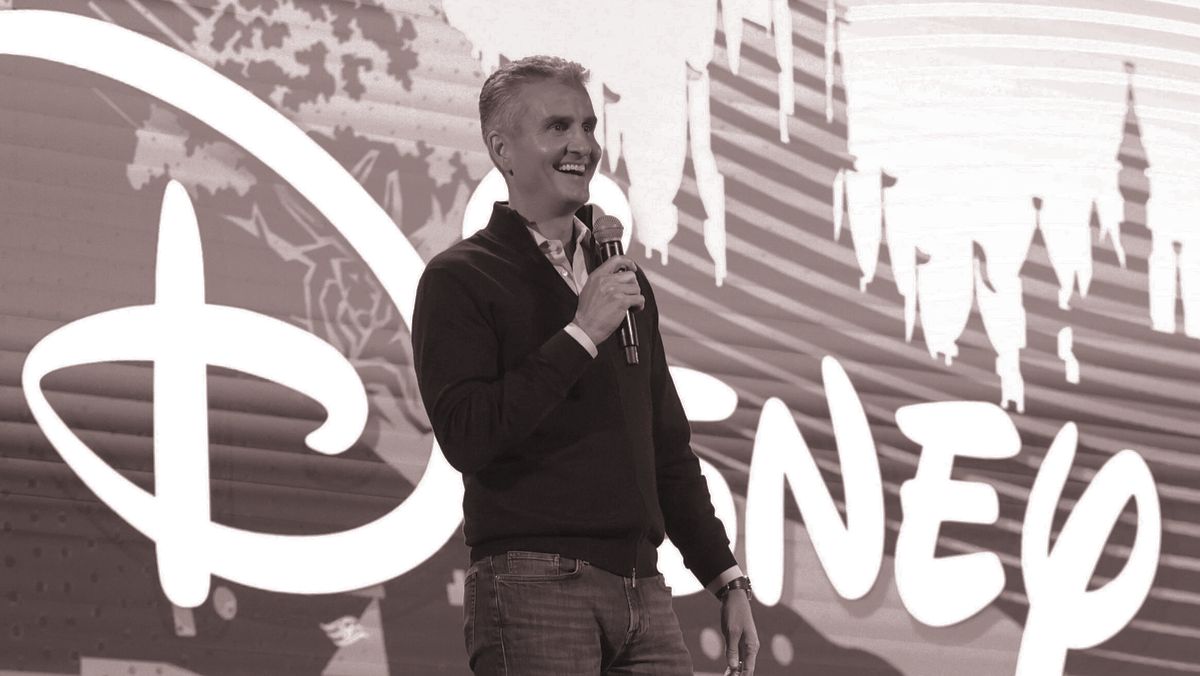
and I dug into both the Post layoffs and Peacock’s pivotal sports month, as well as the ascension of Josh D’Amaro as Disney’s new C.E.O. and the mounting questions over ESPN’s future. Follow The Grill Room on Apple, Spotify, or wherever you prefer to listen.
Also mentioned in this issue: Mathias Döpfner, Dave Portnoy, Anna Palmer, Ashley Parker, Bari Weiss, Alex Burns, Jake Sherman, Mark Mazzetti, Mark Thompson, Pat
McAfee, Rebecca Kutler, Sally Jenkins, Sarah Longwell, and more…
But first… |
-
Post sub growth: This week’s drama at The Washington Post happened to coincide with the quarterly earnings reports from its publicly traded competitors up in New York. The Times reported that total subs have grown to 12.78 million, while the Journal reported a subscriber base of 4.68 million. Post executive editor Matt Murray didn’t offer an overall subscriber number for his paper during the course of our discussion. But he did say that the
paper had “our best subs year last year” with the addition of 675,000 new subscribers. Without having the exact figures, this should put the Post somewhere north of 2 million subscribers.
- MS NOW goes Crooked: MS NOW chief Rebecca Kutler is on the cusp of striking a licensing deal with Crooked Media, the company behind the liberal chatcast hit Pod Save America. Not claiming to be the Oracle of Delphi here, but
I’ve spent more than a year predicting that Rebecca would strike a Pat McAfee–style deal with one of the left’s preferred political podcasts, be it Crooked or The Bulwark. (Hat tip to Status’s Oliver Darcy, who was first to report the deal.)
This is a small harbinger of Rebecca’s
development strategy, I’m told, one that reflects an evolution of her thinking in regard to licensing. Several months ago, Rebecca had courted Punchbowl founders Jake Sherman and Anna Palmer about a talk show, but refused to entertain any proposal that didn’t give MS NOW (then MSNBC) full control over the assets. Jake and Anna launched their own YouTube show
instead.
Most news networks no longer have that leverage and are now following the rent-the-audience model first pioneered by sports networks like ESPN (with McAfee) and Fox Sports (with Dave Portnoy). Granted, these deals won’t be nearly as big, but it’s a win-win for both sides. In any event, I’m sure Bulwark C.E.O. Sarah Longwell is watching this deal with great interest. - And finally…: Axel Springer chief
Mathias Döpfner is stateside this week, bouncing between Los Angeles for the Grammys, New York for meetings—he was spotted with Politico’s Alex Burns at the Carlyle (h/t Lachlan Cartwright)—and San Francisco for the Super Bowl. We wish him luck in his ongoing search for an
appealing media acquisition.
|
|
|
While its executive editor, Matt Murray, was overseeing the fallout of the
devastating layoffs on K Street, The Washington Post’s absentee leader and C.E.O., Will Lewis, was pregaming with friends at the Super Bowl. Yes, the optics are terrible, but is an aloof and often remote C.E.O. the right guy to save the Post? |
|
|
On Thursday evening, about 36 hours after The Washington Post conducted its now-infamous
Zoom bloodletting ritual that sacrificed the livelihoods of more than 300 employees, the paper’s much-maligned publisher and C.E.O., Will Lewis, was spotted—by a former Postie, no less—on the red carpet at the NFL Honors ceremony in
San Francisco. Will attends the Super Bowl and the surrounding fanfare every year, a work-and-perk trip that neatly coincides with his long-standing tradition of attending the game with old friends. But in light of his conspicuous absence amid the layoffs, the sighting triggered another round of hostilities from a Washington in-crowd that has spent the past week turning Will-hating into its own professional sport.
Even by those established standards, Will’s class-cutting inspired a
particularly vitriolic round of shaming on X. New York Times Washington correspondent Mark Mazzetti called Will “a complete fraud.” Former Post sports columnist Sally Jenkins, a vociferous critic, labeled him “a tone deaf jellyfish,” among other things. Ashley Parker, the former Post senior national correspondent who accused the institution of “murder” earlier this week, sought to accuse Will of a penchant for
revelry—an observation many Post insiders have shared in hushed tones over the years—noting that he looked typically “rosy-cheeked” in the photo, and then adding emojis for beers, a tropical cocktail, and a martini. (She subsequently deleted the tweet; Will did not respond to a request for comment.)
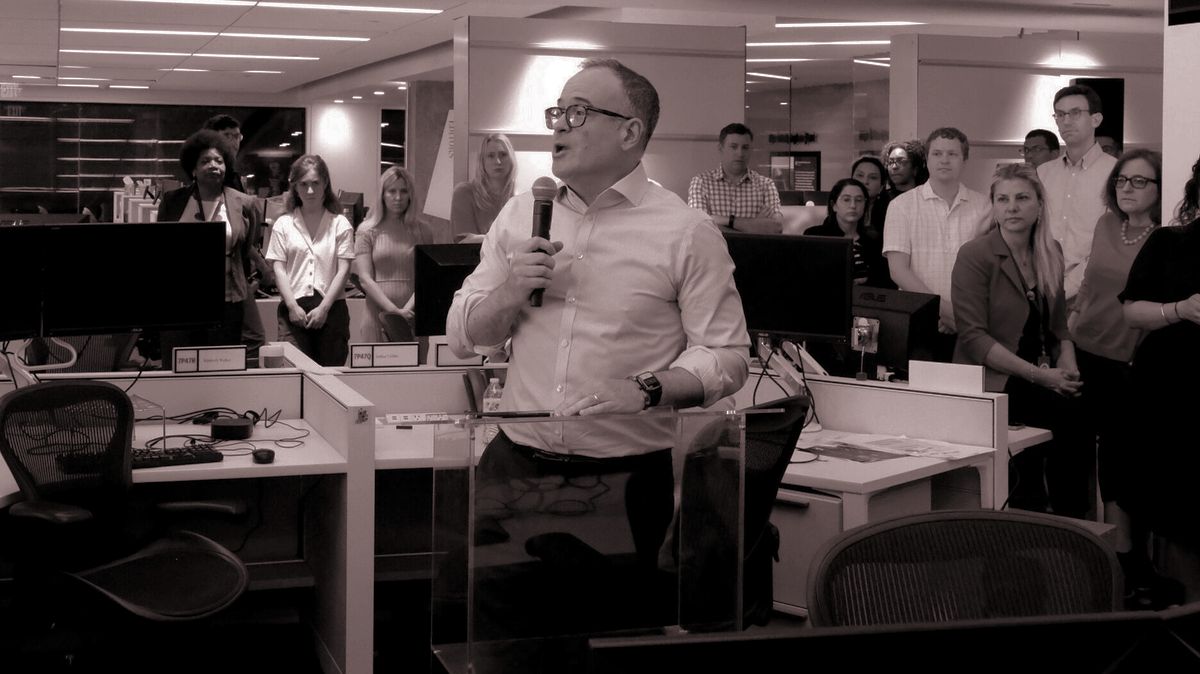
Offline, however, the most notable and inadvertently damning reaction came from the Post’s own executive editor, Matt Murray. In Will’s absence, Matt had
been tasked with delivering the hard news to employees on Wednesday over Zoom, as well as explaining the business rationale behind the restructuring in a companywide memo—the kind of message not typically delivered by an editor who oversees content, but rather by the chief executive who runs the company, or occasionally even by the owner. Yes, yes, Jeff Bezos has a lot on his plate, but he was also involved in this restructuring and has weighed
in on some of the Post’s previous directional changes.
Matt has also spearheaded the public relations effort more broadly; on Thursday, before the photo of Will materialized, he defended the layoffs in a wide-ranging conversation with me on my podcast, The Grill Room. In our discussion, he said Will had decided it was best to have divisional leaders
relay the layoffs to their various teams. But Will had been “involved in overseeing all the different moves,” he told me, and, as he’d told Fox News earlier in the day, Will “had a lot of things to tend to.”
Matt’s understanding, I was later told by a Post source familiar with the matter, was that Will was in his office on K Street working on the rollout of the restructuring. After the photo of Will in San Francisco went viral, the same source told me that Matt had not been aware
that Will left Washington for the Super Bowl, and only learned about it from social media. “I think we all assumed he was in D.C., up in his office,” the source said.
The episode hints at a deeper communication breakdown between the Post’s chief executive and executive editor that seems increasingly unsustainable. Officially, Matt is out there owning the layoffs and defending the new strategy: “I’m the one that’s responsible for carrying it out and accountable to Will and Jeff
for it,” he told me. Matt played the company man throughout the interview, but his less-than-robust defense of Will, whom he previously worked under at The Wall Street Journal, betrayed a deeper fissure. When I noted Will’s managerial shortcomings and the general antipathy toward him, Matt acknowledged that there were “clearly some things we have to work through there,” and then said: “I think there are some expectations placed on Will and the publisher that are a little different here
than I’ve seen at other places, and so I’m still getting used to that myself.” |
The Post’s yearslong trauma has inspired a lot of feelings among Washington
insiders, obviously, as well as a broader debate among media insiders that tends to coalesce around a false dichotomy. With every round of layoffs, the newsroom and its champions accuse the new leadership of destroying all that was sacred about their beloved institution—a “murder,” “self-inflicted brand destruction,” etcetera—while the front office and its sympathizers fault the
newsroom for being too nostalgic and naive about the need for change. “For all the emotions and strong feelings and passion and commitment of some of the former Posties,” Matt told me, “we are living in a different kind of a world.” As I have noted, a similar dynamic is playing out at Bari Weiss’s CBS News and, in a more subtle way, at
Mark Thompson’s CNN.
The preoccupation with this debate tends to distract from a more fundamental strategic challenge, which is that it is impossible to make any forward progress without a leader who is capable of setting the direction and then finessing the organization into alignment. Will hasn’t merely given up on that effort—at times, he seems to be actively trying to sabotage it. Asking his editorial chief to defend his layoffs and then skipping
town was only the latest manifestation of this bizarre and unprofessional behavior. He is routinely described by Post sources as an absentee leader; his refusal to engage with employees has inspired resentment among staff and hurt the paper’s ability to retain staff. Parker’s errant tweet also hinted at an objection to his drinking at work functions—which, I’m told, multiple outgoing staffers cited in their exit interviews.
The Post has a long row to hoe. When I asked
Matt what he hoped to achieve in the years ahead, he cited obvious targets: sub growth, deeper engagement, big scoops, etcetera, before inadvertently betraying just how low the Post’s fortunes have fallen: “We want to be relevant,” he said. Even among those who endorse the layoffs as a necessary step on the Post’s path toward profitability and renewed relevance, there is a broad and sustained consensus that the current leadership isn’t going to get them there. |
|
|
A professional-grade rundown on the business of sports from John Ourand, the industry’s preeminent journalist,
covering the leagues, players, agencies, media deals, and the egos fueling it all. |
|
|
Join Puck’s chief political columnist, John Heilemann, as he roams the corridors of power and influence in America on
this twice-weekly interview show, taking you beyond the headlines with the people who shape our culture: icons and up-and-comers, incumbents and insurgents, moguls and machers in the overlapping worlds of politics, entertainment, tech, business, sports, media, and beyond. The conversations are rich and revealing, unrehearsed and unexpected… and reliably impolitic. A Puck-Audacy joint, new episodes drop every Wednesday and Friday. |
|
|
Need help? Review our FAQ page or contact us for assistance. For brand partnerships, email ads@puck.news. You received this email because you
signed up to receive emails from Puck, or as part of your Puck account associated with {{customer.email}}. To stop receiving this newsletter and/or manage all your email preferences, click here. |
Puck is published by Heat Media LLC. 107 Greenwich St., New York, NY 10006 |
|
|
|