 |
|
Happy Sunday, and welcome back to Dry Powder.
|
|
It’s been nearly two months since legendary author Michael Lewis’s account of Sam Bankman-Fried’s rise and fall, Going Infinite, hit the market. For an author accustomed to gushing accolades, the decidedly mixed reception to his latest book was a new experience—though now there seems to be a reappraisal slowly taking shape. In today’s issue, my conversation with Michael about why the U.K. reception differed from the domestic, how the saga transformed Sam’s parents, what he saw and experienced at the trial, and much more.
|
 |
| Michael Lewis Has More Thoughts on S.B.F. |
| The bestselling author of Going Infinite hits back at the “shit show” criticism of his book, the spectacle inside the courtroom, and S.B.F.’s putative $5 billion offer to Trump. |
|
|
|
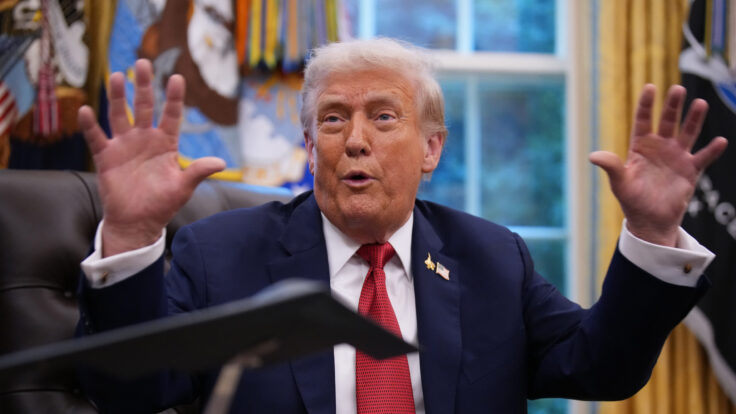
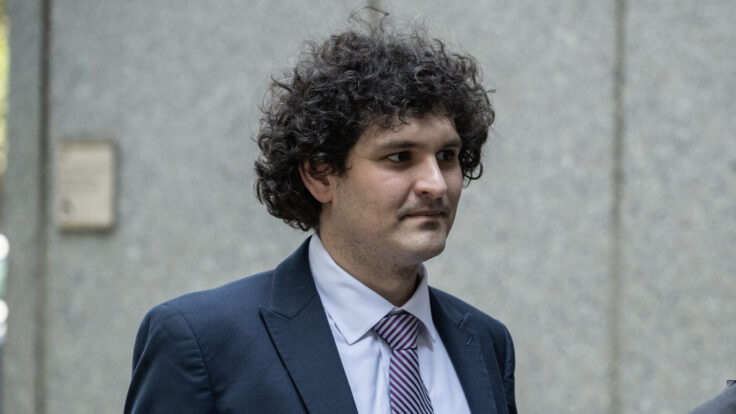
| There was a moment during Michael Lewis’s many, many hours of interviewing Sam Bankman-Fried that struck the legendary author as particularly absurd: Sam was trying to figure out whether Donald Trump would just disappear for $5 billion. “Everyone has a price, right?” S.B.F. thought. But Lewis was highly skeptical of the idea. “He just looked at me,” Lewis told me in a recent conversation. “He was trying to figure out whether it was legal at that point to do it.”
Lewis continued: “I said, ‘Look, you give Donald Trump $5 billion and he pinkie swears he’s not running for president. What do you think is going to happen? You really think he’s going to just honor that agreement? He’ll take your $5 billion and run, right? So what are you doing?’” Michael told me he thought it was a funny idea and couldn’t believe S.B.F. and Donald were actually talking about it. “But I did think, ‘This is nuts. This isn’t going to work.’ I love the spirit of it, but it’s not going to work.”
Michael and I were talking some six weeks after the publication of Going Infinite, his number one New York Times bestselling book about S.B.F. and their considerable time spent together in places like the Bahamas, where FTX was based when it imploded a year ago, and Palo Alto, where S.B.F. was under house arrest in his boyhood home before he was shuttled off to jail in Brooklyn for violating the terms of his bail agreement. Lewis has had time to try to digest the negative reactions to the book, mostly from reviewers and pundits, and to wonder why the Brits liked it much more than the Americans did. He pointed out that Jesse Armstrong, the Succession showrunner, reviewed the book favorably in the Times Literary Supplement, as did the writer John Lanchester, who called it “wildly entertaining” in the London Review of Books. “The Brits definitely get it. The tone of the reception there was just like they were reading it as a ‘read.’” He found that very satisfying, especially after the skewering he took here. “I’ve never had better material,” he told me. “The material is unbelievable. And it was. But it had to pass through this American moral filter.”
Michael figured there would be trouble from the outset. “It’s kind of a treacherous environment to become a writer of narrative nonfiction right now,” he said. “The whole idea that it’s wrong to get to know your subject, that it’s wrong to immerse yourself in your subject’s life? I don’t know how you write it any other way. I mean, what do you do? Do you go read what other people write? The idea that somehow it distorted my view of things to have been with him so much and around the thing so often, I just didn’t get that. I mean, the whole premise of what I do is I go live with people and then write about it. And if it’s just somehow forbidden, I wouldn’t even know how to begin.” |
|
|
| The criticism of Going Infinite, literary and otherwise, has generally coalesced around a couple points. First of all, Lewis began his reporting journey during S.B.F.’s halcyon days, when he was still a political megadonor, effective altruist, crypto boy genius, and the world’s wealthiest 30-year-old. He concluded the book, of course, when S.B.F. appeared headed to the slammer for a fraud that made Bernie Madoff’s crimes seem provincial. Some have wondered how much Lewis revisited his earlier reporting with fresh eyes, and whether the author was as duped by S.B.F. as the public.
Secondly, and perhaps a little unfairly, some of the gripes are tinged with schadenfreude. Lewis, after all, isn’t merely one of the leading nonfiction authors of our time, but his books are essentially I.P. source material for some of our most memorable films. Shortly after S.B.F. was arrested, Lewis’s representatives at CAA began marketing his story to the streamers. (Apple bit, reportedly to the tune of $5 million.) S.B.F.’s closest family members and friends had benefited from their proximity to him during the good times. Was Lewis now cashing in on S.B.F. during the down times?
Lewis is an impeccably kind and well-mannered man. And, despite his success, he isn’t a stranger to personal tragedy. But harsh criticism, which every writer on earth must learn to absorb, may be new to him. Lewis told me that he thought there must be “something in the water” at the moment that is making people react as they are to Going Infinite. “I knew when I published the book, it was going to trigger a shit storm,” he continued. “I knew how tinny and hollow the existing narrative about Sam Bankman-Fried was and how wedded people were to that narrative. And, especially, cryptoland was enraged. And its anger was the defining emotion. And if you walk in and tell a story where anger isn’t the defining emotion, it challenges that narrative, and people don’t like that narrative challenged.”
Lewis made an interesting analogy between those who are most “violently angry” about S.B.F. and homophobic men being the ones who are most unsure of their own sexuality. He said the crypto types most disturbed by S.B.F.’s behavior are the ones who are “fraud adjacent,” or who are most unsure about their own financial integrity: “the people who are loudest in their denunciation of him as just simply a fraud… [that] he’s just a con man and false from beginning to end.” Lewis doesn’t think S.B.F. is “just simply” a fraud. “He’s more complicated than that,” he said. “But those are people who themselves are worried that the light might turn and shine on them. Or that they themselves are at risk of being accused of being a fraud. It’s not people who are as far away as possible from financial crime who are the most upset at Sam Bankman-Fried; it’s the people who are closest to it.”
Lewis said that since the “initial assault” on the book, “which was like 30 unknown, unverified purchases on Amazon the day the book comes out,” and the “initial hot takes,” there has been a bit of critical reassessment (including my review after our initial scheduled conversation got postponed). He said that The New Yorker’s take on the book, written by Gideon Lewis-Kraus, was, like, a “What the fuck are you talking about?” reappraisal. He said Lewis-Kraus came up to him in the courtroom, during S.B.F.’s trial, and said, “in a loud voice, ‘None of these people know what they’re talking about. The book’s great.’” Lewis said he signed copies of the book in the courtroom when he was there for S.B.F.’s testimony, and that even the court’s marshal—who let Lewis sit with the S.B.F. supporters while he testified—had read Going Infinite and listened to a podcast about the book. |
|
|
| Michael told me he got to know Barbara and Joe “pretty well” through the writing of the book. “They were just bewildered that their son was a billionaire,” he said. “They raised their children to be indifferent to material possessions, and they kind of succeeded. But in spite of that, Sam Bankman-Fried is the richest person in the world under 30? They just thought the whole thing was unreal.”
Did they think it was also unreal that their billionaire son is now a convicted criminal who will be heading off to prison for decades? “Oh my God,” Michael responded without hesitation. “They were charmingly bewildered on the way up and shell-shocked on the way down. They were rocked to their core. They look 10 years older than they did before all this started. One of the unsettling things in the courtroom was his mom’s lower jaw trembled the whole time. It was a tick she didn’t have before things went bad. You feel like you’ve watched someone who was in the middle of a nervous breakdown and didn’t know how to make sense of it. They didn’t know how to process this. The irony being these are two law professors, and this is the first time their noses were shoved into the criminal justice system. And I think they were a little shocked by what they saw, too.”
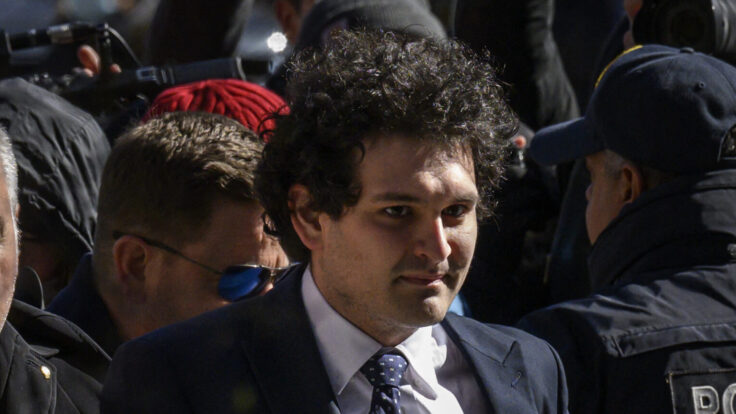
S.B.F.’s four days of questionable testimony left Michael scratching his head. “I had about 18 different reactions,” he said. “I haven’t fully processed it.” It seemed to him that there were two different people testifying: the one confidently and openly answering his attorney’s questions, and the one being evasive and forgetful when the prosecutors cross-examined him. “It was as if he was maximizing the likelihood the jury would think he was dishonest and maximizing the sentence from the judge,” Lewis said. “It was as if he was trying to be punished.”
Michael said he couldn’t figure out why S.B.F. “didn’t remember” if he’d had dinner with the prime minister of the Bahamas and Bill Clinton together in the Bahamas. “Like, that’s something you don’t remember?” he said. “He was not remembering hundreds of things that he obviously would have remembered. He came across exactly as he didn’t need to come across. I found myself thinking, What was the endgame here? Was this what you were planning to do? It was so bizarre.”
Michael couldn’t believe that S.B.F. testified and that he thought it would be beneficial. “Nobody ever testifies, right?” he said. Furthermore, some 99 percent of people charged with crimes by the federal government get convicted or plead guilty. Lewis was convinced that S.B.F. was not going to be among the 1 percent who got off. “Why exacerbate the problem with this performance?” he wondered. He said he thought S.B.F. might have had “some weird reason” why he wanted to get punished for what he did. “It was odd watching him do that,” he said.
In any event, Michael said it was “very clear” from the outset that S.B.F. was going to be convicted, in large part because the prosecution was very clever about the evidence it introduced at trial, and the fact that the various witnesses who testified against S.B.F., who once upon a time worked for FTX and had already pleaded guilty, had more or less changed their tune about S.B.F. “The thing that seemed to be most distorted was the accounts of the other members of the inner circle,” Michael told me. “I don’t think they said anything that was falsifiable, but I think they pretty radically changed their descriptions of how they felt. Like, they remembered feeling things that they didn’t obviously feel at the time. And they made it all sound much more damning than it was.”
He was particularly moved by the plight of Nishad Singh, the former head of engineering at FTX. He joined Sam’s hedge fund at age 21. He was the best friend of Sam’s little brother, Gabe. No other work experience to speak of. Didn’t know the difference between a stock and a bond. “And, what, six years later, he’s facing 20 years in jail for giant financial fraud that he doesn’t completely understand?” Michael said. “And Nishad—unlike Sam, who has lots of shading to his character—Nishad is just like, this sweet-natured person. If you don’t like Nishad, you don’t like people. How he ends up in this situation is breathtaking.” |
|
|
| On some level, this is a new overall narrative tack for Lewis, who has spent much of his career following the ascent of successful iconoclasts: John Meriwether, Billy Beane, Michael Burry, and Michael Oher. Now, he had on his hands an antihero on the road to perdition. That’s quite a different thing (and more my style than his). The public reaction was also different than Michael could have anticipated when he began his reporting. Then, S.B.F. was being heralded on magazine covers as a fintech visionary. By the time of his trial, the same media that abetted his rise was practically celebrating his fall.
Michael thought the packed courtroom and the overflow rooms, filled with some of the 175 journalists who couldn’t get into the main courtroom, rendered the whole trial a spectacle, with attendees acting like theater critics. Or worse. “It reminded me of accounts I’ve read of families packing up their picnic baskets and going to see the lynching,” he told me. He recalled a description he read about the phenomenon. “It was describing the crowd gathering for the lynching like they’re going to watch a play,” he said, “Their spirits are high, they’re enjoying everything, and then the body is dangling from the end of the rope. And then there’s a brief moment when the crowd realizes this was something other than just spectacle. And I assume that moment occurred when they announced the verdict [for Sam]. But I didn’t see that moment. I saw people just being—journalists, especially—just kind of enjoying the show. I felt like this is what it would feel like to go back to the day when people did that, to go for entertainment to a public lynching.”
He wondered, even though he was convinced that S.B.F. would be convicted, whether the jurors, the judge, the people in the courtroom, the people following the action at home felt good about the outcome. “Like, how angry are you about this?” he asked, rhetorically. “Or how much pity do you feel? Are you more sad or more angry? And what was true in my reporting in the book is that all the people that were closest to Sam were more sad than angry. The more they knew him, and the more they knew the situation, the more they said, ‘Yep, he did bad things,’ but ‘Yep, I have more trouble hating him.’ And the further you got from it, the easier it was to hate him.”
Lewis continued: “And I was wondering, when I run down a member of the jury, that’s the kind of thing I’m curious about: I can see why you had no choice but to convict him. But how did you feel about convicting him? And did you convict him with great enthusiasm? Or did you see the humanity in this? And did you feel a little badly about it?” |
|
|
|
| FOUR STORIES WE’RE TALKING ABOUT |
 |
|
 |
| House Turmoil |
| Are MAGA knives out for Speaker Johnson? |
| TINA NGUYEN |
|
 |
|
 |
|
|
|
|
|
 |
|
|
|
Need help? Review our FAQs
page or contact
us for assistance. For brand partnerships, email ads@puck.news.
|
|
You received this email because you signed up to receive emails from Puck, or as part of your Puck account associated with . To stop receiving this newsletter and/or manage all your email preferences, click here.
|
|
Puck is published by Heat Media LLC. 227 W 17th St New York, NY 10011.
|
|
|
|