{{ 'now' | timezone: 'America/New_York' | date: '%b %d, %Y' }} |
|
|
Welcome back to a very loaded Dry Powder. I’m Bill Cohan.
As my
faithful readers know, I’ve become a scholar of Wall Street’s liability management exercise wars and the creditor-on-creditor violence that they have normalized in our times. But the latest legal escalation between telecom billionaire Patrick Drahi and his armada of very blue-chip creditors may reset the playing field—at least for now. This battle, accentuated by a blistering response from Sullivan & Cromwell, is the subject of today’s issue.
Also mentioned
in this issue: The Ellisons, Kathy Ruemmler, Obama, David Solomon, Jeffrey Epstein, Tony Fratto, Max Greyserman, Ron DeSantis, Jeannette Vargas, and more…
But first… |
- PSKY–WBD
rustlings: Is the Warner Bros. Discovery board getting ready to abandon Netflix for Paramount Skydance? Or at least contemplating how the revised PSKY bid—which includes almost everything WBD has asked for—could lead to an objectively “superior” offer above $30 a share? After all, the board must clear that legal threshold before resuming its conversations with the Ellisons without triggering an allegation of tortious interference.
Wall Street is buzzing
about the possibility for two reasons. First, it seems credible that WBD shareholders may be coming around to the view that PSKY’s revised bid is indeed superior. Second, Netflix appears headed for regulatory rough waters: Rumors have circulated around town that the Justice Department has opened what is known as a Section 2 investigation into Netflix, questioning its monopoly power, separate from its efforts to acquire WBD. (The D.O.J. did not respond to a request for comment over the
weekend.) Netflix has said it is unaware of any investigation beyond the standard merger review process. But this would be very different, if true. One Wall Street leader close to the deal told me yesterday, “Just so it’s clear, the Netflix deal is not happening.” Hmm.
All WBD will say at the moment is that its board, “consistent with its fiduciary duties and in consultation with its independent financial and legal advisers, will carefully review and consider” PSKY’s latest bid “in
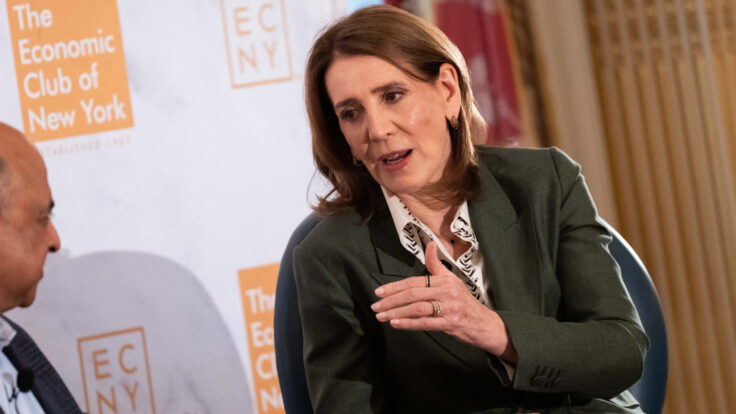
accordance with the terms of” WBD’s merger agreement with Netflix. As for a potential increase in PSKY’s $30-a-share bid? I suspect that will come, too, if and when the two parties resume negotiations. I’ve got a hunch this isn’t over. - My chat with Kathy: Wall Street remains confounded by the stunning turn of events in the saga of Kathy Ruemmler, the former Obama chief White House counsel and current Goldman Sachs
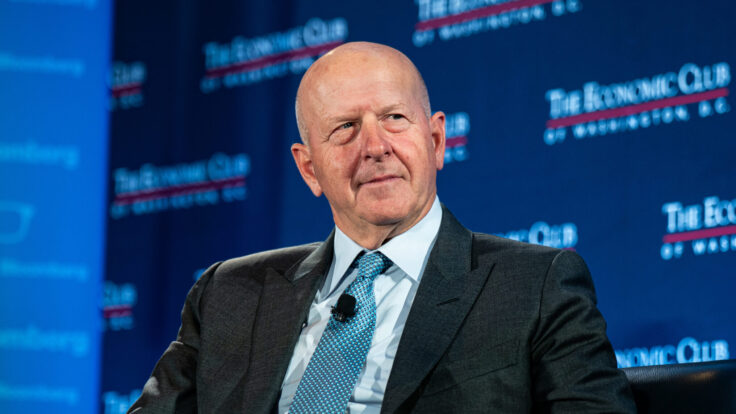
general counsel, who submitted her resignation at the end of the day on Thursday. Of course, this was a complete reversal from the signals of support that Goldman had been sending to the market. Not only was Ruemmler at the recent partner meeting in Florida, but she entered the Miami venue alongside C.E.O. David Solomon. In fact, Ruemmler told me this morning that she'd started this past week determined to fight the mob, referring to the media circus surrounding her
professional dealings with Jeffrey Epstein, who’d helped source deals for her during her rainmaking stint at Latham & Watkins. She was resolute.
On Thursday, however, when she got to the office, the Goldman communications team shared with Ruemmler that four major news organizations, including The New York Times and the Financial Times, were working on stories reporting that employees and alumni were questioning the wisdom of both the board and
Solomon for continuing to support her. After all, merely associating with Epstein after his conviction for child prostitution in 2008 could raise questions about Ruemmler’s professional judgment. And she had gone further, according to documents recently released by the D.O.J., informally advising Epstein on how to repair his image and helping to draft a letter to the editorial board of the Times defending his 2008 plea deal.
Ruemmler realized she was becoming a distraction, and
would have to do what she needed to do to stop the tornadic activity around her. She said it was clear the press was going to remain focused on her, to the detriment of Goldman, until she agreed to resign. “I have spent my entire career in a world where facts and evidence matter,” she told me in an interview. “It is difficult to deal with a situation where the facts become secondary to an alternative narrative. That is what I was facing.”
It’s clear her resignation wasn’t a premeditated
decision. Solomon was out at the AT&T Pebble Beach Pro-Am golf tournament on the Monterey Peninsula, where he teamed up with pro Max Greyserman and was in a foursome with Ron DeSantis. Goldman’s head of communications, Tony Fratto, was in Milan at the Olympics, on vacation with his family. Both likely would have revised their plans to remain in New York had Ruemmler’s decision been planned in advance.
For her part, Ruemmler said that both
Solomon and the Goldman board understood the nuances of her involvement with Epstein and initially supported her. (Last Wednesday, I tried to put Ruemmler’s relationship with Epstein into some context, myself.) But when the angry mob decided to go after company leadership, Ruemmler told me, “It became clear that this was not going to stop, and I was not going to let
Goldman Sachs absorb that on my behalf.” Solomon told her she didn’t need to resign, and that he could absorb the shots coming his way, but that he would understand if it had all become too much for her. “I think I earned the trust of the leadership team of Goldman Sachs after six years, and they understood the full picture,” she said. But, on Thursday, her obligation to the firm and her personal wiring, as a lawyer, led her to decide to put the firm—her client—first: “When the attention started
to shift from me to Goldman’s leadership team and the board,” she said, “I believed I had an obligation to step aside.” She said she feels both sad and defeated, especially since there are so few professional women who have achieved what she has, and she didn’t want to let them down by giving up the fight. In the end, though, she felt she had no choice. “I do not know what people believe the right consequence is for having dealt with Jeffrey Epstein,” she said. “But I wish that I had
never returned his first call.”
Ruemmler will leave Goldman on June 30. Her compensation for 2024 (revealed in the 2025 proxy) was around $17 million. She was probably paid more than that in 2025. She also owns 18,533 Goldman shares, worth another $17 million, plus another 20,000 or so unvested shares, worth around $18 million, which will probably be vested for her upon her resignation date. (But who knows for sure?) She said she is grateful she doesn’t have to worry about how she’s going
to get by now.
|
Now on to the main event… |
|
|
The French debt king, telecom visionary, and Sotheby’s owner may have finally met his match:
Apollo, Ares, BlackRock, et al. have countersued in order to coordinate their efforts against him. Their legal battle could put an end to this era of creditor-on-creditor violence. |
|
|
The morality tale about creditor-on-creditor violence, which has become all the rage on Wall Street,
began innocently enough less than two years ago. In July 2024, a group of creditors at the cable company Altice USA, led by the affiliates of such debt powerhouses as Apollo, Ares, BlackRock, and Oaktree, joined together in a sort of co-op to prevent its owner, the reclusive French-Israeli-Moroccan billionaire Patrick Drahi, from playing them
against one another. Drahi, of course, is legendary for pushing risk onto his creditors—Altice, now known as Optimum Holdings, has some $26 billion of debt—and is equally renowned for his ruthlessness and savvy. The Optimum co-op worried that Drahi would try to pull off a liability management exercise and pit one group of creditors against another to improve their standing in the capital structure, should the inevitable “absolute priority” rule get invoked in an ultimate bankruptcy.
Alas,
Drahi did not love his creditors’ strategy. Last November, he sued most of them in the Southern District of New York, claiming that their little co-op arrangement—which he called a “cartel”—violated U.S. antitrust laws against collusion. Personally, I’m not sure what the difference is between the creditors’ cooperation agreement and an old-fashioned creditors’ committee, but obviously Drahi felt differently. (Kirkland & Ellis, which had been advising Optimum on its restructuring options
and strategy, relinquished the assignment after Drahi filed his lawsuit using other attorneys, due to conflicts across the firm.)
Last week, the creditors struck back. Advised by the powerhouse law firm Sullivan & Cromwell, the co-op filed their blistering response. “This case is an effort to weaponize the antitrust laws to give [Optimum] leverage to which they are not entitled by contract—so they can extract individual concessions on billions of dollars of pre-existing debt,” the firm
wrote. Optimum’s complaint “does not allege that the lending markets were rigged at the point that debt was issued, when competition actually occurred,” the filing continued. “Instead, it challenges creditors’ subsequent decision—after the debt was issued—to coordinate their response to Optimum’s restructuring overtures and proposed amendments, rather than agree to being pitted against one another through individual renegotiations. But antitrust law protects competition”—emphasis
mine—“not a borrower’s desire for leverage in renegotiating its liabilities in times of distress.”
The group’s lawyers went on to argue that Optimum was trying to prevent its own creditors from “coordinating to maximize their collective ability” to get their money back, or as much of it as they still can. In its own complaint, Optimum had argued that antitrust law required Apollo, Ares, et al. “to compete with one another in renegotiations” with the company that holds
their assets. “That theory is wrong,” S&C fired back. “As part of the same transactions that provided Optimum with billions in capital, Optimum’s creditors are entitled to repayment. Optimum and [its creditors’] relationships are defined by the underlying debt instruments, not antitrust law. [The creditors] are not bound by the Sherman Act to indulge Optimum’s preferred renegotiation strategy.” |
Faithful readers know that I have been fascinated for the past few years by the various innovations,
if you can call them that, that have been developing in the credit markets—especially when it comes to corporate borrowers trying to grapple with the fact that they have way too much debt on their books. Historically, of course, equity holders get wiped out during a bankruptcy and debt holders end up with control of the company, as I witnessed firsthand during the six years I spent at Lazard in the early ’90s, working on a number of important restructurings, including those for Revco,
Allied-Federated Stores, and Woodward & Lothrop.
Nowadays, you’ve got companies engaged in liability management exercises, or out-of-court restructurings where debt can be renegotiated or bought back at discount, which in turn often results in the aforementioned creditor-on-creditor violence, wherein collateral can be moved around to advantage some lenders over others, owing to the permissiveness of “cov-lite” loans. As I
reported last week, other companies are simply filing for bankruptcy protection in the U.K., which allows equity holders to get even better terms. In the U.K., there’s no adherence to the so-called “strict priority” rule, where debt is repaid or gets recovery based on its priority in the capital structure. The battle between Altice and its
creditors, however, may begin to rebalance the scales—at least somewhat.
In its letter in defense of the veritable creditor co-op, S&C made the very good point, citing legal precedent, that fierce competition exists between creditors at the time the loans are made—not when a borrower later seeks to negotiate a discount on those loans, instead of paying them back in full. S&C further argued that the cooperation agreement among the creditors in the Optimum situation was hardly a surprising
reaction to the L.M.E.s and creditor-on-creditor violence that have permeated the restructuring environment in recent years. “The creditor cooperation alleged here is a permissible response to that dynamic,” S&C wrote. “In short, the cooperation [Optimum and Altice USA] attack is not merely lawful—it is procompetitive, and it benefits borrowers and consumers alike.”
The creditors are asking Judge Jeannette Vargas to toss the case, as she probably should. Optimum seeks “to
use antitrust law to rewrite their credit contracts,” S&C wrote. “But the Sherman Act does not protect a debtor’s preferred bargaining position against its own creditors or require creditors to help a debtor renegotiate on more favorable terms.” I have no idea what will happen here, of course, and it will probably be months before Judge Vargas rules on the motion to dismiss, although there is a pretrial conference on February 19 to discuss it.
Already, there are repercussions in the
marketplace. In January, Thoma Bravo, the private equity powerhouse, issued a $1.2 billion loan in connection to its portfolio company Majesco’s acquisition of Vitech Systems Group. The loan contained the extremely unusual provision requiring an individual creditor to tell the company within three days if it joined any kind of collective bargaining arrangement or cooperative—or even if it was approached about participating in one. Worse, if you’re approached and don’t snitch, and that
approach later comes to light, then your voting rights can be revoked.
You’d think that kind of provision would be a nonstarter for potential creditors, especially since the debt contained a provision, known as a PIK toggle, that allows the borrower to pay interest in more debt instead of in cash. But, of course, the loan blew out in the marketplace, and at pretty skimpy pricing of 450 basis points over the benchmark Secured Overnight Financing Rate. Will creditors ever learn? |
|
|
Puck’s daily art market email, anchored by industry expert Marion Maneker, offers unparalleled access to the mega-auctions and
galleries, elite buyers and sellers, and the power players who run this opaque world. |
|
|
Join Puck’s chief political columnist, John Heilemann, as he roams the corridors of power and influence in America on this
twice-weekly interview show, taking you beyond the headlines with the people who shape our culture: icons and up-and-comers, incumbents and insurgents, moguls and machers in the overlapping worlds of politics, entertainment, tech, business, sports, media, and beyond. The conversations are rich and revealing, unrehearsed and unexpected… and reliably impolitic. A Puck-Audacy joint, new episodes drop every Wednesday and Friday. |
|
|
Need help? Review our
FAQ page or contact us for assistance. For brand partnerships, email ads@puck.news.
You received this email because you signed up to receive emails from Puck, or as part of your Puck account associated with {{customer.email}}. To stop receiving this newsletter and/or manage all your email preferences, click here. |
Puck is published by Heat Media LLC. 107 Greenwich St., New York, NY 10006 |
|
|
|