{{ 'now' | timezone: 'America/New_York' | date: '%b %d, %Y' }} |
|
|
|
Welcome back to The Hidden Layer. I’m Ian Krietzberg, gearing up for another trip
out west, where I’ll be moderating a can’t-miss panel at UCLA’s 50th annual Entertainment Symposium. Hope to see some of you there.
It’s been a very busy week, and we’ll be getting into all of it: Apple’s Siri dreams, Anthropic’s new Mythos-ish model, OpenAI’s S-1, Google’s circular deal with
SpaceX, and more. Then, for the main event, something different: a close look at the Allen Institute’s $400 million bet that A.I. can accelerate cures for major neurological diseases. This is the promise we’ve heard from Sam, Dario, Demis, and Elon alike—the one that supposedly makes all the risk worthwhile. I’ll reveal how the initiative is actually using A.I., the challenges it faces, and the humans driving it
forward.
Also mentioned in this issue: Paul Allen, Jeff Carroll, Dean Ball, Kathy Hochul, Ed Lein, Craig Federighi, Eddie Lin, Jeff Bezos, Mariano Gabitto, and… Mitt Romney. |
Three Things You Should Know…
|
- About
the Mythos mishegas: Anthropic finally released a version of its heavily hyped Mythos model to the public this week: Claude Fable 5, which is apparently so powerful that it was “nerfed” with a whole suite of safeguards… none of which went over particularly well. The guardrails were designed to prevent the usual threats—hacking, bioweapons, etcetera—but also caused
predictable frustrations for power users attempting to use Fable for more innocent purposes.
One capability that Anthropic made off-limits to users sparked considerable online backlash: frontier L.L.M. development. Any prompts that point to attempts at frontier A.I. work will make Claude less effective—an intervention that Anthropic initially said would not be communicated to the user. But as the research platform AlphaXiv
pointed out, “This sets a dangerous precedent. If a model refuses openly, users can understand the boundary. … But if a model silently modifies or weakens its own answers while still pretending to help, researchers lose the ability to know whether a failed result came from their own idea, their implementation, or an invisible intervention by the model provider.”
Anthropic
subsequently decided to change the system’s safeguards for L.L.M. development “to make them visible”; the initial idea, a spokesperson told me, was to “prevent foreign adversaries from using our most capable models in ways that pose severe safety risks.” Still this person added, “We made the wrong trade-off and we apologize for not getting the balance right.”
Anthropic gained intense public support from its recent spat with the Pentagon, but this policy walk-back might not be enough to
satisfy critics. Dean Ball, the author of the White House’s A.I. Action Plan, said: “I suspect the residual broken trust and resentment this has created will linger and will have a blast radius wider than Anthropic.” - iDream of Siri: This week, Apple finally
launched Siri A.I., the culmination of years of quiet efforts to make Siri competitive in the A.I. race. In essence, Siri A.I. aims to be an artificial assistant, incorporating various Apple A.I. models into contexts like texts, photos, and emails—though one reason for the lag was Apple’s focus on making sure users could
deploy all this while keeping their data private. Craig Federighi, Apple’s senior vice president of software engineering, defended the company’s slower approach, saying that “some appear to be racing forward, seemingly pursuing A.I. for the sake of A.I., without clear regard for the people—all of us—that it’s ultimately meant to serve.”
We also got a little clarity on Apple’s partnership with Google. All the models that will enable Siri A.I., Apple announced, were
custom-built and trained by Apple and “refined using outputs from Gemini frontier models,” putting Apple’s most advanced model roughly on par with Google’s Gemini system. The release, set to roll out this fall, has the potential to radically reshape the competitive A.I. landscape, even if the markets aren’t buying that just yet: Apple’s stock has tanked since the unveiling, falling by around 7 percent since June 8. - The data center wars: Earlier this
month, New York lawmakers passed a bill that would instate a one-year moratorium on data center construction in the state, ostensibly to give utilities and lawmakers time to assess and prepare for the expected impact. (It now awaits Gov. Kathy Hochul’s signature, though she’s expressed interest in bringing both A.I. guardrails and innovation to New York.) Just
a few days later, the Seattle City Council unanimously voted to impose a yearlong moratorium on data center construction while it conducts extensive impact studies.
The council’s response follows intense public backlash to plans from four developers to build five “large-scale” data centers in Seattle—campuses that
would’ve had a combined demand of 369 megawatts of electricity, enough to power roughly 300,000 homes. “We’ve heard from tens of thousands of residents—Seattleites should not be subsidizing record profits of large corporations from the A.I. boom,” councilmember Eddie Lin said in a statement.
|
“A good A.I. future cannot be one where a small number of institutions control most of the capability and
most of the upside. It should be a future where many people, companies, communities, and countries can build, benefit, and hold power. We believe this transformation should belong to everyone.”
—OpenAI, sharing its Lehane-ian plan to make sure A.I. benefits everyone. The document is full of the kind of rhetorical 180s that OpenAI has been making for the
past few weeks—an interesting contrast with Anthropic’s more restrictive Fable 5 launch.
Runner-up: “Our highest and most urgent national priority should be A.I. safeguards. The risks of A.I. weapons, pathogens, mass unemployment, surveillance, and even extinction must not continue to be largely ignored.”
—Mitt Romney, who sounds like he read the pope’s first encyclical, weighing in. |
- OpenAI
officially submitted its confidential S-1, meaning an I.P.O. is imminent. The company wouldn’t clarify timing, saying only that “it may be a while because there are things we want to do that are likely easier as a private company.”
- Talk about circular investing: Google, a longtime investor in SpaceX,
agreed to buy compute power from Elon’s baby to the tune of $920 million a month for the next three years, all on the eve of the latter’s I.P.O. (Morningstar, for one, thinks SpaceX is heavily
overvalued.)
- Apollo partnered with Blackstone and Broadcom to anchor a $35 billion loan against A.I. hardware that will be used by Anthropic. This tranche is the first of many; Broadcom
said this “strategic platform” could power more than 20 gigawatts of A.I. deployments. It’s an example not just of the debt supporting the industry, but of the creativity deployed to make that debt load look less extreme heading into public-market debuts.
|
And now for the main event… |
|
|
|
Of all the altruistic promises of A.I., none has been as tantalizing to frontier labs as
curing disease. The Allen Institute has now launched an ambitious tech-fueled initiative, with $400 million and dozens of high-powered partnerships, to attack the most tantalizing target of all: brain disease. |
|
|
|
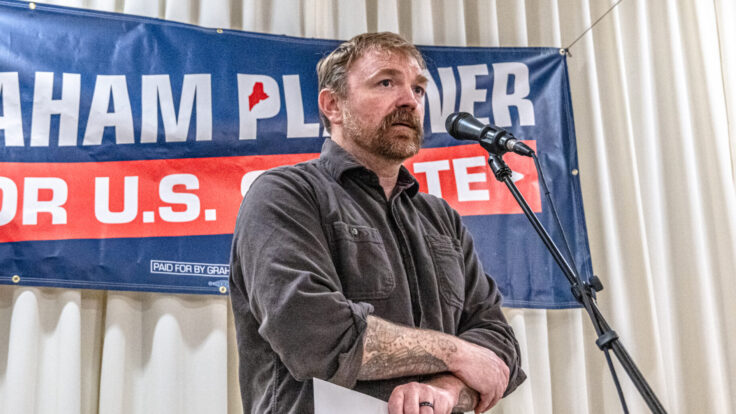
Jeff Carroll was in the Army when his mom was diagnosed with Huntington’s disease—a fatal,
hereditary, neurodegenerative disorder that Carroll, a high-school dropout, had never heard of. So when he got out of the Army, he enrolled in a few university biology classes to better understand it. Huntington’s, he told me—unlike other neurodegenerative diseases such as Alzheimer’s or Parkinson’s—results from one specific genetic mutation, which the research community has known about since 1993. Carroll himself carries the mutation. “You would think, given all that knowledge, or all that
time, we’d have figured it out by now,” he said. “We know a lot, but not enough, because we can’t cure anyone of H.D. yet.”
Carroll, in many ways, has devoted his life to the disease. He’s spent the last 15 years researching Huntington’s, and picked up his Ph.D. in neuroscience along the way. More recently, he’s become one of the lead investigators for Huntington’s research at the Brain
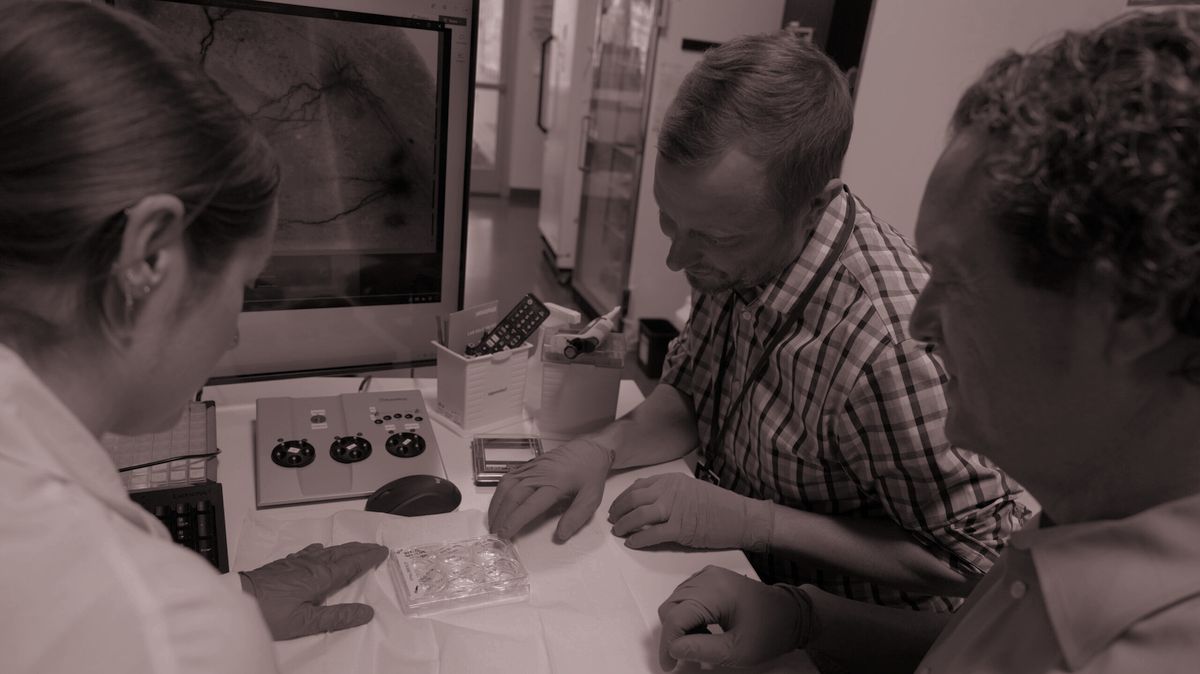
Health accelerator, a massive global effort announced last week by the Allen Institute, the nonprofit medical research organization founded by the late Microsoft co-founder and polymath Paul Allen.
Brain Health, which is focused on treating neurodegenerative diseases, is launching with a $400 million funding commitment—half of which is coming directly from the Allen Institute, in addition to $100 million from the Bezos family and $100 million from
A.W.S., the National Institutes of Health, and EverythingALS. The initiative will focus first on Alzheimer’s, Parkinson’s, Huntington’s, Lewy body dementia, and amyotrophic lateral sclerosis (A.L.S.).
Neurological diseases have been particularly vexing for medical researchers for a myriad of reasons: namely, the complexity and inaccessibility of the human brain, the blood-brain barrier that blocks many therapeutic drugs, and technical and ethical limitations to conducting experiments on
humans. Only recently has technology—fueled by advances in A.I.—begun to catch up to researchers’ ambitions. The Allen Institute already had one of the largest collections of high-resolution brain imaging data in the world—a critical first step, researchers hope, to putting new A.I. models to work. “The tools have gotten far enough now,” Carroll said, “that they’re productive across the scale of hundreds of human brains, which is what you need to see these early changes.” |
“At the Center of Everything”
|
Since the term “artificial intelligence” truly entered the zeitgeist in 2023, the leading labs have vowed
that any of the technology’s risks would be offset by world-changing benefits—perhaps none more so than the potential to cure disease. “Many of my friends and colleagues are raising children, and when those children grow up, I hope that any mention of disease will sound to them the way scurvy, smallpox, or bubonic plague sounds to us,” Dario Amodei wrote in his 2024 “Machines of Loving Grace” essay.
He’s not the only one to have evoked this quixotic future. A little more than a year ago, Google DeepMind chief Demis Hassabis told 60 Minutes that our society would soon be able to “cure all disease with the help of A.I.”
Sam Altman was saying much the same as recently as March, promising that “A.I. will help discover new science, such as cures for diseases,
which is perhaps the most important way to increase quality of life long-term.”
The folks at the Allen Institute are optimistic that the Brain Health project will yield treatments for neurological disorders, but they’re also intensely aware of the work ahead. “I don’t think it’s going to be a magic box,” Carroll said, adding that it “remains to be seen how much these techniques can push beyond what we already know.” Mariano Gabitto, who leads algorithmic development for
the project, said, “It’s a huge endeavor. We don’t plan to solve it at once.”
Still, the undertaking sounds like something out of a movie. The project is split into several main pillars, one of which Gabitto described as an “open science discovery engine” whose goal is simply to better understand the brain—an enormous task that involves the complex process of brain data collection, curation, and study. “You actually have to understand the components. You have to understand what goes wrong
with them,” Ed Lein, the project’s director, told me.
Treatment is another pillar of the project, which also aims to produce therapies that target individual cell types, using different forms of A.I. and machine learning technologies to analyze data, identify patterns, and highlight potential candidates or patterns for early detection. “A.I. is at the center of everything,” Gabitto said, describing the creation of models designed to predict a disease’s trajectory, which
could enable doctors to identify not just its type, but its severity and progression.
Researchers and donors hope this confluence of approaches will take them much further than other moon-shot efforts to better understand the brain. Gabitto called it “precision biology,” which he said would ideally translate into “precision medicine.” Part of the breakthrough, according to Lein, involves getting foundation A.I. models “to learn the structure and the grammar, if you will, of biology”—a
potentially game-changing leap beyond the machine learning that has already become so thoroughly integrated into neuroscientific research efforts.
Lein expects the first few years of the project to be “catalytic,” as various communities rally around the initiative. “If we can solve the technology side, it’s going to open up the biology side—and, for that matter, the A.I. side,” he said. “So I think we’re going to see a much larger community that wants to
join in.” But all three researchers expect their progress to take time, which is not something many people with these diseases have. “In some way, I try to disconnect my survival from the everyday lab work, because otherwise it gets kind of overwhelming,” Carroll told me. “You have to just trust that this worldwide team of folks are pulling in the right direction. And that’s what gives me hope.” |
That’s all for today. I’ll see you on Tuesday.
Ian |
|
|
|
Puck sports correspondent John Ourand and a rotating cast of industry insiders take you inside the executive suites and owners
boxes where the decisions that shape the entire sports business are made. You’ll hear interviews with players, network execs, and everyone in between. The Varsity is an extension of John’s private email for Puck by the same name. New episodes publish every Wednesday and Sunday. |
|
|
|
Puck’s daily political newsletter from Washington on what’s really happening in this town, from the White House to the Pentagon
to Capitol Hill, K Street, the campaign trail, and beyond. |
|
|
|
Need help? Review our
FAQ page or contact us for assistance. For brand partnerships, email ads@puck.news.
You received this email because you signed up to receive emails from Puck, or as part of your Puck account associated with {{customer.email}}. To stop receiving this newsletter and/or manage all your email preferences, click here. |
Puck is published by Heat Media LLC. 107 Greenwich St., New York, NY 10006 |
|
|
|
|