{{ 'now' | timezone: 'America/New_York' | date: '%b %d, %Y' }} |
|
|
Welcome back to The Varsity, where I am laser-focused on the Duke v. Darian
Mensah lawsuit, which some college administrators had hoped could lead to meaningful N.I.L. and transfer portal reforms. Alas, it appears that the suit, filed just a week ago, has already been settled.
The agreement will allow the quarterback to enter the transfer portal, and presumably end up at Miami—his third school in his young collegiate career. Regarding Mensah’s multiyear N.I.L. contract, which would have paid him $4 million next season, a Duke source
told Max Olson that the settlement “addressed the school’s primary concerns” (presumably, Duke will be compensated by either Mensah or Miami). Moving forward, it will be interesting to see whether this settlement chills competing schools from luring players out of existing N.I.L. deals or if it’s just
more proof that nothing matters anymore, the highest bidder will always win, and schools will spend whatever is necessary to compete in the CFP era.
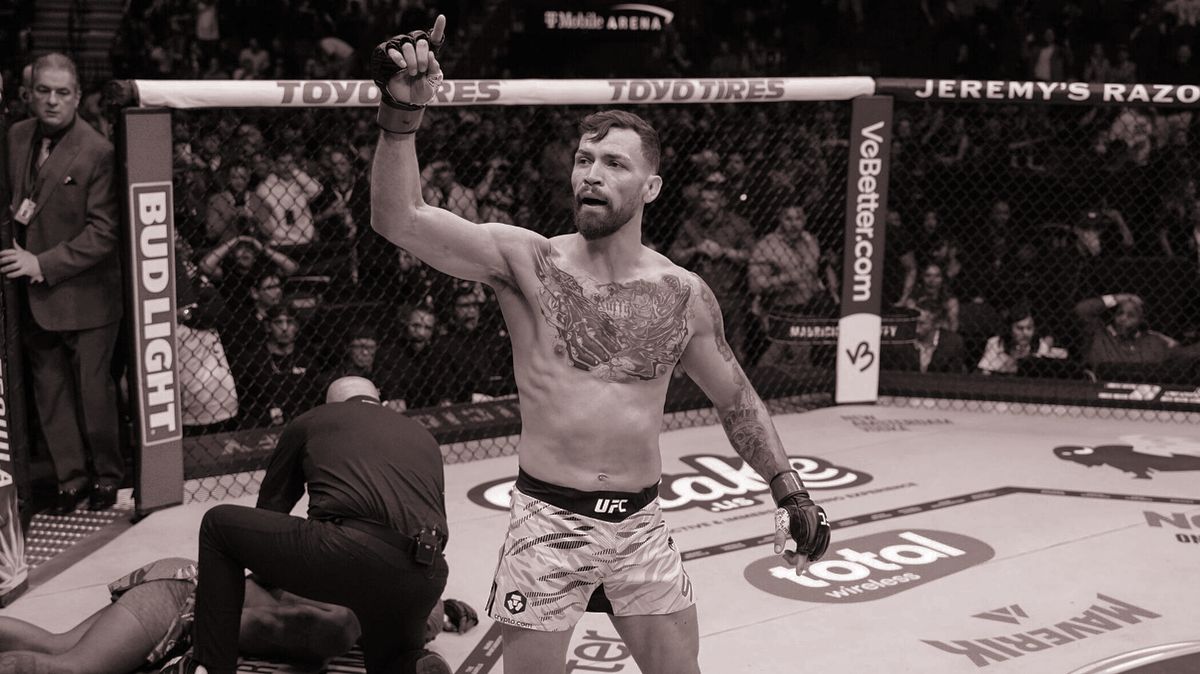
In today’s issue, the great Julia Alexander spent her Saturday night monitoring toe holds and ground-and-pound strategies during UFC 324 in Vegas, the first fight card to appear on Paramount+. The event was deemed a big success, which prompted Julia to look into how Paramount Skydance can build on that momentum. As you know,
this issue is available only to Inner Circle members. Upgrade or risk getting left behind… |
Stat of the Week: 49 Percent
|
The Big Ten has been on an incredible run in college football over the last few years. During last
week’s national championship game against Miami, Fernando Mendoza and the feel-good Indiana Hoosiers brought in 30 million viewers on ESPN. (As Ourand noted yesterday, the Hoosiers also drew an audience of 25 million during their Rose Bowl blowout of the Crimson Tide.) Last year, Ohio State’s title game against Notre Dame netted 22.1 million viewers, and in 2024, 25 million people watched Michigan’s comfortable win over Washington. Not too shabby—especially considering an SEC team had won the championship in each of the previous nine seasons.
Despite the Big Ten’s momentum, however, SEC viewership is still outpacing every other conference, per Sports Business Journal and The Wall Street Journal, averaging 4.9 million viewers a game, up 49 percent from last season. Meanwhile the Big Ten’s average viewership dropped by 11 percent, to 2.8 million—likely the result of Penn State’s down year and the conference’s general
top-heavy imbalance. |
- The Heated Rivalry effect: It’s impossible to ignore what HBO Max and Crave’s Heated Rivalry has done for professional hockey since the show’s debut at the end of November. NHL commissioner Gary Bettman, who told Variety he binge-watched the show in a single night, called the phenomenon one of the most novel ways that new fans have come into the sport in the league’s 100-year-plus history. Meanwhile, StubHub has reported a 35 percent surge
in interest in Boston Bruins and Montreal Canadiens tickets—the two teams featured in the show’s fictional rivalry—since the debut. More than 80 percent of that came from first-time buyers.
The show, however, is something of an anomaly in Hollywood. Despite creating a cultural moment, it’s not a mainstream hit and hasn’t
appeared on Nielsen’s weekly top 10 chart. Nonetheless, it’s been one of the most talked-about shows in the past several months and a massive success for HBO Max and Crave. Its stars, Hudson Williams and Connor Storrie, are currently in Northern Italy to take part in the Olympic torch relay. Hopefully, the NHL can continue reaping the rewards. - A Christmas to remember: December is usually a big
customer-acquisition month for Netflix, but new data from Ampere found that there were even more sign-ups than usual last month: More than 450,000 new customers subscribed in the U.S. alone, spurred by Stranger Things’ final season and, of course, the NFL on Xmas. It was the streamer’s third-best December since the firm started tracking Netflix in 2018.
The report underscored how effective live events, and particularly live sports, have been at driving subscriptions across
all premium streaming services. Sixty percent of major sign-up peaks last year came from live programming, and sporting events accounted for 85 percent of the sign-ups during those peaks. And when customers sign up for sports, they tend to stick around: Roughly 45 percent of those who signed up for Netflix’s Christmas Day NFL games in 2024 were still subscribed a year later. Among customers who churned out, 10 percent signed up again specifically for the 2025
matchups.
Gabe Spitzer, Netflix’s V.P. of sports, probably hoped for higher-stakes games—three of the four teams were already out of playoff contention. But the data should make him and chief content officer Bela Bajaria even more confident about any bid they’re contemplating for NFL media rights, which could hit the market this year. - Such great heights: Netflix’s livestream of
Alex Honnold’s free solo climb of Taipei 101 on Saturday—a display of athleticism that had me nauseous with anxiety the entire time—serendipitously occurred as roughly 200 million snowed-in Americans were trapped at home with nothing to do but watch TV. Honnold’s climb secured the third spot on Netflix’s Weekly Top 10 list, clocking in 6.2 million views. Perhaps even more importantly for Netflix co-C.E.O.s Ted Sarandos and Greg Peters, it
represented the kind of international live event that the streamer hopes to do much, much more often.
In a recent interview with Ben Thompson, Peters said the Netflix team is trying to average one major live event a month. And that these events, like Honnold’s climb, are likely to be sports or
sports-adjacent. Peters said he is focused on engaging “virtual audiences that you have around the world, in different segments with different entrants,” and keeping them all engaged, entertained, and (obviously) subscribed. With engagement stagnating, and audiences outside of the U.S. watching far less Netflix, these types of events are going to be central to its global growth strategy going forward, whether it buys Warner Bros. or not.
|
Now, an update on David Ellison’s first big bet… |
|
|
By most metrics, the UFC’s Paramount+ debut was an unqualified success,
even as diehard fans complained about the abundance of post-P.P.V. advertising. How can David Ellison & Co. build on the momentum? |
|
|
Back in August, when Paramount Skydance inked the company’s blockbuster seven-year, $7.7 billion
deal with the UFC, Jesse Sisgold probably would have given his left arm (via submission) for the kind of ratings debut that the league had on Saturday night. The main event, a matchup between Justin Gaethje and Paddy Pimblett, amassed nearly 5 million streaming views, making it Paramount+’s largest exclusive live event to date. It was the most households that the UFC had reached in nearly a decade across linear, broadcast, and
streaming, per Nielsen and Adobe. For Sisgold, Paramount’s head of global sports entertainment, it was the kind of splashy debut that might convince first-time viewers to seek out UFC 325 this week.
The partnership still has a long way to go before it can be deemed a proper success. But some Wall Street analysts already seem optimistic. Peter Supino, who covers Paramount and TKO for Wolfe Research, noted that “the crowd skewed young and male”—an unsurprising but
welcome sign for Paramount management, “which paid up for UFC in part to expand subscribership outside of CBS’s core demo.” In other words, its continued success could translate into new viewers for PSKY’s other programming.
Meanwhile, Supino also lauded the event’s approach to advertising, noting that the “introduction of programmatic [ads] is the first step to transform Paramount+ into a competitive platform for ad-buyers”—something that reflects “Paramount’s urgency to become a more
competitive D.T.C. player.” And yet, therein lies the rub: There were always going to be some tradeoffs in UFC’s shift from a hyper-premium pay-per-view event to programming available on a $9-a-month streaming platform, starting with ads—lots of them. |
For diehard fans who tuned into UFC 324, the biggest gripe by far was the ad load. After
the event, UFC C.E.O. Dana White addressed some of the backlash from fans. “I haven’t seen it yet and all of this is a work in progress,” he said. But Paramount has “got to make some money too.”
Of course, this isn’t just a UFC issue. As streaming services host more live sports and sports-adjacent events, and as they face down subscriber fatigue and revenue stagnation, fans will need to prepare for more advertising on their screens. The good news for PSKY prince
David Ellison is that plenty of streaming customers don’t actually seem to mind. According to Antenna’s most recent report on streaming ad tiers, which provides data through Q2 of last year, nearly half of all subscribers to premium streaming services in the U.S. are signed up for ad-supported tiers. Those ad tiers also drove 71 percent of all streaming growth in the U.S. for the nine quarters included in the report. Antenna also found that factors like age and income didn’t
seem to impact tier selection. And the ad-free survival rate, or the percentage of consumers who remained subscribed nine months after initial sign-up, was only 1 percent higher than for ad-supported plans.
Meanwhile, sentiment toward advertising seems to be improving overall. According to Kantar’s annual media survey, 57 percent of respondents said they felt positive about ads on digital platforms, a 10 percentage point increase year over year, signifying a correlation between
value placed on overall enjoyment and willingness to sit through marketing. The data echoed recent findings from Hub Research, which found that roughly 68 percent of survey respondents would choose saving money over avoiding ads—an eight-percentage-point increase from four years prior. And, encouragingly for Ellison and Sisgold, 63 percent of respondents between the ages of 18 and 24—the very audience they’re trying to court—said they don’t mind watching TV ads as much as they used to in the
past.
In short, if the ad-load issue is the only thing UFC fans used to ESPN+’s pay-per-view experience are complaining about, it may be a transient annoyance at worst. Perhaps the most glaring issue is whether Paramount+ can continue building out the league’s audience both domestically and internationally—and Netflix’s experiments with boxing might foreshadow the trajectory. |
In November 2024, more than 100 million global viewers tuned into the Jake
Paul–Mike Tyson fight on Netflix. But the streamer has struggled to capture the same audience for subsequent boxing matches, even if the numbers are still relatively strong: The Paul–Anthony Joshua fight garnered just 11.8 million views in its three weeks of availability, and was among the 100 most watched titles on the streamer during the second half of 2025, per Netflix’s most recent engagement report. And while just under half of Netflix’s
boxing audience is international—much higher than the 10-15 percent of the streamer’s NFL audience that tunes in from abroad—there’s a clear appetite from Netflix’s domestic market, and Ellison and Sisgold may hope to divert some of that renewed energy to their own product.
At the moment, P+ has just under 80 million subscribers, most of them domestic. It’s unlikely that even the biggest UFC title card will generate anything close to Paul and Tyson numbers, but matches
might keep delivering strong engagement in the U.S. while attracting new subscribers. Earlier today, Business Insider reported that Paramount+ added 1 million new subscribers during the company’s UFC debut.
Of course,
establishing a regular cadence for these events—which Netflix, notably, hasn’t done with boxing—will go a long way toward maintaining and growing the UFC’s footprint. And even the occasional goofy sideshow, like Donald Trump’s planned skirmish on the White House lawn, won’t hurt either. As I recently wrote, leagues are increasingly turning to gimmicky events to keep viewers engaged—and what’s more American than a gladiatorial brawl in D.C. in the lead-up to the 250th anniversary
of America’s founding? |
Thanks, Julia. See you all on Thursday.
John |
|
|
Puck sports correspondent John Ourand and a rotating cast of industry insiders take you inside the executive suites
and owners boxes where the decisions that shape the entire sports business are made. You’ll hear interviews with players, network execs, and everyone in between. The Varsity is an extension of John’s private email for Puck by the same name. New episodes publish every Wednesday and Sunday. |
|
|
Ace media reporter Dylan Byers brings readers into the C-suite as he chronicles the biggest stories in the industry:
the future of cable news in the streaming era, the transformation of legacy publishers, the tech giants remaking the market, and all the egos involved. |
|
|
|
|
JOHN OURAND & DYLAN BYERS |
|
|
Need help? Review our
FAQ page or contact us for assistance. For brand partnerships, email ads@puck.news.
You received this email because you signed up to receive emails from Puck, or as part of your Puck account associated with {{customer.email}}. To stop receiving this newsletter and/or manage all your email preferences, click here. |
Puck is published by Heat Media LLC. 107 Greenwich St., New York, NY 10006 |
|
|
|