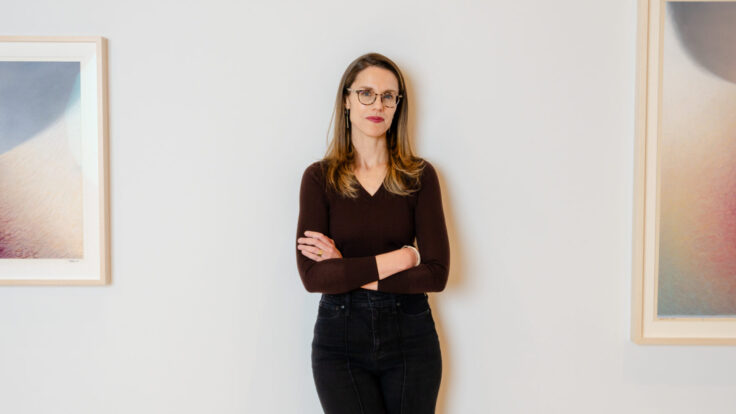
Welcome back to Wall Power. I’m Marion Maneker.
Tonight I’m
finally getting to the Jewish Museum’s great Paul Klee show. I went to see it because of the rare opportunity to see Klee’s Angelus Novus, a work that inspired Walter Benjamin’s lasting vision of history. But the show has many other virtues, none greater than simply engaging with Klee’s enigmatic and singular work. Up top, Sotheby’s had a big first half of the year, and I have their numbers to prove it; Herbert Lust’s
collection is in play; the Robert Rauschenberg Foundation has donated three sculptures to Artist Rooms, which is shared by the Tate and the National Galleries of Scotland; and Heritage achieved an impressive price for Iron Man’s Marvel debut.
But first… |
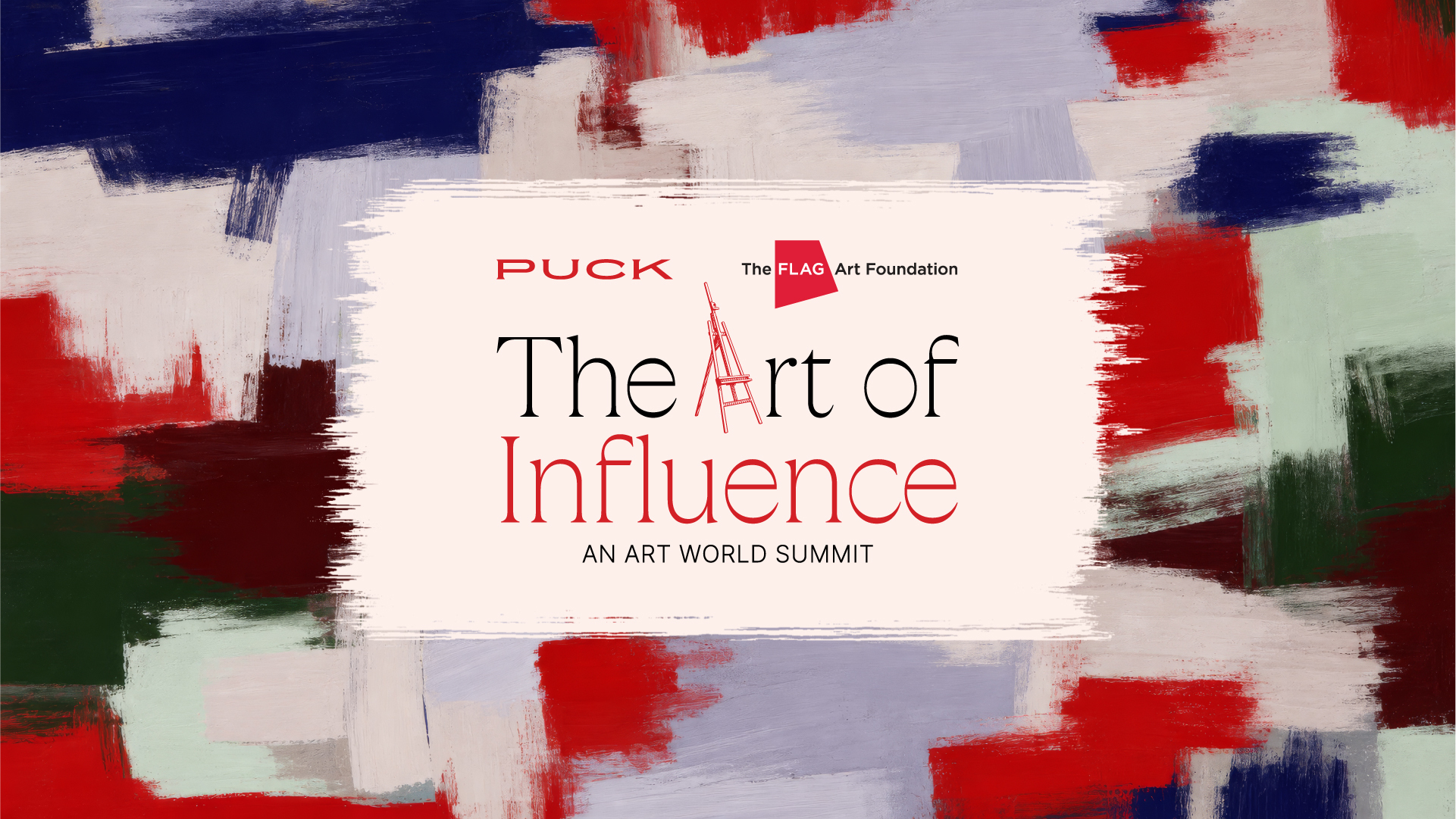
The Art of
Influence, September 23, The Bowery Hotel
|
Earlier this month, we announced the second iteration of Puck and the FLAG Art Foundation’s Art of
Influence conference—a place for art advisors, collectors, artists, and others in the industry to speak their minds about the challenges and opportunities facing the art world. This year’s conversation will include Christie’s C.E.O. Bonnie Brennan, Pace Gallery founder and chairman Arne Glimcher, Pace C.E.O. Marc Glimcher, Metropolitan Museum of Art trustee Jen Rubio, and Siren
Projects founder Sophia Cohen. FLAG founder Glenn Fuhrman and I will moderate. Space is limited, so buy your ticket here. (More speakers will be announced in the coming weeks.)
Also mentioned in this issue: Anthony d’Offay, Georges Bataille,
Wassily Kandinsky, August Macke, Franz Marc, Mason Klein, Karl Marx, Georg Hegel, and more.
Let’s get started… |
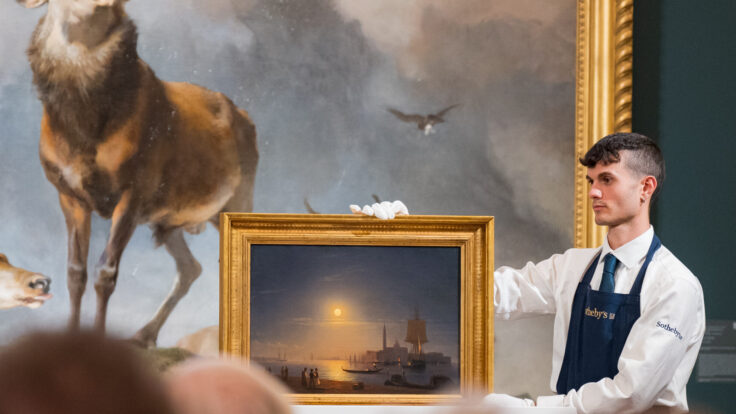
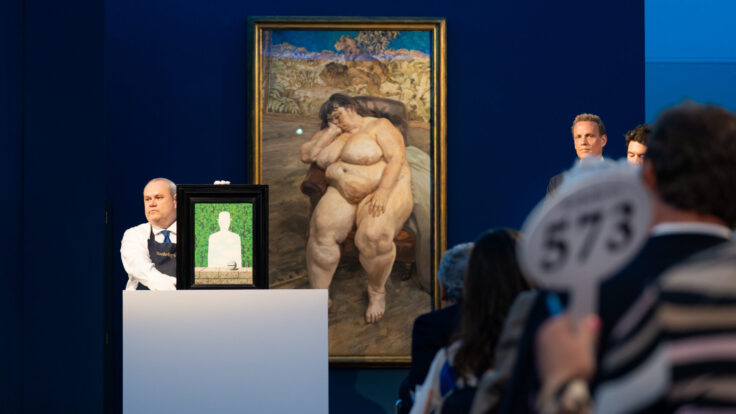
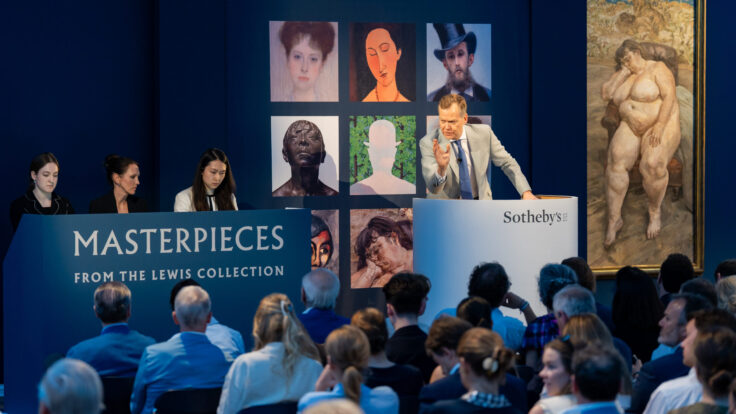
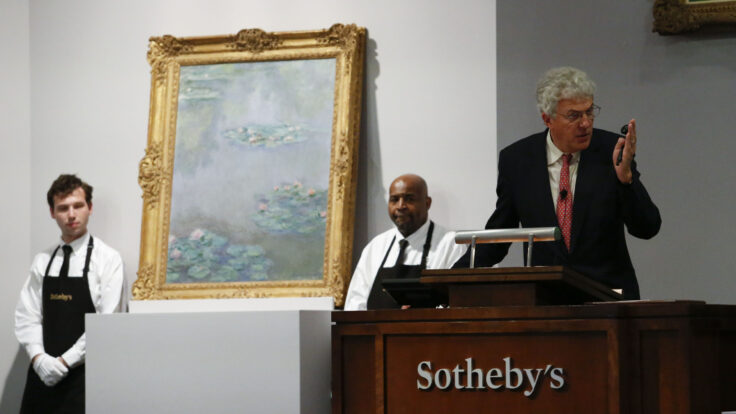
- Sotheby’s $4.4 billion first half: Sotheby’s has released its results for the first half of the year, and the news is good: $4.4 billion in sales across fine art, real estate, automobiles, and luxury. That total broke down into $3.4 billion in auction sales, up 59 percent from 2025, and $826 million in private sales—up 52 percent from the previous year and a record for any semester at Sotheby’s.
Some other important metrics were the 90 percent sell-through rate across
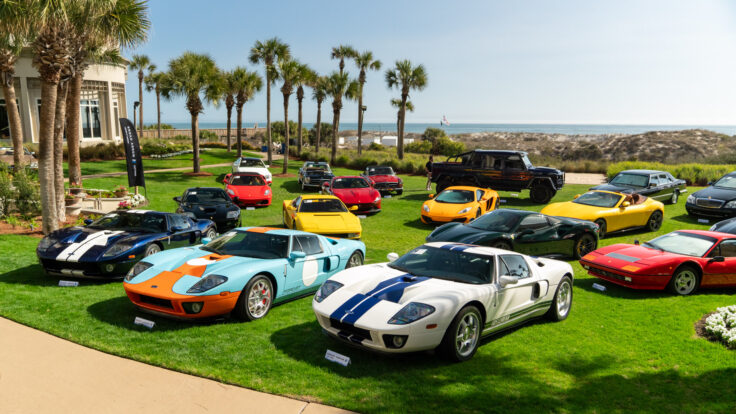
the company; an average of 4.9 bidders per lot, up 6 percent and also a high-water mark; and some financial milestones, including the refinancing of $825 million in debt through bonds and the securitization of $900 million in loans offered through Sotheby’s Financial Services. Also noteworthy, RM Sotheby’s car sales rose 61 percent from 2025; watch sales grew 64 percent; and jewelry sales were also up, at 13 percent. A Sotheby’s rep pointed me to a report showing that fine art auctions led the
way, rising 70 percent year over year. - Herbert Lust’s death revealed: I’m late to this because I was away, but I want to acknowledge The New York Times’s obituary for banker and collector Herbert Lust, who died in May. I haven’t learned why the obituary
came so long after Lust died, but I do know that his collection will be a significant prize for whichever house gets it. You can get a sense of its scope in this video, which Sotheby’s produced seven years ago.
- Rauschenberg Foundation gives three sculptures to Artist Rooms: The Robert Rauschenberg Foundation announced this morning
that it has donated three sculptures created in 1986 and 1987, from the artist’s series of Glut works, to Artist Rooms—a collection shared by the Tate and the National Galleries of Scotland, which was founded in 2008 with a gift from the dealer Anthony d’Offay. The gift will be featured in a show of 25 works from the artist’s career that will open in late September at the Tate Modern in London.
- “Iron Man Is Born!” sells for $3.875
million: Heritage’s sale of comic art included a “splash” page from the debut of Iron Man in 1963’s Tales of Suspense #39, which had six bidders vying for the work above $3 million. The final selling price was
nearly $3.9 million. That number, while very impressive even for the debut of a comic book character as important as Iron Man, isn’t unprecedented. Heritage says that the debut of Spider-Man’s black costume in Marvel Super-Heroes Secret Wars #8, from 1984, sold four years ago for nearly $3.4 million.
|
Now, let’s talk about Paul Klee and Walter Benjamin… |
|
|
|
A brilliant survey of the artist’s work at the Jewish Museum, including drawings
inspired by his Nazi harassment, makes the case for his stature among modern artists. It also makes a courageous statement about the return of authoritarianism today. |
|
|
|
I’ll admit that I wanted to see Paul Klee: Other Possible Worlds at the Jewish Museum
primarily because the show, a survey of the late work of one of the least discussed but most important artists of the modern era, contained a single work of great personal and historical interest to me. And I meant to write about it sooner, but the calendar got in the way. Now the show has fewer than 12 days to run, but I still wanted to tell you about it—and suggest that, if you’re in New York through July 26, you go see it.
I was surprised, as I often am with the very good exhibits at
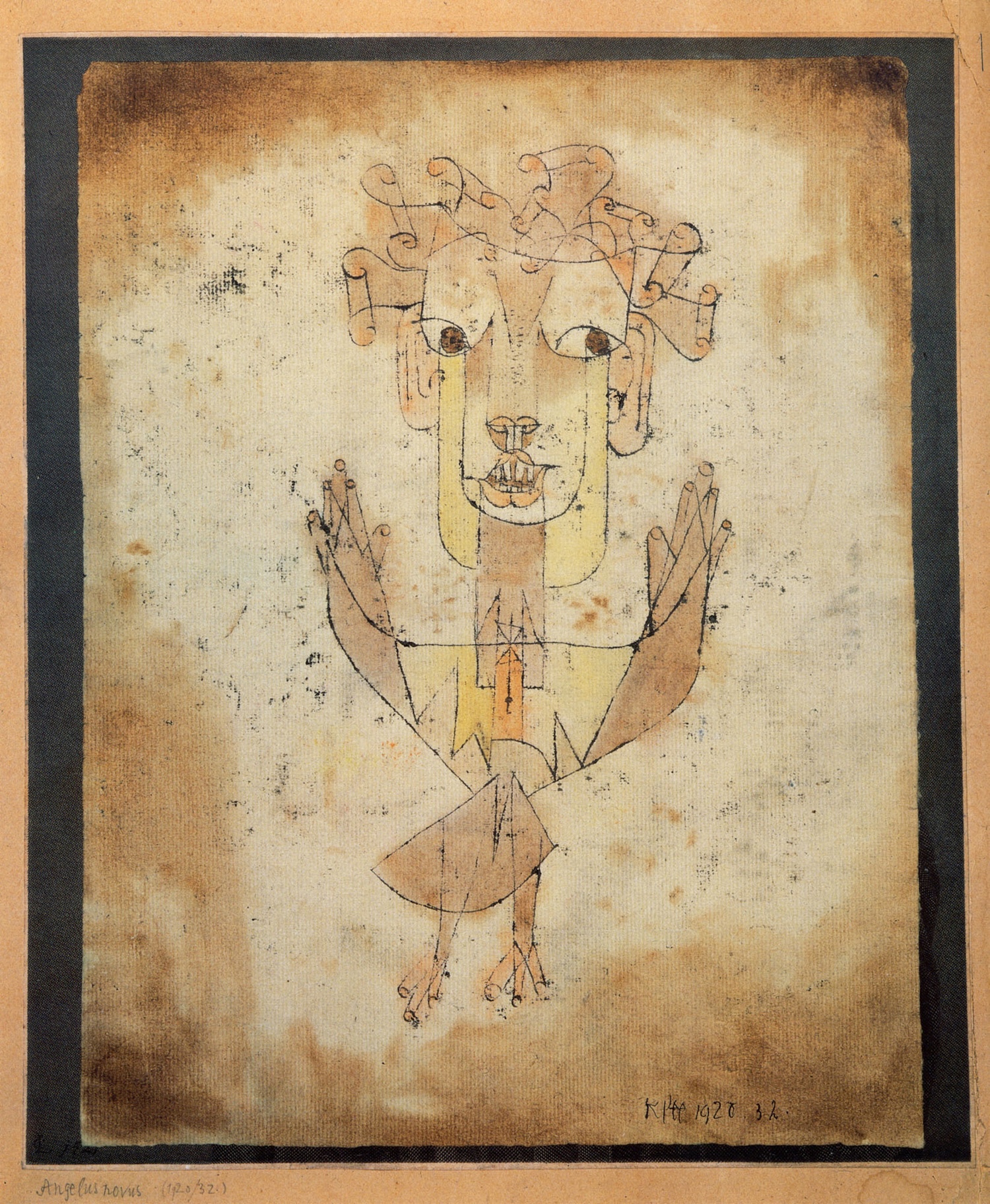
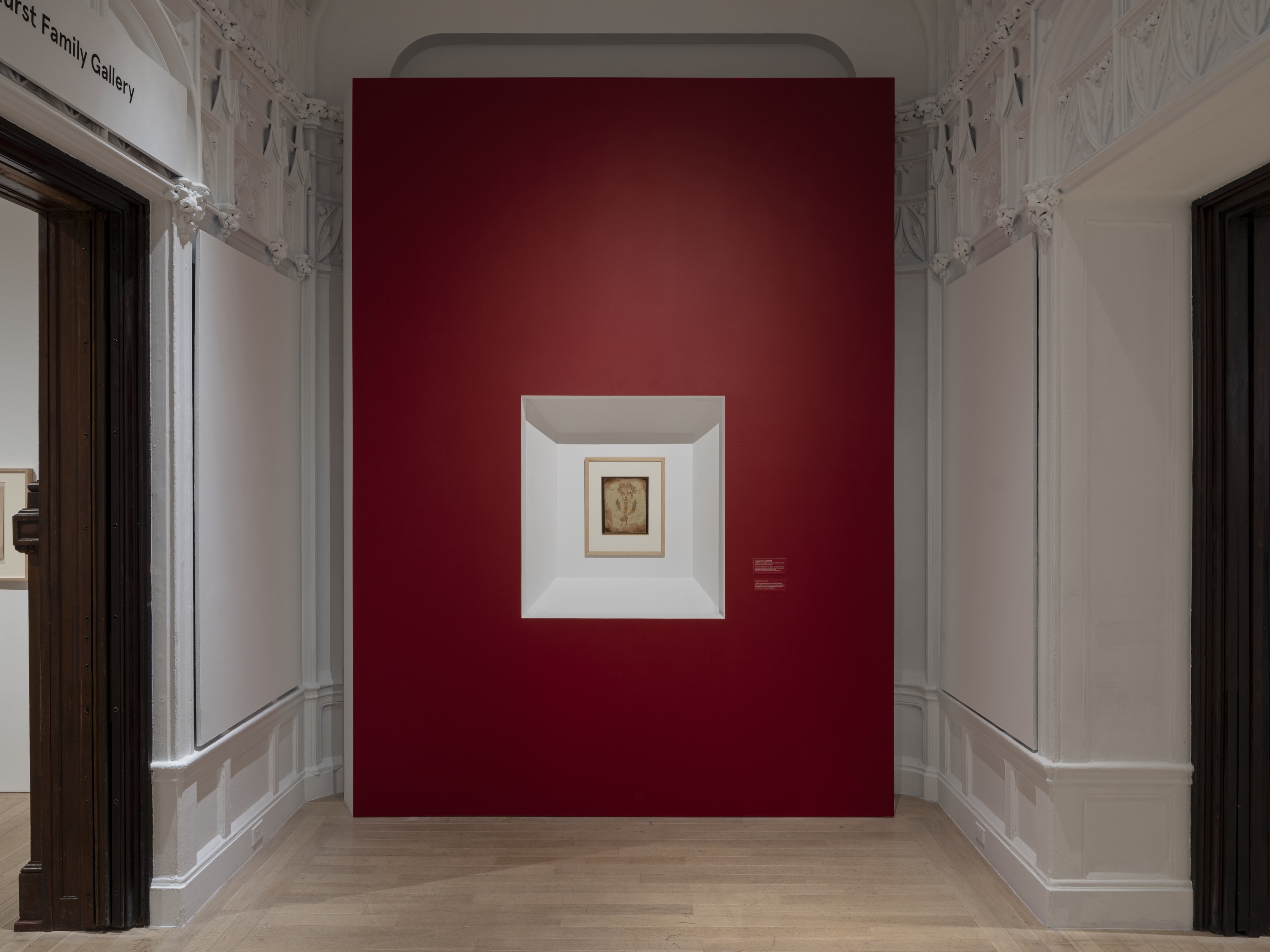
the Jewish Museum, that there had been little advance notice of the show. Indeed, I learned about it only from a stray Instagram video that focused on the show’s inclusion of a small, faint, and finely drawn work on paper made in 1920 that depicts a figure Klee called the Angelus Novus. In Klee’s eclectic body of work, the Angelus Novus is a minor object. Even though it was made at a pivotal moment in his career, as he was about to become a celebrated teacher
at the famed Bauhaus, the work would not have deserved a room of its own in the exhibition had it not become famous—very famous to anyone who studied what we used to call “critical theory,” which emerged from the Frankfurt School in the 1930s. |
Paul Klee, Angelus Novus (1920). Photo: ARS/Courtesy of the Jewish Museum
|
A generation of students in the 1960s and ’70s who were then trying to understand, from a
distance, the attraction of authoritarianism—the same force that has overwhelmed our political institutions these past 10 years—read the work of the Frankfurt scholars, who had lived through the threat in the most direct way. But they also read one of the Frankfurt School’s intellectual godfathers, the indefinable literary critic and philosopher Walter Benjamin.
Unlike his Frankfurt School peers, Benjamin dithered about leaving Europe as Hitler consolidated power and
launched his attacks. When he finally did flee France, in September 1940, he was halted at the Spanish border by guards who threatened to turn him and his party back to occupied France. Panicked, the 48-year-old Benjamin took his own life by overdosing on morphine, an act that proved more hysterical than rational when his traveling party was allowed to transit into Spain the next day.
Before leaving Paris, Benjamin had entrusted his most important possessions to his fellow intellectual
Georges Bataille. Among those objects were Klee’s Angelus Novus, a cherished work that Benjamin had acquired in 1921. In the end, the Angelus Novus would become the inspiration for one of his most important essays and ideas. |
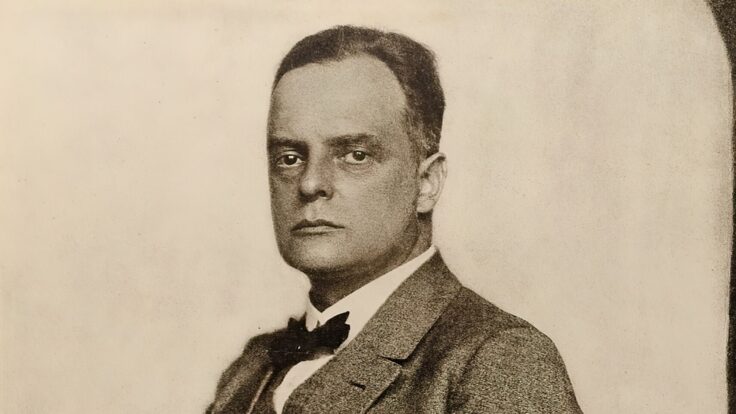
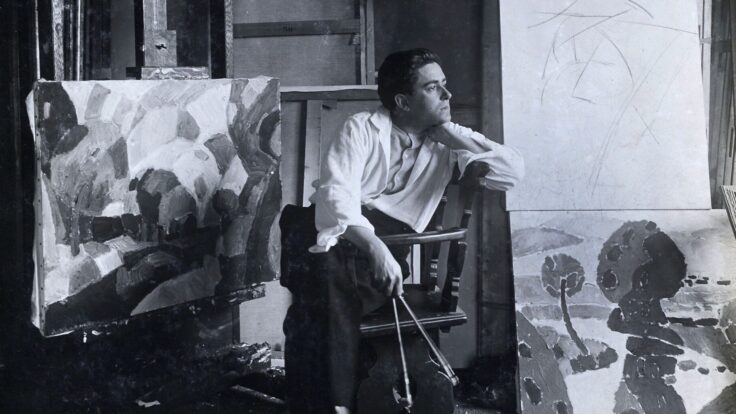
Paul Klee is a difficult artist to categorize. Born in Switzerland to a German music teacher and
his Swiss singer wife, Klee seemed destined to be a musician. But he eventually emerged as a graphic artist and achieved some level of prominence as an illustrator and artist. A friend of Wassily Kandinsky, August Macke, and Franz Marc, all of whom were central figures in the expressionist group the Blue Rider, Klee would serve in the German army during the First World War and come away with a profound commitment to modern art’s
revolutionary potential. In 1920 he joined the staff of the Bauhaus in Weimar, eventually moving with the school to Dessau but leaving in 1931 under growing pressure from the increasingly conservative German government. According to Mason Klein, the curator of the show, Klee’s commonality with several important modernist art movements is one reason to argue for his central importance in art history. “The Munich expressionists laid claim to him,” Klein writes in the catalogue for
Paul Klee: Other Possible Worlds. “The Zurich Dadaists hailed him, and to the French surrealists, he was a kindred spirit.”
The Jewish Museum’s show is a rare opportunity to see the sweep of Klee’s varied, inventive, and nearly indescribable output as an artist, even though the exhibition focuses on the artist’s late work as he struggled with increasing persecution. The Nazi regime, which tried to claim Klee was Jewish, eventually included his work in its infamous exhibition of
degenerate art and seized works by the artist that were owned by German museums. Despite the overwhelming force of the German government to quash Klee, the artist never bowed or compromised. |
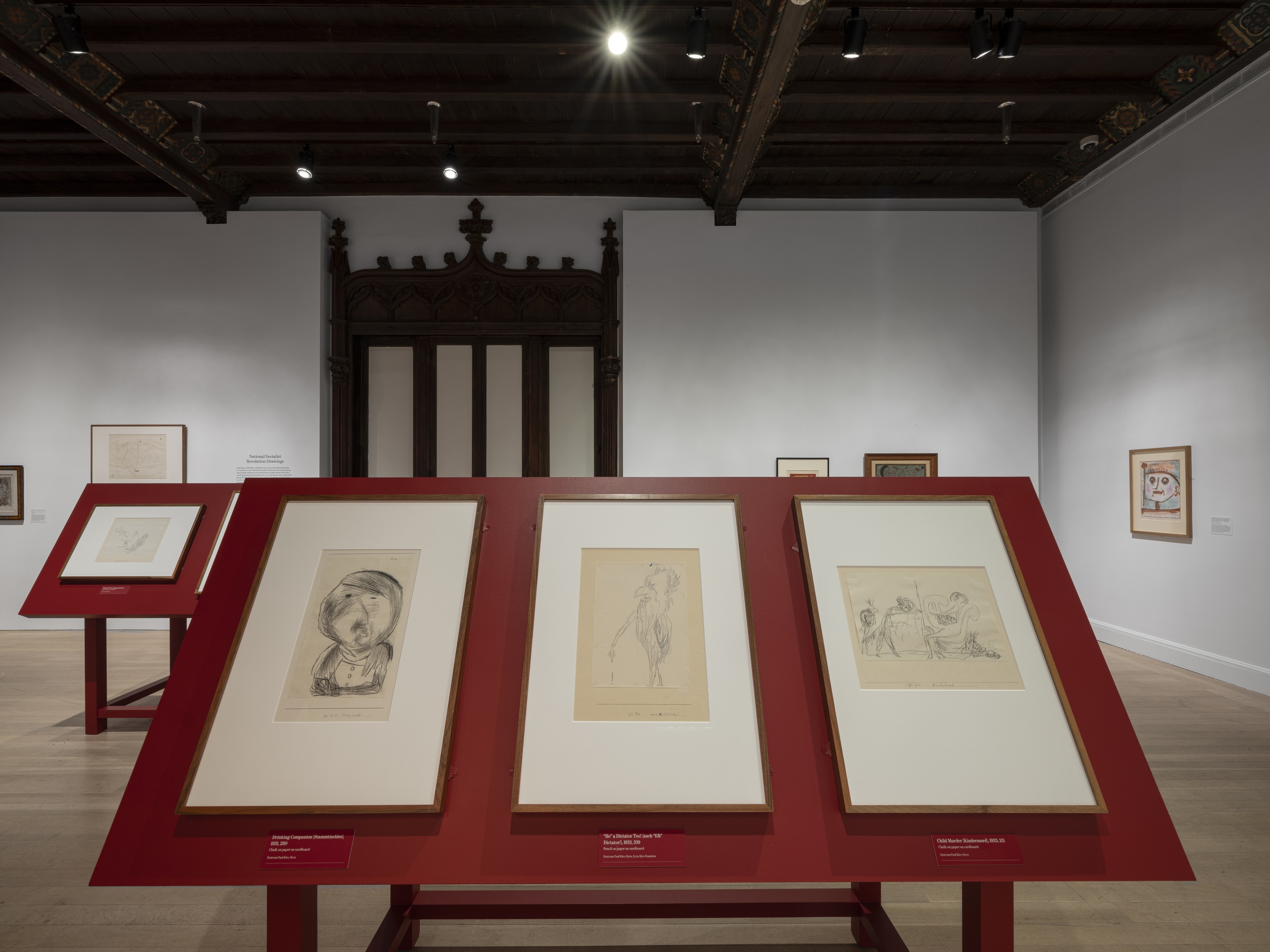
Paul Klee: Other Possible Worlds at the Jewish Museum, New York. Photo: Kris Graves
Projects/Julian Calero |
Central to the show is a rarely seen suite of drawings that Klee made in direct response to the
rise of the Nazis in German life. The stark, delicate, and vulnerable drawings lack the colorful ingenuity and coded criticism of Klee’s best work—but they are, in many ways, the reason for the show. The Jewish Museum isn’t pulling punches here: The show wants you to see how artists deal with the rise of anti-intellectual populism. One clear subtext of the show is the gnawing question of why we have not seen any artists produce images that adequately deal with our own descent into cultural and
intellectual vulgarism. Or maybe, like with Klee, whose output increased dramatically in the final years of his life, ending in 1940, we just haven’t seen it yet. |
The inclusion of Klee’s Angelus Novus in the show—in its own room, isolated even from the
other angels that the artist made throughout his lifetime—is another reminder of the Jewish Museum’s objective. Walter Benjamin is mostly remembered for his essays about the late 19th century emergence of consumer culture and his meditation on the role of the work of art in an age of mass media. Those ideas, once radical, have become almost commonplace (when you’re casually referencing Baudelaire’s flâneur, you’re actually quoting Benjamin) and oddly accepted even as
the digital world amplifies everything that first intrigued Benjamin. The “aura” of an original artwork or event has only become greater in the era of frictionless digital replication. |
Paul Klee: Other Possible Worlds at the Jewish Museum, New York. Photo: Kris Graves
Projects/Julian Calero |
Benjamin’s other great intellectual contribution was to the philosophy of history. The last thing
he wrote was a series of “theses” on history that argued with the mechanical optimism of Marx’s historical materialism and Hegel’s idea that historical understanding comes only long after the ability to act has passed. “The owl of Minerva,” Hegel tells us, “takes flight only at dusk.” Using the image of the Angelus Novus, Benjamin offered a different but no less depressing metaphor for historical understanding. Benjamin’s angel of history faces
backward, toward the past, but is blown into the future by the force of a great calamity. All the angel can see is the destruction and damage wrought by the forces of modern life amplified into an extreme political movement. Sound familiar?
We should be grateful to the Jewish Museum for having the courage to present this important show and draw from it something like hope. Our modern world has survived previous calamities and gone on to renew itself in positive ways. The show demonstrates
that Klee’s legacy is a persistence, defiance, and determination to carry on in the face of an overwhelming and depressing threat. |
That’s it for today. I’ll be back tomorrow with the Inner Circle.
M |
|
|
|
Ace media reporter Dylan Byers brings readers into the C-suite as he chronicles the biggest stories in the industry:
the future of cable news in the streaming era, the transformation of legacy publishers, the tech giants remaking the market, and all the egos involved. Also featuring a weekly dispatch from Puck’s crack streaming/media analyst, Julia Alexander. |
|
|
|
Puck fashion correspondent Lauren Sherman and a rotating cast of industry insiders take you deep behind the scenes
of this multitrillion-dollar biz, from creative director switcheroos to M&A drama, D.T.C. downfalls, and magazine mishaps. Fashion People is an extension of Line Sheet, Lauren’s private email for Puck, where she tracks what’s happening beyond the press releases in fashion, beauty, and media. New episodes publish every Tuesday and Friday. |
|
|
|
Need help? Review our
FAQ page or contact us for assistance. For brand partnerships, email ads@puck.news.
You received this email because you signed up to receive emails from Puck, or as part of your Puck account associated with {{customer.email}}. To stop receiving this newsletter and/or manage all your email preferences, click here. |
Puck is published by Heat Media LLC. 107 Greenwich St., New York, NY 10006 |
|
|
|
|