{{ 'now' | timezone: 'America/New_York' | date: '%b %d, %Y' }} |
|
|
|
Welcome to The Varsity. I’m John Ourand, pressing send tonight just as
the World Baseball Classic final gets going. I won’t go as far as Aaron Judge, who described the event as “bigger and better than the World Series.” But this preseason tournament has developed into much more than mere exhibition games, as evidenced by the more than 7 million viewers who watched the U.S. beat the D.R. on FS1
Sunday night—a number that is even more impressive when you consider that it was up against the Oscars.
In tonight’s issue, Julia Alexander dives into YouTube TV’s slimmed-down and cost-competitive March Madness offering. Now that skinny, sports-specific bundles have become de rigueur for the still-growing distributor, it’s an open question how traditional media companies—and their own streaming services—can keep up. As always, Julia’s work is essential,
and only available to our Inner Circle subscribers, so click here for access. You won’t be disappointed.
All yours, Julia…
Mentioned in this issue: Devin Booker, Rob Manfred, Roger Goodell, Shohei Ohtani, Jimmy Pitaro, vertical video, Chauncey Billups, Nikola
Jokić, Kyle Kuzma, Gabe Spitzer, “prediction market enthusiasts,” Bill Simmons, Terry Rozier, Greg Peters, Adam Silver, Dave Portnoy, Ted Sarandos, Neal Mohan, Philipp Schindler, Giannis Antetokounmpo, Luana Lopes Lara, Jay Marine, and more… |
If you can’t beat ’em… join ’em? NBCUniversal executives, trying to get the most out of their $2.5
billion-a-year deal with the NBA, are leaning into Generation TikTok with the launch of a mobile-only broadcast of games presented in a 9:16 aspect ratio, also known as vertical video. As I reported a few weeks ago, Comcast recently partnered with Japan’s Nippon TV on pursuing this exact kind of streaming enhancement. It should, theoretically, not only entice those who watch games on their phone to spend more time on the app, but also introduce new advertising opportunities for partners. I still
don’t know how many 25-year-olds want to solely watch Nikola Jokić (one of the earlier proposed features is being able to track a single player during a game), but I always give credit to those who try. |
- Ohtani’s real value: Opening day is eight days away, but we’re already in midseason form when it comes to the Shohei Ohtani discourse. Specifically, some of our sports media peers are wondering if MLB’s decision to partner with Netflix on the World Baseball Classic in Japan may drive away some of its Japanese audience at the height of Shohei mania. John dug into this question
in last night’s column, but more than 70 percent of Japanese baseball fans specifically follow MLB because of Japanese talent on the international stage, per a recently published YouGov study, and Ohtani has helped boost MLB viewership by 22 percent in the country as of last June, per the league.
Sorry to all the naysayers out there, but that’s precisely why it’s the right time for both MLB and Netflix to experiment with how much Japanese audiences care about paying for
access to Ohtani. It’s a question of diehard versus casual fans, the latter of whom are disappearing as the pivot to streaming continues. Netflix co-C.E.O. Greg Peters has pointed to Japan as a high-value market with underwhelming engagement (hence, bidding on the World Baseball Classic), while Rob Manfred is in the process of tearing up the very foundations of his league (see: every regional sports network conversation) to figure out what will work tomorrow, as
opposed to just plugging the hole that exists today. Even if WBC viewership decreases slightly in Japan, it’s a question of whom to build for over the next few years, not how to capture fans who may churn out anyway. - The NBA’s Kalshi headache: Last month, when Giannis Antetokounmpo announced his minor investment in Kalshi, the most active sports betting app that’s technically not a sports betting app, NBA commissioner
Adam Silver found himself drawn into another press cycle about the relationship between his professional athletes and the growing world of sports betting. At the time, Silver said his understanding of Antetokounmpo’s stake was that it was a “minuscule investment, less than 1 percent,” but acknowledged it was an issue that he was paying “enormous attention to.”
As of this week, Silver has more Kalshi-associated players to track. Phoenix Suns guard Devin
Booker has partnered with the prediction market for a March Madness promotion that would award $1 billion for a perfect bracket. Luana Lopes Lara, Kalshi’s co-founder, tweeted about the deal by joking that with Booker and Antetokounmpo, Kalshi was starting to collect its “starting five,” tagging Bucks forward Kyle Kuzma, who is also an investor. Every league commissioner is going to have to navigate these endorsements as sports betting
continues its path to ubiquity. But Silver is in a particularly tricky spot, considering an F.B.I. gambling investigation last fall resulted in the arrests of Trailblazers coach Chauncey Billups and the Heat’s Terry Rozier. (Both men have pleaded not guilty.)
Here’s my two cents: Let’s establish a crystal-clear rule that if you’re an active player, coach, or employee of the league, you can’t be involved with a sports betting company—or a
prediction market. - YouTube’s “preferred” podcast strategy: So much of the video podcast wars currently being fought by Netflix, YouTube, and Spotify comes down to how the show’s creators and hosts can find the most viewers and make the most money. YouTube promises reach. Netflix’s recent deal with Bill Simmons’s Ringer and Dave Portnoy’s Barstool leaned on upfront revenue. Ditto Spotify, which has
secured big talent with upfront cash.
Now, YouTube’s advertising team is responding by expanding its “select” ad tier, which is reserved for top brands on other YouTube videos. YouTube’s “Top Podcast Lineup” will now let premium advertisers buy better placements across five categories of video podcasts: sports, news, comedy, society/culture, and true crime. This comes after YouTube’s move last year to introduce dynamic ad insertion, giving both creators and brands more control. Time will
tell if any of this moves the needle.
|
|
|
|
The world’s biggest streaming company just unleashed a sports-centric skinny
bundle that will air every game for about the same price as a combined ESPN/HBO Max/Par+ subscription. Is the appeal limited to superfans, or is this just the beginning of YouTube TV’s master plan? |
|
|
|
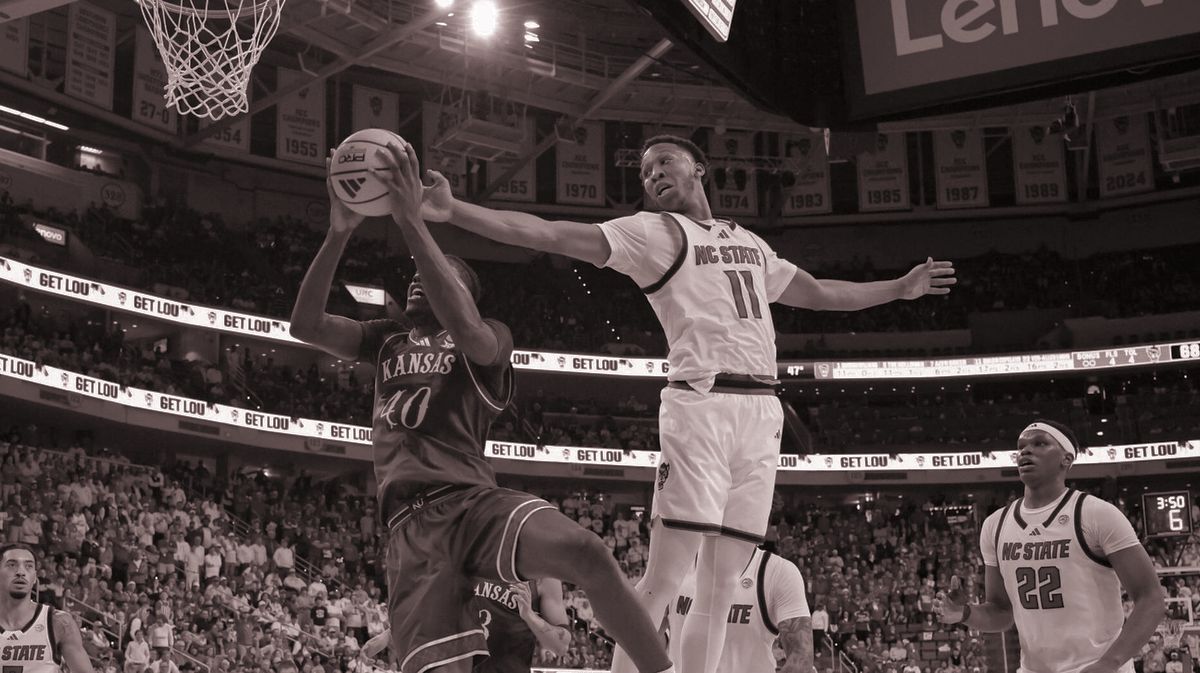
In a couple of days, millions of diehard college basketball fans and Kalshi gamblers—er, sorry,
prediction market enthusiasts—will pack their local bars or plop down in front of their TV sets to binge the NCAA basketball tournaments. March Madness is an annual ratings bonanza, with viewership in 2025 surging to a multidecade high. But there’s an emerging question in media C-suites regarding how fans will watch.
Yes, the majority of games will be aired across Warner Bros. Discovery (TNT, TBS, HBO Max), Paramount (CBS, Paramount+), and ESPN (the women’s brackets)
networks. In recent years, fans have had to juggle multiple streaming packages or, uh… just sign up for cable. But now there’s another option. Last month, YouTube TV launched a sports-centric skinny bundle. And March Madness will provide the first major test of consumer behavior where a virtual TV provider is about the same price or cheaper than the à la carte streaming combo of HBO Max, Paramount+, and ESPN.
Let’s do the quick math, and get into all the asterisks, too. Signing
up for Paramount+, HBO Max, and ESPN Unlimited is about $50 a month, combined, depending on what plans customers choose. For March Madness, you’ll need a Paramount+ Premium plan to access games on CBS, which brings the total cost to about $55. Meanwhile, YouTube TV’s new sports-centric skinny bundle is $55 a month for new customers. Sadly, for sports fans who also enjoy people yelling at each other, the package doesn’t include Bravo or CNN. But it does have ESPN, TNT, TBS, FS1,
and all the broadcast partners. Plus, it includes Peacock-exclusive programming (like the Big Ten and Big East NCAA conference tournaments) via the recently relaunched NBC Sports network. That would otherwise be another $11 a month for the truest Madness devotees.
So for about the same price, you get all of the same games—but you also get them all on one platform. Sunday Ticket fans, or even those coming off weeks of watching Olympics coverage on Peacock, know the real
value proposition in watching sports these days is, you know, actually being able to find the games. The streaming revolution has fomented a maddening fragmentation of sports rights across apps and interfaces, a problem that YouTube TV and Amazon Prime Video, among others, are trying to address.
Sports audiences are particularly overwhelmed with having to navigate a plethora of different channels. Just under 90 percent of all fans are at least “somewhat” frustrated with the current
landscape, with nearly 25 percent of audiences identifying as “very frustrated,” per Hub Entertainment’s latest report on sports viewership habits in the U.S. But nearly 70 percent of fans said that ESPN’s “Where to Watch” and Roku’s “Sports Zone” features, which direct audiences to games, make it much easier, and they’d like to see other companies offer similar solutions. |
What
YouTube Needs (And What It Doesn’t)
|
YouTube, of course, long ago shed its role as a media disruptor. Today it’s just… modern
media, with its own virtual cable distributor that competes with dinosaurs like Comcast and Spectrum. The company generated more ad revenue in 2025 than Disney, Paramount, and WBD combined, and Google’s chief business officer, Philipp Schindler, has repeatedly described YouTube TV as a core component of the company’s vision for the future of the industry. In a recent note, analyst Michael Nathanson estimated that nearly a third of all YouTube revenue
comes from its subscription products, including YouTube TV, now the fourth-largest cable distributor in the country. It is also the most popular virtual cable package, with 10 million-plus subscribers—more than double Hulu+Live TV.
But YouTube TV still has plenty of room to grow, especially if it can out-innovate the competition. Take something as simple as split-screen multi-viewing: YouTube TV didn’t invent the format, but YouTube built an arguably better product (more intuitive with
more customization features) for the right generation of cord-cutters at the right time. It’s also experimenting with alt-casts, which would allow separate broadcasts of copyrighted content to run alongside an official partner’s feed, driving more advertising. Meanwhile, YouTube C.E.O. Neal Mohan is betting that it’s more valuable to own and operate a primary entry point for sports fans, rather than to own sports rights themselves. The recent moves by NBC Sports and ESPN to
integrate their content into YouTube TV are early proof points that legacy partners see value in that arrangement too.
And the timing is right for YouTube TV to push aggressively. With cord-cutting a fact of life for legacy players, and streaming services struggling to sustain growth, the likes of Disney, Comcast, and Paramount increasingly need distribution partners rather than rivals. Continuing to work with Google helps offset expensive new rights packages, YouTube TV benefits from
having more exclusive programming, and fans tired of closed ecosystems get a more comprehensive sports option. It’s a workable alignment of interests, for now.
If March Madness becomes a meaningful subscription driver in the post-NFL lull—YouTube TV lost an estimated 500,000 or so subs in Q1 last year—the new lower price point and multiview features could help reduce churn and lift the lifetime value of a subscriber without a significant increase in acquisition spend.
When YouTube
comes up in my calls with analysts, the conversation almost always runs to the same question: What’s their endgame? Outbidding the incumbents for marquee rights? Letting creators continue building their own sports broadcasts through independent partnerships, like the existing Bundesliga deal? The more defensible answer is probably neither. Having already demonstrated that YouTube didn’t need premium content to get ahead of Hollywood, the same logic may apply on the distribution side. YouTube may
not need to own live sports to have the most appealing sports TV product for the next generation of viewers—but the ultimate challenge will be maintaining just enough of the right content, at all times, to keep that proposition credible. |
Thanks, Julia. See you all on Thursday.
John |
|
|
|
Puck sports correspondent John Ourand and a rotating cast of industry insiders take you inside the executive suites
and owners boxes where the decisions that shape the entire sports business are made. You’ll hear interviews with players, network execs, and everyone in between. The Varsity is an extension of John’s private email for Puck by the same name. New episodes publish every Wednesday and Sunday. |
|
|
|
Ace media reporter Dylan Byers brings readers into the C-suite as he chronicles the biggest stories in the industry:
the future of cable news in the streaming era, the transformation of legacy publishers, the tech giants remaking the market, and all the egos involved. |
|
|
|
Need help? Review our
FAQ page or contact us for assistance. For brand partnerships, email ads@puck.news.
You received this email because you signed up to receive emails from Puck, or as part of your Puck account associated with {{customer.email}}. To stop receiving this newsletter and/or manage all your email preferences, click here. |
Puck is published by Heat Media LLC. 107 Greenwich St., New York, NY 10006 |
|
|
|
|