Hello, and welcome back to The Best & The Brightest, your daily politics dispatch from Puck. It’s
foreign policy Thursday and I’m your host, Julia Ioffe, absolutely livid at what VAR has done to the World Cup.
Tonight, a conversation with my dear friend Nina Khrushcheva, granddaughter of late General Secretary Nikita Khrushchev and a professor at the New School in New York. Despite being labeled a foreign agent by the Kremlin, Nina bravely continues to travel to Russia to bear witness to how Vladimir Putin’s war is
transforming the country of our birth. She painted a vivid and rare portrait of what life is like in Moscow, which is where I found her this week.
Also mentioned in this issue: Evan Gershkovich, Michael Jordan, Graham Platner, Dmitry Peskov, Morris Katz, Mikhail Gorbachev, Mike Collins, Andrew Eisenberger, Boris Yeltsin,
Konstantin Chernenko, Zohran Mamdani, Kip Talley, Phil Jackson, and more. |
|
|
|

| Marianna Sotomayor
|
|
- Platner’s plotz: While
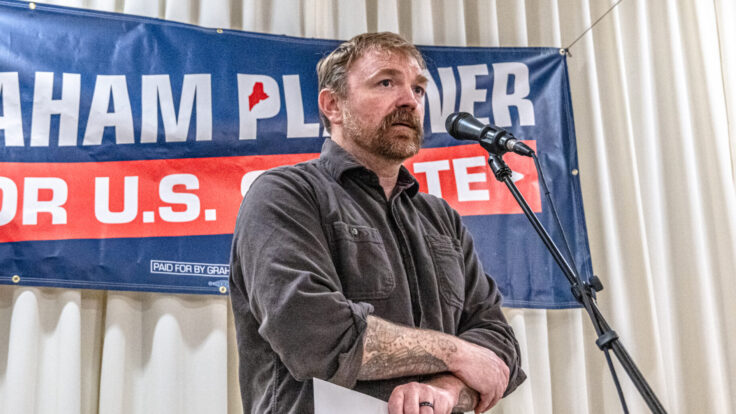
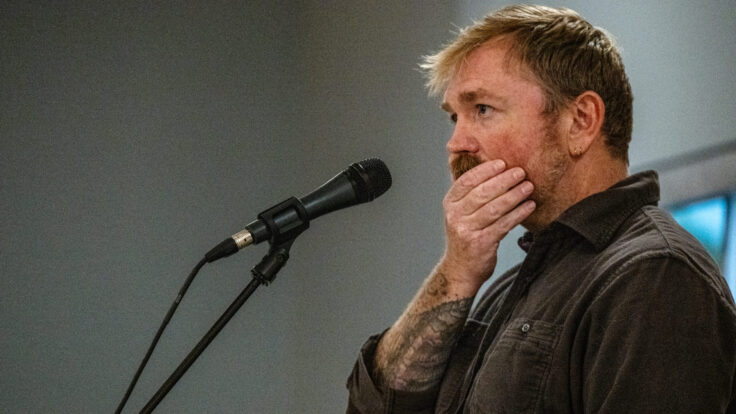
candidates accused of egregious misconduct are expected to face blowback, strategists rarely become targets. But in the aftermath of Graham Platner’s implosion, a number of veteran Democratic operatives are putting the blame on Morris Katz, the self-styled wunderkind and former Mamdani campaign advisor who helped recruit the Nazi-tattooed alleged rapist. (Platner has denied both the sexual misconduct accusations and knowledge that his tattoo was
Nazi-affiliated.)
Katz had argued that the oyster farmer’s outsider appeal and rugged charm could redefine and broaden the party, and various operatives credited him with creative TV spots and media strategies for both Mamdani and Sen. John Fetterman. But they bristled at his claim to have cracked the code for electing a new generation of populist candidates that could succeed in notoriously swing districts or states. “Trying to take credit for Mamdani is like
Phil Jackson trying to take credit for Michael Jordan,” one strategist told me. “It’s nothing brilliant he’s figured out. We put flipping the Senate in jeopardy because of his ego.”
Anyway, Katz committed the ultimate consultant cardinal sin by making himself the story—a quirk embodied by his “best not miss” post on X and brash public defenses of Platner. “To me, the concern with Katz’s approach is that he seemed to treat reasonable scrutiny as a personal
attack,” a senior Democratic aide told me. “Campaigns need people who keep the focus on the candidate… not on themselves.” Over the past several months, I’ve also heard from multiple campaign operatives that Katz was absent from strategy calls. In one instance, he was reportedly in London, advising progressive British candidates. (Katz did not respond
to a request for comment.)
Sure, Katz possesses genuine talent as a video storyteller, but that can only take a campaign so far. As Tré Easton, the vice president for public affairs at Searchlight Institute, told me, “If you just want to be right and you don’t want to actually win elections, you’re going to get into trouble, like we’re seeing with Platner.”
In his first post since Platner dropped out, Katz wrote on X: “Like so many of his
supporters, I’m deeply disappointed.” But that isn’t cutting it for some: An online petition has garnered more than 120 signatures from democratic socialists calling on “D.S.A. candidates and elected officials to no longer contract or work with Morris Katz or Fight Agency, his political consulting firm.”
|
|
|
|

| Leigh Ann Caldwell
|
|
- Collins staff chaos:
Republican Senate nominee Rep. Mike Collins has appointed his third chief of staff to his Capitol Hill office in just the past six months, continuing the high turnover among his senior advisors—never a good sign for a high-profile candidate.
Brandon Phillips, Collins’s longtime confidante, left the office in January to focus on the Senate campaign. Months later, after Phillips mocked a political operative whose wife had accused
former NBC host Matt Lauer of rape, Collins fired him. Phillips’s replacement, Kip Talley, also brought baggage: According to Slate, Talley participated in a group chat with white nationalists Nick Fuentes and Richard Spencer about securing the release of Holocaust
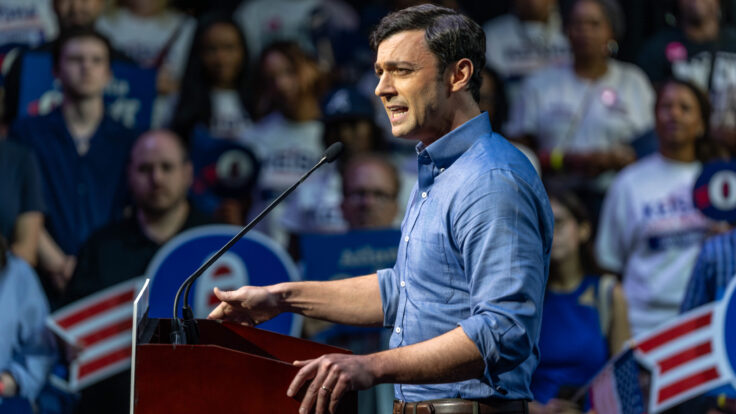
denier Charles Johnson from prison. “At the end of the day, he’s sloppy in his hiring practices, and it shows in his Senate race,” one Republican aide told me. Collins, who won a runoff to take on incumbent Jon Ossoff for a U.S. Senate seat in Georgia, also continues to face scrutiny over his own history of racist and antisemitic posts on X.
Collins’s new chief, Andrew Eisenberger, returned to the office after a short stint in the private sector. (Neither Eisenberger nor Collins’s campaign responded to requests for comment.)
|
|
|
|
And now, on to the main event… |
|
|
|
In a conversation from Moscow, Nikita Khrushchev’s granddaughter describes a society
adjusting to shortages, tighter government surveillance, blocked cellphone service, and the realization that Putin’s war has reached home. |
|
|
|
The mood in Russia, it seems, is turning very, very dark, very, very quickly. The country, a petrostate and
one of the top oil producers in the world, is in the grip of a gasoline shortage. Miles-long traffic jams are forming at gas stations, where desperate Russians are getting into physical altercations, having meltdowns, and often not getting any gas. In the meantime, Crimea is increasingly cut off from mainland Russia—its only land connection, after all, is to Ukraine—and stranded tourists are sending desperate messages, pleading for help getting home. All of this is the work of Ukrainian drones,
which have been hammering Russian oil refineries, taking nearly a third of them offline.
Because of the draconian military censorship and increasingly brutal dictatorship (highlighted by Evan Gershkovich’s imprisonment), there aren’t many independent or Western journalists on the ground anymore. So I called my dear and brilliant friend Nina Khrushcheva—granddaughter of Nikita—who teaches the interplay of propaganda and dictatorship at the
New School. Despite the dangers, and the fact that the Kremlin recently labeled her a foreign agent, Nina continues to go back to Russia to bear witness to how the war is transforming the country of our birth. I called Nina, who is now in Moscow, to get her view of what things are really like in the Russian capital—and what the Russian version of hope looks like. I hope you find our conversation, which has been edited for clarity and length, as fascinating as I did. |
“Now It’s
Back to Despair”
|
Julia Ioffe: What’s happening in Moscow and the rest of the
country?
Nina Khrushcheva: There are gas lines, even in Moscow—although, of course, Moscow is being better supplied than anywhere else. Meanwhile, the Kremlin is telling people, “Oh, it’s just logistics.” And everyone can see that it’s not. When [the Moscow oil refinery at] Kapotnya is exploding in front of their eyes, it’s obviously not logistics. [Putin’s spokesman Dmitry] Peskov is saying everything is under control at the St. Petersburg Economic Forum, while half of St. Petersburg was getting blown up. Even pro-Kremlin war bloggers are pissed because
the Kremlin keeps blocking mobile internet service on the pretext of protecting Moscow from Ukrainian drones. But half of Moscow is still getting blown up, and they’re like, “I’m sorry, you’re blocking shit, and they’re going through, so how is that possible?”
For the first time, I’m seeing how the picture the Kremlin is painting no longer corresponds to whatever the Kremlin is saying it is. It didn’t before, but they went in parallel. If you don’t want to listen to the Kremlin or the
Duma, fine, you go to your McDonald’s—or whatever it is, the non-McDonald’s—and you go to the bookstore and the theater and you basically shut it out. You can have a parallel life. But your parallel life is no longer possible because the prices are high. There are lines for gas. You can no longer pretend that all this doesn’t
exist.
What about all the things that Muscovites loved to brag about, all the mobile services where everything you could ever need is yours with the push of a button on your phone. How do mobile internet restrictions affect something Muscovites were always so proud of?
I was meeting a friend for dinner and she told me the address of some restaurant I’d never heard of, and I got lost. So I’m running around and I can’t call her because we have no service because of
these restrictions, so I had to turn on my American phone, which went through a satellite, and call her through America because I couldn’t reach her with the Russian phone—even though she was down the block. It was absolutely psychotic.
What do other Russians do? I imagine most of them don’t have an American phone they can fall back on.
Well, the government is now blocking V.P.N.s on mobile networks. V.P.N.s work on Wi-Fi at home, but most of the time, they don’t
work on your phone when you walk the streets. Telegram is not working because Telegram is “dangerous.” There’s a South Korean messenger, there’s a Turkish messenger. People just download them all. I know a friend who has 10 apps like that, and so she said, “Well, if something doesn’t work, I just use another one.” It’s that
Russian thing when, instead of fighting, you adjust and circumvent. But it’s getting harder and harder to adjust and circumvent, and it’s getting harder and harder not to notice.
If I can describe the feeling in Moscow, it’s this: There was despair at the beginning, in February 2022, and then the despair went away and people went back to normal life. Now it’s back to despair. It’s not even apathy—it’s a resignation. You cannot do anything, shit is going to hit the fan, things are
horrible, and you are just basically like, “How do we survive until the bottom drops out?” But then there’s also the very Russian hope that maybe it’s not going to get to that point. It is going to get to that point, but they hope that maybe it’s not going to.
Has that changed popular opinion or support for the war?
Russians never agreed with the war—maybe 20 percent supported it at the beginning, and there’s probably even less now. But when Putin started
fighting it, they were kind of like, “Okay, well, we’re going to ignore it.” And you remember, when the war began, Putin said, “It’s going to last five minutes, your lifestyle is not going to change, we’re just going to teach them a lesson, and then we’re going to be loved even more.”
Four and a half years later, clearly it didn’t work out this way, and now nothing can be changed. It’s not that Russians don’t want to lose. In fact, a lot of people just think it needs to be lost
so the freaking regime goes down. But there is also fear when you lose, with all the vigor of the Europeans now who are saying, essentially, “We are really going to fuck you over when it’s over.” When Putin is over, we’re not going to fuck only him over, we’re going to fuck all you Russians over. And, you know, no nation wants to be defeated in this sense. |
Now that it’s all going sideways, whom do people blame? The Kremlin? Ukraine? Both?
I
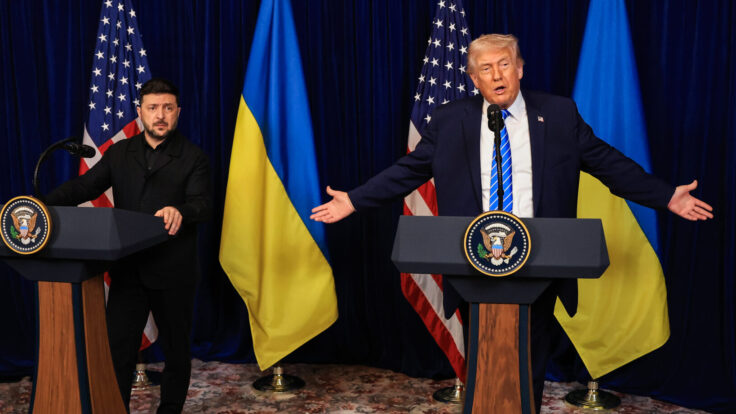
talked to a cab driver the other day, and he said, “I was such a patriot, I thought we should not lose, but now we lost, this is ridiculous, we should just stop this war. This is a good deal that we got [from Trump to freeze] the front line. Stop the war, lift some sanctions. What is [Putin] going to prove? He already proved that he cannot win.”
Then there are those who wanted to fight ’til the end but couldn’t imagine that, in the four and a half years of war, Russian
oil refineries were going to be attacked. They’re wondering, “Where is our protection? Why are you sitting on your ass when these things are happening to your people?” The problem for Putin is that he lost both. He obviously lost the liberals a long time ago, but now he’s losing these militant patriots, who are furious.
Of course, the next conclusion, which we already knew—though, for them, it took another autocrat to get to—is, “Who cares?” Do you really think anybody in the Kremlin ever
cared about your comfort? Because all of this is material for Putin’s power. The only reason he may care about the gas lines is because, god forbid, there might be some sort of revolution about it. When I was here in the winter, about 50 people in my neighborhood came out and had this winter wonderland moment. People brought snow from all the neighboring streets and made this huge hill. People brought their kids, sleds, coffee. It was lovely, like something you’d see in the old Russian paintings
of Russian winter. The police came in 30 minutes. They checked everyone’s documents and dispersed the crowd, even though no one was protesting. Because it was an unsanctioned gathering, and that terrifies them.
When we were texting earlier, you told me, “No one’s going to storm the Kremlin with pitchforks.” Why do you say that? Because Americans are always waiting for Russians to do basically that.
Yes, Americans are waiting. You also asked me, “Do
Russians understand that this is all because of Putin and the war?” Of course they understand. They’re not idiots. But it’s a very Western idea that if things are going horribly, you’re going to go and express your disillusionment publicly. Russians don’t protest this way. Russians protest with a middle finger hidden in their pocket.
I’m hearing from so many people that the regime is going to fall soon, that the Kremlin is running out of money. Do you think that’s a realistic
assessment of the situation?
We hope. It’s a hope. When Stalin died, Khrushchev was not even supposed to happen—and yet he did. When Chernenko died, Gorbachev was not supposed to happen—but he did. When the 1991 coup happened and Yeltsin got on a tank, he wasn’t supposed to win—but he did. It’s Russia, things can happen.
But in my view, what I’m seeing from Putin is that his regime
is the war, so he’s not going to stop it. If things go badly or get to the point where he cannot do it through reasonably acceptable means, whatever that means, he’ll just flip the board over and the next thing is going to be a great escalation. Remember that story that he used to tell about the
rat in the corner? So unless he’s eaten, it’s going to get worse.
Do you remember, at the beginning of the war, everybody was talking about the “snuff box option”? That somebody from the elites would hit
Putin in the back of the head with a proverbial snuff box—a reference to the fact that political change in Russia usually comes from the elite. Do you think that’s a real possibility in the near future?
Possibly. People say that if he turns to nuclear weapons—which he may, if he feels like he’s deeply threatened—then the snuff box comes in, because nobody wants to be blown up. But who knows? Russians are unpredictable.
On the other hand, he is the guarantor of all the
different political clans, and they need him to stick around so that they stay in power. And he gave too much power to the siloviki [the strongmen of the security services]. And these are a different breed of siloviki. This isn’t the K.G.B., which was under civilian control. This is the N.K.V.D. I could never understand the difference, but now, the way we’re treated, the way it’s happening, the way they’re basically punishing you for your existence. And that’s exactly
how it is. This is the N.K.V.D.
I think the siloviki are telling Putin, “We’re dealing with security, and we’re there to make sure this grumbling among the people doesn’t turn into anything bigger.” The other night, I was in the historic city center. For the first time, I noticed that all the security guards standing outside the old mansions are now armed with big machine guns. That’s new. There were always guards, but never machine guns. All of that is there to make sure you
understand that, if anything happens, they’re ready to shoot.
So on one hand, it’s getting more difficult for Russians to ignore all this shit. But Russians are very good at ignoring shit, because they know they cannot change anything and that the guards will shoot. So Russians are just going to milk as much of normal life as possible, even if it’s not normal. |
That’s all from me, friends. I’ll see you back here next week. Until then, good night. Tomorrow will be
worse.
Julia |
|
|
|
Join Puck’s chief political columnist, John Heilemann, as he roams the corridors of power and influence in America on this
twice-weekly interview show, taking you beyond the headlines with the people who shape our culture: icons and up-and-comers, incumbents and insurgents, moguls and machers in the overlapping worlds of politics, entertainment, tech, business, sports, media, and beyond. The conversations are rich and revealing, unrehearsed and unexpected… and reliably impolitic. A Puck-Audacy joint, new episodes drop every Wednesday and Friday. |
|
|
|
Ace media reporter Dylan Byers brings readers into the C-suite as he chronicles the biggest stories in the industry: the future
of cable news in the streaming era, the transformation of legacy publishers, the tech giants remaking the market, and all the egos involved. Also featuring a weekly dispatch from Puck’s crack streaming/media analyst, Julia Alexander. |
|
|
|
Need help? Review our
FAQ page or contact us for assistance. For brand partnerships, email ads@puck.news.
You received this email because you signed up to receive emails from Puck, or as part of your Puck account associated with {{customer.email}}. To stop receiving this newsletter and/or manage all your email preferences, click here.
|
Puck is published by Heat Media LLC. 107 Greenwich St., New York, NY 10006 |
|
|
|
|