{{ 'now' | timezone: 'America/New_York' | date: '%b %d, %Y' }} |
|
|
|
Welcome back to Dry Powder, and greetings from Paris, where I’ve gone to celebrate the summer
solstice, feel some genuine summer heat, and visit the beautifully restored Notre Dame, since last year I couldn’t visit because Pope Francis had died—and no, I did not insist on taking a picture with Trump while here.
As always, it’s fascinating to hear business leaders defend their enormous capital commitments to the A.I. craze, especially when it is also driving up the value of their stock and options. The latest installment in the
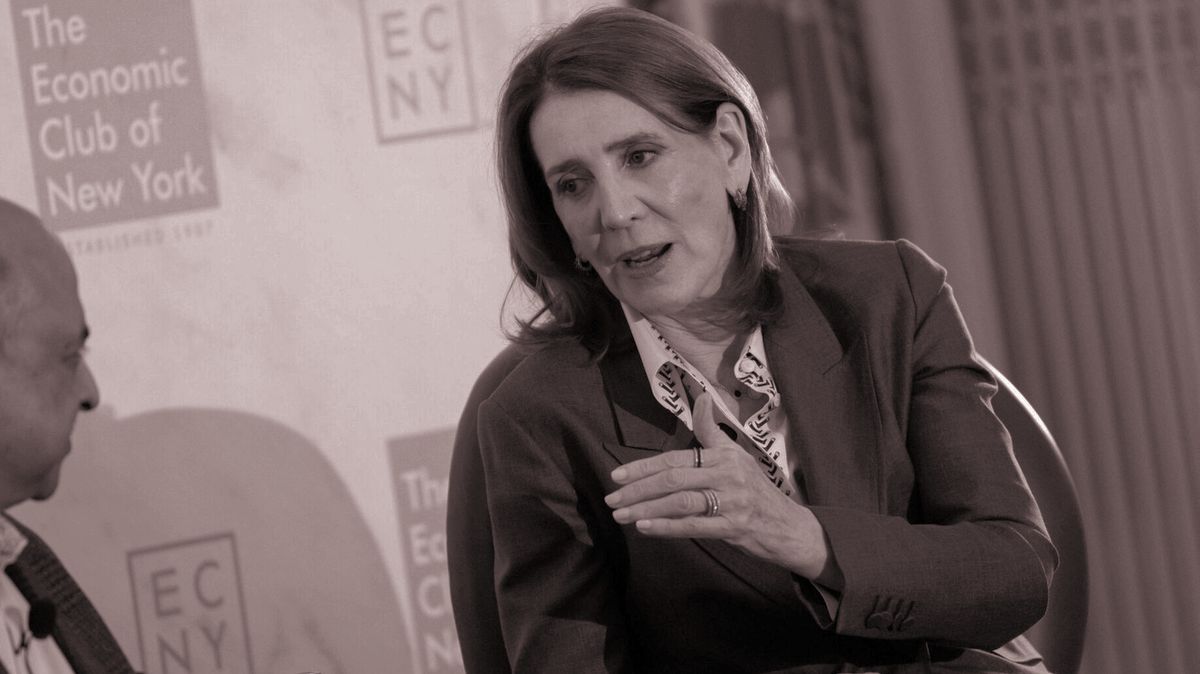
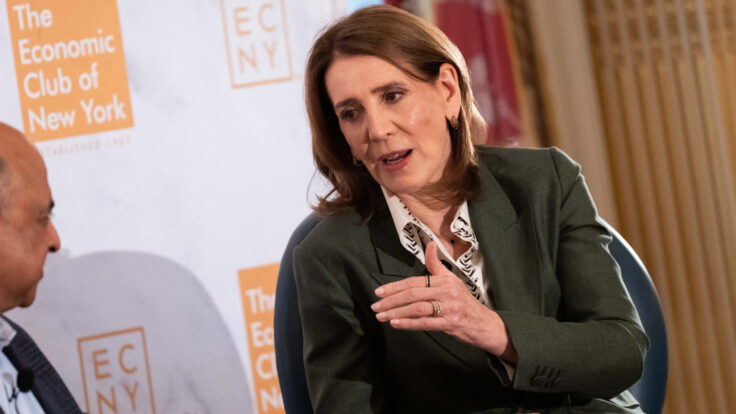
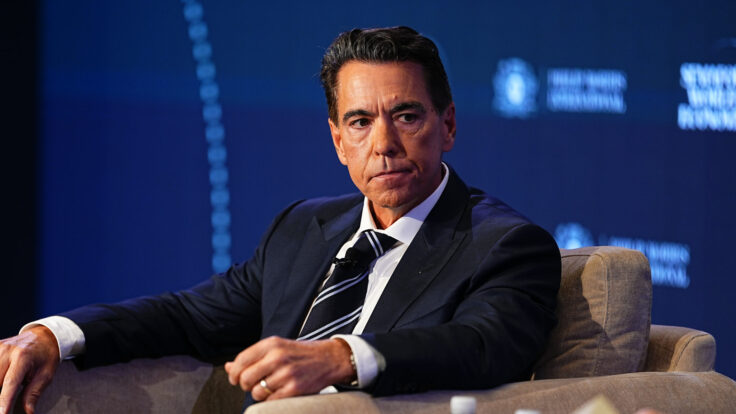
genre arrived last week at the Economic Club of New York, where Ruth Porat, the president and chief investment officer of Alphabet and Google, and Arvind Krishna, IBM’s C.E.O., attempted to make the bull case for A.I. and swat away the concerns voiced by the technology’s growing ranks of critics. I’ll unpack her case below, while also noting that Alphabet stock is once again nearing $4.5 trillion.
Meanwhile, as summer
gets underway, I wanted to revisit and update a few of the stories that I’ve covered in recent months. It’s a little fan service for all the loyal members of the #DryPow community, who often beseech me for the latest twists and turns after I’ve published a story.
Also mentioned in this issue: Geoff Hinton, Gene Sperling, Nadia Carlsten, Arvind Krishna, Scott Borchetta, John
Jumper, Larry Page, Sundar Pichai, Eric Schmidt, Demis Hassabis, Ruth Porat, Orlando Bravo, Wes Edens, Gloria Caulfield, and more.
Let’s get started… |
- Bravo,
Thoma!: Let’s begin with one of the more spectacular private-equity face plants in recent memory. Thoma Bravo, the usually well-regarded buyout firm, finally bit the bullet this week on its Medallia investment, perfecting a $5 billion equity loss in the process. The private-equity firm handed control of the software company to its three
largest creditors—Blackstone, which will own the largest stake, as well as Apollo and KKR. The creditors also agreed to inject $150 million of fresh equity into Medallia to help reduce its approximately $3 billion debt load. That’s a small start.
The Medallia wipeout drew attention across Wall Street, not only for the scale of Thoma Bravo’s loss but also because the company’s new owners are the kingpins of the private credit boom who would like us to believe their own mistakes are far and
few between. “You always learn from mistakes,” Orlando Bravo, Thoma Bravo’s billionaire co-founder, said last month at the Sohn Conference in New York. “It was a big mistake.” Now we’ll see what Blackstone can do with this company. My guess is that sooner or later they’ll figure out how to make it work. - Allbirds migrates to A.I.: Then there’s Allbirds, the onetime quirky shoe company favored by
some fashion-backward Silicon Valley and Hollywood types, which has completed its transition from a failed footwear company to—ta-da!—Smartbird, an A.I. infrastructure company. As my Puck partner Malique Morris noted back in April, “The real lesson here was that Allbirds never created any sort of moat around its unattractive and sexless sneakers.” Smartbird’s new C.E.O is Nadia Carlsten, who previously worked in Amazon Web Services’ quantum-computing division. You can’t make any of this up, of course, even though I wish I were. (Usual disclosure: This is not investment advice.)
The company remains publicly traded and has retained its BIRD ticker
symbol. On Thursday, after announcing the completion of its A.I. makeover, Smartbird’s stock surged 66.5 percent, giving the company a market cap of a mere $53 million. Hope springs eternal, I guess. (And good luck!) - The bespoke British bankruptcy: New Fortress Energy, the natural gas and liquefied natural gas operator created by Wes Edens, the billionaire Milwaukee Bucks co-owner and co-founder of the hedge fund
Fortress Investment Group, has successfully completed the restructuring of its balance sheet. You will recall that New Fortress Energy was burdened with some $9 billion of debt that the company chose to restructure through the U.K. courts, despite being a U.S.-based and U.S.-listed company. That approach is the latest big trend in the arcane world of
bankruptcy and restructuring. Unlike in the U.S., the U.K. courts provide a faster, less expensive process and allow the equity holders to get a smidgeon of recovery, as opposed to being wiped out entirely. (See Medallia, above.)
Under the approved plan, creditors agreed to exchange more than $9 billion of their debt for a combination of new debt and 65 percent of the equity in two newly restructured companies—one containing the Brazil assets of New Fortress, and the other holding the
remaining assets, to be known as New New Fortress Energy. On the news of the U.K. court approval, New Fortress Energy’s stock traded down 15 percent, giving the company a market cap of roughly $123 million. Edens did own 18.8 percent of the company. But now he owns roughly 6.6 percent—18.8 percent of the 35 percent now owned by the previous shareholders—worth around $8 million. That’s a little better than being wiped out.
|
|
|
|
Alphabet president and chief investment officer Ruth Porat has a cogent and forceful
argument for all those A.I. doomers out there—starting with a productivity revolution that she believes will add trillions to the U.S. economy. |
|
|
|
Last week at the Economic Club of New York, Ruth Porat, the president of
Alphabet/Google, joined IBM C.E.O. Arvind Krishna to make the bull case for A.I.—and to swat away the concerns voiced by the technology’s growing ranks of critics. As you may have noticed recently, esteemed techworld commencement speakers—Eric Schmidt, Gloria Caulfield, and Scott Borchetta—have been practically booed off the stage when they bring up A.I.
(Porat’s boss at Alphabet, Sundar Pichai, artfully minimized the topic during his address at Stanford, though some students walked out anyway.) And no wonder: As Gene Sperling, the former director of the National Economic Council, argued this week in the Financial Times, “A.I. enthusiasts need
to lose the delusion that if working families could only comprehend the productivity gains, consumer conveniences, and potential medical breakthroughs that the technology may bring, they would get over their fear of losing their standard of living, meaningful work, and hopes for their children’s economic future. They won’t.”
Of course, no one booed Porat at the Economic Club. While A.I. might pulverize Gen Z job prospects, this crowd had already made its
money and Wall Street’s frenzy over A.I. hasn’t exactly done their portfolios any harm—at least not yet. Yes, those data centers hoovering up enormous amounts of power might be an environmental problem, but Porat addressed those worries head on. As a former Morgan Stanley banker, and once the firm’s C.F.O., Porat has become one of the most revered business executives during her 11 years at Google/Alphabet. At the Economic Club, she began by ticking off ways that A.I. would lead to “profound”
benefits for society. She argued that the technology could add roughly $4 trillion to the U.S. G.D.P.—about a 10 percent increase—over the next several years. Krishna noted that growth on that scale could mark the difference between a sluggish economy and what he called “a breakaway” economy. (Notably, Alphabet just raised a fresh $85 billion in equity capital to continue its own massive A.I. buildout.)
Porat then turned to A.I.’s implications for science, citing the 2024 Nobel
Prize in chemistry shared by her Google DeepMind colleagues Demis Hassabis and John Jumper for using A.I. to predict the 3D structure of proteins based on their genetic sequences. “It has been described as one of the greatest contributions to drug discovery in our lifetime,” Porat said. Previously, she noted, a Ph.D. student might spend four years diagramming a single protein—and there are roughly 200 million proteins. Hassabis’s response to that challenge was
simple. “‘Why not?’” she recalled him saying. “If there’s one thing I would want to leave anybody with—that I quote a lot at Google—it’s that with A.I., the question ‘Why not?’ is something we should each be asking ourselves about anything that to date has been intractable. Because it lets you break through it.”
Porat went on to cite A.I.’s potential benefits for cybersecurity, healthcare, education, and food security. “We were talking about a whole host of really important social issues
that we can now address as a result of A.I.,” she said. Krishna then brought up what many in the room were likely thinking about—“some of the downsides of A.I.,” he said, particularly the spiraling cost of energy from new data centers. That turned out to be a softball for Porat. “We can’t have the upside of A.I. without the energy to power it,” she said, arguing that with so much upside, “we can responsibly protect” the downside. “When I was in New York as a banker, one of the core things
we all learned is if you really want to address a risk issue, you have to go at the root cause of the risk issue.”
The real root cause, she said, was decades of underinvestment in energy infrastructure. “It’s caught up with us,” she said, adding that data centers currently use about 4 percent of the energy grid and are on their way to using around 12 percent. Yet she cited a study by the Lawrence Berkeley National Laboratory that suggested, counterintuitively, that electricity
prices have actually risen more slowly in states with data centers than states without them. “Data centers through 2024 have actually helped keep electricity prices growing at a slower rate,” she said.
Alphabet/Google, she added, is “committed” to adding energy capacity “wherever we invest,” including through nuclear, solar, and wind projects, “so that we’re bringing additional capacity online.” During very hot or very cold days, Porat said, Alphabet/Google moves its “workloads out
of the way” so that residential and commercial customers can get the energy they need first. “Across the country, we’ve created the equivalent of one gigawatt of incremental capacity by saying we’ll get out of the way when the community needs it,” she said.
Porat argued that the benefits extended beyond electricity. Building data centers would create high-paying local jobs, she said, reciting a common refrain from the Big Tech players. (Alphabet/Google, she noted, was working with
electrician unions to train new workers.) Porat went on to cite what she said was a 9-times employment multiplier: For every job Alphabet/Google creates, another nine jobs emerge in the surrounding community. Of course, that research doesn’t fully address the nation’s central anxiety about A.I.: that while data centers may require more electricians, many white-collar jobs—including even those held by the sort of swells who attend Economic Club of New York events—may one day cease to exist.
|
Google’s
“A.I. First” Philosophy
|
Indeed, the conversation eventually turned to the increasingly pervasive fear that the dawn of
superintelligence will ultimately eliminate many jobs. Krishna invoked Geoff Hinton, the so-called Godfather of A.I., who predicted in 2015 that radiologists would become obsolete—A.I., in Hinton’s prophecy, would be able to read X-rays and diagnose patients more effectively than human doctors can. “There are more radiologists today, and there’s actually a shortage and compensation is up, given the acute need,” Porat said. “We’re seeing too many of our forecasts about
what might happen to the future of work that actually are not anchored in history and labor economics.”
She also argued that A.I. has the potential to democratize the quality of healthcare, which is “on all of us to address,” she said. “That should not differ based on your zip code, not in America, not anywhere,” she added. “And if you can use technology to augment and actually supplement the radiologists, we can start addressing outcomes across America.” In her telling, A.I. is merely a
tool to help “us crunch more data, see things more rapidly. … But I still firmly believe that the human [element] and bringing people together [is crucial].”
Porat and Krishna also discussed how A.I. is already reshaping lives far from Silicon Valley. Porat pointed to examples in the Global South, where A.I. has increased efficiency and boosted earnings for farmers by double digits. “I think the opportunity there is profound,” she said. At Alphabet/Google, Porat noted, they talk all
the time about every project being “done right”—with a sense of responsibility. “What we are doing by building data centers is improving the resilience of the grid and protecting affordability,” she said. “So ‘done right’ is the other thing that we keep saying when we go in. We need to make sure that responsible execution is a choice.”
Then there’s all the money that Alphabet and others are spending on A.I.—“a tad bit,” she said, joking—and that the history of technology has shown that
“you can’t miss platform shifts.” She then recalled an anecdote from when she was working on the Google I.P.O. at Morgan Stanley. At the time, she came across a letter from Larry Page, in which he wrote, “Incrementalism leads to irrelevance because change in technology is revolutionary. It’s not evolutionary.” She said she learned early that “if you don’t invest for the long run, you are sowing the seeds of your own destruction.” At Google, she noted, they invest for long-term
growth: “One of the earliest sort of jokes within Google was that ‘URL’ actually stood for ‘users first, revenue later.’ We found that if you focus on the consumer—you focus on creating a better experience—good things will follow, and they have.”
Now, she said, Google was shifting to “A.I. first,” including investing in models, A.I. application solutions, and its own proprietary chips. “We started our chips program about a decade ago,” she said. “You really do have to plan for the long
run… the performance and efficiency of the chips is pretty special.”
As the conversation wound down, Krishna and Porat discussed Arthur C. Clarke’s famous observation that “any sufficiently advanced technology is indistinguishable from magic.” Porat talked about surviving cancer twice and said that there is now a growing expectation that “cancer will be conquered in our lifetime.” She argued that if we can do these things through A.I., we must do these
things. “That, to me, is why protecting on the downside is so imperative, because the anxiety around A.I. will slow us down as a country,” she said. “People need to see what that upside magic is. And it’s affecting every single one of us, every family. And we do, with A.I., have the ability to provide this amazing tool that can make a difference for every one of our families.” |
|
|
|
Join Puck’s chief political columnist, John Heilemann, as he roams the corridors of power and influence in America on this
twice-weekly interview show, taking you beyond the headlines with the people who shape our culture: icons and up-and-comers, incumbents and insurgents, moguls and machers in the overlapping worlds of politics, entertainment, tech, business, sports, media, and beyond. The conversations are rich and revealing, unrehearsed and unexpected… and reliably impolitic. A Puck-Audacy joint, new episodes drop every Wednesday and Friday. |
|
|
|
Puck’s daily political newsletter from Washington on what’s really happening in this town, from the White House to the Pentagon
to Capitol Hill, K Street, the campaign trail, and beyond. |
|
|
|
Need help? Review our
FAQ page or contact us for assistance. For brand partnerships, email ads@puck.news.
You received this email because you signed up to receive emails from Puck, or as part of your Puck account associated with {{customer.email}}. To stop receiving this newsletter and/or manage all your email preferences, click here. |
Puck is published by Heat Media LLC. 107 Greenwich St., New York, NY 10006 |
|
|
|
|