{{ 'now' | timezone: 'America/New_York' | date: '%b %d, %Y' }} |
|
|
|
Welcome back to Dry Powder. I’m William D. Cohan.
There are vanishingly
few opportunities left for Sam Bankman-Fried to avoid serving out his 25-year sentence in federal prison for fraud and conspiracy. Last week, Sam lost his appeal at the Second Circuit in definitive fashion. And while he formally asked the president for a pardon, Donald Trump has said that he has no intention of granting S.B.F. any such reprieve.
In today’s issue, some fresh reporting on S.B.F.’s final Hail Mary options. Plus, news and notes on a
SpaceX investor-relations mystery, and my partner Ian Krietzberg’s assessment of Elon’s $60 billion Cursor deal. (Sign up for Ian’s excellent A.I. newsletter, The Hidden Layer, by clicking here.)
By the way, this month marks the fifth anniversary of Dry Powder. It’s been quite a ride, needless to say. If you still haven’t subscribed,
what are you waiting for? Click here to join Puck—you can afford it.
Also mentioned in this issue: Tony Fratto, Barbara Fried, Wesley McDade, Gary Wang, Caroline Ellison, Ryan Salame,
Mark Cohen, Andrea Williams, Bryan Lanza, Kory Langhofer, John Donohue, Lewis Kaplan, and more.
But first… |
- Paging
Andrea…: Congratulations to Andrea Williams, the new head of investor relations at SpaceX, Elon Musk’s newly public, $2.7 trillion rocket ship. I suppose those shares largely sell themselves, but I still thought it was strange that the company didn’t announce her hiring or mention her anywhere in its S-1 filing. When I got her on the phone late last week, after the I.P.O., she said that she had laryngitis and asked if we could speak another time. I
have not heard back.
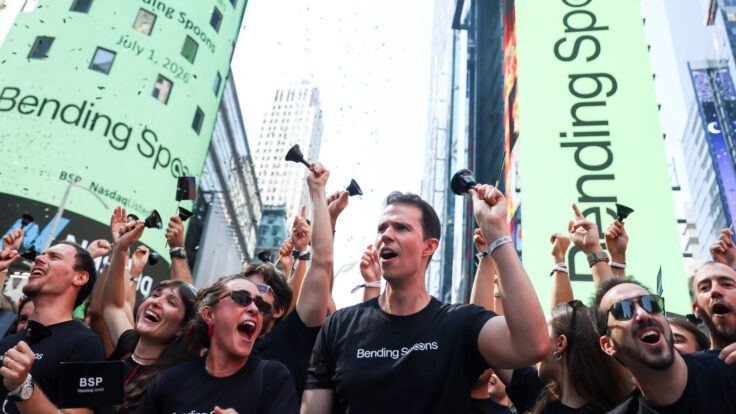
It’s all a bit odd. I learned about Williams’s move to the I.R. job—which is vastly different from a communications job—around Memorial Day, but I could not confirm the appointment, because SpaceX had not announced her hiring and her LinkedIn page continued to say she worked at Grayscale Investments, which she joined last August. But after the I.P.O., Wesley McDade, the global head of corporate affairs at Morgan Stanley,
posted a picture on LinkedIn of himself and Williams at Morgan Stanley. “Great to see my old friend Andrea Williams, the Head of Investor Relations for SpaceX, this morning on the Morgan Stanley Equity Trading floor to open trading for the largest I.P.O. in history,” McDade wrote.
I’ve known Williams since she was head of global communications at Goldman Sachs, a job she started in 2021 amid the Covid pandemic. She has also done stints at Oaktree Capital, Robinhood, and, most recently,
the aforementioned Grayscale. She survived for around 18 months at Goldman, where she practiced a “less is more” style of engagement with the press. (The media’s relationship with Goldman has been mightily improved under her replacement, Tony Fratto.) Good luck, Andrea!
|
|
|
|

| Ian Krietzberg
|
|
- Elon’s $60B Anysphere
deal: Earlier today, SpaceX officially acquired the A.I. coding startup Cursor for $60 billion, paid almost entirely in SpaceX stock. SpaceX and Cursor first announced a partnership in April, when the former announced that the latter had granted them the right to acquire the company for $60 billion, “or pay $10 billion for our work together.” In its announcement on
Tuesday, SpaceX said that it has spent the past few months “jointly training” an A.I. model with Cursor, which will be released soon. In a regulatory filing published Tuesday, SpaceX confirmed that Cursor will survive the merger as a wholly owned subsidiary of SpaceX. Congrats to all the Cursor and Grok developers who have made it past the
vesting cliff.
|
|
|
|
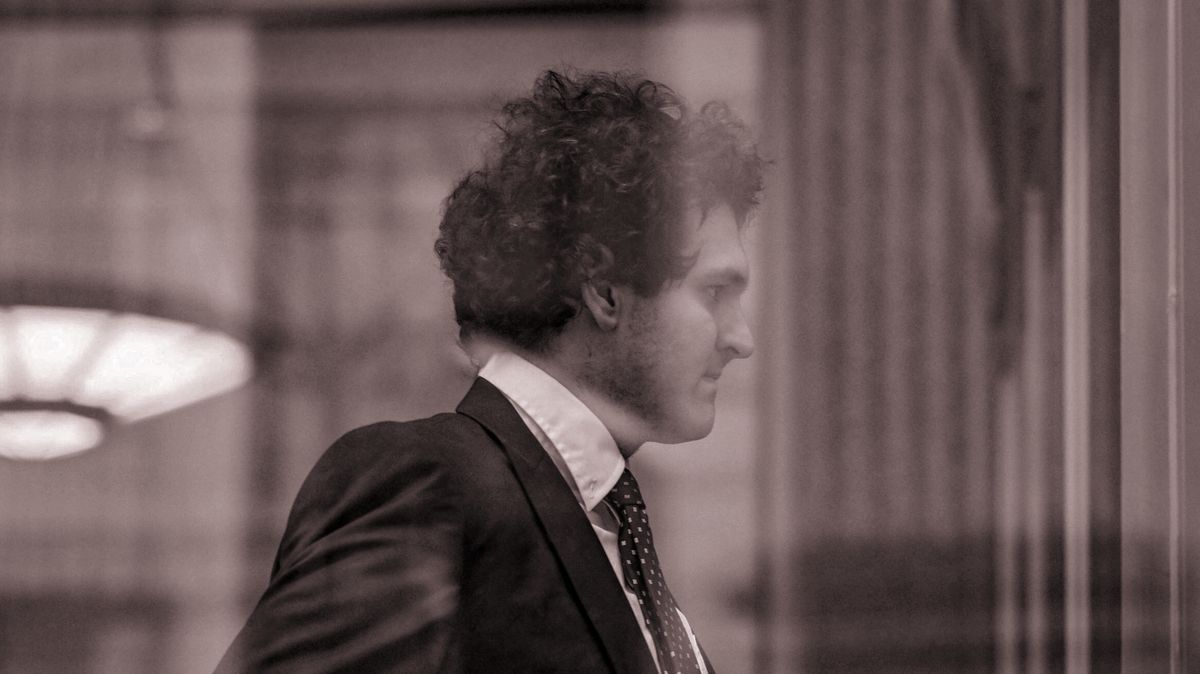
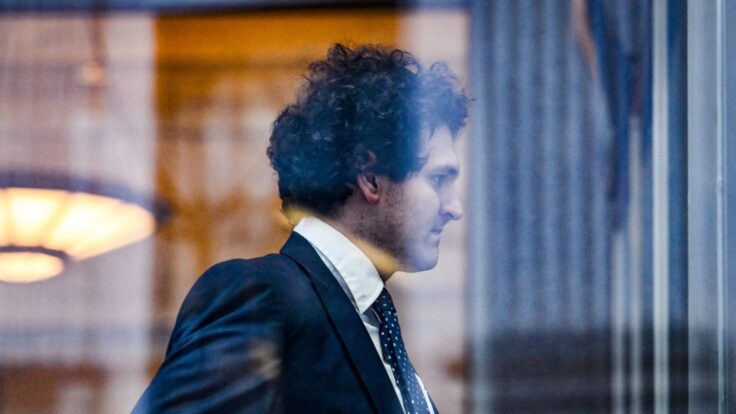
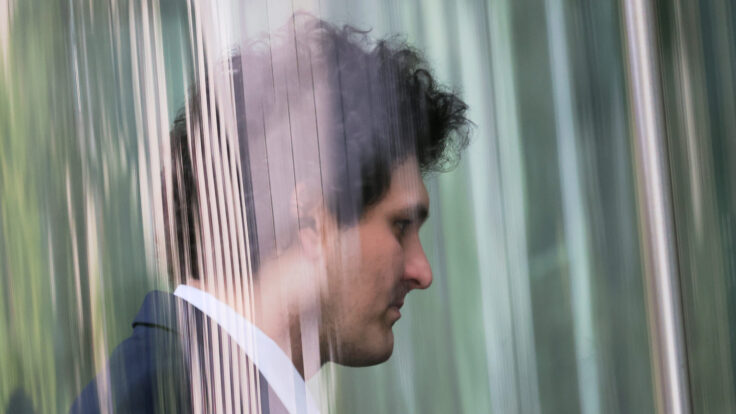
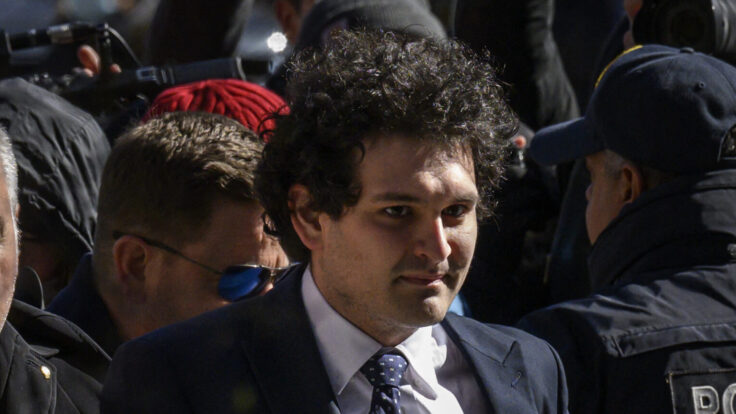
With his request for a new trial now officially rejected by the Second Circuit, Sam
Bankman-Fried’s dwindling hope for salvation is down to the Supreme Court or Trump. Alas, S.B.F. may be the only white-collar fraudster the president isn’t open to pardoning. |
|
|
|
It seems that Sam Bankman-Fried, the once-admired and since-disgraced crypto
mogul, has run out of options to reduce the balance of his 25-year sentence in federal prison, which is slated to end in December 2044. Last month, Judge Lewis Kaplan threw the book at S.B.F., denying with prejudice his petition for a new trial in the Southern District of New York. A few weeks later, The New York
Times reported that Sam had formally applied for a pardon from Donald Trump, which was always going to be a long shot. The president, of course, typically hands out pardons like water at the end of a marathon. But in January he said that he has no plans for granting Sam a reprieve. Just in case, a group of senators from
both parties came together this week to urge Trump not to change his mind.
Now it appears that S.B.F. has reached the end of the judicial road. Sam had recently contended that Kaplan, his original trial judge, had done everything possible to thwart his case. But on June 12, the Second Circuit completely demolished Sam’s argument for a new trial, and a unanimous three-judge panel backed Kaplan to the hilt. Among other things, the judges didn’t buy Sam’s argument that “despite the
many unauthorized transactions” he orchestrated at FTX, the investments he made with his customers’ money were “sound” and could have “ultimately [made] investors and customers whole” if the company had not been dragged into bankruptcy. While that may be true—his venture-capital investments included early stakes in Anthropic and Cursor—it’s also legally irrelevant. As Kaplan reasoned, “a thief who takes his loot to Las Vegas” and makes money gambling is still, you know, a thief.
The
Second Circuit also cited the damning testimony of Sam’s deputies, including FTX co-founder Gary Wang and Alameda C.E.O. Caroline Ellison, S.B.F.’s onetime girlfriend. And while Sam has argued that some of his former colleagues, particularly FTX Digital Markets C.E.O. Ryan Salame, were coerced by the government into not testifying in Sam’s defense as part of a plea bargain, the Second Circuit gave no quarter to
the idea that their testimony was biased. “The overwhelming evidence presented at trial proved that Bankman-Fried knowingly and intentionally committed large-scale fraud on FTX’s customers,” the Second Circuit concluded. “We are not convinced that the isolated statements Bankman-Fried points to, tainted the jury’s verdict.”
In an email to me after the appeals court handed down its ruling, Sam’s parents wrote, “Judge Kaplan barred the introduction of virtually all evidence that would have
proved Sam’s innocence. The Second Circuit chose to look the other way. We continue to hope for justice for our son.” (For those interested in Sam’s experiences during his various prison stays, in Brooklyn, San Diego, and Lompoc, a lengthy New York magazine article this week provides many of the gory details.) |
At this point, Sam is nearly out of moves. He can petition the Second Circuit for an en banc review,
meaning that all the judges on the court would take up his appeal, but that would almost certainly be rejected, since the panel was unanimous. He could also appeal to the Supreme Court, but that seems extremely unlikely given that SCOTUS agrees to take on just a few cases each year. Once his avenues for appeal have been fully exhausted, he could file a habeas petition, arguing that his legal representation was somehow flawed or inadequate. But since high-profile defense attorney
Mark Cohen represented him during the trial, that also seems like a long shot.
That leaves Trump. But since the Second Circuit also left in place the $11 billion judgment against Sam, it’s probably fair to say that he does not have the money to make the necessary donation to secure a pardon. Still, Sam’s family has hired two Trump-proximate lobbyists/advisers, Bryan Lanza and Kory Langhofer, to continue to argue Sam’s case.
Polymarket currently lists Sam’s chance of getting a Trump pardon by the end of July at 3 percent.
Despite his long odds for escaping Lompoc federal prison, several of Sam’s friends have continued rising to his defense, arguing that a vast miscarriage of justice has occurred. In a recent essay on Substack, John Donohue, a professor at Stanford Law School, where Sam’s parents taught before they retired, wrote: “The bankruptcy estate of FTX—despite some
gargantuan errors—ultimately recovered enough value to make whole every customer who had funds frozen on the exchange at the time of its collapse… In what universe is that the outcome of a catastrophic fraud, for which we send a man to prison for 25 years?” Donohue also wrote that the “entire legal process” was about “blame-shifting, optics, politics, legal error, and the personal ambition of prosecutors and regulators.”
Meanwhile, in a recent post on her Substack, Sam’s loyal mother,
Barbara Fried, compared the family’s nemesis, Judge Kaplan, to Captain Ahab, literature’s most famous allegory for self-immolating obsession. “Kaplan’s hatred of Sam was instantaneous, visceral, and immune to facts and reason,” Barbara wrote. “He was Captain Ahab and Sam was his Moby Dick, an avatar of evil rather than a real, live, human being. In his sentencing speech, Kaplan disclaimed thinking Sam was a villain. But everything else he said, along with the 25-year sentence he
handed down, was more befitting a cold-blooded murderer than someone who had lived an unblemished life up until that point, devoted to doing good in the world, and was convicted, essentially, of failing to collateralize a loan appropriately.”
She also shared the story of the time Judge Kaplan was not available to preside over Sam’s request for the special medications he needed. In short, Kaplan had ordered Sam to give up his house arrest in Palo Alto and report immediately to the
Metropolitan Detention Center in Brooklyn before the start of his criminal trial. Barbara recalled that the magistrate judge who was filling in for Kaplan called a hearing and requested that Sam be present. “She asked him a lot of questions, listened to the answers, and treated him with kindness and respect,” Barbara wrote. “At the end, she said, ‘I don’t have the power to order a federal judge to do anything, but I promise you that as soon as I get back to my chambers I will call the BOP myself
and see what I can do.’”
Barbara continued: “Bending the rules, the marshal who had brought Sam to the hearing allowed Joe and me to talk to him for a minute before he took him back to prison. Leaning over the railing separating us, I said to Sam, ‘What might have been…’ He nodded, his eyes pooled with tears. The next morning, Sam had his medications.” What might have been, indeed… |
|
|
|
Join Puck’s chief political columnist, John Heilemann, as he roams the corridors of power and influence in America on this
twice-weekly interview show, taking you beyond the headlines with the people who shape our culture: icons and up-and-comers, incumbents and insurgents, moguls and machers in the overlapping worlds of politics, entertainment, tech, business, sports, media, and beyond. The conversations are rich and revealing, unrehearsed and unexpected… and reliably impolitic. A Puck-Audacy joint, new episodes drop every Wednesday and Friday. |
|
|
|
An essential, insider-friendly Hollywood tip sheet from Matthew Belloni, who spent 14 years in the trenches at The
Hollywood Reporter and five before that practicing entertainment law. What I’m Hearing also features veteran Hollywood journalist Kim Masters, as well as a special companion email from Eriq Gardner, focused on entertainment law, and weekly box office analysis from Scott Mendelson. |
|
|
|
Need help? Review our
FAQ page or contact us for assistance. For brand partnerships, email ads@puck.news.
You received this email because you signed up to receive emails from Puck, or as part of your Puck account associated with {{customer.email}}. To stop receiving this newsletter and/or manage all your email preferences, click here. |
Puck is published by Heat Media LLC. 107 Greenwich St., New York, NY 10006 |
|
|
|
|