 |
 |
|
Welcome back to The Stratosphere.
|
|
Tonight, I’m revisiting my semi-semi-annual power ranking of who’s up and who’s down in the Silicon Valley megadonor fundraising world. Yes, everyone knows about Sacks hosting Trump in a few weeks, but did you know about Vinod and Marissa hosting Biden? (If you’re not already subscribed, correct your mistake here, and read on.)
But first…
- “What the hell is going on at Schmidt Futures?”: I’ve probably been asked various iterations of that question a dozen or two times over the past six months by political and philanthropic insiders wondering about the drip, drip, drip of news coming from the eponymous nerve center of Eric and Wendy’s empire. And I got it again plenty on Monday after top official Tom Kalil, a towering figure in the world of science and philanthropy and a very senior Schmidt aide, announced that he was spinning out of Schmidt Futures. Kalil, who led the Obama administration’s Office of Science and Technology Policy, is starting a new entity called Renaissance Philanthropy to raise philanthropic capital for the world’s scientific and technological challenges from outside donors, and he’s taken much of his team with him—the who’s who of the organization, in the words of one observer—including Kumar Garg, part of the Kalil gang from the OSTP days. (They’ll remain part-time at Schmidt Futures.)
These questions are percolating because Schmidt Futures, which hired aggressively out of the gate, has become a shell of what it once was in terms of staff: The group lists 26 employees on its website today—it listed about 150 a year ago. Founded just in 2017, it has since spun out various entities and shut down others altogether as part of what the organization called a “regular 5-year strategic review.” Eric and Wendy, themselves, put out a semi-cryptic statement last October titled “An Update from Our Founders” that went little-noticed but seemed to wink at the whole shebang. “Schmidt Futures is entering a new and exciting phase, with more focused teams and organizations to support science and the thoughtful development of technology to address challenges on a local and global scale. In the coming weeks and months, we look forward to sharing more about our re-focused efforts to make a bigger difference for more people in the world,” they wrote.
Schmidt Futures is a lot smaller in part because of this broader reorg in the Schmidt philanthropic orbit. Earlier this year, the entire 30-person science team effectively decamped to a new organization called Schmidt Sciences, led by Stu Feldman. Feldman’s longtime predecessor, Eric Braverman, the senior McKinsey consultant who led the Clinton Foundation, also exited Schmidt in August, and there’s plenty of speculation about what happened there. He’s since started a new Schmidt-backed entity, Telescope. A few other senior folks have left: Jason Berkenfeld, who led Schmidt’s political giving, is still helping Schmidt part-time, but he spun out into his own donor advisory firm, Bluespark Partners, to help other political philanthropists. Josh Hendler, the other big cheese in political giving at Schmidt Futures, now works for Eric’s personal office, a transition made by several other Schmidt Futures executives. But there’s no bigger departure than Kalil, who has incredible loyalty among his homies in the social sector. “Tom has been obsessed with getting philanthropists to give more for years now. So in that sense it’s not surprising,” said one person watching all of this who loves the new Kalil push. “But I don’t see why he would leave Schmidt Futures to do it. Seems like a step down in prestige, purview.”
My conversations with Schmidtheads over the past year or so have varied: This is either a big deal driven by Eric and Wendy’s indecision and veering interests—a “$1 billion philanthropic mess,” in the words of Forbes—or just more quotidian drama in the world of family offices where the leader calls the shots on structure. A billionaire philanthropic enterprise already defined by its sprawl—the number of employees who work for Schmidt’s family office, Hillspire, has at times approached 700—is only getting more sprawling, with even more entities. Maybe, the thinking goes, this is just a reshuffling of the bureaucracy.
|
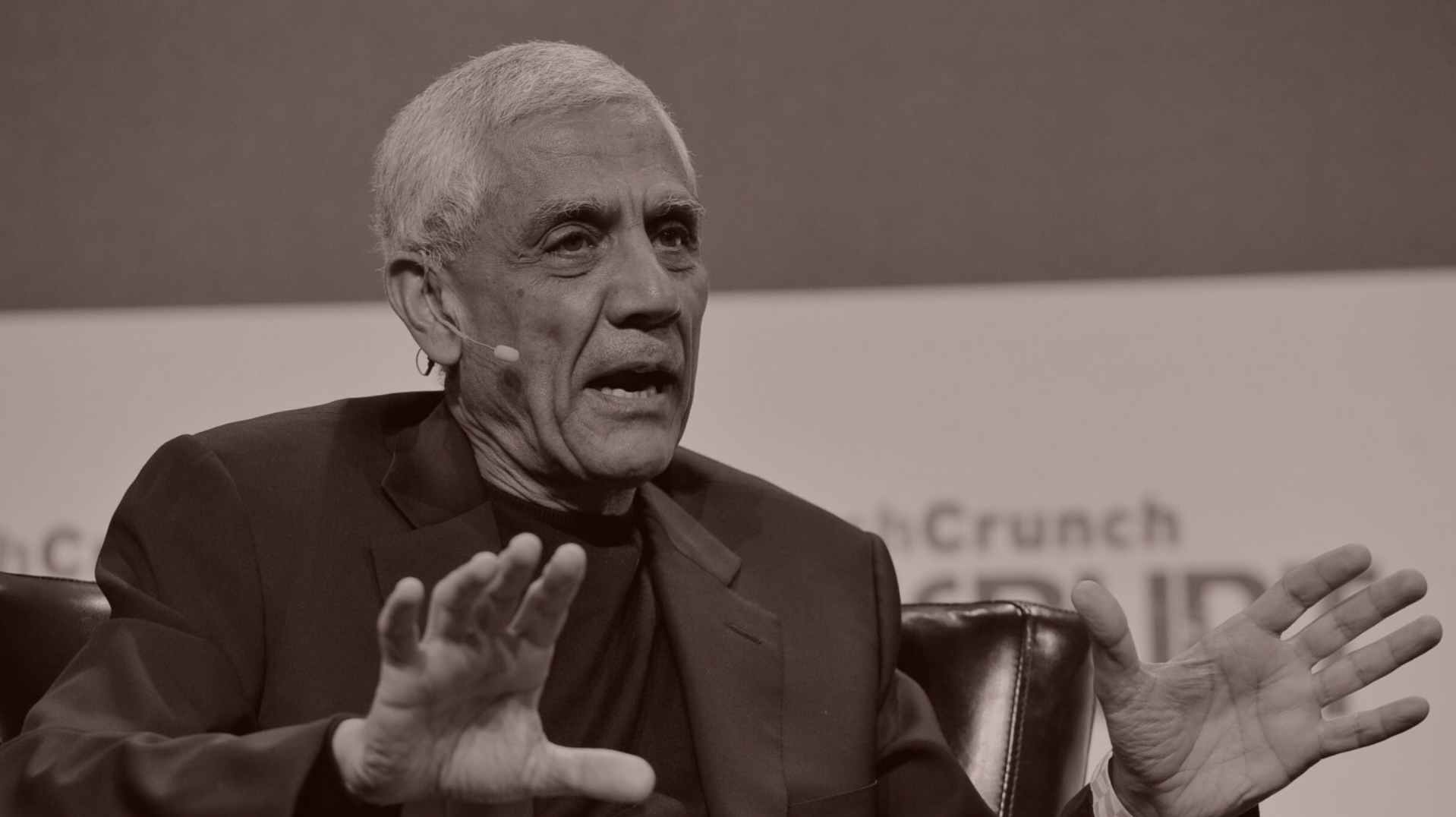 |
| The Silicon Valley Megadonor Olympics |
| A semi-scientific mid-cycle power ranking of who’s trending up (Marissa Mayer, Vinod Khosla), who’s trending down (Jan Koum, Peter Thiel), and who’s massively overhyped among the nouveau riche tech money crowd. |
|
|
|
| It’s time, at last, to revisit one of our favorite pastimes here at Puck: ranking the megadonors, machers, and money men and women fueling the race for the White House. As I recently reported, Joe Biden is flying out to Silicon Valley this Friday for a major fundraising tour. Hosting a presidential visit at your home is a huge honor—one often vied for by sharp-elbowed donors desperate to get every check attributed to their bundler I.D.—and Biden has chosen to bestow that honor on two fundraising thoroughbreds, Marissa Mayer and Vinod Khosla.
Meanwhile, it should come as little surprise that Trump has chosen David Sacks to execute the complex choreography of high-dollar wrangling on the Republican side. Much of the industry chatter has coalesced around the rising donor-influencer, his comrades at the secretive Rockbridge Network (including J.D. Vance and Peter Thiel), and close friend Elon Musk—the $200 billion man who everyone in G.O.P. politics is hoping will stop tweeting and start cutting checks.
But there are a number of lesser-known names to watch as the election draws ever closer. Herewith, an ever-so-slightly unscientific but highly informed trend report on who’s up, who’s down, and who’s overhyped as the money race shifts into higher gear. |
|
A MESSAGE FROM OUR SPONSOR
|
 |
| At BlueTriton, our whole world is water. Making sure safe, healthy hydration is always there for you is what we do. Protecting natural springs and water sources is how we do it. Because we are a water company. Always. And what matters most to you means everything to us. Find out more at: bluetriton.com |
|
|
|
|
| Trending up: Khosla hosted Barack Obama back in 2013, so he’s not new to this. But he has gotten much more involved during the Trump era, contributing single-digit millions to the Democratic House and Senate super PACs, as well as the David Brock-founded American Bridge. And he does it all himself, without an advisor.
Khosla is a moderate: He has complained about the “crazy left-wing” influence on the Biden administration, particularly antitrust crusader Lina Khan at the F.T.C.; he’s criticized the president for over-prioritizing railroads; and he’s questioned whether Biden could win reelection against Nikki Haley. (Of note: Khosla’s son, Neal, was the largest donor after Bill Ackman to the anti-Biden, pro-Dean Phillips super PAC last year.) Khosla’s upcoming Biden event, which he is hosting at his Portola Valley home with his wife, Neeru, is selling tickets ranging from $6,600 to $100,000.
Biden’s other big Silicon Valley event will be hosted by Mayer, another former Obama host who’s continued to hang around the hoop of Democratic politics (though, curiously, she did not cut a single disclosed check to the Biden campaign or anti-Trump efforts in 2020). Together with husband Zack Bogue, a venture capitalist, the defenestrated Yahoo C.E.O. will host Biden in Palo Alto hours after the Khosla shindig. About 40 people are expected to attend the event, which now has tickets priced at $10,000, $30,000, and $50,000, according to a copy of the invite. (I’m hearing Governor Gavin Newsom and his wife, Jennifer, are likely to appear.) The co-hosts are Joe Ansanelli, the C.E.O. of startup Gladly, and his wife, Kathryn Corro Ansanelli. Together, the Khosla and Mayer events should rake in about $4 million. “We’ve made material progress against the climate crisis in the last four years, and I don’t want to see that progress unwound if we don’t reelect Biden,” Bogue told me.
Meanwhile, Reid Hoffman remains the grand poobah of the Silicon Valley Democratic machine, having gone without a clear challenger since taking the mantle from Eric Schmidt. He put a mammoth $6 million into Future Forward in March, his biggest single disclosed political check ever. His network of favored operatives, from Sarah Longwell to Ian Bassin to Chauncey McLean, are the most influential figures in the salt mines of anti-Trump politics, and other major givers in techno-progressive politics, such as Matt Cohler, follow his lead closely. Hoffman also deserves credit from lefties who were apoplectic over the No Labels party, as he was the largest donor involved in the successful effort to derail it. I hear Hoffman and his close friend, Kevin Scott, the C.T.O. of Microsoft, are planning a Biden event in June.
Speaking of which, the Seattle-based Big Tech crew is hosting Biden for a fundraiser in the city this Saturday, according to a draft invite that’s circulating, which mentions David Zapolsky, the top lawyer at Amazon, and Brad Smith, the political fixer at Microsoft, as among the hosts.
Honorable mention: Silicon Valley is still coming to grips with the overnight ascension of Nicole Shanahan, formerly a B-level player in Bay Area Democratic circles, to presidential running mate. Shanahan put $2 million into the Robert F. Kennedy Jr. campaign the day after she was chosen for the ticket, and there’s lots more to come, as I’ve reported. But apart from turning up last weekend at a Bay Area farmers market, she’s been close to invisible on the campaign trail. She just scheduled her first public events, in Houston and Austin, next week, where she’ll appear at a fundraiser and do a solo event on criminal-justice reform. She’s recorded a few podcasts, and is apparently involved in ballot-access strategy behind the scenes, but she’s been virtually absent from the public eye.
My reporting suggests that more and more, Silicon Valley leaders will pull an Ackman, condemn the two-party system, and at least gravitate toward Kennedy. He’s not a traditional business-friendly moderate, of course, but for tech moguls fed up with the two brands they’re being offered, he is the only option. Plus, he’s into falconry—he calls it “hawking”—which is the kind of rich man’s hobby tech elites like to imagine themselves getting into one day.
Trending down: Sam Altman, who has plenty of political power but appears less interested in partisan politics than he was in 2022 and 2023, when he was trying to find a Biden primary challenger, and Eric Schmidt, who I’m told remarked at a closed-door, Bilderberg-related panel a month or two ago that Biden would lose if the election were held then. |
|
|
|
|
| Trending up: David Sacks isn’t known for writing seven-figure checks, but he’s a bona fide media personality and multiplatform political influencer. I say that as a sign of respect for anyone who has created a successful media business and found product-market fit, so to speak. That platform, and his growing power within G.O.P. circles, has only deepened his influence with some of the wealthiest people in the world, including Elon Musk and Peter Thiel.
For the past few weeks, Sacks has been negotiating with Trump aides at Mar-a-Lago to set up a Trump fundraiser at his San Francisco home on “Billionaires’ Row.” For another venture capitalist, hosting Trump might induce blowback, but for Sacks—who has cultivated a somewhat pugilistic identity as a tech leader who doesn’t have to be all things to all people—it’s probably a net positive that merely emboldens his All-In podcast fans. And not so many people, and certainly not Sacks, care about being canceled anymore. I’m now hearing the fundraiser probably isn’t happening until June, as opposed to May.
Also trending up: Marc Andreessen. I’ve written that Andreessen Horowitz’s loud and very flush co-founder are the heavyweights behind the effort to push back on so-called “A.I. safety.” Marc and Ben detest the culture’s A.I. anxiety, and they’re primed for political combat. I hear that a16z is the big money behind a new 501(c)(4) called the Alliance for the Future, a nonprofit started to push back against those pesky effective-altruist doomers. The group’s marketing materials feature lots of Andreessen quotes about A.I. accelerationism. The dark-money group doesn’t disclose donors, obviously, and Brian Chau, the (c)4’s head, kindly told me to kick rocks when I asked about the a16z check. But I’m told that Chau has described it as an Andreessen-funded group in at least one private conversation.
One to watch: Rumors surrounding Elon Musk’s political agenda are hard to track, partly because Elon, himself, is all over the place. I’ve reported he’s considering a Trump endorsement this summer, and Sacks and Joe Lonsdale and Steve Wynn have been whispering in his ear, but so far he’s kept his powder dry. He’s incensed about transgenderism, Covid lockdowns, and the border—he was ranting about immigration at the Milken Conference yesterday—and the Trump team was glad to hear about the dinner he threw with Sacks and Mike Milken a few weeks ago. But he’d need people he trusts to operationalize his wealth into influence. Maybe he’ll hire his good friend Kevin McCarthy?
Runner-up: Jacob Helberg is not as astronomically wealthy as others on this list, but his ascent demonstrates the power of his Ron Conway-esque hustle. Of course, he is married to politically connected V.C. Keith Rabois, a fact that isn’t ignored by the politicians who swing by their Miami Beach home to raise money, like Senator J.D. Vance did the other week. Helberg, a workhorse who’s leveraged proximity to tech and savvy relationship management into political power, was praised as one of the people who helped make the TikTok ban happen.
Helberg—whose next cause is said to be opposing onerous A.I. regulation—is something of a polarizing figure in political circles, sure. But he’s got undeniable pull: He brought Mike Johnson to Silicon Valley last month to meet with major tech figures under the radar, and his tech-and-national-security confab in D.C. last week won plaudits from everyone from Chuck Schumer to Lindsey Graham. And then there was Trump, piped in on a pre-recorded video, saying, “Jacob, I want to thank you. Our meeting was very productive, talking about A.I. and all the ramifications, good and bad.” Helberg stuck around for a Johnson fundraising summit in Washington a few days later.
Only a few years earlier, Helberg was a hyper-ambitious Democratic operative who worked for Pete Buttigieg—in the aftermath of the Biden election, he told friends he might even try to become ambassador to France. But that was a different era, indeed, and Covid and his concern about China made him realize he fit in better with the G.O.P. An LLC attributed to Helberg, called Outbuild, donated $100,000 to Trump’s super PAC earlier this year, and he and Rabois were spotted this past weekend getting a few minutes with Trump at the Miami Grand Prix.
Trending down: Jan Koum, the WhatsApp founder who sunk $10 million into Haley’s super PAC but has stuck to pro-Israel groups ever since; Peter Thiel, who as I’ve reported is declining entreaties to get involved in the Trump campaign; and Larry Ellison, who really wants to convince Trump to make Tim Scott his veep, but probably doesn’t have the juice. |
|
|
|
| FOUR STORIES WE’RE TALKING ABOUT |
 |
|
 |
|
 |
| Wizard of Ozy |
| Dissecting a slate of high-profile lawsuits. |
| ERIQ GARDNER |
|
 |
| The ’68th Sense |
| Skewering the media’s Chicago ’68 false equivalencies. |
| PETER HAMBY |
|
|
|
|
|
 |
|
|
|
Need help? Review our FAQs
page or contact
us for assistance. For brand partnerships, email ads@puck.news.
|
|
You received this email because you signed up to receive emails from Puck, or as part of your Puck account associated with . To stop receiving this newsletter and/or manage all your email preferences, click here.
|
|
Puck is published by Heat Media LLC. 227 W 17th St New York, NY 10011.
|
|
|
|