 |
 |
|
Welcome back to Dry Powder. I’m Bill Cohan.
For those who think the Paramount deal process is dead, think again! In today’s issue, a close look at the boomeranging Sony/Apollo offer, the rumored $2.5 billion bid from Bain Capital and Edgar Bronfman Jr., the ostensible $3 billion bid from Hollywood filmmaker Steven Paul, and more.
But first… a few updates from my partners on developments elsewhere in the Puck cinematic universe…
- Christie’s to sell some cool stuff that Paul Allen owned: Christie’s announced today that they would continue their relationship with Paul G. Allen’s estate by holding two online auctions and one live sale in early September. The works on offer range from a Gemini spacesuit (estimated at $80,000) to a signed letter from Albert Einstein to F.D.R. foreshadowing the possibility of an atomic bomb (estimated at $4 million) to a DEC PDP-10 computer (estimated at $30,000), similar to the machine that Allen and Bill Gates used to create Microsoft’s first software product in 1975. The online sales will close on September 12; the live sale will take place on September 10. (Just a reminder: We still haven’t seen some important works from Allen’s art collection. Presumably, his sister and heir Jody Allen is holding on to them.) —Marion Maneker
- Ourand on an update from Zazistan: I called a good source of mine this morning, and before I could even ask about where things stand with the NBA, he blurted out, “July.” Yes, dear reader, as we’ve reported for the past four weeks, we’re still “two weeks away” from the ink drying on the NBA media rights deals. The NBA will host a two-day draft this Wednesday and Thursday—the first time it has held its draft over two days, which makes it even more unlikely that we’ll hear anything about the league’s media deals until after July 4. —John Ourand
- Podcasts!: Finally, if you haven’t already, a reminder to check out the latest episodes from Puck’s excellent suite of podcasts. On Impolitic, my newish partner John Heilemann got a rare conversation with Biden campaign chair Jen O’Malley Dillon. On Somebody’s Gotta Win, Tara Palmeri and Dylan Byers broke down the conservative media proxy war over Trump’s V.P. pick. On The Town, Matt and Lucas Shaw gut checked some of Scott Galloway’s criticism of the entertainment industry. And on The Powers That Be, John Ourand and Peter Hamby dissected the contract dance between ESPN and Stephen A.
|
 |
| Bezos’ Rubber Room & Shari’s Plan B |
| News and notes on the dual obsessions of the Sconset set: whether Shari will reconsider the private equity pill and break up Paramount; and how Jeff Bezos and Will Lewis may be taking a page from Wall Street’s layoff playbook with their plan for a “third newsroom” at The Washington Post. |
|
|
|
| We’ve entered the perfect deal dynamic for the partnership between Apollo and Sony to pounce on Paramount Global. To nearly everyone’s surprise, two weeks ago, Shari Redstone, the company’s controlling shareholder, blew up the long-anticipated deal that her advisors, and the special committee of the board of directors, had negotiated with David Ellison and RedBird Capital. As my faithful readers know, Ellison and RedBird were going to buy National Amusements Inc., the Redstone family holding company that controls Paramount Global, and then merge Ellison’s Skydance Media into Paramount, with the combined company remaining a publicly traded entity. It was a complicated, creative deal that was on the 1-yard line before Shari pulled the football away.
But to those who think the Paramount deal process is dead, think again. The special committee of the Paramount board of directors remains impaneled and waiting to see what turns up next. And no firm loves a busted deal more than Apollo, which generally shuns auctions anyway and likes to swoop into dicey situations that require tenacity, risk tolerance, and capital, and where other bidders have thrown up their hands in frustration.
Alas, we don’t know many specifics of the previous Sony/Apollo offer, other than those laid out in the letter sent to the Paramount special committee. The letter stipulated a $26 billion deal for Paramount Global; Sony/Apollo would assume the company’s $12 billion of net debt, and pay another $14 billion for the equity of the business. (At the moment, the market value of Paramount’s equity is $7 billion. If the original Sony/Apollo offer is still viable, they would be paying a roughly 100 percent premium.) The big, outstanding question, of course, is how that $14 billion will be divided up between the Class A and Class B shareholders—if the original offer still even stands. The Paramount stock is certainly not trading as if shareholders are expecting a new deal to surface. On the contrary, it’s down 17 percent in the last month, burning the arbs who moved into the deal expecting an Ellison/RedBird transaction. |
|
A MESSAGE FROM OUR SPONSOR
|
 |
|
As innovative as it is influential.
|
|
|
| Shari would obviously have her own nits to pick with the deal, as well. First, Sony and Apollo wouldn’t be buying NAI, so Shari would basically get the same consideration in the deal as other voting shareholders. At the moment, that would probably translate to around $1.4 billion, rather than the $2 billion she was going to get from Ellison/RedBird. On the other hand, the non-Redstone shareholders would probably prefer the Sony/Apollo deal for that very reason, and, thus, she wouldn’t be as likely to spend the next few years of her life, and tens of millions of dollars, defending herself in court. (This is not investment or legal advice.)
There would also most certainly be a tough regulatory approval process, especially in a second Biden administration. Sony, a foreign company, can’t own more than 20 percent of a broadcaster like CBS. Also, Apollo already owns a bunch of local television stations and might smash into the F.C.C. cap on market penetration if it attempts to gobble up the CBS affiliates. And then there is the problem of five big Hollywood studios being reduced to four—a dynamic that Paramount saw play out in the publishing world a year ago when it tried to sell Simon & Schuster, ultimately to KKR.
On the other hand, Apollo and its fancy deal lawyers at Paul Weiss live to figure out legal maneuvers around these sorts of restrictions—it all comes down to deal structure, as they like to say in private equity. The bigger problem, at least from Shari’s perspective, is that the Sony/Apollo ownership of Paramount Global would probably lead to the breakup of the company back into its many component parts, with assets flying all over the place. Would David Zaslav end up with CBS and Paramount+? Who knows. But there’s little question that Sony would get the Paramount studio, which it wants, and Apollo would figure out what to do with everything else—in a tax-advantaged way, of course. Shari won’t be excited by the prospect of breaking up her family’s legacy. But if it’s her best option and Sony/Apollo makes their offer public and fully financed, it will be very hard for her and her special committee to say no again.
And yet, Shari, who is nothing if not clever, may already be preparing for this outcome. Such a posture would explain, for instance, the various leaks surrounding the notion that Bain Capital and Edgar Bronfman Jr. are interested in buying NAI for as much as $2.5 billion, or that Hollywood filmmaker Steven Paul is said to be willing to pay $3 billion to wrest the holding company from the Redstones. I certainly see why Shari would like these two deals better than the Sony/Apollo offer—more money for her!—but I don’t see how the smart money would be content to step into Shari’s shoes without some sort of rehab plan, akin to what David Ellison and RedBird had in mind. Anyway, I think we will find out soon enough, and then we can all move on to something else. |
|
|
| When I first started hearing about embattled Washington Post C.E.O. Will Lewis’s idea of creating a “third newsroom,” the hair on the back of my neck stood up. On the most prosaic level, the new unit had been described as a place to make “service and social media journalism,” and to find new ways for the paper—which lost $77 million last year—to return to profitability. But it also triggered a latent memory from my past life on Wall Street, and a brutal experiment that JPMorgan Chase tried more than 20 years ago, when it, too, conceived of a “third” investment bank inside the big investment bank that had been created by the 2001 merger of J.P. Morgan and Chase.
Few probably remember the frothy environment on Wall Street that led to the merger of J.P. Morgan and Chase. I had joined Chase’s small M&A group in 1997 after stints at both Lazard and Merrill Lynch, and then moved to J.P. Morgan in 1999, only to find myself back at the combined JPMorgan Chase when the deal closed in early 2001. (During the summer of 2000, Goldman was rumored to buy J.P. Morgan… but it was not to be.) At that time, the Chase M&A group was generating about $500 million a year in revenue; J.P. Morgan was a bit bigger, with around $750 million in annual M&A revenue. The fear-inducing leader of the combined JPMorgan Chase M&A team at that time, Doug Braunstein, now a vice chairman at Wells Fargo, used to exhort us to do bigger and bigger deals—as if bankers could control what their clients did—with the hope that our unit would generate $2 billion in revenue in 2001.
What the bank’s leaders didn’t count on, of course, was September 11. The terrorist attack forced the financial markets to close for a week, and when they reopened the stock market dropped like a stone, some 14 percent. The entire mindset in the markets changed that morning, from buoyant and euphoric to scared, dreary, and desultory. Most M&A deals came to a screeching halt, and with them the prospect that the JPMorgan Chase M&A department could achieve Braunstein’s lofty revenue goals. Panic quickly set in as it became apparent that many bankers who were highly valued before the attacks were now on the chopping block. Fears about how it might happen, and how soon, ran like a torrent through the investment bank. Enter the “client solutions group,” or C.S.G., a.k.a. the third investment bank. |
|
|
| C.S.G. was the brainchild of Geoff Boisi, the former Goldman partner and co-head of investment banking at the firm, who joined Chase in May 2000 after the bank bought Boisi’s boutique advisory firm, The Beacon Group, for $500 million—an absurd amount of money at the time for a handful of ex-Goldman bankers. Given Boisi’s pedigree and JPMorgan Chase’s aspirations, it was no surprise that he was quickly named co-head of investment banking at Chase and then at JPMorgan Chase.
At the time, there were two distinct parts to the JPMorgan Chase investment bank: the bankers responsible for managing the client relationships; and the bankers executing transactions for the clients, whether an M&A deal, a financing, or an underwriting. (The sales and trading operation was completely separate, on the other side of the “wall” so to speak.) In April 2002, Boisi unveiled the third part—C.S.G.—whose purpose, theoretically, was “to streamline operations, better serve clients and reduce costs amid an earnings drought,” as the New York Post reported at the time. I’m not so sure about the first two, but it certainly ended up being about the third: reducing costs. The move came after JPMorgan Chase had already announced it was going to fire 500 bankers. And the C.S.G. felt like a way to eliminate even more bankers after moving a bunch of them, including me, into this newfangled but amorphous group. Before summarily being given this new job, the duties of which Boisi failed to articulate, I was head of the media and telecom M&A group. In fact, I was part of the team that was advising Comcast on the $72 billion acquisition of AT&T Broadband—its cable distribution business—one of the largest M&A deals ever. (The deal was announced in December 2001 and closed almost a year later; it was one of the few big deals to move forward after September 11.)
After being moved into C.S.G., my assignment, of all things, was to work with Sarah Nash, a superstar banker at the firm, to come up with “corporate solutions” for General Motors. Thanks to C.S.G. and my former partners in the M&A group, I was no longer a telecom and media guy. I was now a car guy. Actually, I wasn’t even a car guy—I was a guy who was somehow supposed to figure out how GM could get out from under its long-term healthcare and pension liabilities that were slowly but surely bankrupting the company. Sarah and I were off to Detroit on a quasi-regular basis to see GM brass and walk them through our off-the-wall ideas about how they could defease these growing liabilities. And that was the only thing I did for the rest of 2002.
Needless to say, we got nowhere with GM. (Although, six years later, those liabilities played a big part in GM’s bankruptcy.) But during those trips to Detroit, the thought began to cross my mind that the “corporate solutions group” was just the place where JPMorgan Chase put the bankers it wanted to fire when it inevitably turned out the C.S.G. had failed to achieve its goals—especially after Boisi shockingly departed, in May 2002, a month after he set up C.S.G. And, of course, that’s exactly what happened. By the end of 2002, C.S.G. was kaput, a failed experiment that was doomed from the start. Next thing I knew, I was forced to sit in an empty office on an empty floor on Fifth Avenue, surrounded by blueprints for existing and future Chase bank branches. Just me and my secretary, for nearly a year, doing nothing.
By January 2004, like the rest of the people who had been moved into the third investment bank, I was gone, too, fired unceremoniously. Thousands of other bankers were let go, too, most of them having been part of the corporate solutions group. Needless to say, such a group no longer exists at the bank. (The rest is history, by the way. Jamie Dimon arrived at the bank in July 2004 after JPMorgan Chase bought Bank One. He became C.E.O. at the end of 2005, and turned the operation into the Wall Street powerhouse it is today. In 2023, JPMorgan Chase made $50 billion of profit.)
I have no idea what Lewis has in mind for The Washington Post’s “third newsroom.” My partner Dylan Byers described the unit as a place for “soft content.” According to the Post’s own reporting, Lewis has described the third newsroom—the first is the actual newsroom, the second is the opinion section—as a way to “reach younger readers and other untapped markets by focusing on social media and consumer journalism.” The Wall Street Journal described it as a way “to reach and generate revenue from audiences who are unlikely to pay for subscriptions but will engage with the news outlet’s content on social-media platforms.” It sounds like the idea is to create short videos for younger audiences who prefer to get their information from social media sites such as TikTok, Instagram, and YouTube. (Lewis is an investor in a company, News Movement, that had a similar aim; recently, the Post entered into an agreement that allows the two companies to develop content together.)
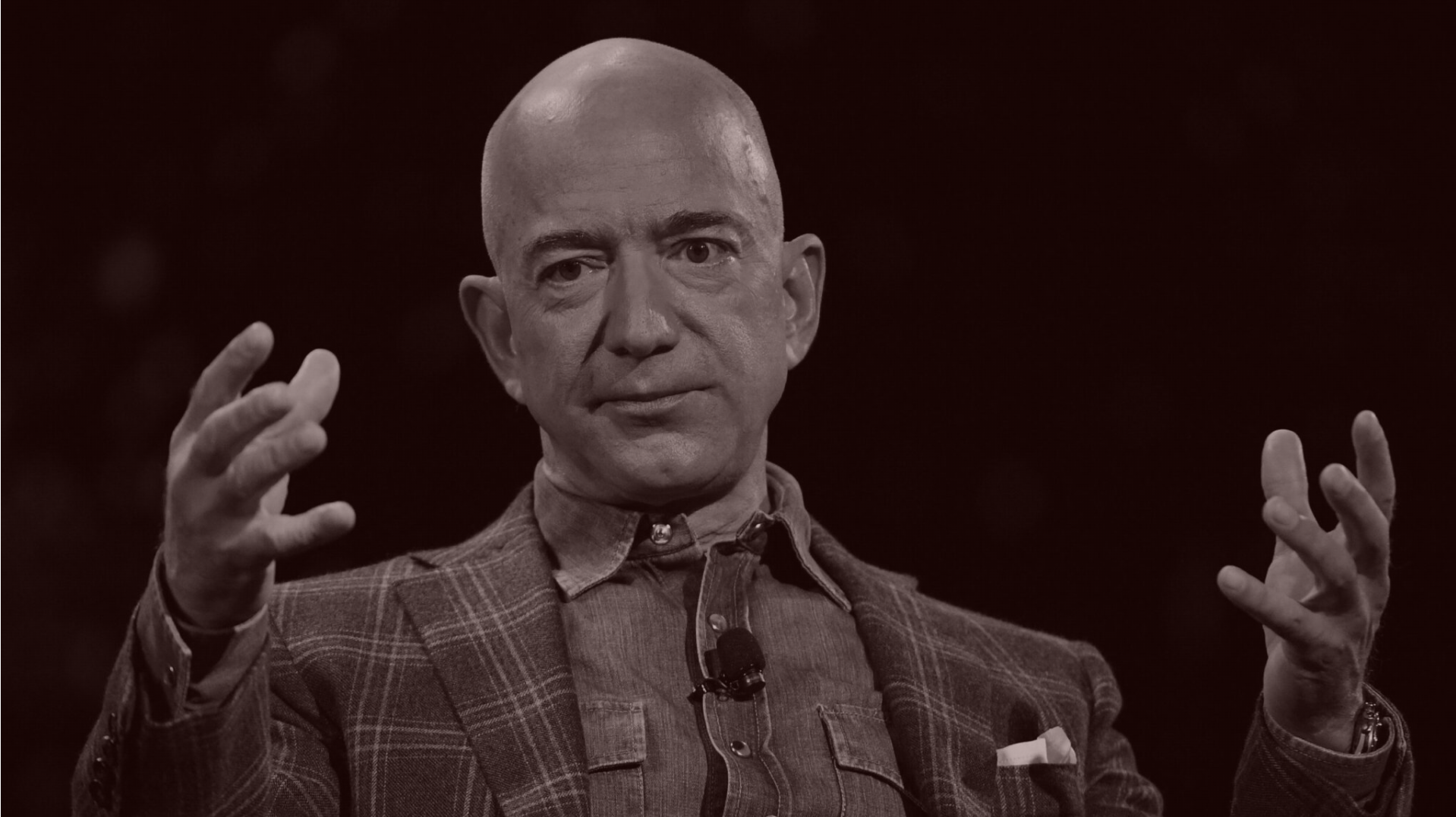
Just like the “corporate solutions group” at JPMorgan Chase back in the day, the third newsroom concept appears ill-defined, rudderless, and nonsensical. And I imagine it may be abandoned as quickly as the old C.S.G. The Post is losing money hand over fist, even if its owner is the richest person in the world with a net worth of $216 billion these days, and therefore shouldn’t give a hoot about losing $100 million or so. But I guess caring about losing $100 million annually at your hobby is how you get to be worth more than $200 billion. If I were a journalist at the paper, I would do everything in my power to steer clear of it, even if the highly respected Matt Murray shifts over to run it after the election. (I have my doubts about this, too, to be honest.)
It’s clear, too, that the Post probably doesn’t need all the 1,000 or so journalists now employed at the paper, especially if Bezos is going to demand profitability, as is his right. What better way to cut that creative workforce than by moving the ones you are willing to lose into the amorphous third newsroom, and then, at some point, declaring the “experiment” a failure? As they say in Star Wars, “I have a bad feeling about this.” |
|
|
|
| FOUR STORIES WE’RE TALKING ABOUT |
 |
|
 |
| The Blue Scare |
| Puncturing the Democrats’ hysteria machine. |
| ABBY LIVINGSTON |
|
 |
| London Art Blues |
| A guide to Phillips’ and Christie’s London art sales. |
| MARION MANEKER |
|
 |
|
|
|
|
|
 |
|
|
|
Need help? Review our FAQs
page or contact
us for assistance. For brand partnerships, email ads@puck.news.
|
|
You received this email because you signed up to receive emails from Puck, or as part of your Puck account associated with . To stop receiving this newsletter and/or manage all your email preferences, click here.
|
|
Puck is published by Heat Media LLC. 227 W 17th St New York, NY 10011.
|
|
|
|