{{ 'now' | timezone: 'America/New_York' | date: '%b %d, %Y' }}
|
|
|
|
Welcome back to Dry Powder. I’m Bill Cohan.
Thanks to all the DryPow
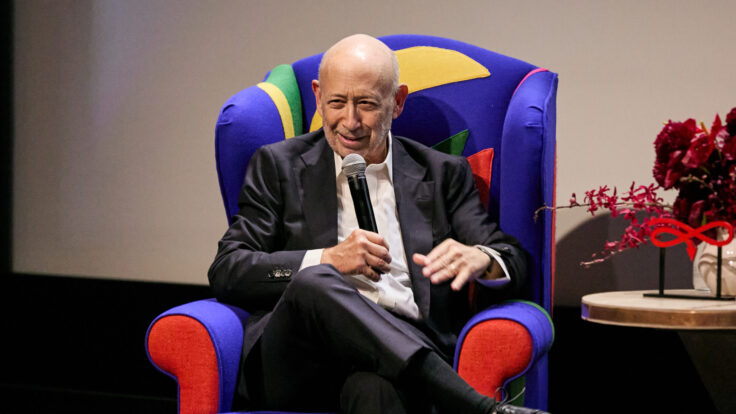
faithful who attended my conversation last evening with Lloyd Blankfein at the Whitby in Midtown, in partnership with Mayer Brown. The former Goldman Sachs C.E.O. was candid and forthright about topics as varied as the current situation in the private-credit markets, his well-known penchant for salads, the shots fired during the recent White House Correspondents’ Dinner (he was famished)—and, naturally, his composition process for his new memoir, Streetwise. It was one
of those intimate and exclusive evenings that only Puck can convene.
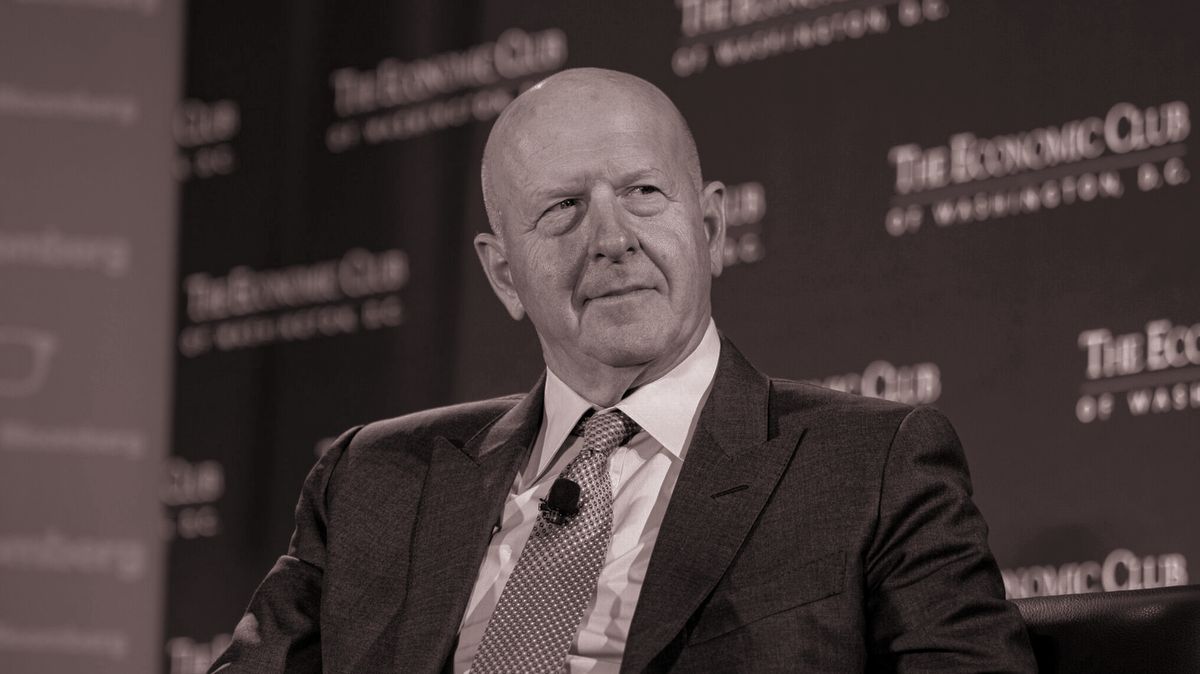
Only a few years ago, Lloyd’s successor, David Solomon, was in the hot seat at Goldman after his misadventure into consumer banking irritated analysts and internal partners alike. Time heals all wounds, however, and Goldman is on its way to its best year since 2021—thanks, in part, to its role underwriting the I.P.O.s for SpaceX and Anthropic (and possibly OpenAI before all is said and done). For
tonight’s issue, I sat down with David to discuss the bank’s remarkable performance.
Also mentioned in this issue: Paris Hilton, Nicholas Braun, Taylor Fritz, Zohran Mamdani, Christina Aguilera, Marshall Sandman, Kevin Mayer, Josh Richards, Robin Williams, Greg Abel, Gary Cohn, Mark Wahlberg,
Pete Davidson, Jamie Dimon, Dylann Sands, Bryce Hall, James Corden, Dina Powell, David Rubenstein, Shawn Johnson, Justin Kan, Jimmy Donaldson, and more.
|
|
|
|
Claude, the AI without ads
A space to think. Anthropic keeps conversations with Claude ad-free: no sponsored links, no advertisers shaping answers, no paid product placements you didn't ask for. When you bring your hardest problem to an AI, you shouldn't have to wonder who it's working for.
Learn more
|
|
|
|
- Animal
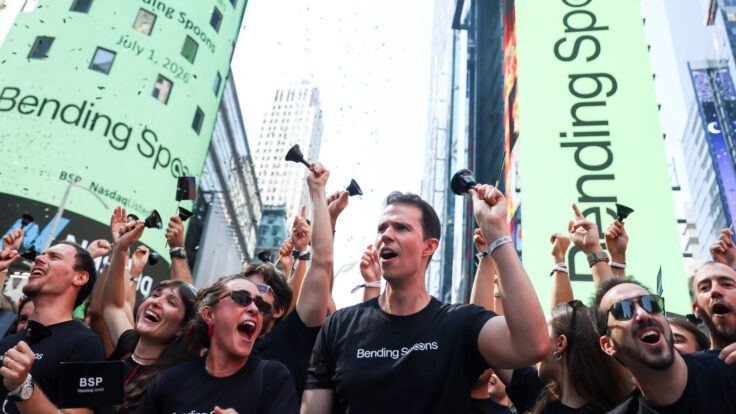
house: Back in March 2022, I first wrote about Animal Capital, the influencer-focused venture capital boutique founded only a few years earlier by the young former Goldman banker and WarnerMedia strategist Marshall Sandman, along with young social media celebrities such as Josh Richards, Griffin
Johnson, and Bryce Hall. Sandman’s key insight was to give social media influencers access to early-stage investment opportunities while leveraging their followers for returns.Animal is a small shop with big ideas and outsize performance. In its first fund, Animal invested $12.7 million in 75 portfolio companies. Among its investments was Breakr, a music marketplace that connects artists and brands to “create movements,” where Animal invested alongside
Andreessen Horowitz. Animal also invested in PYM, an anti-anxiety chewables company started by Zak Williams (the late Robin Williams’s son); Fairseed, which makes inexpensive smoothies; and Chums, a Yelp-like product review site. Animal’s biggest loser was the appropriately named Ugly, a maker of nonalcoholic seltzer with flavor drops, like a Shirley Temple. The company secured a big distribution deal with CVS that it couldn’t fulfill because of supply chain
issues. In any event, the current value of the Fund I investments is $67 million—more than a 5x return.
Fund II, at around $16 million, invested in 36 companies, now worth around $21 million. The two funds together brought in another $100 million in co-invest to various deals. “If you co-invested in everything we did, you’re up I think, like, seven and a half times just on our co-investments,” Sandman told me. He predicted the first two funds will end up returning investors 12 to 13 times
their money, “which is crazy,” he said. One of the big winners for Animal is Colossal Biosciences, now a more than $10 billion business. Sandman said the returns on Animal’s first two funds put it in the top 1 percent of fund returns for those vintages.
Animal has just announced the closing of its third fund, totaling $33 million. (Sandman is now partnered with Dylann Sands, who worked at General Atlantic after Goldman.) Celebrities such as Christina Aguilera
and Paris Hilton re-upped. (Hilton’s family office is the largest investor in Fund III.) Pete Davidson put in some coin, as did David Kaplan, one of the co-founders of Ares Management. Gary Cohn, the former Goldman Sachs number two and director of the National Economic Council during the first Trump administration, wrote a small check for Fund I, Sandman told me; by Fund III, he had committed a
seven-figure sum. “He made money on a deal with us,” Sandman said, explaining how Animal had invested in Arch, a digital administrative software company for family offices, and Cohn sold out in a later round for a big return. “He’s easily our toughest investor in terms of the way he addresses me and comes down on me,” Sandman said.
Other investors include the actor Nicholas Braun (Cousin Greg of Succession fame), Olympian
Shawn Johnson, former Disney executive Kevin Mayer, Android co-founder Rich Miner, Twitch founder Justin Kan, as well as Mark Wahlberg, James Corden, Taylor Fritz, and Jimmy Donaldson (a.k.a. MrBeast). “We’ve actually made them real, in-their-bank-account money, and we also haven’t gotten gluttonous,” Sandman
said. “Bigger funds don’t return money, and our investors would much rather co-invest with us. So we charge a regular two-and-20 on the fund. It’s an access vehicle. We’re taking the tip of the spear—ultra-ultra-high-end risk to get involved with these businesses. Then, when the Series A and Series B time comes and our allocation gets big, we’ll do a little pro rata. But the reality is that the Rich Miners and Gary Cohns and Justin Kans of the world—the titans of their own industries—want to
pick and choose. We’ve done more than $100 million of co-invest, and from an A.U.M. perspective, I would expect us to cross $300 million or $400 million of A.U.M. over the next 18 months in co-invest, because that gives us the opportunity to actually compete with Founders Fund, Union Square Ventures, and Andreessen.” Good luck, Marshall and Dylann!
|
|
|
|
My candid chat with Goldman C.E.O. David Solomon.
|
|
|
|
Everything seems to be coming together for David Solomon, now in his eighth year as C.E.O.
of Goldman Sachs.
The firm is co-lead managing the SpaceX I.P.O., which is looking like it might raise as much as $86 billion, the largest of all time, at a valuation of around $1.8 trillion. Goldman just joint-managed the $85 billion equity raise for Alphabet to support its ongoing A.I. build, one of the largest secondary offerings for a public company ever, which also included a $10 billion investment from Berkshire Hathaway under new C.E.O. Greg Abel. It’s also a lead
manager on the Anthropic I.P.O. and will likely be involved, as co-lead manager, in the OpenAI I.P.O., unless the Anthropic folks object, which does not seem likely. Goldman will probably be in pole position, too, if Meta decides to raise billions in equity to continue its A.I. build-out. After all, Dina Powell, the Meta executive leading the capital raise, is a former longtime Goldman executive.
Meanwhile, the firm’s revenue will probably come in at around $75
billion this year, with net income of around $20 billion—on par with the $21 billion Goldman earned in 2021, its peak earnings year (thanks to the pandemic, oddly enough). Correspondingly, the firm’s stock price is steaming toward $1,050 a share, up 68 percent in the past year alone and 170 percent in the past five years. All that concern about Goldman’s ill-fated strategic push into consumer banking seems to have melted away after Solomon basically reversed course and returned to focusing on
the firm’s bread-and-butter institutional client base. Goldman’s market capitalization is now $304 billion.
Yes, rival Morgan Stanley’s market cap is a smidge higher, at $330 billion. And Jamie’s machine is much bigger still, at $838 billion. But Goldman has them both beat in terms of stock market value per employee: around $6.7 million for Goldman, compared to $4.2 million for Morgan Stanley and $2.5 million for JPMorganChase. I’m not sure this statistic means anything
substantive, but I like it.
|
|
|
|
Claude, the AI without ads
A space to think. Anthropic keeps conversations with Claude ad-free: no sponsored links, no advertisers shaping answers, no paid product placements you didn't ask for. When you bring your hardest problem to an AI, you shouldn't have to wonder who it's working for.
Learn more
|
|
|
|
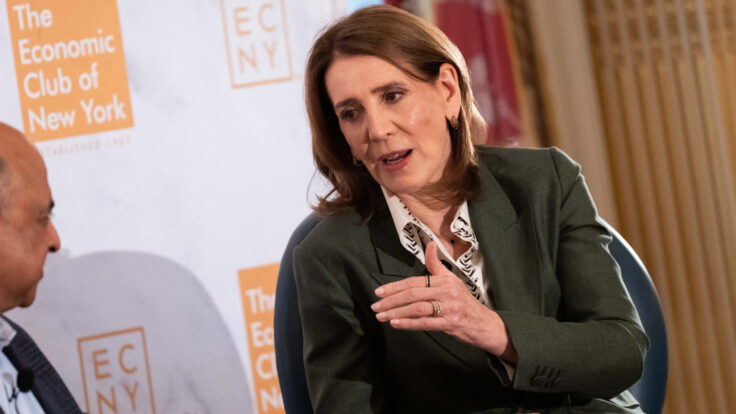
Amid the bank’s success, David has been more publicly out there of late. He just gave a talk at the
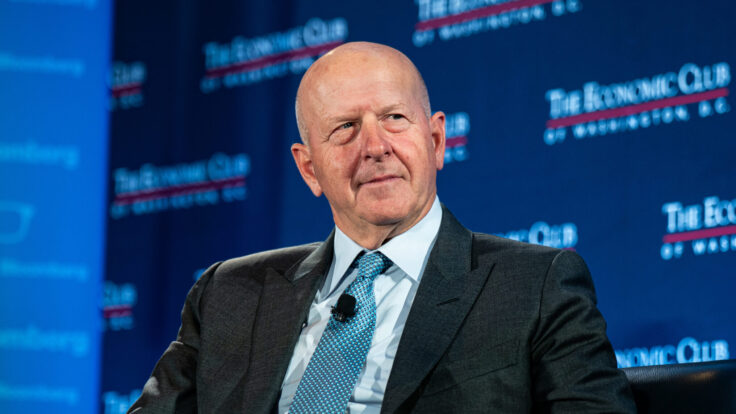
Economic Club of New York, spoke with David Rubenstein at the Economic Club of Washington, and delivered the commencement speech at Wharton. He also wrote a Times piece rebutting some of the fears around A.I. and joined Trump on his C.E.O. caravan to China. He even met recently with New York City Mayor
Zohran Mamdani for a frank conversation about the importance of finance and Wall Street to the city’s economic viability. And, yes, he talked to me.
During our chat, David acknowledged that, as the C.E.O. of Goldman, it’s his job to worry. At a private Puck event this week, his predecessor, Lloyd Blankfein, wistfully recalled that his job had been to find the rain cloud behind every silver lining. (Worrying seems to come with the job; Blankfein
used to say he spent 98 percent of his time worrying about things with a 2 percent probability.) David acknowledged that he spends a lot of time thinking about inflation and growth, consumer sentiment, Iran, cyber threats, etcetera. As he told the Economic Club of New York, he’s worried that there is “more greed than fear” in the markets right now. (This is not investment advice, but no shit…) Solomon has been around long enough to be rightly concerned that these spasms of economic and financial
euphoria often end very badly, as I wrote last week.
In the on-the-record portion of our interview, David shared that at the beginning of the year, he was “quite optimistic” that the world economy was “set up” for greater real economic growth than was generally anticipated. He thought that 3 percent “real growth,” after accounting for inflation of around 2 percent,
was not out of the question. But then the war in Iran began. “The war has definitely created an energy shock,” he told me. Thanks to the increase in gasoline prices, Americans probably spent something like $45 billion more in March and April on gasoline than they did in January and February. “So, it’s real,” he said. “It’s real.” The increase in oil and energy prices also filters down through the supply chain, raising the price for all sorts of other products that depend on oil and
gas.
Concern about how the war would affect the growth picture for the year is just now becoming top of mind for corporate C.E.O.s, David said, adding that they’re starting to talk about “a little bit of softness” here and there. “My base case is, while the markets are running, we’re going to see some softness in the economy, potentially in the second half of the year, because this has to have a real effect,” he said. “It doesn’t mean a recession. But my growth expectation was—with all
the stimulus, the benefits of the bill from last summer coming into play, the continued deregulatory trend, the A.I. investment super-cycle—like, you know what? This can break to the high side in terms of nominal growth, and now I think we’ve got a headwind.”
David explained that he also worried that market participants who believed the war would get resolved—and oil prices along with it—might have another thing coming. “There are tailwinds in the basket and there are headwinds in the
basket,” he said. “They’re just focused on the tailwinds, and they’re kind of ignoring the headwinds. So I do think there is a risk—not saying it’s a huge risk—that we see some of these economic effects filter into the economy, and that tempers some of the risk-taking that’s now going on in the capital markets in the second half of the year. But we haven’t seen it yet, and that might not happen.”
|
Of course, Solomon was also characteristically buoyant, which is part of the Goldman C.E.O. job description.
Goldman has been telling clients that this might be one of the rare perfect moments to raise capital, given the “risk off” mentality of many investors, the high valuations assigned to many companies, and the record stock markets. “This is a really good moment if you need to raise capital,” he said.
He was especially proud of the Goldman team that worked with Alphabet on its massive capital raise. “People are starting to realize that for all these capital needs, it’s got to be a mix of
equity and debt,” he said. “You can’t just borrow, borrow, borrow. Even if you’re a really strong investment-grade company, you’ve got to find a balance in that.”
David shared that, lately, he’s been thinking about what the next five to 10 years might look like. “I think it’s a super interesting time,” he said. The current technology boom, he believes, is going to “unlock a productivity acceleration in the United States that is going to be extraordinary for the country, for economic
growth, for participation. Is it going to be a straight line? No. Are there going to be dislocations and bumps? Yes. Is it going to be disruptive to certain kinds of jobs? Absolutely.” But, as he wrote in the Times, he doesn’t envision a “massive difference in structural employment.” Rather, he thinks the United States is “a very nimble, very diverse economy,” and is “super optimistic about the way the U.S. is positioned” for the A.I. revolution.
In particular, David wanted to
address the metastasizing job-loss doomerism. “When I hear people talk about structural unemployment, universal basic income, and that no one will have a job, I just don’t think that’s grounded in reality,” he said. “Technology has been disrupting jobs, changing work patterns for my whole career. People are incredibly resilient when they’re forced to change. They don’t like to change, but when they’re forced to, they adapt. I don’t think it’s different this time.”
He noted that, at some
$30 trillion, the United States is the largest economy in the world, leaving China, at $21 trillion, pretty much in the dust for the foreseeable future. And it is an economy that is growing and continues to lead the world in innovation. “You and I could sit here, and we could agree on a long laundry list of issues that are problems that have to be dealt with that we don’t like, that are really important,” he said. But, he added, there are plenty of good things to celebrate, too. The United
States is “the largest, most vibrant, most diverse economy in the world,” he said. “It’s underpinned by a technology of entrepreneurship, technological innovation, a risk-taking culture, and, generally speaking, a desire—even though at the moment we’re having struggles with immigration—to welcome people for a long, long period of time. I actually don’t think that’s going away.”
Our capital markets, David said, are “so far ahead of everyone,” as is our capital formation process. “Think
about it. Individual Americans want to take risks. Some of the risks they take are stupid, okay, but they take risks. You go to Europe, they don’t take risks, they don’t invest in equities. Look at their pension returns. Here, people take risks. Think about the venture community, all the startups, all the entrepreneurship. Think about the fact that 65 percent of all jobs in the United States come from small- and medium-size enterprises—most of which are entrepreneurs—driving business. That is a
huge economic advantage for the United States. It is a model for the world. It is a winning model. It’s not perfect, but it is better than anybody else’s model.”
He continued: “Europe has 450 million people. The European Union has been a very complex experiment for 25, 30 years, but they’ve not harnessed the economic might of 450 million people—a $20 trillion economy with a 0.7 percent growth trend. The U.S. is 330 million people, with a $30-plus trillion economy growing at a 2 percent
trend over time. The compounding difference is extraordinary.” He said he loves the fact that Americans are ambitious and think outside the box. “Thank god people dream,” he said. “Look, I don’t know if there are going to be data centers in space, but let me tell you something: I love the fact that we have Americans who are dreaming about it, thinking about it, trying to figure it out.”
During David’s soliloquy, I realized I was looking at a man entirely transformed from the rough patch
of a few years ago, when he was experimenting with consumer banking and stretching the patience of some in his partnership amid a sagging stock price. Now, he’s firing on all cylinders. “The world is a magical place,” he said. “There’s so much opportunity.”
This newsletter has been updated. |
|
|
|
Join Puck’s chief political columnist, John Heilemann, as he roams the corridors of power and influence in America on this
twice-weekly interview show, taking you beyond the headlines with the people who shape our culture: icons and up-and-comers, incumbents and insurgents, moguls and machers in the overlapping worlds of politics, entertainment, tech, business, sports, media, and beyond. The conversations are rich and revealing, unrehearsed and unexpected… and reliably impolitic. A Puck-Audacy joint, new episodes drop every Wednesday and Friday.
|
|
|
|
The industry’s go-to source for unflinching reporting on the trillion-dollar business of artificial intelligence - perhaps the
single most important technology of our time. Ian Krietzberg, the powerhouse journalist behind The Deep View, delivers twice-weekly insights into the latest dealmaking and breakthroughs in A.I., and how the intersecting worlds of finance, entertainment, media, and politics are being transformed in its wake.
|
|
|
|
Need help? Review our
FAQ page or contact us for assistance. For brand partnerships, email ads@puck.news.
You received this email because you signed up to receive emails from Puck, or as part of your Puck account associated with {{customer.email}}. To stop receiving this newsletter and/or manage all your email preferences, click here.
|
Puck is published by Heat Media LLC. 107 Greenwich St., New York, NY 10006
|
|
|
|
|