{{ 'now' | timezone: 'America/New_York' | date: '%b %d, %Y' }} |
|
|
|
Welcome back to Dry Powder. I’m Bill Cohan.
From Wall Street to Nantucket,
where I’ll be taking up residence in the Puck Atlantic Coast Bureau next weekend through the rest of the summer (come say hi or use my TV studio for your CNN/MS NOW/CNBC hit), everyone is talking about one thing. No, it’s not the Strait of Hormuz or the SpaceX I.P.O. Instead, it’s the media powder keg that is 60 Minutes, which has become the crucible of discontent inside the Ellison family’s $120 billion-ish, multi-fronted L.B.O. of the legacy media business.
You
can trace a semi-straight line from Shari Redstone’s distressed sale, which was accompanied by a $16 million payoff to the Trump administration, to Scott Pelley’s dramatic defenestration last week. In tonight’s issue, I spoke with Lesley Stahl, the longtime and legendary correspondent, about her decision to stay put. The conversation includes some newsy bits, like executive producer Nick Bilton’s attempt to woo
her, and her not-yet-finalized two-year contract extension.
Also mentioned in this issue: Wes Edens, Changli Luo, Bari Weiss, Tanya Simon, Sharyn Alfonsi, Cecilia Vega, Draggan Mihailovich, Guy Campanile, Matthew Polevoy,
Rob Bonta, Jeffrey Kessler, Bill Whitaker, Jon Wertheim, Anderson Cooper, Bryan Lourd, and more.
But first… |
- The
garden of Edens: A quick update on my two favorite Wes Edens–related projects. As I mentioned last weekend, Brightline—the Florida commuter rail project and Edens’ brainchild—now has some $6 billion worth of debt, and is facing a June 15 deadline to pay interest on its commuter bonds. That payment has already been extended on several
occasions. The private company, which is backed by Edens’ Fortress Investment Group, shared that it is trying to “actively pursue the planned issuance of a substantial amount of equity, the proceeds of which would be used to repay principal and interest of existing higher-coupon indirect parent entities’ debt of ours and to increase cash reserves.” Brightline now has a full complement of financial and legal advisors striving mightily to avoid bankruptcy, or to pull off a major out-of-court
restructuring.
In its latest note to investors, Brightline said it was seeking to obtain new debt financing—probably in the vein of D.I.P., or debtor-in-possession financing, generally used in the context of a bankruptcy filing. “Net proceeds of the potential additional debt would be expected to be used to provide liquidity for the company’s ongoing operating requirements,” the company shared. “The terms and conditions of our existing indebtedness include restrictive covenants that limit
our ability to incur debt and we expect that we may need to obtain consent from certain holders of our indirect parent entities’ debt to incur the additional debt.” In other words, the new financing could result in some of the creditor-on-creditor violence that has become all too common in many U.S. out-of-court restructurings—and that, in the end, often does not stave off bankruptcy. (See, for instance, Saks Global.)
Meanwhile, New Fortress Energy, the publicly traded liquefied natural gas
company that Edens founded, and where he still serves as C.E.O., is pursuing its own restructuring in the U.K., where the company can take advantage of the faster, cheaper, and more accommodating procedures and court system. (I have written about this here, too.) In May, the U.K. court essentially approved the New Fortress Energy restructuring plan, and
scheduled the vote on it for June 15, with the final approval to be given on June 18. The implementation would likely happen sometime in the third quarter. Edens owns about 19 percent of New Fortress, and the U.K. filing allows him to keep the stock trading on the Nasdaq instead of getting wiped out, as would usually occur in a U.S. bankruptcy.
Still, the stock is trading at 50 cents, down 55 percent (so far) in 2026. Edens’ stake in the company is now worth around $27 million, but his
ownership will surely be diluted as part of the restructuring of the $8 billion of debt. In short, it’s been a rough 2026 for Edens, and that’s without delving into his extortion sex scandal involving Changli Luo. (Luo was criminally indicted, and Edens has said he won’t be commenting until he testifies under oath at her trial.) Don’t worry though: Edens is still a billionaire, and still owns a big chunk of the Milwaukee Bucks, even if they didn’t get near the
NBA playoffs.
|
|
|
|
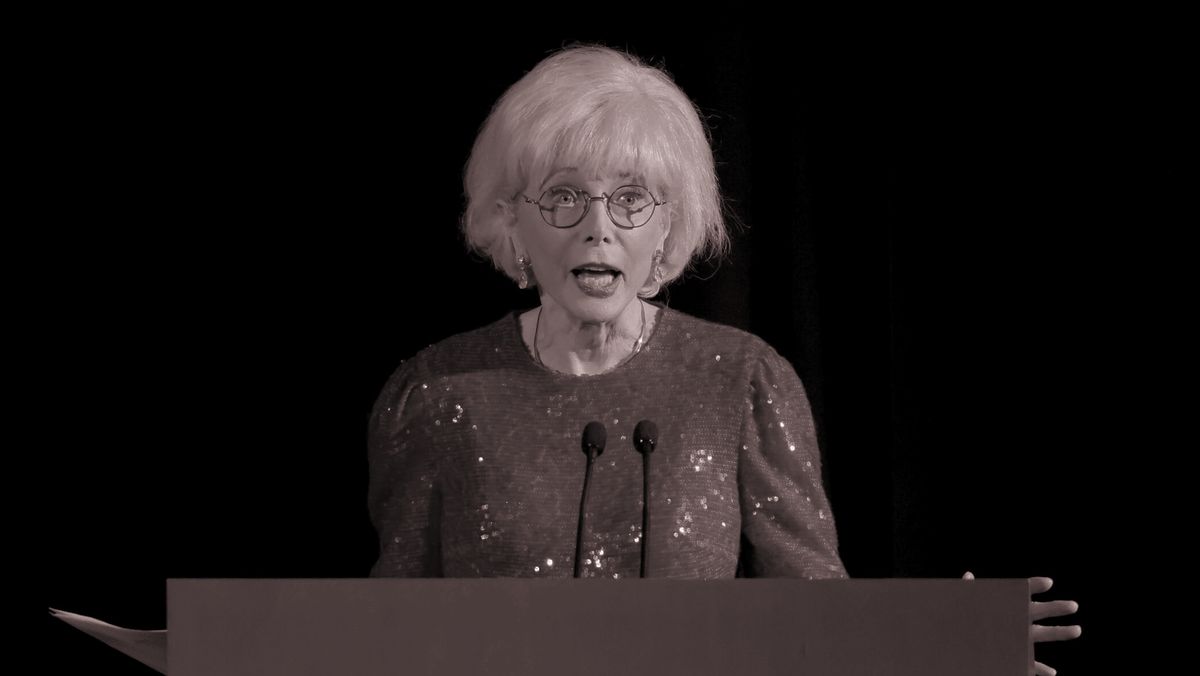
In a candid chat, the longtime 60 Minutes star correspondent explained her fraught
decision to stay on after perhaps the most bizarre week in the show’s history. “It’s just been obviously the hardest chapter of my career,” she said. “This was by far the worst experience I’ve been involved in, or even witnessed.” |
|
|
|
Shortly after Black Thursday—the moniker that 60 Minutes veterans applied to the simultaneous
firings of a half-dozen top producers and journalists at the end of May—longtime and legendary correspondent Lesley Stahl had an uncomfortable decision to make. Should she board a long flight to Madrid to report on a new segment for the fall season of the show?
After all, she still hadn’t decided whether she was staying or not, and she was furious, confused, and irate over CBS News editor-in-chief Bari Weiss’s decision to terminate Tanya
Simon, the show’s executive producer and daughter of the late longtime 60 Minutes correspondent Bob Simon; correspondents Sharyn Alfonsi and Cecilia Vega; and top producers around Simon, including Draggan Mihailovich, her deputy, segment producer Guy Campanile, and Matthew
Polevoy, who ran the show’s digital operations. Stahl was further surprised when Weiss subsequently installed my old VF colleague and friend Nick Bilton, a smart journalist who unfortunately has no broadcast news or management experience, let alone a market value of around $2.3 million per year. But she also still loved the show and didn’t want this catastrophe to be the end of the line. |
|
|
|
A MESSAGE FROM OUR SPONSOR |
INSPIRE AWE
Revered by all. Driven by those who lead by example. Elevate every move you make in a Range Rover.
EXPLORE
|
|
|
|
But Stahl, now 84 years old, faced even further complications in deciding to board that flight. Campanile,
the producer of the segment, was also on his way to JFK, en route to Madrid, when he was given the axe. “Oh god, this was awful,” Stahl told me. She had never before worked with Campanile, a former producer on CBS Evening News, and said she was looking forward to the opportunity. He had already compiled the research for the story, and persuaded the subject and his team to give Stahl a filmed interview in Madrid, where the subject was appearing. Campanile had also sent her a huge
research package in preparation.
Even as Weiss et al. fired Campanile, they gave him the option of going on the trip anyway and producing the story. “He had to make a very fast decision,” she said. He decided not to go. “Someone else had to step in,” she said. “They fired everybody who was around Tanya. We don’t know why. He doesn’t know why. He has no idea why he was fired. None,” Lesley said, explaining her thinking in the moment. “And I have no idea why he was
fired.”
In a conversation on Friday, Lesley told me she had to make a snap decision. And while it was just about one particular story for the historic TV newsmagazine, now entering its 59th season, it was also suddenly imbued with fraught significance pertaining to the institution itself. “I had to make a decision to go forward with the story, without knowing if I was going to stay or not,” she told me. In the end, she decided to get on the flight, “not knowing where I was headed.” (Stahl
declined to say what the segment is going to be about. I know, but out of respect for her and the show’s process, I’ll keep that under wraps.) |
Of course, this was all just a prelude to one of the most bizarre weeks in the show’s remarkable history. The
following Monday, Bilton would greet an aggrieved staff that wanted answers regarding the firings. Many in the room had long ago turned against Weiss, and they weren’t likely to offer much grace to any successor to Simon, particularly one who came from outside their ranks. Real or imagined, Bilton’s appointment seemed like the latest sign of disrespect to them and their craft, just as Bari’s arrival had been months earlier.
And yet, some larger issues—often obscured in this drama—were
also clearly present. 60 Minutes may be the so-called jewel of American newsmagazine journalism and a veritable institution. But it’s also a line item inside the most complex series of M&A deals in the history of the media industry. Less than a year ago, the Ellison family and RedBird Capital closed a deal to acquire Paramount Global for $8 billion—a deal, unfortunately, that was approved by regulators only after that $16 million check was cut to placate yet another
Trump-created grievance. The same group is currently trying to close its subsequent $110 billion purchase of Warner Bros. Discovery before a $7 million daily ticking fee kicks in, at the end of September—and Trump appeasement may still be on the agenda.
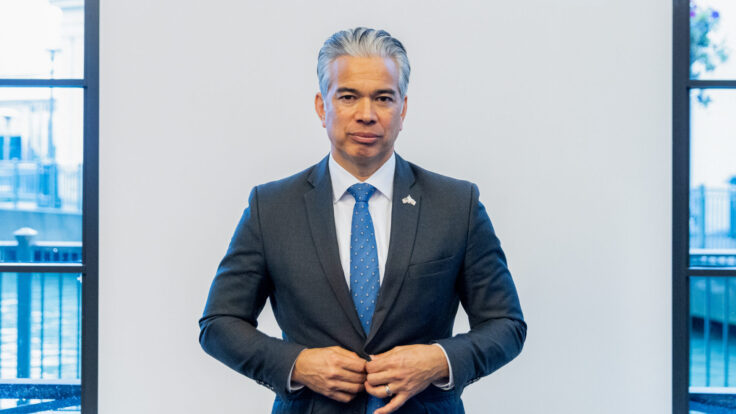
The Ellisons ostensibly still think they can close by July 15, although California Attorney General Rob Bonta may have something to say about that timing. The new owners have been telling regulators that
both Paramount and Warners will still combine to make around 30 movies per year, and therefore the merger is not a threat to Hollywood. (Read my partner Eriq Gardner’s excellent interview with their lawyer, Jeffrey Kessler.) Nevertheless, WBD’s stock fell nearly 3 percent on Friday on the news that Bonta was preparing a
lawsuit to try to thwart the deal. Meanwhile, the combined entity will soon need to find billions and billions of cost cuts—err, synergies—as it grapples with its massive $79 billion debt load. (Disclosure: RedBird is a minority investor in Puck.)
60 Minutes has long operated independently of “across the street,” as its staffers say, in reference to the fact that their office on 57th Street is across from the main CBS offices. And why not? It’s an incredible brand that
produces remarkable journalism, and has for nearly 60 years. But under new leadership, there is a mandate to think more expansively about new platforms and formats—not merely 60 Minutes Overtime and TikTok vertical videos—and all kinds of ideas are probably being cooked up in conference rooms about how to integrate CNN and its journalists, in anticipation of the closing of the WBD merger. At the same time, a culture clash is already in full flower. While 60 staffers might covet
their independence, the new managers and owners have paid billions to be both seen and heard. It’s hard to imagine any entity operating independently in an environment undergoing such operational scrutiny, and with so much debt to pay down.
During Bilton’s initial meeting with staff, since-fired correspondent Scott Pelley referred to the show as being “murdered.” In a recent interview with the Times, he took it a half-step further, and said the whole affair felt
as if a spouse had been murdered. The reality is that some changes are likely necessary to ensure 60 also thrives in an “ice cube that is melting” world, as Bilton described broadcast television, and these objectives may also be colored by the combined WarnerMount’s other cash considerations.
Adding to the crisis is the unfortunate fact that these decisions are being poorly communicated by overwhelmed executives amid the pressure of a rapidly closing deal. The whole
situation is a real shame, and it certainly didn’t have to go down this way. You almost wish everyone could take a do-over on the last week—though I suspect Bari and Nick don’t quite work that way. Wouldn’t it be better if the old team could get back together again? |
On Friday, days after Pelley’s ouster, Stahl and her fellow correspondents, Bill Whitaker
and Jon Wertheim, announced in a memo that they were staying on the program. She confessed to me that “part of the reluctance” to stay was that the trio did not know why their colleagues had been fired—and they still don’t know. (Alfonsi had understandably gone to war with Weiss after the latter’s alleged interference in the infamous “Inside CECOT” segment, and many in the building assumed that Simon was among the walking dead after letting Anderson Cooper
offer thinly veiled criticism of CBS News management during his signoff from the show.) |
|
|
|
A MESSAGE FROM OUR SPONSOR |
INSPIRE AWE
Revered by all. Driven by those who lead by example. Elevate every move you make in a Range Rover.
EXPLORE
|
|
|
|
Anyway, Stahl said the mystery over the firings was Pelley’s main beef with CBS management. “That’s what he
was agitated about,” she said. “Tell us why they were fired. That was his question. He never got an answer. They felt he was insubordinate for asking that question.” (A CBS spokesman told me that as a general and legal matter, it was not possible to share the confidential reasons why someone was fired with other employees, even if requested.)
Their memo reflected their deep sense of grief about the way their colleagues were treated. “We have had a hard time deciding whether to stay at
60 Minutes,” they wrote. “We’re still deeply upset by the firings of Tanya and Draggan, strong leaders who everyone respected. As far as we can tell—because no explanation has ever been offered—they were expelled because they fought for our 60 Minutes values and stood up to protect our independence and integrity. Newsrooms are not supposed to be run like dictatorships. Collaboration and argument are the way we have always worked at 60.”
After mentioning by name
the 60 Minutes Seven—the six fired without cause, plus Pelley—they wrote, “We want to express how sorry we are that these principled, fair and honest journalists were treated so shabbily, with such indecency. Tanya deserves to be celebrated, not cruelly cast off. Draggan too. It’s been heartbreaking.” (A CBS News spokesman told me, “We’re excited for Season 59 with Lesley, Bill, and Jon as star correspondents and Nick at the helm.”)
Lesley told me that although they knew the
housecleaning had been “in the works for a while,” Tanya went to her meeting that day with Weiss thinking she was going to be discussing the new fall season of the show. “Instead, she was fired in the three-minute meeting,” she said, “and was told that she and Draggan had to clear out of their offices by five o’clock that day.” (The CBS spokesman said that although the fired employees were initially told their “company systems and badge access” would be “disabled” by 5 p.m. that day, they were
later told by an H.R. representative that there was “no rush” and they did not have to leave by the end of the day. They had until 8 p.m. to get gone.)
Last Wednesday, after she returned from Spain, Lesley had dinner with Nick at Gabriel’s on Central Park South. “It was a meeting to talk about the procedures at 60 Minutes,” she said. “I was making a plea not to change anything on the Sunday night broadcast.” She said the 60 Minutes crew is “happy to do more work online” and
was already doing “a lot of things that Bari has talked about,” such as podcasts and YouTube videos. “We understand that we need to do more,” she said. “We get that, and if there are good ideas on that front, fine. The Sunday night broadcast, after 60 years, and after increasing our audience this past season, in my view, shouldn’t be tampered with. It’s so not broke, so why, quote, fix it?” (The CBS spokesman confirmed to me that this was what the two discussed at their
dinner.)
In their memo, the three remaining correspondents wrote that they decided to stay because “we don’t want to see 60 Minutes die. We have been grieving because this whole mess has wounded and damaged the broadcast. We want to stay and fight, try to repair and preserve our reputation.” The remaining producers had been waiting, with trepidation, to see what the three correspondents would decide. “We had to finally say it,” Lesley said. “What are we doing?” Lesley said there
is not much collaboration among the correspondents at 60 Minutes—instead, “there’s a kind of low-level competition,” as she put it—but in this case, they decided they needed to all agree on what to do. “We were going to do it together,” she said. “It was going to be the three of us, no matter what. That was difficult.”
They pledged to work with Bilton to revitalize the program in the wake of this self-inflicted wound. “There’s a lot of pressure on me and Bill and Jon to step up
and do more pieces than we’ve been doing, and do them at the same level,” she said. “We’re trying to explain to Nick what the procedures are—all the layers of fact-checking and screenings, just layer upon layer of fresh eyes, always fresh eyes, looking over and over and over.”
Lesley, whom my partner Matt Belloni reported is now working with CAA C.E.O. Bryan Lourd, is in the midst of negotiating a new two-year contract with 60 Minutes. She told
me she still has lots of energy, but is also trying to look at herself objectively to make sure she still has what it takes to fly around the world for the kind of rigorous reporting that a 60 Minutes segment requires. “I watch myself all the time,” she said. “I’m me, and then there’s me off to the side, looking at me, saying, Can you do it? I’m very, very, very aware of my age, and so far it’s been fine.”
She’s clearly still quite rattled by the whole episode, and the
still-unsolved mysteries around it, even though she’s made the tough decision to stay and try to raise the phoenix from the ashes. Most of the responses she’s received have been positive. “It’s been overwhelming,” she said. “It’s been a gush of lovely thank-you notes, just a flood. All these producers, associate producers, editors, even cameramen have just been standing paralyzed, waiting for us to tell them what we were going to do, and that really weighed heavily on us. We don’t want to leave
you, these lovely people we work with every day. It’s a big part of it, and they’re thanking us, and that feels good. It feels very good.”
Of the 60 Minutes Seven, she said she has heard only from Matt Polevoy since she made the decision to stay. She said she had a brief conversation with Bilton after the memo came out, and he seemed to be accepting of it and their decision. But still, she said, it’s been “the hardest chapter of my career, and it’s been a long career. It’s been
over 50 years. This was by far the worst experience I’ve been involved in, or even witnessed. I mean, firing seven people, including the entire management team over here, plus reporters and producers…” Her voice trailed off, as if she was still having trouble processing what had happened during the past week or so. |
|
|
|
Join Puck’s chief political columnist, John Heilemann, as he roams the corridors of power and influence in America on this
twice-weekly interview show, taking you beyond the headlines with the people who shape our culture: icons and up-and-comers, incumbents and insurgents, moguls and machers in the overlapping worlds of politics, entertainment, tech, business, sports, media, and beyond. The conversations are rich and revealing, unrehearsed and unexpected… and reliably impolitic. A Puck-Audacy joint, new episodes drop every Wednesday and Friday. |
|
|
|
Ace media reporter Dylan Byers brings readers into the C-suite as he chronicles the biggest stories in the industry: the future
of cable news in the streaming era, the transformation of legacy publishers, the tech giants remaking the market, and all the egos involved. |
|
|
|
Need help? Review our
FAQ page or contact us for assistance. For brand partnerships, email ads@puck.news.
You received this email because you signed up to receive emails from Puck, or as part of your Puck account associated with {{customer.email}}. To stop receiving this newsletter and/or manage all your email preferences, click here. |
Puck is published by Heat Media LLC. 107 Greenwich St., New York, NY 10006 |
|
|
|
|