Hello and welcome back to The Best & The Brightest. I’m Leigh Ann Caldwell,
watching House Republicans try to digest the Senate updates to their Big Beautiful Bill. The question is when (not if) they pass it.
Make sure you listen to this morning’s edition of The Powers That Be, our flagship podcast, in which I speak to Puck’s newest author, A.I. expert Ian Krietzberg, about why Senate Republicans killed the A.I.
regulatory moratorium in the bill, and how Trump’s legislative agenda is at odds with his determination to “win” the tech arms race. Also, make sure to sign up for Ian’s newsletter, The Hidden Layer, which debuts on Tuesday.
Tonight, as the House moves to pass the BBB, exclusive news and notes about what the multitrillion-dollar legislation means for Trump and the
Republican Party, and how the agonizing process has catapulted—and broken—political careers.
Programming note: The Best & The Brightest is off tomorrow, but will be back in your inbox on Sunday. See you then!
But first… |
-
American S.U.V.s to Vietnam?: Six days before his July 9 deadline to ink trade deals with 90 different countries, President Trump has concluded a grand total of… two, maybe three. First came an “agreement in principle” with the U.K., then a deescalation agreement with China, and today, Vietnam gets a 20 percent tariff on its exports to the U.S. (that’s 40 percent for goods shipped through Vietnam to the U.S. from a third country), in exchange for opening its market to U.S.
goods. On Truth Social, Trump mused that American S.U.V.s would be “a wonderful addition to the various product lines within Vietnam,” though it’s hard to see how narrow Vietnamese streets stuffed full of bicycles, animals, mopeds, cars, and people would find room for, say, a Chevy Suburban.
- U.S. halts weapons to Ukraine: The Trump
administration also announced today that the Pentagon will halt deliveries of some weapons to Ukraine, including air-defense interceptors that have been critical to protecting Ukrainians from Russian missiles and drones. According to a White House spokesperson, the decision was made because the U.S.’s own stockpiles are running low. The Washington Post reports that the Ukrainians haven’t been formally notified, and it’s unclear if the move represents the beginning of the end of U.S.
military assistance to Ukraine, or just a temporary pause. Even the latter could have a significant impact on the war, given Russia’s stepped-up attacks on the country since ceasefire talks broke down.
- Elon’s threat: Ex-first buddy Elon Musk’s furious criticisms of the Big Beautiful Bill continue over its elimination of renewable-energy tax cuts, especially for solar, and its eye-watering price tag. He’s now
threatening to fund primaries against every Republican who votes for it. You’ll recall that Musk spent nearly $300 million in the 2024 presidential election. If he spends a million dollars against nearly every House Republican, and the 18 Senate Republicans expected to run for reelection, that would come to the relatively bargain price of $235 million. (Of course, a million bucks might not put anyone over the top in a Senate primary.) He just might be able to pull this off—unless Tesla
continues to slump, and Trump cancels his billions of dollars’ worth of government contracts. Also, recall that Musk previously said, just six weeks ago, that he was planning on scaling back his political spending.
|
|
|
There was sound, there was fury, and then there was the predictable spectacle of
Republicans—hawks and populists alike—falling in line behind Trump’s landmark bill. |
|
|
Somewhere amid the slog of the Senate’s 27-hour session this week, I managed to steal a few
minutes with Sen. Ron Johnson, the cantankerous Wisconsinite who was being courted as a key swing vote on Trump’s Big Beautiful Bill. Johnson is perpetually frustrated: with congressional leadership, with his Republican colleagues, with what he calls Washington’s “addiction” to spending. But if Congress is an addict, Johnson is an enabler—he told me he’d reluctantly vote for the bill despite the trillions it’s projected to add to the deficit. And on
Tuesday, he did just that, justifying his vote on a personal promise from the president that he would get serious about reining in spending… in the future.
Before the final Senate vote, Johnson relayed to me Trump’s complaint that “Democrats are always united, they’re never divided.” Yet, in the end, it was the supposedly unruly and fractured Republican conference that bowed to Trump’s will with little resistance. House Republicans
crafted and passed their version of the BBB within six months—a lightning pace, really, when you consider the year and a half it took Democrats to fashion Biden’s signature Inflation Reduction Act, or the year and change they spent on Obama’s Affordable Care Act.
Indeed, notwithstanding media fixation on the supposed Republican holdouts, who have complained to the cameras that the BBB costs too much, or cuts
too deeply, the takeaway from this legislative saga is that Trump has remade the Republican Party into a monolith. Just ask the president himself, who posted this morning, “Trump was right about everything”—an apparent attempt to whip House Republicans nervous about voting for the Senate version of the BBB, which includes steeper Medicaid cuts and adds even more to the
deficit than the version the House passed in May.
Even the House Freedom Caucus, which helped oust Republican House Speakers John Boehner, Paul Ryan, and Kevin McCarthy, has largely kept their frustrations to themselves when it comes to Trump. Before the House even received the latest version of the bill, a senior House Republican leadership aide told me he wasn’t worried about the fiscal hawks falling in line:
Trump was going to pull out all the stops to make it so. For some fiscal hawks, the real fight was just getting face time with Trump. After signaling he had some beef with the bill, Rep. Andy Ogles posted a picture of himself with a major grin outside the White House, boasting about his upcoming meeting with the president. Rep. Tim Burchett posted a
White House video describing all the problems he had with the bill—and then posting afterward about how informative Trump was and calling it a “very good day.”
A sizable number of more centrist Republicans publicly worried about their constituents losing Medicaid coverage, or about the bill’s impact on their state’s renewable energy industry, or
the reduced timeframe for an increased state and local tax deduction. But they, too, were largely soothed by meeting with Trump. After all, the punishment for resistance was highlighted for all to see, with Trump threatening to back a primary against (the now-retiring) Sen. Thom Tillis and the creation of a super PAC to defeat Rep. Thomas Massie. For most other would-be defectors, those two cautionary tales were enough. Plus, they had already
taken the politically risky vote for Medicaid cuts in the first go-round. The Democratic campaign ads using this as an attack line have already been written, the aide pointed out, and they’re not going to change for anyone who backs out now.
|
The swift capitulation reflects how Republican careers are made and broken by Trump these
days. Two of the few remaining Republicans to take issue with the president at times, or otherwise not support his agenda—Senator Tillis and Rep. Don Bacon—announced their retirements this week, the latest in a long line of Republicans who have quit politics rather than submit to the Trump show: Sens. Jeff Flake and Bob Corker, the three former House speakers, the list goes on. Of the 10 House Republicans who voted to impeach Trump in January
2021, only two are still in office. Meanwhile, Trump has absolutely supercharged the careers of the deeply loyal. House Speaker Mike Johnson is perhaps the most obvious example, having made the strategic decision to endorse Trump during his reelection campaign, and then siding with the president on, well, everything. Johnson’s Trump-is-always-right mantra of governing has served him well
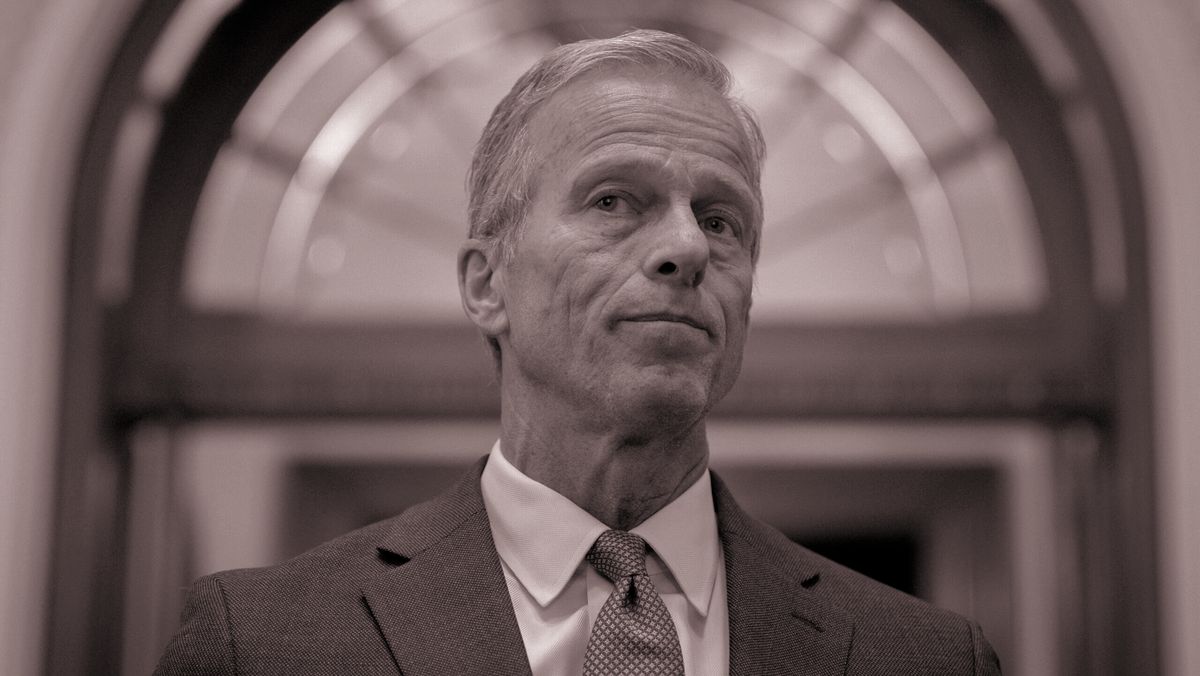
so far: It was Trump who cajoled members into voting for Johnson as speaker, a job he still holds, even though reporters once took bets on how long he’d last. And then there’s new Senate Majority Leader John Thune, whose job is arguably more difficult than Johnson’s. Yes, he wields a more comfortable margin, but senators are, in theory, less willing to cede everything to Trump—they
don’t have to face reelection every two years, after all. Plus, Thune and Trump started off on a more tenuous footing; Thune, an even-keeled senator some reporters refer to as “Hot Grandpa,” almost didn’t run for reelection in 2024 over worries about a Trump-backed primary challenger.
But he did run, at the urging of then-Senate Majority Leader Mitch McConnell, and he won. And now that he’s majority leader, Thune has decided to make
nice with Trump, realizing that a contentious relationship would doom his leadership and imperil his ability to gain respect from the growing number of colleagues who owe their elections to the president. But having to navigate a vengeful and mercurial president, as well as a conference with disparate beliefs and varying willingness to be team players, has posed the biggest challenge of Thune’s political career. And the BBB is the first big piece of legislation he’s had to get passed as
leader.
|
Thune had a major letdown early on, when he was forced to abandon his two-bill strategy and
cede to Mike Johnson’s “one big, beautiful bill” plan. But in the end, he let the House do its work, and then moved the other chamber’s bill even more to the right, comfortable that they’d have to accept it. Trump could more easily twist arms in the House, and Trump is 100 percent behind it. Vice President J.D. Vance broke the tie, after all. Republican senators tell me Thune was
transparent, inclusive, and responsive throughout the agonizing process—a major contrast from McConnell’s leadership style, which was very top-down and need-to-know (with members apparently needing to know very little). Thune has held 52 conference-wide meetings since the beginning of the year about the tax and spending bill, Sen. Markwayne Mullin told me, not including the side huddles, small-group meetings, and late night phone calls to hammer out a path to 51 votes. Sen.
Kevin Cramer said he’s watched Thune walk from member to member on the Senate floor to get the latest vibe check. “Nobody has to come to him,” Cramer said. “He’s amazing.” Ultimately, it was Thune, more so than Trump, who convinced Sen. Lisa Murkowski to cast the deciding vote in favor, offering her a long list of policies that would help Alaska. He was also
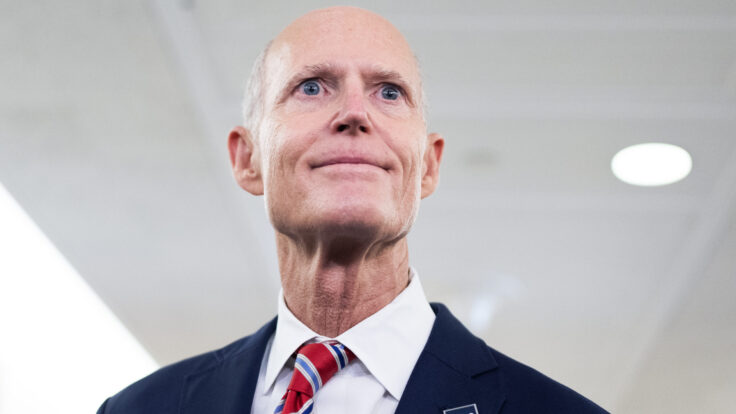
instrumental in getting the support of Sen. Rick Scott (who’d previously challenged Thune for leadership) with the promise of a vote on his amendment to slow the growth of Medicaid. Scott complimented Thune as “receptive” and having “worked his butt off.” Still, Ron Johnson remains grumpy, and an outlier: He’s never had much good to say about leadership, and in this case declared himself “not happy”
with the process, declining to comment directly about Thune on the grounds of some advice he got from a “neighbor lady”: “If you don’t have anything nice to say, say nothing at all.” |
|
|
Join Emmy Award-winning journalist Peter Hamby, along with the team of expert journalists at Puck, as they let you in on the
conversations insiders are having across the four corners of power in America: Wall Street, Washington, Silicon Valley, and Hollywood. Presented in partnership with Audacy, new episodes publish daily, Monday through Friday. |
|
|
Unique and privileged insight into the private conversations taking place inside boardrooms and corner offices up and down Wall
Street, relayed by best-selling author, journalist, and former M&A senior banker William D. Cohan. |
|
|
Need help? Review our FAQ page or contact us for assistance. For brand partnerships, email ads@puck.news. You received this email because you signed up to receive emails from Puck, or as part of your Puck account associated with {{customer.email}}. To stop receiving this newsletter and/or manage all your email preferences,
click here. |
Puck is published by Heat Media LLC. 107 Greenwich St, New York, NY 10006 |
|
|
|