 |
|
Welcome back to Dry Powder.
|
|
Something weird is going on with the Netflix stock. Despite collapsing again in April—costing Bill Ackman some $400 million on his $1.1 billion attempt to buy the dip—the company’s EBITDA margins remain an incredible 60 percent. Is it just me, or is the Netflix stock looking downright cheap these days? (This is not investment advice.)
Bill
|
 |
| The Bull Case for Netflix |
| Yes, the stock is down 70 percent and there are legitimate frets about an emerging ad-tier, churn, and increased competition. But the company is only trading at about 4x EBITDA while Tesla is trading at, um, 55x. This is not investment advice, but something weird is going on here. |
|
|
|
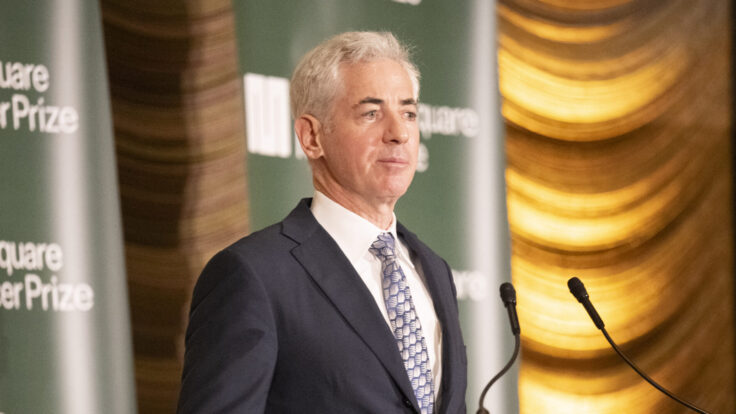
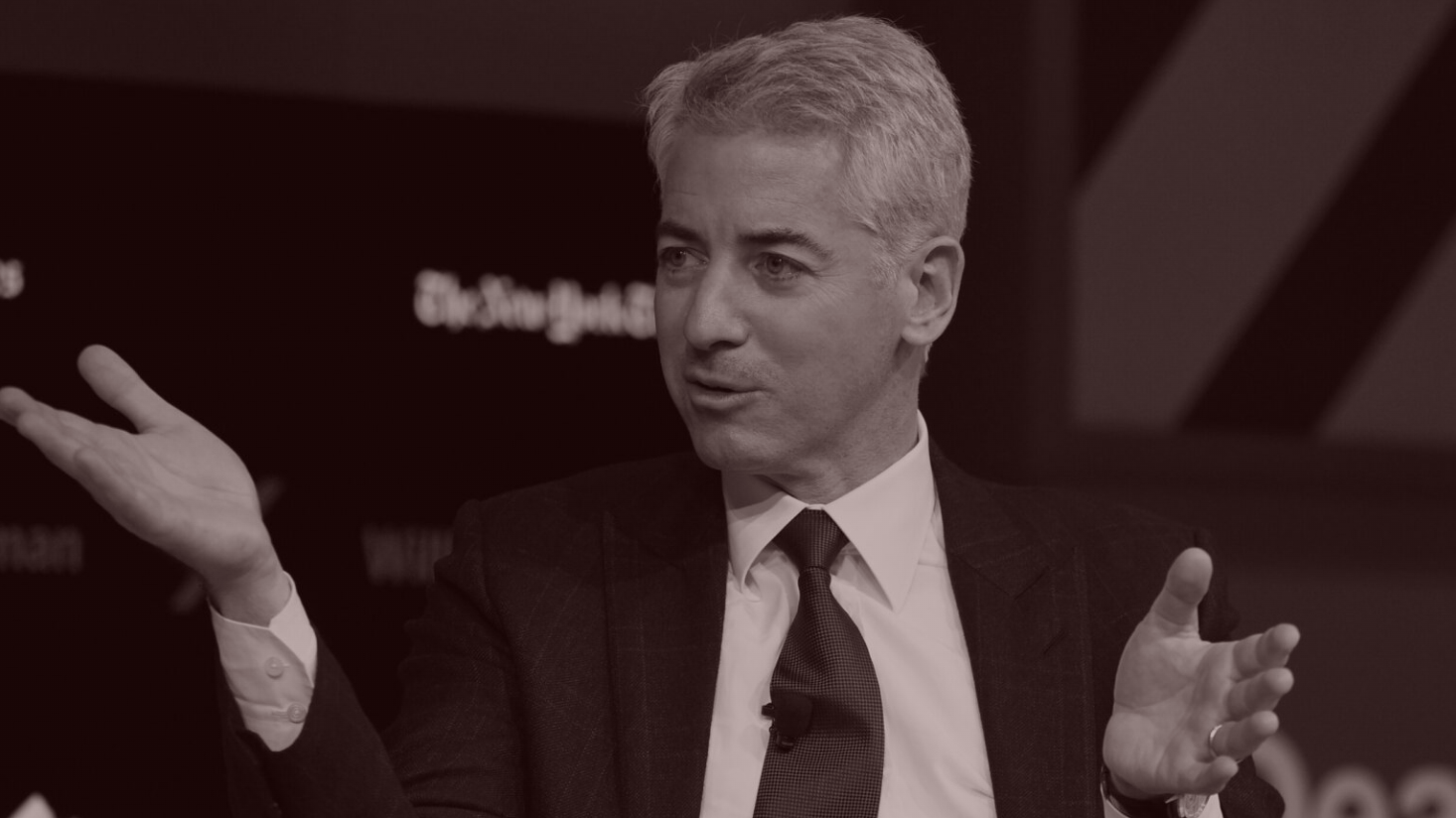
| Back in April, the jack-of-all-trades billionaire hedge fund manager Bill Ackman bailed out of Netflix, just three months after purchasing some 3.1 million shares of the company, worth around $1.1 billion, and forcing him to digest a loss of around $400 million. Only months earlier, in a letter to his hedge fund investors, Ackman had enumerated the various reasons why the firm believed “the opportunity to invest in Netflix at current prices offered a more compelling risk/reward and likely greater, long-term profits for the funds.”
At the time, the news that Ackman was already dumping his Netflix shares was stunning. Among other things, Ackman has always been a proponent of taking a long-term perspective, much like his investing hero, Warren Buffett. (In fact, two of his fund’s most infamous bets, Herbalife and Valeant Pharmaceuticals, hewed to this timeline, with disastrous results.) In his letter laying out the bull case for Netflix, Ackman had written that he loved the business of streaming content, having previously bought a big stake in the Universal Music Group, a digital music content company, which provided him a lot of proximate exposure to the fine details of streaming economics. He praised the Netflix management, its business model of recurring revenues, its pricing power and its high EBITDA margins. He also lauded the “superb quality” of Netflix’s “industry-leading content,” which he wrote should continue to lead to higher growth and a wider “moat” around the business, despite the recent market correction.
Three months later, of course, his thesis was down the drain. Netflix reported slowing subscriber growth in the first four months of 2022, and warned investors that it might lose around 1 percent of its 220 million global subscribers in the second quarter. That would mark the first time in a decade that the company’s subscriber growth retreated. Netflix also said that it would consider adding a lower-priced, ad-supported tier—voiding its founders’ long-held arguments against advertising of any kind—and that it would start cracking down on password sharing. The company’s stock got clobbered and Ackman was down $400 million.
That was enough of a reversal of fortune for Ackman to decide to sell his stake. “While we believe these business model changes are sensible, it is extremely difficult to predict their impact on the company’s long-term subscriber growth, future revenues, operating margins, and capital intensity,” Ackman wrote on April 20. “...While Netflix’s business is fundamentally simple to understand, in light of recent events, we have lost confidence in our ability to predict the company’s future prospects with a sufficient degree of certainty.”
To his credit, Ackman saved himself another $145 million, or so, loss by bailing. Since April 20, when Pershing sold, Netflix’s stock is down another 22 percent, as investors continue to sour on its fluctuating business model. Once worth more than $300 billion last fall, Netflix’s market value these days is around $80 billion, down some 70 percent so far in 2022.
My Puck partner Matt Belloni has done an excellent job conveying Netflix’s various challenges, including his recent analysis on its decision about whether to outsource its advertising tier to Google or to Comcast. I’m interested in thinking through the investment angle on the company. Is it time to employ the old Wall Street saw that if you liked Netflix when it was trading at $700 a share, shouldn’t you love it even more now, when it’s trading at $180 a share? Indeed, that’s a 70 percent discount on what was, until recently, considered one of the most important technology companies around, alongside Amazon and Google and one of the components of the so-called FAANG stocks. It goes without saying that this isn’t investment advice, but let’s take a minute to reconsider Netflix. |
|
|
| Gigantic swings in investor sentiment are nothing new, of course. Stocks go in and out of favor all the time, for various reasons, some logical, others merely emotional. The question remains, is it smart to invest after a dramatic change in sentiment or is that akin to trying to catch the proverbial falling knife? Is Netflix poised for a rebound akin to Apple, which is now worth $2.2 trillion, or is Netflix’s descent just a rest stop on a path to the dustbin of history, which has claimed the likes of Enron, Worldcom and many others?
There’s no question that the streaming market is exponentially more competitive than it was in 2007, when Netflix launched its online platform. Nowadays every media company with a pulse is boasting about its streaming capabilities, in part to try to capture their share of the luxurious earnings multiple that Netflix once enjoyed but no longer does. It was one thing when Netflix was valued 50 percent more than Disney; it’s quite another when Disney’s market value is twice Netflix’s—and that’s after a rough 2022 that so far has cost Disney 38 percent of the value it had at the beginning of the year. In other words, Netflix is swimming in shark infested waters these days.
But setting aside the intensifying competition and the slowing subscriber growth, at some point, it would seem that Netflix’s stock looks… cheap. In the last 12 months ended March 2022, Netflix’s EBITDA was $19.1 billion, a 14 percent year-over-year increase. Netflix’s 2021 EBITDA of $18.6 billion was a 20 percent increase from 2020, which saw a 30 percent increase from 2019. Given that Netflix’s 2021 revenue was about $30 billion, we’re talking about a company with EBITDA margins in excess of 60 percent. Very few companies have EBITDA margins anything like 60 percent. So, in a very real way, Netflix hasn’t changed so much as have externalities—the market, the global economy, and perhaps sentiment around the company.
Indeed, Netflix’s core economic value was always simple, as Ackman noted, as measured either in monthly recurring revenue or annual recurring revenue, or even its market-leading average revenue per user. This recurring revenue machine made the balance sheet elegant, despite whatever it paid for Ryan Murphy or The Irishman. And yet, even accounting for the recent headwinds, it is important to recall that the ARR engine still works. Even if competition heats up and subscriber growth slows, or declines a bit, there are still some 220 million people paying an average of about $13 a month for access to Netflix’s streaming service.
What’s more, with Netflix’s market value hovering around $80 billion, the Netflix stock is now trading at a relatively humble 4.2x last-twelve-months (LTM) EBITDA. The stock is even cheaper looking forward, trading at 4x Wall Street’s consensus 2022 EBITDA of $20 billion. While this is not investment advice, would you rather own Netflix, trading at 4x 2022’s expected EBITDA, or Tesla, which is still trading around 55x EBITDA, despite its stock falling some 43 percent this year? It’s not like everybody suddenly stopped watching shows on Netflix. Quite the opposite, in fact. People spent around 125 million hours watching Umbrella Academy, Season 3. The latest installment of Stranger Things, which had its season finale last week, just crossed the billion hour mark.
About a decade ago, Netflix stumbled when Reed Hastings, its co-founder and C.E.O., decided to split the company into two parts, one focused on its slow-growing but highly profitable business of delivering to customers at their homes red envelopes stuffed with DVDs of the movies they had requested online and a fast-growing, but strange-seeming business of delivering these same movies directly to customers’ homes via the Internet and on to their smart TVs, aka streaming video on demand. The market reacted quite negatively to Hastings’ announcement—for reasons I’ve never fully understood—and Netflix’s stock lost two-thirds of its value in a few days. With the writing clearly on the wall, the savvy Hastings abandoned the split-up plan and soon got House of Cards on the air, its first attempt at streaming its own vertically integrated homegrown content.
It was a big success, as we all know now. Pretty much as the Netflix stock hit its nadir back in 2011, one of Ackman’s hedge-fund rivals, Carl Icahn, backed up the truck and piled into Netflix’s stock. In 2012, Icahn bought around a 10 percent stake in the company. When he sold it three years later, in 2015, he pocketed a profit of $2 billion. As far as we know, Icahn didn’t engineer anything fancy—no derivatives, no leverage, no nothing—other than a well-honed spidey sense that Netflix was a good investment. He was very, very right. And anyone could have done the same thing. Of course, luck also plays a part. According to CNBC, Netflix, with an increase of 4,181 percent, was the best performing stock in the S&P 500 in the decade between 2010 and 2020. |
|
|
| Who knows if the Netflix stock today presents investors the same opportunity it presented investors a decade ago. There’s obviously a lot more streaming competition today and other exogenous factors, such as the ebbing of Covid, the return of the theatrical business, and a looming recession. And it’s not clear whether Netflix will be stuck at the 220 million subscriber number and, if so, for how much longer.
Back in January, when Ackman made his Netflix foray, and he was full of fire and brimstone, he wrote, “Many of our best investments have emerged when other investors whose time horizons are short term, discard great companies at prices that look extraordinarily attractive when one has a long-term horizon.” That sure seems like wisdom to me. I still wonder why Ackman wrote that about Netflix in January and then jettisoned the shares in April. I am sure losing $400 million in three months can be awfully sobering but this is a man who shorted Herbalife for around five years and held onto Valeant Pharmaceuticals for around three years. He lost a total of around $5 billion on these two bets alone. I know we’ve got a new and reformed Bill Ackman on our hands these days, but I’m still pretty surprised he bailed out of Netflix so quickly. What happened to his idea of taking a “long-term” perspective? (Ackman declined to chat with me about his Netflix investment beyond what he wrote to Pershing Square investors when he bought in January and when he sold in April.)
Some see the headwinds that Ackman described. Earlier today, Barclays lowered its price target on Netflix to $170 a share, from $275 per share, some 8.5 percent below where it is currently trading, which is effectively a “sell” rating on the stock. (Barclays anticipates that Netflix will soon report another weak quarter with declining subscriber counts as competition continues to heat up.) But other banks see longer-term value in Netflix. As of June, only three of the 37 Wall Street research analysts that cover Netflix had a “sell” recommendation on the stock while nine had a “buy” recommendation. The rest were neutral. The average price target for Netflix is now around $275 a share, a 52 percent increase above where the stock is trading now. One analyst has a price target of $405 per share.
Not so long ago, in an effort to get a taste of Netflix’s valuation, every media company went out of its way to emphasize its growing streaming business. That ploy proved ineffective and streaming is now just another part of what these companies do. Whether streaming returns to the forefront of the valuation exercise, or whether it’s just a major source of cash flow at these companies, remains to be seen. Either way, at Netflix, there is still around $20 billion of EBITDA valued at 4x and that doesn’t seem to be disappearing anytime soon. No wonder the company is likely to be top of mind for the billionaires who will be attending the Allen & Co. this week. Will Hastings come out of Sun Valley with a deal for the company or take his chances on yet another resurrection? |
|
|
|
| FOUR STORIES WE'RE TALKING ABOUT |
 |
| Brangelina's Rosé Suit |
| The litigation spans three countries and involves the Hamptons’ favorite summer rosé. |
| ERIQ GARDNER |
|
 |
| Ro Khanna Speaks! |
| A wide-ranging and candid conversation with the progressive Silicon Valley congressman. |
| TARA PALMERI |
|
 |
| Europe After Biden |
| A return to America-first isolationism would leave Europe at Putin’s mercy. |
| JULIA IOFFE |
|
 |
| The Next MacKenzie? |
| A chat with Nicole Shanahan. Plus, S.B.F.’s media ambitions. |
| THEODORE SCHLEIFER |
|
|
|

|
|
|
| You received this message because you signed up to receive emails from Puck
Was this email forwarded to you?
Sign up for Puck here
Sent to
Unsubscribe
Interested in exploring our newsletter offerings?
Manage your preferences
Puck is published by Heat Media LLC
64 Bank Street
New York, NY 10014
For support, just reply to this e-mail
For brand partnerships, email ads@puck.news |
|
|