 |
|
Happy Wednesday, welcome back to Dry Powder.
|
|
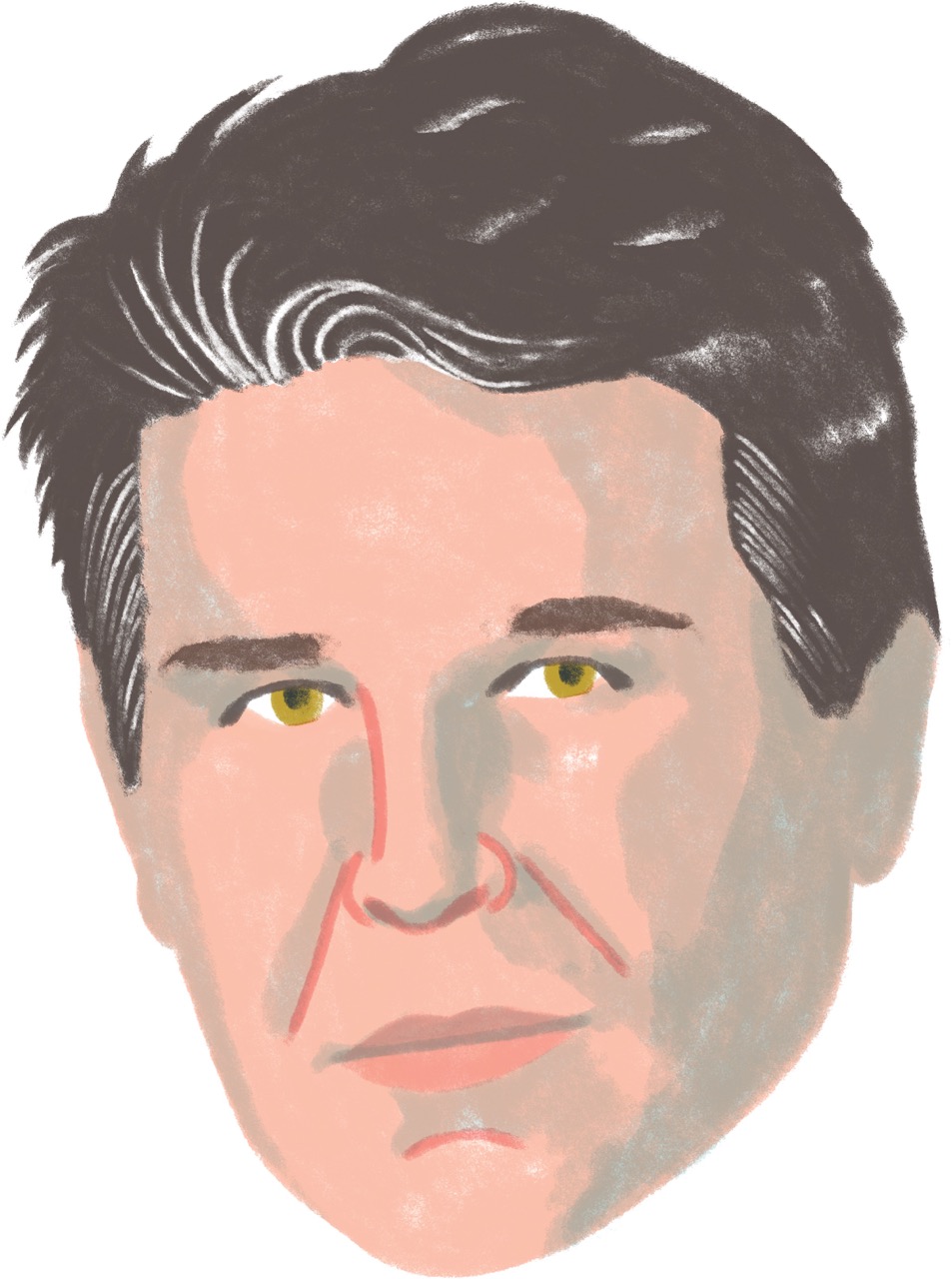
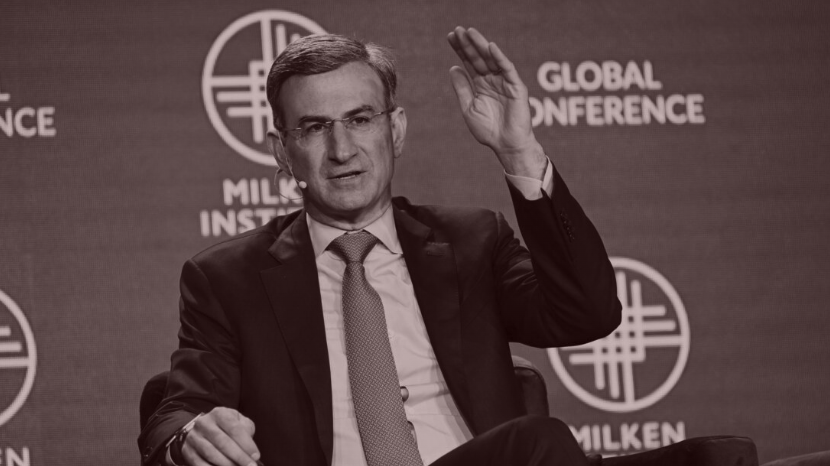
Once upon a time, when Lazard was run by the likes of André Meyer, Felix Rohatyn, and Michel David-Weill, it consistently punched above its weight, despite being a small private advisory partnership. But in recent years, its direct competitors have been more or less eating its lunch. Can Peter Orszag, the former Obama budget czar, who took the top job three months ago, restore Lazard’s luster? In today’s issue, I caught up with Orszag to hear about how he’s settling in, and his bold agenda for the firm.
|
 |
| The Raising of Lazard |
| Peter Orszag, the new Lazard C.E.O., has an ambitious plan to double revenue by 2030. But can the former Obama aide transform an eccentric culture by emphasizing productivity, recalibrating fee structures, culling underperformers, and bringing in some rainmakers? He thinks so… |
|
|
|
| Wall Street, understandably, often has trouble with succession. Who in their right mind would voluntarily relinquish a top job that pays many millions and requires everyone to hang on your every word? Very few, it turns out. Why do you think Jamie Dimon, now 67 years old and in his 20th year at JPMorgan Chase, sticks around, without a clear successor? Brian Moynihan, 64, remains atop Bank of America after 14 years, also without a clear successor.
So, on the rare occasion when Wall Street gets C.E.O. succession right, it’s worth celebrating, or at least noting. That’s why so much ink has been spilled in the last few months about the successful leadership hand-off at Morgan Stanley, where James Gorman recently passed the torch to Ted Pick without a whole lot of angst. (Gorman’s reward for a job well done was a seat on the Disney board of directors, where he can help Bob Iger with his succession problem.)
But Morgan Stanley wasn’t the only Wall Street firm to get succession right in 2023: Much to my surprise, my old stomping grounds, Lazard, also picked a new leader, marking one of the few times since before World War II that the firm was able to peaceably decide who should run the place. In October, without a lot of fanfare, Ken Jacobs gave up the C.E.O. job after nearly 15 years at the helm, and handed the reins to Peter Orszag, the former Obama-era head of the Office of Management and Budget, who had joined Lazard in 2016 and was running the banking group.
It was time for Jacobs to go. He had been C.E.O. since the unexpected death of the legendary Bruce Wasserstein, in October 2009, and the Lazard stock—down roughly 20 percent during Jacobs’ tenure—badly underperformed the market and its peers. (Our friend Nelson Peltz even made a brief, relatively uneventful, activist play against the bank.) Of course, Lazard being Lazard, Jacobs isn’t exiting stage left. He remains a senior banker at the firm and Orszag’s boss, as the executive chairman of the Lazard board of directors. Apparently, that arrangement is working out fine, at least so far.
In any event, since Orszag has been in the top job for three months, I thought I would check in with him and see how things are going. He has already set a relatively bold agenda for Lazard: He wants to double the firm’s revenue by 2030, in part by hiring 10 new managing directors, and wants the banking managing directors to be more productive. Indeed, he’s already taken a page from Candide—specifically the tale of the British general executed after losing a battle in France pour faire un example pour les autres—when he and Jacobs decided to lop off the bottom 10 percent of the workforce. He also wasted little time in firing Reid Snellenbarger, the newly hired co-head of Lazard’s restructuring group, after he engaged in “inappropriate” behavior at a party he hosted over the July Fourth holiday weekend. That certainly sent a message. (On January 2, Lazard announced the hiring of two new restructuring managing directors.)
He’s also put in his own leadership team at the firm, including my old friends Ray McGuire, whom I worked for at Merrill Lynch, and Mark McMaster, who started at Lazard with me some 35 years ago, and installed, among others, a new general counsel, a new chief operating officer, and a new head of communications. In other words, all is appropriately in flux at Orszag’s Lazard. |
|
|
| Orszag was traveling overseas with his wife, the CNN journalist Bianna Golodryga, over the holidays, but he was kind enough to give me a call back. Was he enjoying himself in the new job, I wondered? Not quite yet, apparently, he confessed. There was too much he wanted to do, and he was just getting started. He told me that a close confidant explained to him that he would start having fun in the job after about three years. “I’m trying to beat that,” he said. Thankfully, the firm recently had an offsite for its managing directors and the consensus was that Lazard is ready for change. “The organization is really primed for aiming higher,” he said. “My main message there was, ‘We’re burning the boats here. So if you don’t want to be on this island, you should leave now.’” And the group took to his exhortations. “I’ve been very positively impressed with the eagerness of the organization to kind of step it up and to be more ambitious, which is fantastic,” he said.
Lazard does need a kick in the pants. In what was a down year overall in the M&A market, Lazard finished the year as the 10th-ranked M&A adviser, with some 222 deals, valued at around $180 billion, according to Dealogic. As ever, Goldman Sachs remained the number one M&A adviser for 2023, working on more than 320 deals valued at nearly $1 trillion, followed by Morgan Stanley and JPMorgan Chase in a dead heat, and with Bank of America and Citigroup rounding out the top five.
It’s not surprising to find the biggest Wall Street banks atop the advisory league tables. What is a little surprising is that two boutique firms—Evercore, founded in 1995 by Roger Altman, and Centerview Partners, founded in 2006 by Blair Effron and Robert Pruzan—ranked sixth and seventh, respectively, in 2023. These are more or less Lazard’s direct competitors, and both have been eating Lazard’s lunch in recent years, even though Lazard just celebrated its 175th anniversary and has been an advisory powerhouse for decades, in both the U.S. and Europe. And even though Lazard’s stock is up 25 percent since Orszag took over as C.E.O., Evercore’s stock is up nearly 28 percent during the same three-month period, and now has a market value of $6.2 billion, compared to Lazard’s market value of $4.3 billion. (Centerview is still private but highly profitable.)
The problem that Orszag has to confront is that once upon a time, when the firm was run by the likes of André Meyer, Felix Rohatyn and Michel David-Weill, it consistently punched above its weight. It was a very small firm in those days—some 75 partners and 75 non-partners in the banking group—but it often found itself involved in many of the biggest and most important M&A deals. Back in 1985, Lazard represented RCA in its sale to GE—then the largest M&A deal ever—and pretty much single-handedly created what became ITT. Heck, I even got to work on the sale of Paramount to Viacom and the restructuring of Euro Disney, working directly with Michael Eisner and Frank Wells, before his tragic death.
Back then, C.E.O.s loved asking Felix to help solve their strategic problems. He had a certain old world charm—he was born in Vienna, lived in Paris, and barely escaped to New York, via Casablanca, during the Holocaust—and had a magnetic mysteriousness. He could also be quite mean. All of which was sort of like Lazard itself in those days. After all, the firm didn’t recruit on college campuses, or from the top MBA programs. You had to know someone to even get an interview. But if you could work at Lazard as an M&A bro in the 1980s and 1990s, you were at the top of the Wall Street food chain. That was in the decades when M&A was the hot product and hedge funds and L.B.O. firms were still in their infancy. That has changed considerably in the past 40 years, of course. Now everyone wants to be in private equity, or what is now known as an “alternative asset management.”
Can Orszag really restore Lazard’s luster and attract and retain top talent? Peter, himself, is a bit of a supernova. He graduated from Exeter and Princeton, and then got a Ph.D. in economics from the London School of Economics, where he was a Marshall Scholar. (His father, Steven Orszag, was a teenage prodigy and pioneer in the study of fluid dynamics—the youngest person ever to turn 40, Peter has joked.) Peter worked in the Clinton administration and, later, was the director of the Congressional Budget Office. In November 2008, President-elect Obama named Orszag as his director of the O.M.B. He was all of 40 years old.
Eventually, though, it was time to make some money. In 2011, he joined Citigroup as a senior banker. In May 2016, he moved to Lazard. He married Golodryga, his second wife, in 2010. They have a son and a daughter together. (He also had a child with his previous girlfriend, the Greek shipping heiress Claire Milonas, and two children with his first wife.)
In his manifesto calling for Lazard to double its revenue by 2030, Peter is also demanding that the firm’s managing directors generate annual fees of at least $10 million, up from $8.5 million. Of course, it’s one thing to put such a request into an email or a manifesto, it’s quite another thing to make it happen. Wall Street bankers can’t just snap their fingers and generate more fees. After all, M&A advisers are just interstitial men; it’s pretty much out of their control when, or if, a deal happens and, if it does, whether or not they get hired. But Orszag has a whole bunch of ideas about how Lazard’s bankers are going to become more productive and help the firm regain its relevance. He wants them to become more selective in their mandates and to take on only those assignments that have “attractive fees” attached to them. He wants the bankers to be more “disciplined” about the fees they are receiving. In his travels, he said, he’s heard that Lazard’s work for its clients is generally “exceptional” but that, “I don’t think that we’ve done as much as we can in making sure that the fees are proportionate to that exceptional work.” |
|
|
| Accordingly, Orszag instituted a minimum fee requirement at the firm that can only be waived by top management. “There are some promising early returns,” he told me, without sharing the specifics of the big deals that are pending. He also noted how “bizarre” the fee structure is in the M&A business, where you do all sorts of work for free, often for months, if not years, hoping that when a C.E.O. decides to pull the trigger, the firm gets hired and a payday finally arrives, assuming a deal gets announced and closed. “And so anything that you can do to either jump the queue or to get paid during the client development phase is hugely productivity enhancing,” he said. (One way to “jump the queue,” he added, was by hiring more senior bankers, like McGuire, with deep connections to C.E.O.s and board members who decide which banks to hire.) He also mentioned Lazard’s relatively new geopolitical advisory business as one example of how the firm is providing monthly advice to clients and getting paid for it.
Orszag is also determined to change the Lazard compensation model to reward the two behaviors he thinks are essential: being commercial and being collegial. (Lazard has never been a particularly collegial firm, although it was never boring in its feistiness.) “There will be a component that is explicitly based on your collaboration,” Orszag said of how he wants to change the compensation system. “And then the second part is based on how commercial you are and, within the commercial piece, we’re going to have a ratchet. Just like we now encourage the bankers on sell-side mandates to have ratchets in the fee discussion with clients. We’re going to have a ratchet in our comp model where basically, until you hit the breakeven point, roughly speaking, the payout ratio is going to be lower. And then at the margin, as you move above that, the payout ratio moves much higher, to encourage really hyper activity.”
He also promised that Lazard would be “tougher” in its year-end personnel evaluation process. He said he wants to “make sure that people who no longer belong at Lazard are no longer at Lazard,” adding that culling the herd is “really important not only for productivity, kind of mechanically, but also for the signal that it sends and the kind of morale effect. This is not an annuity.” He said he’s willing to carry a year or two of low productivity from a managing director, but not years and years of it. “We’re going to be rigorous about that process,” he said. (One of my longtime friends and colleagues, Al Garner, just “retired” from Lazard after 45 years at the firm; he may have been the longest-serving Lazard banking partner.) Peter told me he is confident that Lazard will reach its higher productivity goals. “Part of what makes Lazard Lazard is having people super-proud that they work here because of the firm’s elevated cachet, to use your word,” he said. “And continuing to build that cachet and pride is a core part of our plan.”
He said he’s been pleasantly surprised by how well his plan and his ambitions for Lazard are going down with the troops across both the financial advisory and asset management businesses. “People want to aim higher and like this sense that we’re firing with live ammunition,” he said. “We are not kidding around here. And we’re going to do this. I’m sure we’ll make mistakes. But I think the overall spirit of the place—and some of our internal surveys show this, too—is one of hope and ambition and forward-looking excitement, which is all we can ask for at this point. And now we have to execute.”
Peter told me he didn’t come to Lazard thinking he would ever run the firm. He only started to think seriously about that possibility when Jacobs mentioned it to him as a potential career path. That’s when he got excited about what it meant to run a 175-year-old firm with an extraordinary history. “I've never taken jobs just to sit in the seat and kind of go sideways,” he said. “So what I’m excited about here is I really do feel like there are fundamental things that we can do. And what greater legacy to think about than to reinforce Lazard as one of the world’s greatest financial institutions. And I think that is an eminently achievable objective, and it’s really exciting as a kind of organizing thought.”
Lazard is a really complex and quirky place—or it was, anyway, when I was there—filled with huge, competing egos, driven by ambition, greed, and success. As David-Weill always used to love to tell us, without the slightest trace of irony, Lazard was a “haute banque d’affaires vis-à-vis the world.” He then proceeded to describe what he meant by that odd phrase: “To me, it is a state of mind, not an activity. It is a firm which puts itself at a level parallel with the level at which decisions are made in enterprises. It means that you remain at the decision-making level, that you give advice at that level, that you think at that level, and that you remain exclusively at that level.” I noted with interest that in his Lazard 2030 memorandum to the firm, Orszag used the same phrase, and in French. |
|
|
|
| FOUR STORIES WE’RE TALKING ABOUT |
 |
| Ozempic Mysteries |
| A medley of fashion predictions and concerns for 2024. |
| LAUREN SHERMAN |
|
 |
|
 |
| TikTok Geopolitics |
| On the wartime crumbling of a Congressional status quo. |
| ABBY LIVINGSTON |
|
 |
| Bezos’s Sports Fever |
| Why is Amazon interested in the sclerotic regional sports business? |
| JULIA ALEXANDER |
|
|
|
|
|
 |
|
|
|
Need help? Review our FAQs
page or contact
us for assistance. For brand partnerships, email ads@puck.news.
|
|
You received this email because you signed up to receive emails from Puck, or as part of your Puck account associated with . To stop receiving this newsletter and/or manage all your email preferences, click here.
|
|
Puck is published by Heat Media LLC. 227 W 17th St New York, NY 10011.
|
|
|
|