Hi, and welcome back to Line Sheet, and this very special Inner Circle issue. (Trade up
here to join our elite tier.)
Great news today: The Pieter Mulier era of Versace is upon us. I have the details below, plus news on an accessible-luxury earnings report and a scoop about a notable talent exit from an important American brand. For the main event,
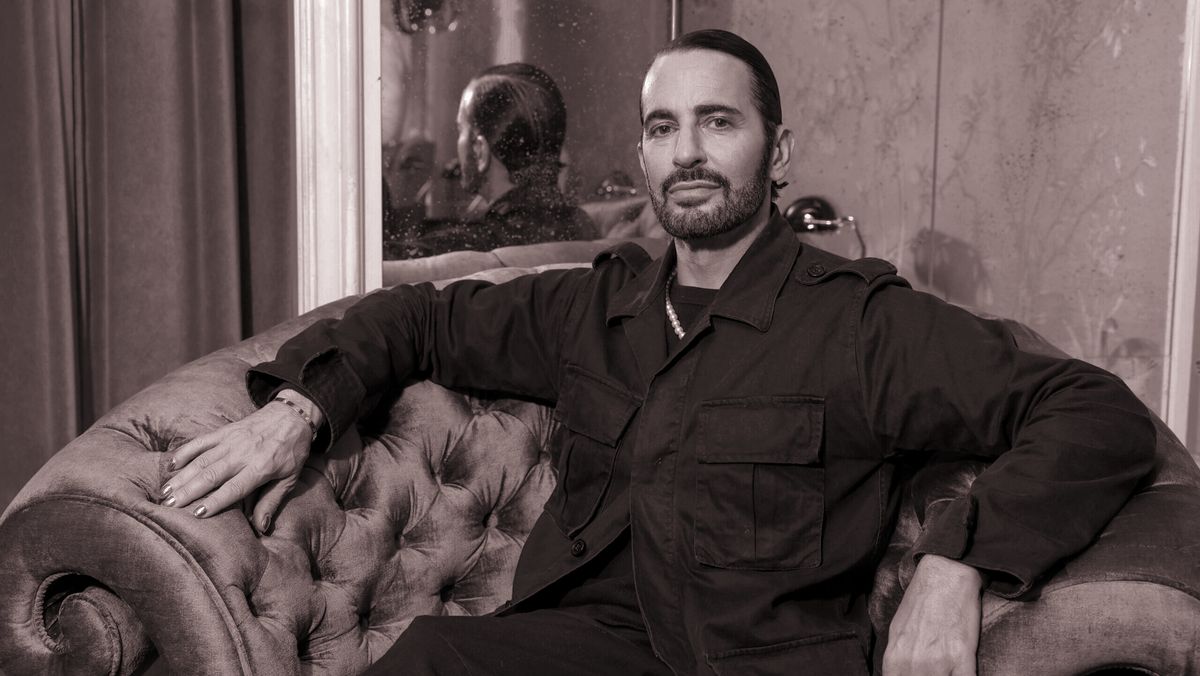
I’m looking at the future of Marc Jacobs. After the ABG deal fell through, LVMH has recommitted to the brand (no, really). I have more details about why ABG didn’t work, and where Marc should go from here.
Tomorrow’s Fashion People guest is Ian Schatzberg, founder of the brand strategy firm General Idea. We’ll discuss… well… brands! Big brands, little brands, high fashion brands, high street brands, whether brands matter, and to
whom. Ian has a high E.Q., and it’s easy to tell why companies pay him the big bucks to figure it all out for them. I really enjoyed this episode and I hope you do, too. Listen here and here.
Mentioned in this issue: Marc
Jacobs, Bernard Arnault, LVMH, Ava Nirui, Eric Marechalle, Virgil Abloh, Jamie Salter, Authentic Brands Group, Bluestar, Ib Kamara, Hailey Bieber, Versace, Pieter Mulier, Lorenzo Bertelli, Dario Vitale, Fear of God, Paul Helbers, John Idol, Coach, Kate Spade, Ralph Lauren, and many
more… |
Three Things You Should Know…
|
- Yes,
I love to say I told ya: This morning, the Prada Group announced that the next creative director of Versace is Pieter Mulier. Of course, Line Sheet readers have known this since mid-December. His start date is an almost comical July 1, but we still don’t know when he will stage his first show. My guess is that they’ll take a Demna-at-Gucci approach and propose
something in September, but that the real debut will be next year.
For the next six months, Lorenzo Bertelli & Co. will have to reckon with the fact that Dario Vitale’s collection is selling well and permeating the culture. On the other hand, it’s a relief that Mulier’s appointment has finally been announced. Bertelli’s press statement was carefully worded: “When we considered the Versace acquisition, we identified Pieter Mulier as the
right person for the brand. We believe that he can truly unlock Versace’s full potential and that he will be able to engage in a fruitful dialogue with the brand’s strong legacy. We are excited to begin this journey together.” So, yes, it was Pieter all along (which we already knew).
These long, drawn-out periods of limbo—when we all knew one designer was leaving and another was joining—have become a staple of this era of the industry. But you have to hand it to the Prada Group and
Richemont: They negotiated like adults and made these announcements as quickly as they could. The agony and annoyance were brief. Now, we have months to speculate about what Mulier will do with Versace. I’m most excited for dresses and the shoes. And sexy jeans. (Also, the return of Atelier Versace.) There’s so, so, so much material here, so let’s see if he can really turn Versace into the Chanel of Italy. I believe in him.
|
|
|
A MESSAGE FROM OUR SPONSOR |
|
|
- Another
exit for Paul Helbers: I hear the well-regarded (if notably transient) designer has left Fear of God. Why do we always hear about Helbers’ appointments and exits and not the comings and goings of other number twos? (It’s reminiscent of Paul Surridge; even when he isn’t in the top job, the news somehow gets back to us.) Not for nothing, seems like FOG is performing pretty well post-Essentials boom, thanks partly to grown-up C.E.O.
Bastien Daguzan. Will Helbers’ exit make a big difference? Probably not, but I’m sure I will hear about it when he lands somewhere else.
- A boom time for accessible luxury (sort of): If nothing else, fashion is cyclical, and brands that feel premium but aren’t crazy-expensive are currently performing well at retail and on the stock market. (In some cases, at least.) Today, Tapestry announced that Coach’s sales jumped 25
percent in its most recent quarter, sending shares up 12 percent. (The group, which recently offloaded Stuart Weitzman and is struggling to make Kate Spade New York work, said that sales of the Tabby bag drove a good amount of the growth.) Ralph Lauren beat Wall Street expectations with its “drive the core and expand for more” approach: Net sales for the quarter were up 12 percent, to $2.4 billion. However, the stock dipped nearly 7 percent as executives warned that sales growth may slow this
year. Capri’s shares plunged nearly 16 percent post-Versace sell-off and a dip in revenue at Michael Kors. (Jimmy Choo, which Capri C.E.O. John Idol claims is “not for sale,” was up a bit.)
So brands that impart real value to consumers are performing right now, no matter the price. Despite the dip, Ralph Lauren remains well-positioned to stay at the center of consumer culture. And yet Coach, despite being well managed and designed, won’t always be able to
coast on a hit bag. While our friend Simeon Siegel over at Guggenheim is bullish on Capri, there’s a real question about whether the executive team can revive Michael Kors, even with all the goodwill that its namesake has in the fashion industry and with consumers.
|
|
|
In the wake of the failed ABG deal (good riddance), LVMH has decided to reinvest in Marc
Jacobs—a $1 billion throwback brand that doesn’t quite fit in the conglomerate’s hyperscaled ultra luxury portfolio yet doesn’t seem to belong anywhere else, either. Will the rapprochement work? |
|
|
On Monday at 6:30 p.m. E.T., Marc Jacobs will stage a runway show in New
York—two days before the official start of what remains of the city’s emaciated Fashion Week. Jacobs, the enfant terrible turned elder statesman, is arguably the last designer showing in America who can deliver something like the appointment viewing the fashion diehards will turn to Milan and Paris for later this month. Those who still bother actually attending the New York shows are more likely to do so if he is present. And then there’s the added intrigue: This is his first show since
Authentic Brands Group’s aborted effort to buy the business for $1 billion. |
|
|
A MESSAGE FROM OUR SPONSOR |
|
|
Jacobs’ career has been notably serendipitous. If he hadn’t been famously fired from Perry Ellis for that
grunge collection, he might not have caught the eye of Bernard Arnault, who bought into his business in the late 1990s and gave him Louis Vuitton to design. Together, the duo made billions of dollars, and still continue to generate hundreds of millions a year in sales for Marc’s namesake line, the sole focus of his professional output since his final Louis Vuitton collection more than a decade ago.
While the Marc Jacobs brand was never entirely forgotten,
it became deprioritized as LVMH focused on hyperscale luxury opportunities, like acquiring Tiffany & Co., and eventually realized they weren’t going to be able to spin it off, Michael Kors–style. So that’s why, despite remarkable mutual loyalty, LVMH was ready to accept ABG’s $1 billion offer for Marc Jacobs last year. In the end, of course, it didn’t work out, mostly because ABG principal Jamie Salter had some reservations about the value proposition. As one
executive noted, the legendarily frugal Salter wanted Jacobs to remain involved but he was never going to underwrite, say, a runway show. More importantly, Salter and his team have claimed to others that they discovered during due diligence that the profit potential of slapping the Jacobs name on towels, socks, what have you, was not high enough to justify the valuation. (A rep for Salter did not immediately respond to a request for comment on this point.)
Marc Jacobs isn’t
Guess—or even Missoni, for that matter. The brand may do close to a billion a year in sales, but it’s no longer a growth business. And these sorts of mature brands, which naturally lend themselves to value-extraction opportunities, are sometimes valued at below annual revenue. Even the rise of nostalgic sub-line Heaven—whose creator, Ava Nirui, left the business last week—can’t fix that. |
When Salter walked away, he became persona non grata at LVMH. Arnault & Co. recommitted to the
brand and to Jacobs himself, as well as Eric Marechalle, the label’s C.E.O. They also communicated as much to bankers and other interested parties, insisting that they are not starting another sales process. Yes, Marc Jacobs no longer makes sense in the LVMH portfolio, but Arnault seems to believe it’s also not worth offloading—at least not now. Renewed investment, after all, will hopefully increase its value.
There are still outside buyers who would very
much like to own Marc Jacobs, regardless of Salter’s math. The most likely is Bluestar Alliance, which bought Off-White from LVMH in 2024, a year after the death of its founder, Virgil Abloh. At the time of the ABG–Jacobs deal, Bluestar was busy absorbing Dockers and could not entertain such a rich valuation. But it’s been a few months, the markets are more favorable, and Bluestar is riding high on the success it has experienced with Off-White, whose creative
director, Ib Kamara, was retained post-acquisition. Kamara still stages fashion shows (the next is in Paris in March), and from the outside, everything seems to be business as usual. According to my sources, Off-White was generating $200 million in sales when Bluestar bought it at a $150 million valuation. This year, the brand will generate $700 million in revenue—close to Marc Jacobs’ current numbers. |
|
|
Bluestar isn’t as well capitalized as ABG, but the group could create an everyone-wins scenario: LVMH can
respectfully exit a business that’s not germane to its current strategy; Bluestar can continue developing its reputation as the sensitive brand-management company. The group might also be a better owner for Jacobs at this stage of his career. And he would stand to make meaningful money on the deal, I’m told.
But Jacobs’ brand isn’t his brand without the runway, and if Bluestar was the owner, we’d all still be heading to see his show on Monday night. For Jacobs that may be the
most important thing, but it’s also important to fashion. It would be lesser without him. |
Brands are getting more sensitive—and smarter—about pricing.
[BoF]
More and more global fashion brands are going to spring out of China, and Kering understands that.
[WWD]
The provenance of Hailey Bieber’s jeans is a big topic of conversation on my corner of Instagram right now. I will write more about this tomorrow, because I believe they say a lot about the state of the denim market, but I have confirmed that they are vintage 501s. (The lower-than-expected rise is due to the era when they were made—probably early 1980s or early 2000s.) I am guessing they were also tailored, but she is a person who could convincingly
sell a trash bag. [Harper’s Bazaar]
Here’s a big interview with C.E.O. Hillary Super about Victoria’s Secret’s post-MeToo success. [Fortune] |
Until tomorrow,
Lauren
P.S.: We use affiliate links because we are a business. We may make
a couple bucks off them. |
|
|
Puck founding partner Matt Belloni takes you inside the business of Hollywood, using exclusive reporting and insight to explain the
backstories on everything from Marvel movies to the streaming wars. |
|
|
The industry’s go-to source for unflinching reporting on the trillion-dollar business of artificial intelligence - perhaps the single most
important technology of our time. Ian Krietzberg, the powerhouse journalist behind The Deep View, delivers twice-weekly insights into the latest dealmaking and breakthroughs in A.I., and how the intersecting worlds of finance, entertainment, media, and politics are being transformed in its wake. |
|
|
Need help? Review our FAQ page or contact us for assistance. For brand partnerships, email ads@puck.news. You received this email because you
signed up to receive emails from Puck, or as part of your Puck account associated with {{customer.email}}. To stop receiving this newsletter and/or manage all your email preferences, click here. |
Puck is published by Heat Media LLC. 107 Greenwich St., New York, NY 10006 |
|
|
|