 |
| Welcome back to Dry Powder, I’m Bill Cohan. |
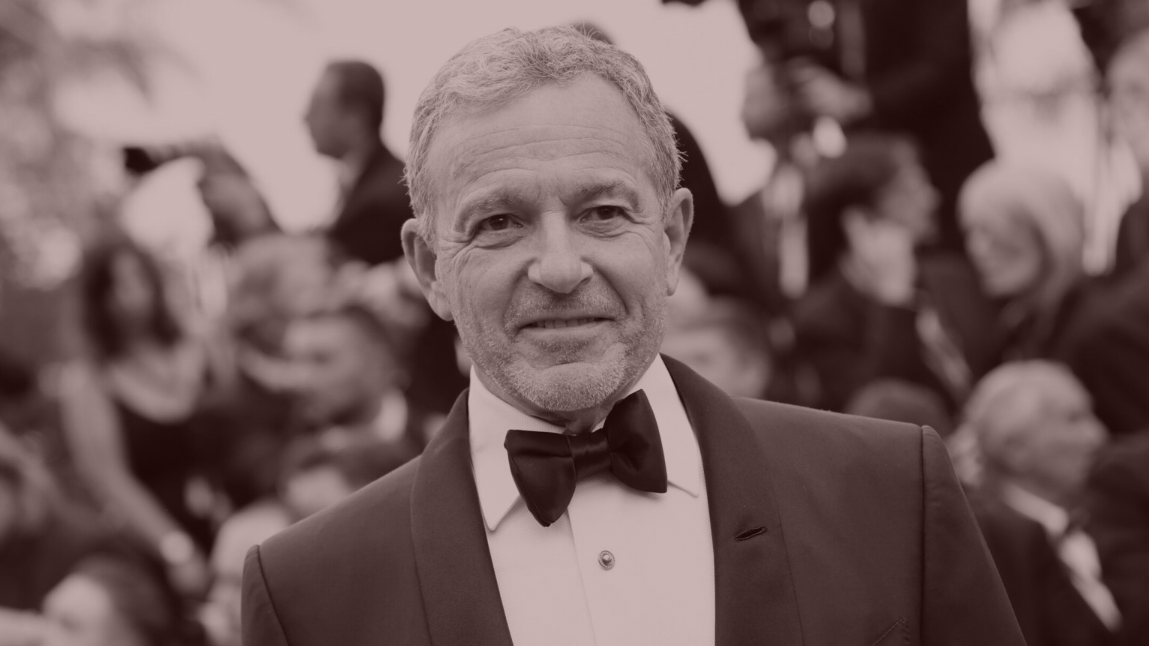
Today, a prismatic look at Bob Iger’s myriad challenges and opportunities defining his second, troubled stint at Disney’s helm.
But first…
- Schiele Game: Before we get going here today, I want to share some big art world news that’s starting to emanate from the office of Manhattan District Attorney Alvin Bragg, who has also brought charges recently against a former President of the United States.
On September 12, Bragg’s office obtained three search warrants from a New York State judge, Althea Drysdale, allowing for the seizure of three artworks by the late Austrian artist, Egon Schiele, at three prominent art museums: the Art Institute of Chicago; the Carnegie Museum of Art, in Pittsburgh; and the Allen Memorial Art Museum, at Oberlin College, in Ohio. The seizure of these three Schieles, which has now occurred, is part of a larger Bragg investigation, I’m told, involving Schiele artworks stolen from Jewish families by the Nazis during World War II. The other Schiele artworks, owned by the likes of Ronald Lauder, the Museum of Modern Art, the Morgan Library, and the Serge Sabarsky Collection at Lauder’s Neue Galerie, on Fifth Avenue, will be turned over voluntarily by their current owners to Bragg and returned to their rightful owners and then put up for auction at Christie’s, potentially as soon as November.
This, of course, is a big deal in the world of art restitution and the world of billionaire art aficionados more broadly. The fight over the restitution of stolen artworks in New York City, and among Schiele collectors, goes back at least to January 1998, when one of Bragg’s predecessors, the legendary Robert Morgenthau, seized two Schiele paintings, The Portrait of Wally, and Dead City 3, after the closing of a Schiele show at the Museum of Modern Art, which had originated at the Leopold Museum in Vienna.
Morgenthau’s seizure was front-page news at the time, raising questions in the art world not only about how stolen art is to be restituted, but also what it would mean for museums if artworks that are part of a traveling exhibition can be seized by local law enforcement authorities on the suspicion that they were stolen. In the end, the Justice Department took over the matter from Morgenthau, with the Dead City returning to the Leopold Museum, under still murky circumstances, and the Portrait of Wally restituted to the Jewish family from which it was stolen by the Nazis. In an ironic twist, the Portrait of Wally was sold by the family back to the Leopold Museum for $19 million.
This time around, I’m told, Bragg secured the cooperation of Lauder, the MoMA, and the Morgan Library, all of which voluntarily returned the specific Schieles in their collections. The search warrants that Drysdale signed yesterday are for the three museums that refused, for whatever reasons, to go along with Bragg’s requests that the artworks be turned over voluntarily. At Oberlin, the artwork seized is Schiele’s 1910 watercolor, Girl with Black Hair, estimated by Bragg’s office to be worth $1.5 million. At the Art Institute, the Schiele artwork seized is his 1916 watercolor, Russian War Prisoner, with an estimated value of $1.25 million. And at Carnegie, Bragg’s office seized Schiele’s 1917 pencil on paper drawing, Portrait of a Man, valued at $1 million. (“Carnegie Museums of Pittsburgh is deeply committed to our mission of preserving the resources of art and science by acting in accordance with ethical, legal, and professional requirements and norms,” a spokesperson told me. “We will of course cooperate fully with inquiries from the relevant authorities.”)
This is a developing story and I hope to have much more for you about it either before or after Bragg’s big announcement, which could come as early as next week in lower Manhattan. (The Allen Museum didn’t respond to a request for comment. Nor have I heard back from the Neue Galerie, or the Museum of Modern Art. Bragg’s office declined to comment other than to say the Schiele artworks at the three museums had been seized pursuant to the search warrant.)
Megan Michienzi, the Executive Director of Public Affairs at the Art Institute of Chicago, responded with a statement after publication defending the museum’s possession of Russian War Prisoner, saying “We are confident in our legal acquisition and lawful possession of this work. The piece is the subject of civil litigation in federal court, where this dispute is being properly litigated and where we are also defending our legal ownership.”
Now onto the main event… |
 |
| Year of the Iger |
| Running Disney may be close to impossible, but Iger is supposed to be the one guy with near complete free rein—isn’t everything on the table?—to do it. Are his various half-step initiatives early signs of Vulcan chess, or something much less magical? |
|
|
|
| It’s been nearly a year since Bob Iger orchestrated his own rather questionable return, at 71, to the corner office of The Walt Disney Company, and since then everything appears to be coming apart at the seams—the stock price, the succession drama, the deteriorating macroeconomic conditions, the ongoing work stoppages, and even the recent ugly dispute with Charter, where both sides emerged battle-scarred and claiming a Pyrrhic victory. (We don’t know yet the economics of the Disney+ revenue sharing agreement, but Disney essentially waved a white flag on its third tier channels. Meanwhile, 15 million viewers in L.A. and New York were seriously pissed about not getting to watch the second week of the U.S. Open.) There’s more, obviously: the ill-advised CNBC interview at Sun Valley; the impolitic commentary about the strikes; the sputtering quality of the movie production. I could go on.Since Iger’s return to the Burbank headquarters last November, Disney’s stock is down roughly 30 percent while the broader S&P 500 index is up nearly 9 percent in the same time period. (By comparison, in the last year, Warner Bros. Discovery’s stock is down 10 percent and Paramount Global’s stock is down 41 percent.) That’s not typically the type of performance that gets its architect rewarded with a two-year contract extension, potentially worth some $30 million a year. I spoke recently with one Disney board member who told me that Bob saw the challenges at Disney “clearly” and wanted to come back to try to fix them. The contract extension, the board member said, gives both Disney and Iger more breathing room to try to solve the myriad of problems, which Iger believes he can fix.
But ticking through the parade of horribles provides little comfort to Disney shareholders, employees, executives or board members. Iger’s chief responsibility as C.E.O., of course, is to find his successor. He blew that assignment the first time around when he chose the wrong guy, Bob Chapek, the head of the parks division, in February 2020, and then proceeded to remain as executive chairman of the Disney board until the end of 2021, all before orchestrating the public defenestration of Chapek last November, some five months after the Disney board gave the guy a three-year contract extension. Then, Iger was only supposed to stay for two years, during which time he was to find his successor. But less than a year into the new tenure—in July—somehow Iger got the Disney board to extend that deal for another two years, when Iger will be 75 years old.
Managing Disney, especially these days, is looking increasingly like a Sisyphean task. It’s a legendary company with a rich history facing historic change—and having a rough go of it. Unlike WBD C.E.O. David Zaslav, for instance, who is trying to manage through a publicly traded L.B.O., Iger can’t easily move like a bull in a china shop, killing pricey initiatives, pulling content from its streaming services without apology, or prioritizing debt payments above all else. Those are the sorts of tone deaf gestures, in part, that swept Chapek into the undertow and Iger back into the corner office.
Investors expect more than that from Iger and Disney; they expect him to lead the industry out of its current malaise. And for all the clarity that Iger may have demonstrated to the board in order to get his job back, it’s hard to see much evidence of the decisive action that characterized his first 15-year tenure. Running Disney may be close to impossible, but Iger is supposed to be the one guy with near complete free rein—isn’t everything on the table, Bob?—to do it. One is left to wonder if his various half-step initiatives are early signs of Vulcan chess, or if he has lost the plot. |
| Is The Mayer/Staggs Thing Real? |
|
| So where does that leave succession at Disney? Pretty much “nowheres,” as one of my old Lazard colleagues liked to say. Sure, Iger has made it seem that he’s focusing on succession by bringing in as “advisers,” whatever that means, the old Disney hands, Tom Staggs and Kevin Mayer (as my partner Matt Belloni first reported). But both Staggs and Mayer, who Iger should never have jettisoned in the first place if he were serious about succession, have day jobs now, working for my Nantucket neighbor Steve Schwarzman at Blackstone, which is the majority owner of Candle Media, the small Hollywood entertainment company the two men co-founded two years ago in their post-Disney second act.Candle owns a bunch of other companies, including Reese Witherspoon’s Hello Sunshine, and Moonbug Entertainment, a children’s content company, for which Candle paid $3 billion. Candle is not Disney, but Staggs and Mayer are fiduciaries for Blackstone, as well as for themselves, and unless Iger plans to buy Candle in order to get these two guys back into the Disney fold, and into serious consideration to be his successor, then I’m not seeing how the Staggs & Mayer show is a path to solving Iger’s biggest problem. In fact, I’m not even sure I understand why Blackstone is willing to let this arrangement with Disney continue, because it dilutes the time and attention of Staggs and Mayer away from their primary responsibility.
Could Disney be the takeout for Candle in order to get Staggs and Mayer back into succession consideration? Bill Harrison, the JPMorgan Chase C.E.O., bought Bank One Corporation, in 2004, pretty much in order to get Jamie Dimon in position to be his successor, when the other choices inside JPMorgan Chase were less appealing. (That proved to be the best thing Harrison did as C.E.O. of the bank, and nearly 20 years later, Jamie is still leading the company, with his own succession problems.) In 2011, Rupert Murdoch bought his daughter Elisabeth’s entertainment company for nearly $675 million—netting her more than $200 million personally—presumably to bring her back into the family fold. But that has worked out less well, at least as far as Fox/News Corp. succession is concerned, at least at the moment. On Disney succession, Iger and the Disney board have punted for now. Unless Disney buys Candle, though, or either Staggs and Mayer are willing to leave Candle to be anointed Iger’s successor, this problem remains a big open wound. |
|
|
| In his ill-advised Sun Valley interview, Iger threw ABC under the bus, suggesting that the long declining largely linear TV network was for sale. “They may not be core to Disney,” he said. Making a public announcement, on CNBC no less—a rival network—about an asset being for sale is a poorly-considered way to maximize value, as I am sure Iger knows. That leads me to conclude that Iger is not only worried that ABC will be a tough sell, but that, as a result, he wanted to cast as wide a net as possible for it, in order to bring potential buyers out of the woodwork.It’s difficult to determine from Disney’s public filings how bad things are at ABC and its related linear entities. In the first nine months of Disney’s current fiscal year, ended July 1, the operating income from Linear Networks—presumably ABC et al.—fell to nearly $5 billion, from $6.8 billion a year earlier, off 27 percent. This is a falling knife, and it’s going to be hard for anyone to catch it, or to want to catch it. Foreign buyers are out, of course, given the federal licenses that are needed for broadcasting, leaving only a smattering of potential domestic players—although who those might be, aside from a bunch of hard-driving financial buyers, is hard to see.
Deep-pocketed tech companies, such as Amazon, Apple, or Google, could potentially scoop up ABC at a discount, but I’m not sure why they would, even if it were for pocket change. Who needs or wants that headache? Perhaps the likes of Apollo, which bought Yahoo for $5 billion and is poised to make a fortune on that deal, could be interested in ABC, adding it to its string of local television stations, but only at the right, distressed, price. Something well bought is half sold, goes the old Wall Street mantra—and Iger is about to find out just what that means.
ABC, once among Disney’s crown jewels, has fallen on hard times, more as a result of macroeconomic factors than anything that ABC and its executives have done wrong. What do you do when consumers slowly but surely flee your business? It’s a tough situation. Iger’s announcement that ABC was no longer core to Disney merely exacerbates the problems at ABC and, I’m sure, the worry on West 66th Street. Iger shot himself in the foot on this one.
Then there is ESPN. In Sun Valley, Iger didn’t go quite as far with the loose lips chatter about ESPN. I am told he loves the network and live sports, and what ESPN does for Disney. Still, he made clear that ESPN needs strategic partners. That led to stories about ESPN partnering with various professional sports leagues, which, of course, it already does and has for decades. That’s not news. Then came the absurd 10-year, $2 billion gambling deal, with Penn Entertainment, that will result in something called ESPN Bet, a new sports betting enterprise. Gambling diminishes everything it touches and is metaphorically a deal with the devil. But I guess that’s where we’re at.
ESPN’s affable and shrewd C.E.O. Jimmy Pitaro is laser-focused on the business’ bigger problem: the ongoing loss of revenue, and profits, as a result of cord-cutting. Whereas ESPN once upon a time had something like 100 million cable subscribers, that number these days is closer to 75 million. The ESPN crew expects that number to fall to 45 million in the coming years. Pitaro is determined to replace those subscribers and the subsequent loss of revenue (and profits) with a new digital offering (as opposed to ESPN lite, known as ESPN+) in the coming years.
ESPN isn’t willing to say when that new direct-to-consumer offering will be available, and rumor has it that ESPN, the digital offering, will cost as much as $35 a month, or $420 a year. Are enough people really going to pay that much to help Disney replace the revenue and profits lost from a declining linear ESPN? Who knows. But that is the conundrum faced by Pitaro & Co, and it’s a doozy. I wouldn’t wish that problem on my enemies.
The upside: Solve it, and Pitaro could be in the Iger succession conversation. Get it wrong, and it’s bye-bye Jimmy, alas. We’ll know more about how things are at ESPN sometime in the first half of next year when Disney begins to release ESPN’s standalone financial performance in its S.E.C. filings.
A year or so ago, hedge fund manager Dan Loeb suggested to Chapek the idea of floating off ESPN on its own boat, loaded up with some of the billions of Disney’s nearly $38 billion in net debt. The idea did not get much traction back then, and soon faded along with Loeb’s cage rattling, (which was followed by Nelson Peltz’s saber rattling, a threat that Iger saw off relatively easily, giving him one of his only victories in the last year). But the more I think about it, the more I like Dan’s idea. He was onto something.
As much as Iger may love ESPN, the model is also pretty broken. Not quite ABC broken, but not great either. And I don’t see how a streaming ESPN offering, given what consumers must be charged to make it profitable for Disney, will attract the necessary subscribers to make up for what is being lost on linear. Perhaps the best solution—barring my personal preference for the Comcast/Hulu/ESPN swap as I’ve repeatedly suggested—would be to have ESPN float off on its own with some Disney debt (but not too much) as a publicly traded company. With $45 billion of financial commitments to buy sports rights, just through 2027, I’m not sure keeping ESPN is a viable option for Disney anymore, especially since we’re at a precarious moment where linear subscribers are falling and have yet to be replaced with anything other than an amorphous idea of a streaming ESPN.
Again, Pitaro strikes me as a very capable young leader. He’d make a great C.E.O. of a publicly traded, independent ESPN. He can figure it all out from Bristol and make a fortune for himself, for Hearst (which still owns 20 percent of ESPN), and for his new public shareholders. (This is not investment advice.) I just don’t see the economic logic for Disney to still own ESPN. If Iger sees things as clearly as I’m told, I’m sure he understands this, too, no matter how cruel the reality. |
|
|
| And then there’s Hulu. In a September 6 S.E.C. filing, Disney announced that, starting in November, Disney and Hulu can begin the process of haggling over the valuation of Comcast’s one-third stake in Hulu. The floor valuation for all of Hulu is $27.5 billion, or roughly a minimum price of $9.1 billion for Comcast’s stake in the business.That price won’t fly, of course. The final price will be at least $10 billion, and maybe more. Comcast executives have continuously argued that the value of Hulu has gone up since the May 2019 agreement between the two companies that Disney would end up with Comcast’s stake in Hulu. (If there is a disagreement on price, the deal becomes an investment banker’s dream—with three firms working to reach an agreement.)
As of July 1, Disney had $11.5 billion in cash. Iger could, in theory, write a Disney check for the Hulu stake. But that would rocket Disney’s net debt back to near $50 billion, which is not what the market wants to see right now. I’m also not sure buying the remaining one-third stake in Hulu, for $10 billion, would be Iger’s focus right now if he didn’t have to do it contractually. It seems like a waste of time, effort and precious capital. Sure, getting control of all of Hulu will help with the Disney+ streaming bundle and make the whole thing more economically viable, but my bet is that Iger would prefer to postpone a Hulu deal if he could. But he can’t, so he won’t.
Which brings us, inevitably, to the streaming bundle itself. What a fabulous product, but what a terrible business, at least at the moment, as Warren Buffett, and many others, have pointed out. Across the spectrum of streamers, only Netflix, it seems, is making money. All the others, including Disney, Paramount, WBD et al., are losing money hand over fist and have been for years. Disney has lost billions since it introduced Disney+ and lost another $512 million in its latest quarter from streaming, down from more than a $1 billion loss from the year prior.
Disney+ is also losing subscribers, although, to be fair, most of those losses are coming from its low-ARPU India operation, after a sports deal went away. Still, where once Disney+ had 158 million subscribers worldwide, there are now only 146 million subscribers. And how does that conundrum get resolved? It’s a terrible predicament: If you keep raising prices, you risk losing more subscribers. But if you don’t raise prices, the losses will continue.
Meanwhile, the cost of providing content continues to increase—a situation that will only be worsened when the writers’ and actors’ strikes are resolved. No wonder Iger said, rather imprudently, in Sun Valley that he thinks the unions’ demands were “just not realistic.” But the only way the strikes get resolved is if the writers and the actors end up with more money. That won’t do anything positive, in the near-term anyway, for Disney’s income statement. |
|
|
| Of course, Iger could start by improving the quality of the films and shows that Disney and its various affiliated studios produce. Others at Puck, including my partners Matt Belloni and Julia Alexander, have documented well the struggles that Iger and Disney are facing across the content spectrum, including at Disney, Marvel, Lucasfilm, and Pixar. What used to be a surefire hit machine has turned into another problem for Iger. The two biggest hits of the summer—Barbie and Oppenheimer—were made by competitors, WBD and NBCUniversal.Disney’s only box-office success so far this year came from Guardians of the Galaxy, Vol. 3, which has made around $850 million worldwide. This can get resolved, of course, with the right content and with the right appreciation for the zeitgeist but it’s also not likely to be fixed in the short-term, especially because of the strike and because movies take time to make, to edit, to produce, to market and to distribute. In the long-run, Iger and his successors will likely solve the movie problem, but not anytime soon.
It’s not all doom and gloom at Disney. On Monday, Disney and Spectrum solved their differences—as the analyst Rich Greenfield, at LightShed, predicted on Sunday that they would. The new deal calls for Charter to pay higher rates for Disney channels in return for being able to provide the Disney+ and ESPN+ streaming services to its pay-TV subscribers. It certainly could have been worse, what with Charter/Spectrum making noises that its customers could live without ESPN, ABC and the rest of Disney’s linear TV offerings.
Disney got a reprieve but Spectrum’s threat points yet again to how precarious the situation remains for linear TV and the old cable television model/goldmine. “You have to give Charter a win, but it’s not as big of a win as Charter would have liked,” Greenfield told CNBC on Monday. “And Disney avoids the existential collapse of ESPN.”
The one bright spot for Disney, surprisingly, is its theme parks business. For the last nine months, ending July 1, “Parks, Experiences and Products” has generated revenue of about $25 billion, up 17.4 percent, from $21.3 billion a year earlier, and operating income of $7.6 billion, up 18.8 percent from $6.4 billion a year earlier. It’s hard to know if this performance is sustainable since it comes after the pandemic years when the Disney theme parks and “experiences” were essentially shuttered. As a result, there was a lot of pent-up demand, which now appears to be showing up in the company’s income statement. And thank goodness for it, too. Without the added revenue and operating income from parks and experiences, Iger’s problems would be even worse, much worse. |
|
|
| Clever acquisitions, of course, were a hallmark of Iger’s first tenure. He bought Marvel and Pixar and Lucasfilm, all of which were pretty much brilliant moves. He let the creatives loose and they produced hit after hit after hit. He then got carried away. He decided to buy Fox’s entertainment assets from Murdoch, a very savvy seller. He had a deal but then Brian Roberts jumped into the mix and forced Iger to overpay. What had been a somewhat reasonable $52 billion or so purchase price became a major overreach at $71 billion, saddling Disney with a boatload of unwanted debt and a new film production unit, for which the company overpaid.Between that, the pandemic, the proxy fight with Peltz, the cost cuts, and the palace coup, Disney has been staggering from one problem to the next in the past year. What remains to be seen is whether Iger has one more big M&A deal left up his sleeve. Will he be able to pull off the deal-of-the-century by selling all of Disney to Apple, as many have suggested he wants to do? After all, Iger prides himself on having reached a deal for Pixar with Steve Jobs after Michael Eisner, Iger’s predecessor, pissed Jobs off and couldn’t get a deal done. Iger was able to succeed where Eisner had failed.
But buying Pixar for $7.4 billion is a very different kettle of fish than thinking Tim Cook will step up for Disney. That would be probably a $200 billion deal, including debt and a premium for the equity. Maybe even more. Could Apple, with a $2.8 trillion market value, absorb Disney at $200 billion? Certainly. And if it did, Iger would go out a hero, by passing along Disney’s myriad of problems to a different company and different investors.
But it’s unlikely to happen. Apple’s biggest acquisition to date was the $3 billion it spent a decade ago for Beats, the headphone company. All the rest were for $1 billion, or less. Apple doesn’t do big M&A deals. That’s not the Apple DNA. And Tim Cook, a fellow Duke grad, is way too smart to get sucked into the Disney rabbit hole.
There’s no easy exit for Iger—an empire builder, who now presides over a complex challenge of restructuring, culling, servicing and all at once. He was there at the creation of these problems. He chose the wrong successor. He engineered the coup to return to the corner office. He has no successor lined up. I don’t know what he was thinking when he pushed to return to the company or why he would ruin a perfectly good retirement by returning to the white hot center. But he’s back there now. And I am not getting the sense he knows what to do next. |
|
|
|
| FOUR STORIES WE’RE TALKING ABOUT |
|
|
|
|
|
 |
|
|
| Need help? Review our FAQs
page or contact
us for assistance. For brand partnerships, email ads@puck.news. |
| You received this email because you signed up to receive emails from Puck, or as part of your Puck account associated with . To stop receiving this newsletter and/or manage all your email preferences, click here. |
| Puck is published by Heat Media LLC. 227 W 17th St New York, NY 10011. |
|
|
|