 |
|
Welcome back to Dry Powder.
|
|
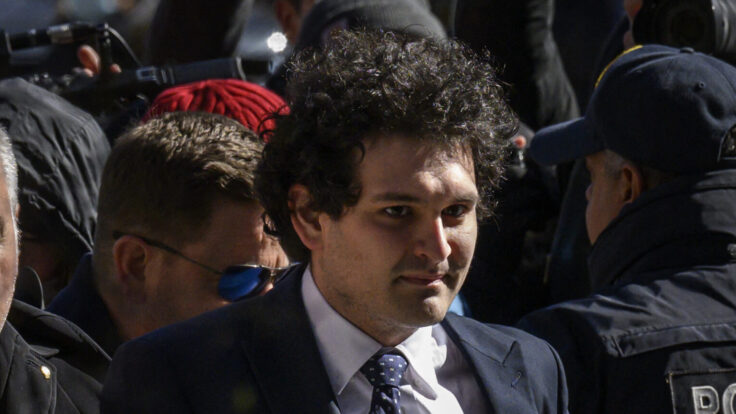
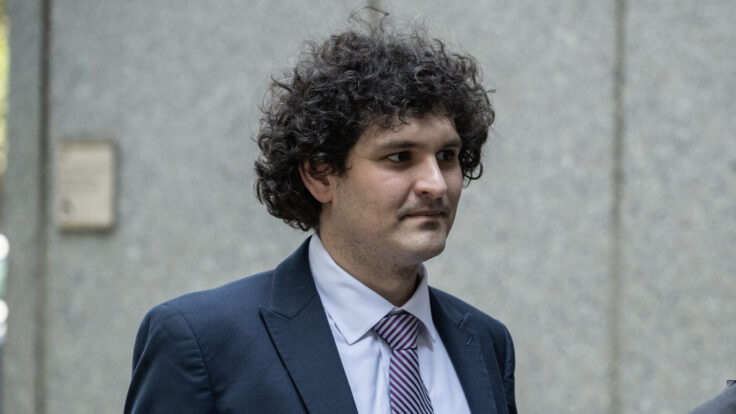
The S.E.C. complaint against Sam Bankman-Fried—whose name, it seems, will be uttered on Wall Street with the same inflection as Madoff’s—is unlikely anything that I have ever seen. Allegations of massive impropriety are buried in nearly every one of its nearly 100 paragraphs. Tonight, I highlight some of the document’s most eye-popping moments, and consider where this dramatic affair will rank in the halls of business infamy.
|
 |
| The S.E.C.’s Treatise on S.B.F. |
|
In short, the S.E.C. is alleging that S.B.F. out-Madoffed Madoff, who at least had the decency to keep his market-making operations on the 19th floor of the Lipstick Building, separate from his money management Ponzi scheme two floors below. S.B.F. mixed them all together.
|
|
|
|
The recently concluded S.B.F. apology tour was so spectacularly ill-advised, both from a legal and public relations perspective, that I’ve been at a loss to comprehend it, let alone explain it. Until yesterday. That’s when I read the 14-page indictment, courtesy of the Southern District of New York, which accused S.B.F. of eight crimes, ranging from several different varieties of wire fraud to several different varieties of conspiracy. On the last page of the indictment came the answer for which I’ve been searching: It was nothing more complicated than a hand-written date, December 9, 2022, four days earlier, and the words “Filed Sealed Indictment—Arrest Warrant issued.”
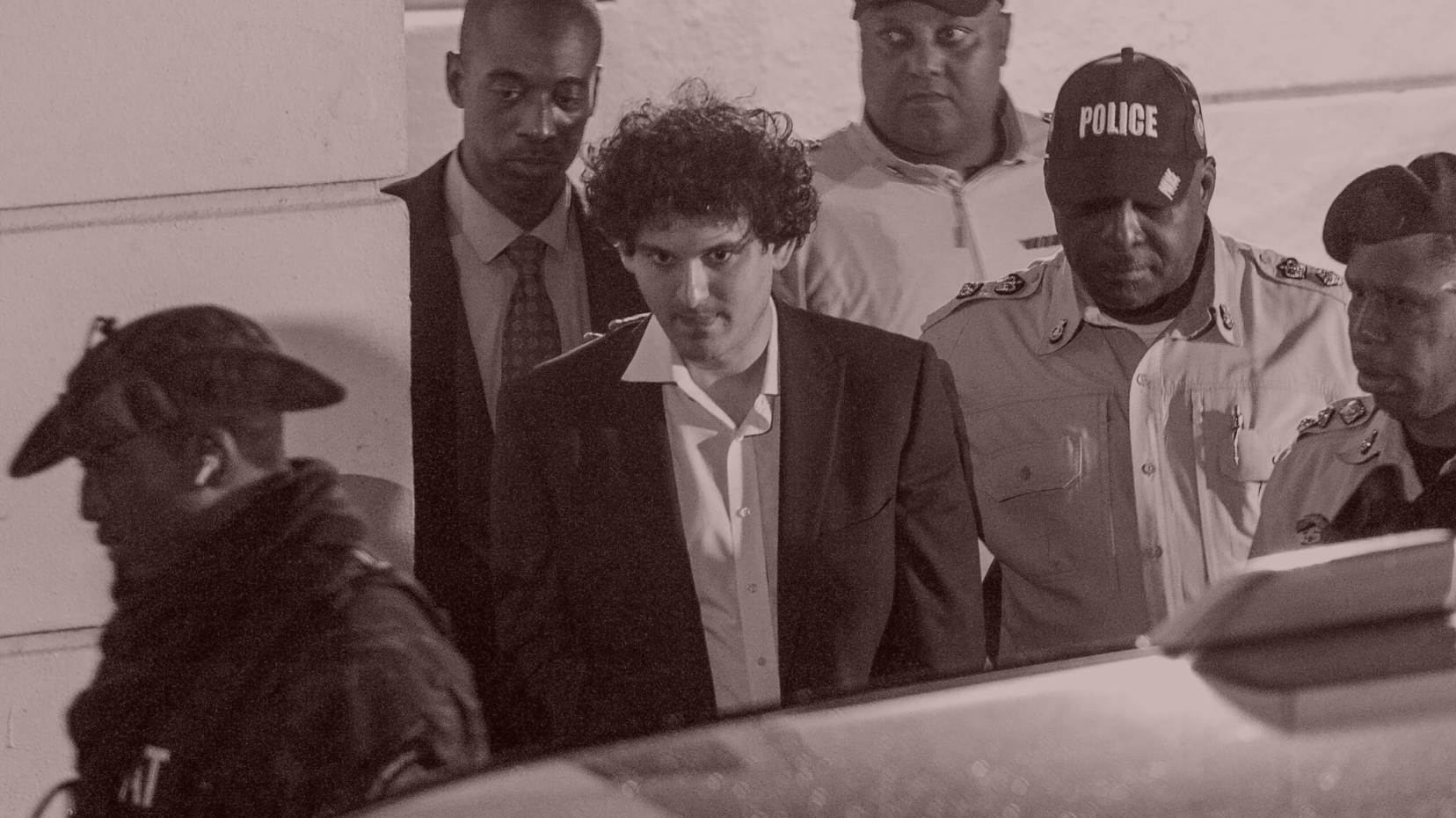
In other words, the federal grand jury had handed up, and then sealed, the S.B.F. indictment on Friday. S.B.F. was arrested in the Bahamas on Monday, pursuant to the indictment, and held without bail, as part of the process that will lead to his extradition to the United States so that he can be present for his criminal trial. The indictment was unsealed on Tuesday.
Under the logical assumption that a case of this complexity does not get before a grand jury and is then decided overnight, S.B.F. has presumably known for a while now that a federal grand jury had been convened and that his indictment, and his subsequent arrest, was quite likely imminent. He seemed to insinuate as much in his conversation with my Puck partner Teddy Schleifer, when he acknowledged that there was a real possibility he’d end up in prison. “The only thing I have left is saying things that are true and aren’t getting said,” he told Teddy. Perhaps he figured that his apology tour was his last chance to try to make sense of what may turn out to be, as U.S. Attorney Damian Williams essentially posited, the largest fraud and Ponzi scheme perpetrated by a nearly sole proprietor this side of Bernie Madoff. |
|
|
Aside from delineating the criminal charges against him, the federal indictment is of little substance. It’s more like a legal stake in the ground. The Southern District of New York must be saving the good stuff for the trial or the guilty plea negotiations. For some of the particulars of S.B.F.’s crimes, we must turn to the highly substantive Securities and Exchange Commission complaint, which contains jaw-dropping allegations of massive impropriety in nearly every one of its nearly 100 paragraphs.
It’s an extraordinary document. In my experience, it’s usually the federal indictment or the federal complaint that conveys the substance. Not this time. The S.E.C. complaint outlines a fraud of breathtaking audacity, as does another, even longer, complaint that the Commodities Future Trading Commission filed against S.B.F.
Essentially, the S.E.C. claims that from the start of FTX, in May 2019, S.B.F. sought not only to “defraud” the equity investors who eventually ponied up $1.8 billion during a series of capital raises that earlier this year valued FTX at $32 billion—some 90 investors in the U.S. ponied up $1.1 billion of this money—but also that he was “diverting billions of dollars” of FTX’s customers’ funds “for his own personal benefit and to help grow his crypto empire.” All the while, the S.E.C. claimed, S.B.F. portrayed himself as the “responsible leader” of the crypto community who “touted the importance of regulation and accountability” and that FTX was “both innovative and responsible.” Indeed, as we all know by now, he portrayed himself as the savior of the industry, the J.P. Morgan of his failing crypto brethren, above reproach. “Customers around the world believed his lies,” the S.E.C. continued, “and sent billions of dollars to FTX, believing their assets were secure on the FTX trading platform.”
They believed this because FTX’s own rules of the road promised customers, in writing, that no one would mess with their funds and that they would be there whenever they wanted them back. “But from the start,” the S.E.C. wrote, “Bankman-Fried improperly diverted customer assets to his privately-held crypto hedge fund, Alameda Research LLC, and then used those customer funds to make undisclosed venture investments, lavish real estate purchases, and large political donations.”
In short, the S.E.C. is alleging that S.B.F. out-Madoffed Madoff, who at least had the decency to keep his market-making operations on the 18th and 19th floors of the Lipstick Building, separate from his money management Ponzi scheme on the 17th floor. S.B.F. mixed them all together and used his customers’ funds for his own inane and greedy purposes, all wrapped up in a blanket of Effective Altruism. He then tried to seduce lawmakers with large campaign contributions and solicited favors from the crypto regulators at the S.E.C. and the C.FT.C., including S.E.C. Chairman Gary Gensler, himself a former M.I.T. lecturer on the subject of cryptocurrency. This might be about as brazen as it gets.
The S.E.C.’s portrayal of the run on FTX is cinematic. According to the complaint, S.B.F. started diverting the FTX customer funds to Alameda right from the start of FTX and continued to do so until the bankruptcy filing. The agency argued that S.B.F. not only directed FTX customers to send their dollars into bank accounts controlled by Alameda, but also enabled Alameda to draw down a “virtually limitless” undocumented “line of credit” at FTX, which was funded by customer funds. “As a result, there was no meaningful distinction between FTX customer funds and Alameda’s own funds,” the S.E.C. claimed. S.B.F. then used the FTX customer funds to do what he wanted at Alameda.
Remember all that blithering from S.B.F. about “mislabeling” accounts? According to the S.E.C. that was intentional—S.B.F. labeled the account “fiat@ftx.com” at FTX in order to conceal “Alameda’s liability in FTX’s internal systems.” The liability to FTX was not indicated on the Alameda balance sheet, nor did Alameda pay interest on the “loans” to FTX. In the end, “more than $8 billion” of FTX customer money was diverted to Alameda, and is now probably gone unless John Ray III, the new FTX C.E.O., can work some kind of magic to recover it.
When crypto prices “plummeted,” starting in May 2022, the complaint notes, Alameda’s lenders demanded repayment of the billions of dollars that they had lent to the S.B.F. hedge fund. “Despite the fact that Alameda had, by this point, already taken billions of dollars of FTX customer assets, it was unable to satisfy its loan obligations.” According to the S.E.C., S.B.F. then “directed” FTX to divert even more billions of dollars in “customer assets” to Alameda throughout the summer, money he used not only to satisfy the Alameda lenders but also to make venture capital investments and for loans to himself and other FTX executives. It all came to an end with the bankruptcy filing. |
|
|
There’s really very little difference, at the end of the day, between what happened at Bear Stearns, in March 2008, and what happened at FTX in November 2022. They both went down the tubes, nearly instantly, when investors lost confidence in them, wanted their money back and it wasn’t there to be returned. The big difference, of course, is that the Feds believe—and make a pretty compelling case—that S.B.F. did all this intentionally and for his own personal gain. At Bear Stearns, it was more of a failure of imagination, a failure to imagine that the overnight repo market, which Bear Stearns had been forced to rely on for its daily financing needs since the failure of its two hedge funds during the spring of 2007, would no longer be available to the firm, forcing it to scramble to meet institutional redemptions and to continue to try to run its business, which it could not do any longer. It wasn’t intentional.
Not even Madoff, who was sentenced to 150 years in prison, was this brazen. Interestingly, starting next month, Netflix has an amazing new four-part documentary about the Madoff scandal that crystallizes just what he did, in all its gory details. He traded on his legitimacy as the head of Nasdaq and a market maker to build a money management business that promised results it couldn’t deliver by robbing Peter to pay Paul. Heck, he didn’t even buy the stocks and bonds for the customers he told them he was buying; he just made it all up and printed it out on their monthly brokerage reports. After the 2008 financial crisis, he ran out of the money when investors wanted their money back. What’s clear is that what S.B.F. allegedly did at FTX/Alameda seems worse. He just swiped the money that investors and customers were giving to his crypto exchange and allegedly used it for his own personal gains, and then pretended he didn’t. “As always, our users’ funds and safety comes first,” S.B.F. tweeted in August 2021. “We will always allow withdrawals (except in cases of suspected money laundering/theft/etc.).” The irony is rich.
But, of course, there’s more, because there often is. While orchestrating what prosecutors have described as an audacious criminal conspiracy, S.B.F. tried to camouflage his misdeeds in a veneer of ethical and moral rectitude combined with an “aw shucks” innocence. It was an incredibly potent bouillabaisse and nearly everyone fell for it. (Over the holidays I will share with you stories about people I have found who didn’t fall for it and tried to do something about it.)
Take for instance how S.B.F. concluded his remarks to the House Committee on Financial Services a year ago: “And the last thing I will say is if you look at what precipitated some of the 2008 financial crisis, you will see a number of bilateral, bespoke, non-reported transactions happening between financial counterparties, which then got repackaged and releveraged again and again and again, such that no one knew how much risk was in that system until it all fell apart. If you compare that to what happened on FTX or other major cryptocurrencies in use today, there is complete transparency about the full open interest. There is complete transparency about the positions that are held. There is a robust, consistent risk framework applied.” The level of cynicism and deceit captured in this testimony can barely be comprehended.
As my loyal readers know by now, I have been working on a documentary film about the crypto phenomenon for more than a year now. Right about the same time last December that S.B.F. testified in the House, he sat for a 90-minute conversation with me and a camera crew in a Manhattan hotel room. He was at the height of his power and influence. Bitcoin had just hit an all-time high. He had just testified before Congress. He was about to lure some new sophisticated investors into the FTX web at a $32 billion valuation.
In our conversation that night, he told me something about his decision to go to Jane Street Capital, the downtown Manhattan hedge fund where S.B.F. got his start after graduating from M.I.T., that had me scratching my head. Even though I believed I was talking with a mini-Einstein of sorts and the richest person in the world under 30, I was still rather incredulous when he told me that what he really wanted to do after college was work for a nonprofit. As he knocked on door after door of these organizations, he said, he was told that everyone would be better served if he, instead, went off to make a ton of money and then donated it. I don’t know about you, but I’ve never heard of a charitable organization saying anything like this to a recent college grad, nor has anyone I’ve asked in the world of charitable organizations ever heard of anything like this. At that moment, I should have realized that this guy was totally full of shit. |
|
|
|
| FOUR STORIES WE’RE TALKING ABOUT |
 |
| Royals in Hollywood |
| What ‘Harry & Meghan’ reveals about Netflix’s plan for documentaries. |
| JULIA ALEXANDER |
|
 |
| Putin’s Chef |
| A profile of the terrifying kingpin behind Russia’s most notorious mercenary group. |
| JULIA IOFFE |
|
 |
| The Biden Switcheroo |
| Notes on Biden’s inner circle musical chairs and McCarthy schadenfreude. |
| TARA PALMERI |
|
 |
| Khan’s Long Game |
| What blocking the Microsoft deal tells us about Lina Khan’s FTC. |
| ERIQ GARDNER |
|
|
|
|
|
 |
|
|
|
Need help? Review our FAQs page or contact us for assistance. For brand partnerships, email ads@puck.news.
|
|
|
|
Puck is published by Heat Media LLC. 227 W 17th St New York, NY 10011.
|
|
|
|