 |
|
Welcome back to The Best & The Brightest, it’s Peter Hamby back in the saddle after a much-needed vacation. Thanks to my wonderful partners for filling in. I was in London for a few days, and if anyone wants to sidebar about how Rishi Sunak is Mitt Romney-level awkward on the campaign trail, I’d be delighted to indulge. Meanwhile, I hope that you enjoyed today’s episode of The Powers That Be: Media Monday. Jon Kelly and I chatted all about the crisis shaking the Post.
In tonight’s edition, I write about how Gen Z doesn’t remember much at all about the Donald Trump presidency, or even care—yet another reason why Joe Biden can’t just run against the chaos of the Trump years.
But first, here’s Abby Livingston’s daily roundup of Capitol Hill chatter…
|
|
|
| The Congressional Baseball Game—perhaps the Capitol Hill event of the year—is set for Wednesday night at Nats Park, a matchup notable for rare bursts of athleticism (and the inevitable post-injury knee scooters that appear around the Capitol each summer). Alas, Democrats have struggled recently, unable to muster a win since 2019. Republicans have dominated under the coaching of Rep. Roger Williams, who played minor league ball for the Atlanta Braves in the ’70s.
One of the more intriguing angles of this game is the ever-evolving roster. In odd years, the fun revolves around sizing up the potential of the (mostly) freshmen rookies. In even years, the speculation surrounds which players each team stands to lose because of retirements and election trouble. Here’s how it’s shaking out…
- The Casar X-factor: On Monday, a source close to the Republican team leadership texted me: “We have basically the same team as last year, and they are better. [Florida Rep. Greg] Steube pitching, and [Missouri Sen. Eric] Schmitt hitting, are probably your stars. Apparently a late injury to [Michigan Rep. Bill] Huizenga will cause some movement in the infield.”
The coach on the Democratic side, California Rep. Linda Sánchez, is feeling confident. “Last year, we had a young team with lots of freshman players,” she told reporters. “Now with a game under our belt, I have a better idea of each player’s skill set and we have been able to coach them to play different positions.” I hear she’s bullish on Pennsylvania Rep. Chris Deluzio, Kentucky Rep. Morgan McGarvey, California Rep. Kevin Mullin, California Sen. Alex Padilla, and California Rep. Jimmy Panetta.
The question is whether the Dems can make up for the absence of former NFL linebacker and Texas Rep. Colin Allred, who’s not playing this year, given the challenging race he’s running against Ted Cruz for the Texas Senate seat. That’s why hopes are hanging on Texas Rep. Greg Casar—a former high school track star and nominally the fastest man in Congress after last month’s ACLI Challenge race. He could make for an ideal pinch runner.
- Wenstrup hangs it up: Ohio Rep. Brad Wenstrup, the Iraq combat surgeon who likely saved House Majority Leader Steve Scalise’s life in the aftermath of the 2017 baseball game shooting, is retiring and playing his last game. Meanwhile, two other Republican team members are facing election trouble: South Carolina Rep. William Timmons and Arizona Rep. Juan Ciscomani. Ciscomani is one of the Democrats’ top targets in the fall, and Timmons is facing a stiff primary challenge tomorrow in South Carolina.
- Lefty double-switches: Two ball players are not returning on the Democratic team: California Rep. Tony Cárdenas, who announced his retirement last year, and North Carolina Rep. Wiley Nickel, a freshman forced out after a redistricting. But Nickel could suit up again in a few years, since he’s floated himself as a potential 2026 North Carolina Senate candidate. His fellow North Carolinian freshman Rep. Don Davis is on the roster, but is fighting to hold on to his seat in one of the most competitive districts this November.
Similarly, New York Rep. Pat Ryan and Deluzio are in tough reelection fights, while a handful of their Democrat colleagues have mildly competitive races: Kansas Rep. Sharice Davids, California Rep. Mike Levin, and New York Rep. Tom Suozzi, who last played in 2022, right before leaving Congress to challenge Kathy Hochul for the Democratic gubernatorial nomination. He’s back, of course, having won the February special election to replace George Santos. And then there’s Arizona Rep. Ruben Gallego, who has slightly better-than-even-odds to make the jump to the Senate. If he wins, he’ll likely be back on the team next year.
|
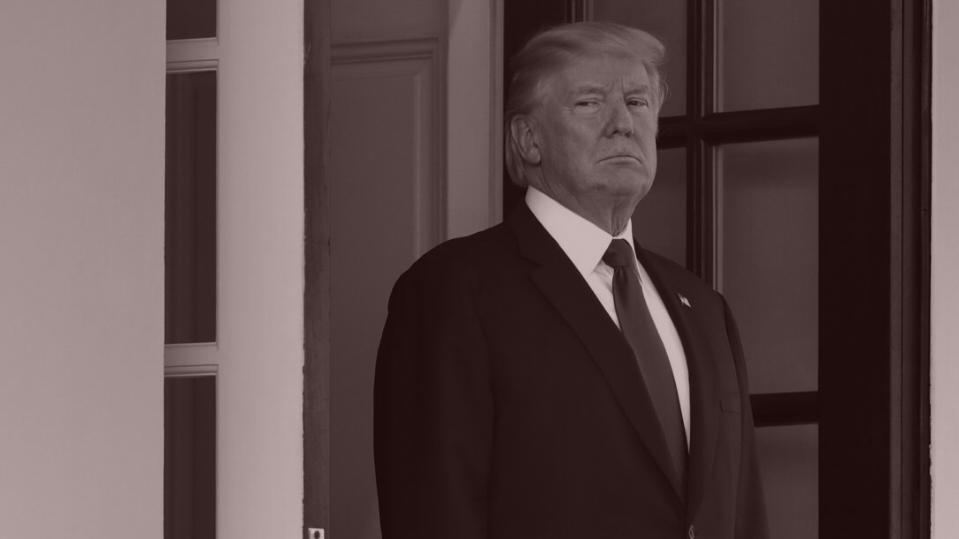 |
| The Left’s Trumpnesia Problem |
| A new poll finds that not only do many young and first-time voters not really remember the chaos of the Trump years, but they don’t really care that much, either, when presented with examples of Trump’s most inflammatory rhetoric. |
|
|
|
| Most journalists would probably like to forget about the media coverage of the 2016 campaign, but unfortunately, the drama of that year is burned into all of our brains like an acid flashback. I have one particularly vivid memory I return to from time to time. I was in my hotel room in St. Louis on the morning of the second presidential debate between Hillary Clinton and Donald Trump. MSNBC was on in the background, and I turned to watch Andrea Mitchell interview Clinton’s campaign manager, Robby Mook. It was the same day that Trump held a Facebook Live press conference with three of the women who had accused Bill Clinton of sexual misconduct back in the ’90s—Juanita Broaddrick, Paula Jones, Kathleen Willey—and Kathy Shelton, a sexual assault victim whose rapist was defended by Hillary Clinton more than 40 years ago. The four women, Trump announced, would be attending that night’s debate.
Mitchell asked Mook about this ploy, which was all over the news. “This has been reported many times,” he said calmly. “Obviously, the Clintons had a tough time in their marriage 20 years ago. This was litigated a lot, and I don’t think voters are interested in litigating it again.”
My gut response was that Mook was half right. The Clinton scandals of yesteryear did feel like old news. But I also figured that a lot of boomers had never forgotten about Bill’s sliminess back in the day, and that Trump’s gambit might remind them they didn’t want the Clintons anywhere near the White House again.
What I didn’t account for, being the high-information political know-it-all that I am, was that a lot of younger voters probably had no idea about the Clinton-era sex scandals. For them, it was new information—and possibly yet another excuse to stay home on Election Day rather than vote for Hillary. In hindsight, this gimmick was effective for the Trump campaign.
As Chuck Klosterman wrote in his excellent history The Nineties, even though Bill Clinton left office with one of the highest approval ratings in modern history, today he is remembered as “an irreconcilable villain among young people (and particularly young women) who have little or no memory of Clinton’s time in office.” For younger millennials and especially Gen Z, who came of age during the #MeToo era, his sexual transgressions eclipse his administration’s achievements.
I thought about all this last week after seeing a poll from a newish Democratic outfit called Blueprint, whose purported mission is “to take a sober, detailed look at what Democrats need to do to win in 2024.” The report is titled Trumpnesia, and the results are ominous for Democrats who are worried about getting Gen Z to vote for Biden. It turns out that not only do many young and first-time voters not really remember the chaos of the Trump years, but they don’t really care that much when presented with examples of his most inflammatory rhetoric. |
|
|
| No matter your partisan affiliation, you likely remember the scandals that defined Trump’s first campaign for president and his presidency: the Muslim ban; the Access Hollywood tape; the claims that Mexican migrants are murderers and rapists; the dismissal of servicemen who died in war as “losers” and “suckers.” That story about Trump calling Haiti and African nations “shithole countries.” And so on. These low points will be in Trump’s obituary. MSNBC has been talking about them in primetime for almost a decade.
But in a survey of registered voters between the ages of 18 and 30, Blueprint found that multitudes of young people in America have never even heard of these Trump comments. Only 42 percent of young voters were aware of Trump disparaging John McCain as “not a war hero”; the same low percentage had heard of Trump’s proposal for the “total and complete shutdown of Muslims entering the United States.” Likewise, a majority of young voters professed utter ignorance over Trump’s statement that there were “very fine people on both sides” of the 2017 white supremacist march in Charlottesville, a moment the Biden campaign highlighted in a digital ad back in March.
“The whole Trumpnesia lesson, to me, isn’t to go out and remind everyone of this stuff,” said Evan Ross Smith, the lead pollster for Blueprint. “The lesson is that you can’t rely on these voters having this bedrock understanding of Trump as a chaos agent, as a dysfunctional president, as someone who made bad decisions that weren’t aligned with their values. We can’t assume all that. We can’t rely on all that.”
Smith’s perspective aligns with some of what I’ve heard from John Della Volpe, the director of the Harvard Youth Poll, who has done polling for Snapchat, where I also work. In April, as part of his recent survey work on Gen Z voters, he noted that the younger members of Gen Z were in middle or high school when Trump launched his campaign in 2015. Now eligible to cast ballots for the first time, many of them only started paying attention to politics a few years ago, maybe starting around the time of the Biden inauguration or the Covid pandemic.
These voters are new to politics in a way that would probably baffle adults who consider themselves longtime savants. A useful thought exercise would be to reflect back on the first campaign you followed closely. Mine was the 2000 election, when I was at Georgetown, nerding out with other young strivers. I argued with my classmates, watched a lot of Inside Politics and Crossfire, and cobbled together money to pay for a Washington Post subscription. I was up late watching NBC News live when Tim Russert scribbled “Florida, Florida, Florida” on that whiteboard. But the presidential election before that? I was in high school in 1996, and don’t remember much about politics back then at all, other than the names at the top of the ballot—and maybe Bob Dole falling off a stage somewhere? For a teenager, a few years is a lifetime.
It’s no wonder, then, that many of the Zoomers surveyed by Blueprint don’t remember what went down during the Trump presidency, or even the 2020 campaign, when Trump lied about a stolen election and stoked the violence of January 6. “These things feel like a million years ago to them,” Smith told me. Less than half of young voters, for example, had heard of Trump infamously telling the Proud Boys to “stand back and stand by” in his first debate against Biden. Only 40 percent of Gen Z voters had heard of Trump calling Georgia’s secretary of state and demanding that he find the votes to overturn the state’s election results. And while 72 percent of young voters had heard of Trump saying that the 2020 election was “rigged” and “stolen,” that still means more than a quarter of young people remain oblivious to the skulduggery and violence which made headlines for the past four years and are now at the center of two criminal cases against the former president.
Even when reminded, or told for the first time, only 50 percent of the young voters surveyed said they were “bothered” by Trump’s claims that the election was stolen. Only 46 percent were bothered by his meddling in Georgia, and only 52 percent were bothered by his Charlottesville remarks.
The news here is that while most Americans remember a less chaotic, even at times congenial, political landscape “before Trump,” almost no one in Gen Z does. For the kids, political havoc is the norm and the idea of social trust is only academic. “The American political system has been on unfirm footing for an entire generation of American voters who are now reaching their late 20s and early 30s,” Smith said. “There is very little loyalty to democracy as a concept. In the Trump era, which I’d say starts in 2015, it’s hard to look at that stretch of democracy and say, ‘Yeah, democracy works great for me.’ It isn’t yielding consistently good outcomes, or at least outcomes that feel reasonable. There isn’t some automatic built-in Schoolhouse Rock loyalty to the democratic system that every American is born with. If all you know is the dysfunction, who cares if someone is undermining it?” |
|
|
| There’s an ongoing debate over whether Biden should run against the havoc of the Trump years under the banner of “Saving Democracy,” or run on his accomplishments and the issues (right now, mainly abortion rights). It’s a false dichotomy. Biden can do both, of course, and the technology exists to reach different audience clusters with different messages. But the Blueprint poll should be a warning to the Resistance crowd demanding that Democrats Do Better! and build their campaigns around the idea of saving the republic from Trumpism. What matters to most voters right now—and this isn’t a shocker to anyone who can read a poll—is the economy. The cost of living is far and away the biggest concern among young voters. Rent, prices, gas, and debt are more salient to Gen Z than anything else. Especially dated outrage about Trump’s rhetoric.
There are ways, Smith told me, for Biden to tie some of Trump’s past statements to an issues-based campaign message. After all, even if Biden is unpopular with young voters, they do align with him on the vast majority of issues. Trump’s past remarks about race and gender, the poll found, are also the ones that Gen Z found the most bothersome. “Drive that values wedge,” Smith said. “It’s not about democracy. Drive that values wedge against Trump, that this guy is nothing like you. He doesn’t care about people like you, and the people he cares about are the fabulously wealthy, ultra-rich, powerful white dudes just like him, who have nothing for you. He’s going to look out for them, and he's going to treat you like dirt. If you’re not white, if you’re a woman, he doesn’t care what happens to you. He doesn’t care if you live or die or succeed or fail.”
The lesson from the poll isn’t profound. It’s that Biden is running for president in 2024. Not 2020, not 2016. The state of the economy—real or imagined, unfairly or not—belongs to him. And to lean on the old maxim, elections are about the future and not the past. That’s especially true for impatient young Americans looking out on a future that doesn’t look very accommodating to them.
“These voters are not going to cast a negative vote against Trump on the basis of the memory of how he was as president,” Smith said. “We know they’re not going to cast a vote in defense of democracy, because it’s not so clear that they’re interested in defending democracy. So what can we get them to do? Cast a positive vote in favor of Biden. It’s not rocket science. Meet them where they are, on things like the economic pain they're experiencing. Acknowledge that this is not a great economy for young people. When you hear younger people who are undecided or leaning Trump or anything like that, it’s mostly an economic argument of, Trump was good for the economy. With Trump, it can’t be any worse than Biden, when things are so expensive. Their questions are not about democracy. Their questions are: Will I ever not need roommates?” |
|
|
|
| FOUR STORIES WE’RE TALKING ABOUT |
 |
|
 |
|
 |
|
 |
| License to Will |
| Uncovering the dueling narratives at the Washington Post. |
| DYLAN BYERS |
|
|
|

|
 |
|
|
|
Need help? Review our FAQs
page or contact
us for assistance. For brand partnerships, email ads@puck.news.
|
|
You received this email because you signed up to receive emails from Puck, or as part of your Puck account associated with . To stop receiving this newsletter and/or manage all your email preferences, click here.
|
|
Puck is published by Heat Media LLC. 227 W 17th St New York, NY 10011.
|
|
|
|