{{ 'now' | timezone: 'America/New_York' | date: '%b %d, %Y' }}
|
|
|
Hello, and welcome back to The Best & The Brightest, your daily political dispatch. I’m
Julia Ioffe and it’s foreign policy Thursday.
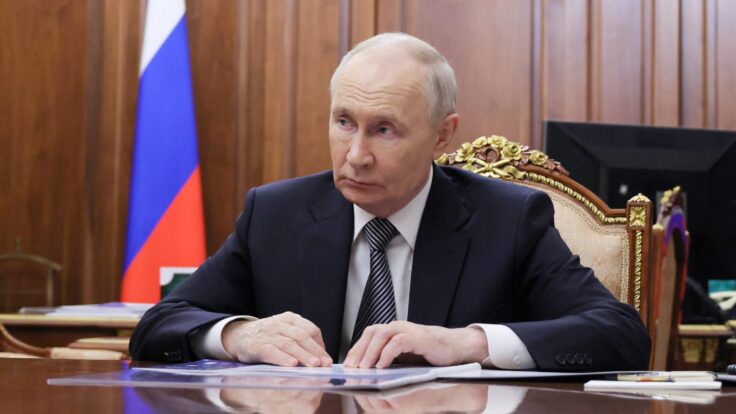
Steve Witkoff and Donald Trump, the quiet Americans, are trying to end the brutal war in Ukraine, but find themselves, as per the stereotype, completely in over their heads. In tonight’s issue, we get into how they keep misunderstanding what Vladimir Putin is telling them, and why there is almost no chance of a peace deal this time around. “Putin tries to play with words,”
said a source close to the Kremlin, “but Trump thinks it’s a yes.”
But first, here’s Abby with the latest on the Hill…
|
|
|
 |
Abby Livingston |
|
- The joy of Roy:
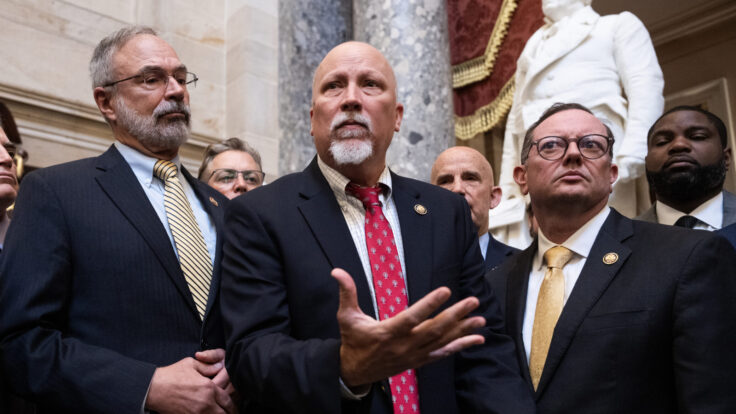
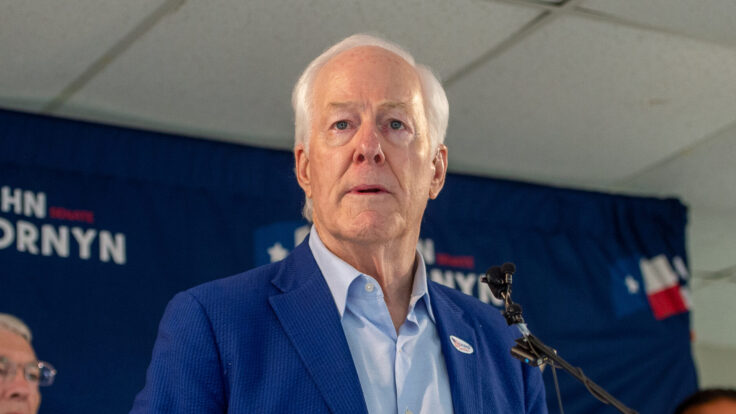
Four-term Republican Rep. Chip Roy will end his congressional career to take a shot at succeeding his former boss, Ken Paxton, as Texas attorney general. (Paxton, of course, is vacating his job to challenge Sen. John Cornyn in next year’s Republican primary.) The A.G. slot is the first major statewide office to open up in more than 10 years, yet despite that rare opportunity, Roy enters the race as the most prominent Texas Republican
competing in the party primary. (Roy, who once served as Paxton’s chief deputy, later called on his former boss to resign amid a corruption scandal that led to his 2023 impeachment. Have to imagine there’s some bad blood there…)Given Roy’s rabble-rousing nature, his exit will likely mean fewer headaches for House G.O.P. leadership. His exit from the chamber will
also create a coveted opening on the Rules Committee, where Republicans may or may not continue to put Freedom Caucus types in 2027. But that doesn’t mean there will be any less noise surrounding the battle to succeed him. The last time the seat was open, Roy defeated a field of 18 Republicans seeking the nomination. The 21st district was mildly competitive in the general a few years ago, with a different congressional map, but after this week’s gerrymander, the seat should be
an easy hold for Republicans.
- The Winklevii have entered the chat: The Winklevoss twins, seeking a larger role in the 2026 midterms, have announced a $21 million donation to a Trump-aligned cryptocurrency PAC—in Bitcoin, of course. The key race to watch will be in
Ohio, where former Senator Sherrod Brown is challenging appointed Senator Jon Husted. In 2024, Brown, a crypto skeptic who chaired the Senate Banking Committee, was defeated by Republican Bernie Moreno, a crypto enthusiast, thanks in part to a super PAC funded by cryptocurrency companies that unleashed more than $40 million in spending. The grudge match ended up being the
most expensive Senate race in history.But Brown is no longer an incumbent—a position from which it’s typically easier to raise money—let alone the Banking chairman (the politics of his seniority, should he return to the Senate, are for another day). His direct-to-campaign fundraising last cycle was a major reason he lost by only four points in a year
when Kamala Harris lost Ohio by 11. He’s raised $3.6 million in his first 24 hours of his campaign this week, but we’ll see if he can keep up that pace.
|
|
|
In recent days, Trump and his team have announced a series of breakthroughs in
Russia-Ukraine negotiations, only to find out they’ve misunderstood the Russian position. Now it seems the only security guarantees Ukraine will get are none at all.
|
|
|
On Sunday morning, Steve Witkoff, the president’s foreign policy factotum, stunned the world
by announcing on CNN that he’d gotten Vladimir Putin to agree to allow “Article 5–like” security guarantees for Ukraine. This would have been a shocking concession from the Russian president, who has repeatedly said that one of the aims of his war is to keep Ukraine out of NATO. But as Witkoff boasted to Jake
Tapper, now Putin was just fine with a Western pact to defend Ukraine should Russia reinvade—essentially NATO by another name. Witkoff was clearly very proud of himself. This was, he said, “the first time we had ever heard the Russians agree to that.”
The problem, of course, was that the Russians hadn’t agreed to that. Not 48 hours later, Sergey Lavrov, the Russian foreign minister, gave an interview and a press conference that squashed that dream. “We
cannot agree with the fact that it is now proposed to resolve collective security issues without the Russian Federation,” he said. “This will not work. We have already explained this more than once.” Put another way, Russia wants a say over these security guarantees, the kind of veto power it was asking for in winter 2021-22, the last time an American president led a round of
negotiations this frenzied. “Discussing questions of providing security guarantees without the Russian Federation is a pipe dream,” Lavrov continued. “It is a road to nowhere.”
It wasn’t long before the other main deliverable from the Trump-Putin Alaska summit also fell apart. On Monday, Trump stepped out of his White House meeting with Volodymyr Zelensky and European leaders to call Putin for about 40 minutes, later announcing on Truth Social
that the Russian president had agreed to meet with him and Zelensky in a “trilat.” (Even Trump can’t escape the dorkiest D.C. lingo.) This would have been another massive surprise victory, given that Putin hates Zelensky. Putin doesn’t see Zelensky as an equal, refuses to even use his name in public, and has tried several times to have him assassinated. But now Putin was going to honor a president he’s falsely called illegitimate with a face-to-face meeting?
The next morning, I
called a longtime source close to the Kremlin who has been very optimistic about these talks. Yet even he was sure something had been lost in translation. “Something got garbled,” the source told me. “Trump said, Let’s have a meeting,” between the three of us, and “Putin, as I understand it, answered evasively. But Trump probably didn’t understand it.” What Putin did say, according to this person, was that he’d “raise the level” of the talks. It didn’t mean that Putin agreed to
meet with Zelensky, but rather that, this time, he’d agree to sending higher-ranking people to participate in Russian-Ukrainian talks. “But Trump heard it as an agreement,” the source said. “Putin tries to play with words, but Trump thinks it’s a yes.”
Sure enough, Lavrov confirmed on Wednesday that Putin would not agree to sit down with Zelensky until a higher-level delegation had met to discuss any further meetings. Ever the bureaucratic hand brake—Lavrov once
ground the entire European Parliament to a halt because copies of a resolution were printed on different-colored pieces of paper—the Russian foreign minister said one other thing had to be talked about before meetings to talk about future meetings could even begin to be talked about. “During our last, third round of talks [in Istanbul], our negotiators suggested creating
three working groups in order to consider the agenda in more detail,” he said, adding that those groups would be focused on “military, humanitarian, and political questions” respectively. “An answer from Ukraine has still not been forthcoming,” he added.
It’s hard to imagine a more ridiculous outcome. Trump and Witkoff, former real estate tycoons, want to push through a
deal yesterday and tout their accomplishments to the media. Trump, as he’s made clear, wants deals, deals, deals—because is a peace deal really so different?—so he can finally get his Nobel Peace Prize. But the world of New York real estate is a soothing spa compared to the dark, Byzantine maw that is the Russian state, and Trump and Witkoff are clearly no match for it. They are so illiterate in the context, culture, and even the reality of what they’re dealing with that it is, frankly,
embarrassing. Even worse, they clearly don’t even realize how badly they are out of their depth. As one analyst in town put it, “These people are idiots.”
|
On Sunday morning, I was sitting in the makeup chair at CNN, getting ready to dissect the Trump-Putin
summit. I struck up a conversation with Jake Tapper, who had just returned from Anchorage and was getting ready to host his Sunday morning show. Jake had brought up the case of Juliane Gallina, a senior C.I.A. official whose mentally ill 21-year-old son, Michael Gloss, was killed fighting for the Russian army in Ukraine in April 2024. Earlier this month, Witkoff had visited Moscow to meet with Putin, who had given him a
gift for Gallina: the Order of Courage, a Soviet-era award for outstanding civilian service, in honor of her son.
At the time, the gesture was described in the press alternately as “a dig” and a way to “needle” the American president. But let’s be serious. This was Putin, a former K.G.B. officer and head of the F.S.B., using Witkoff to say “fuck you” to his old enemy, the American intelligence services. It was saying, in essence, even the children of your spooks choose our side—and using
the president’s own envoy to deliver the message.
When news of Gloss’s death was first reported this spring, by the independent Russian media organization Important Stories, the chatter among Russia experts was that Russian intelligence must have had a hand in recruiting this young man, as a way of humiliating not only his mother, but the entire U.S.
intelligence community. If that is indeed what happened, Putin’s gift was in much the same spirit.
And yet, as I pointed out to Jake, no one seemed to know whether Witkoff had taken the award, or given it to its intended recipient. “I’ll ask him,” Jake said.
Yesterday afternoon, he texted with a link to the story
he’d written: Witkoff had not only accepted the Order of Courage, but passed it on. “For Witkoff, who lost a son in the opioid epidemic, losing a child is a traumatic experience that transcends geopolitics,” Tapper wrote. “And he thought it worthwhile to give the medal to Juliane Gallina, the C.I.A.’s deputy director for digital innovation.”
Witkoff saw it as a way to bond with a fellow grieving parent, but that’s almost certainly not how Putin meant it. Putin was sending a message to
Gallina and the C.I.A. that was packaged so that Witkoff wouldn’t understand it. That too is part of the insult: pointing out that Witkoff understands so little, and is so easily manipulated by the Russian president, that he can use him, like an unwitting mule, to give a senior American intelligence officer a black eye.
“Witkoff may be the most inept and clueless envoy in the history of U.S.-Russian diplomacy,” said Marc
Polymeropoulos, a retired senior C.I.A. officer who learned about playing nice with the Russians the hard way. “By first accepting and then delivering the medal, he both went along and then actually actively aided Putin’s mockery and trolling of America.”
|
What’s in a
Security Guarantee?
|
A lot is getting lost in translation these days, especially in the discussions about security guarantees for
Ukraine. To agree to lay down its arms, Ukraine needs to know that when Putin inevitably invades after a peace deal is done, someone will come to its defense—something that would hopefully deter Russia from doing so in the first place. But the debate is so contradictory, both internally and between the warring parties, that I fear the more likely outcome is that Ukraine will get no guarantee at all.
On Monday, U.K. Prime Minister Keir Starmer
said the Europeans had discussed putting boots on the ground. But my Kremlin-proximate source declared there was “zero chance” of that happening. “That’s not acceptable under any circumstances!” the source said. Starmer, he added, “needs to take pills and stop hallucinating. Maybe his wife isn’t putting out, because these are his sexual fantasies.”
What, then, did the Kremlin have
in mind? The source suggested that Putin has never been against “offshore” security guarantees—a setup wherein third countries promise to fight for Ukraine if Ukraine is attacked. “Any offshore security guarantees that don’t involve NATO membership or presence of American or European forces on Ukrainian soil—Putin is fine with that,” the source explained. And anyway, this person said, it wouldn’t matter because Putin wasn’t planning on invading Ukraine again.
“There’s this European
paranoia that Putin is a serial invader,” the source continued. “He’s not. He just wants [what he wants]”—no NATO enlargement, keeping Ukraine demilitarized and neutral, and securing rights for Russian speakers—which many see as a Trojan horse for Putin to influence Ukrainian politics. “He doesn’t want to invade Ukraine every Tuesday!” the source exclaimed. Then again, the source conceded that even he didn’t think Putin was foolish enough to invade back in 2022. So we were back at
square one.
The other bitter irony, as Sergey Radchenko, a professor at Johns Hopkins’s S.A.I.S., has pointed out, is that it’s Washington, not Moscow, that is the reason Ukraine doesn’t have a security guarantee. After extending the invitation in 2008, the U.S. could have actually allowed Ukraine into NATO rather than leave it twisting in the wind
for 15 years. Even now, the Trump administration says they won’t put U.S. boots on the ground or offer much of anything else beyond weapons sales. They expect Europe to bear the brunt. As for Trump’s idea that American investment in Ukraine—via the shakedown that was the proposed mineral deal—would be the best security guarantee of all?
Well, this morning, Russia targeted and destroyed an American electronics factory well into Western Ukraine, far from the front.
That leaves the country, once again, to mostly fend for itself, with the aid of Western weapons. Which is why one of the guarantees Putin wants for himself is largely dismantling the Ukrainian military. After that, apparently, he won’t
invade again. Pinky swear.
|
That’s all from me for now, friends. I’ll see you back here next week. Until then, good night and keep your
neighbors safe.
Julia
|
|
|
Unique and privileged insight into the private conversations taking place inside boardrooms and corner offices up and down Wall
Street, relayed by best-selling author, journalist, and former M&A senior banker William D. Cohan.
|
|
|
Join Puck’s chief political columnist, John Heilemann, as he roams the corridors of power and influence in America on this
twice-weekly interview show, taking you beyond the headlines with the people who shape our culture: icons and up-and-comers, incumbents and insurgents, moguls and machers in the overlapping worlds of politics, entertainment, tech, business, sports, media, and beyond. The conversations are rich and revealing, unrehearsed and unexpected… and reliably impolitic. A Puck-Audacy joint, new episodes drop every Wednesday and Friday.
|
|
|
Need help? Review our FAQ page or contact us for assistance. For brand partnerships, email ads@puck.news.
You received this email because you signed up to receive emails from Puck, or as part of your Puck account associated with {{customer.email}}. To stop receiving this newsletter and/or manage all your email preferences,
click here.
|
Puck is published by Heat Media LLC. 107 Greenwich St, New York, NY 10006
|
|
|
|