Hello and welcome back to The Best & The Brightest. It’s foreign policy Thursday, and I’m your
host, Julia Ioffe, following the latest choreography surrounding Russian and Ukrainian peace talks.
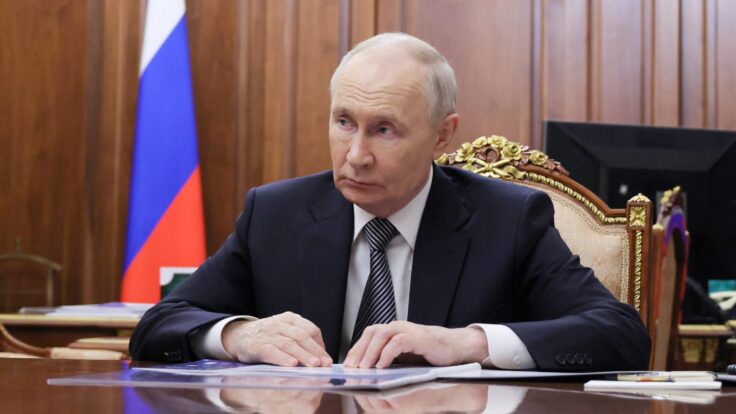
Negotiators for the two sides met today in Istanbul for the third time since Trump came into office insisting that he’d end the war in a day. This time, negotiations were over in less than an hour. That’s how little they had to discuss. It’s hardly surprising, given that Russia is very clearly winning and doesn’t intend to settle things anywhere
other than on the battlefield, and that the U.S. is clearly not interested in helping Ukraine even at levels set under the Biden administration. Meeting for less than an hour was an obvious box-checking exercise for each side to prevent Trump from thinking that they were the problem. The Russia-Ukraine negotiations are an increasingly tedious and meaningless exercise, but here we are.
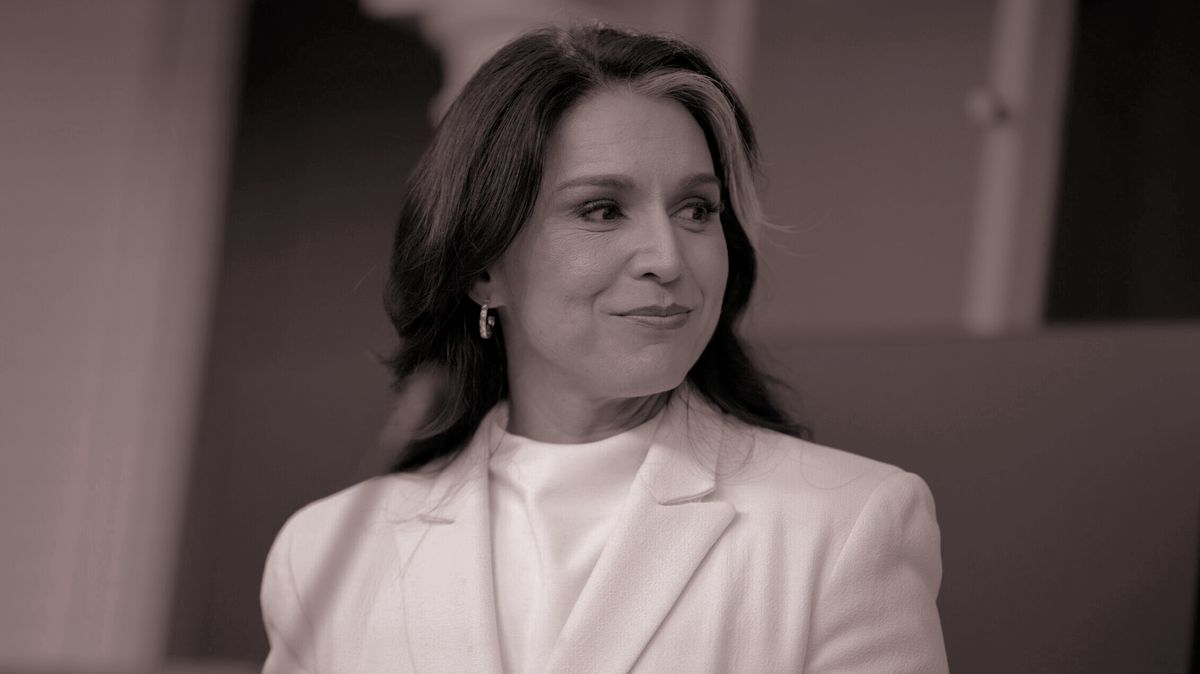
Tonight, news and notes on D.N.I. Tulsi Gabbard’s opportunistic revival
of Russiagate, and the real inside chatter in the intelligence community about the reams of documents that Gabbard declassified last night. |
|
|
A MESSAGE FROM OUR SPONSOR |
Members of the agriculture community are raising serious concerns about the MAHA Commission’s recent report, which
questions the use of safe, essential crop protection tools. Backed by decades of research, these safe, trusted tools underpin American agriculture—helping farmers produce more food, keep prices from rising, and advance conservation practices like no-till farming that improve soil health and reduce emissions. That's why MAA
recently joined over 250 agricultural organizations in a letter to the administration underscoring a simple point: sound science—not fearmongering—must shape agricultural policy. |
|
|

| Abby Livingston
|
|
- A North Carolina Senate
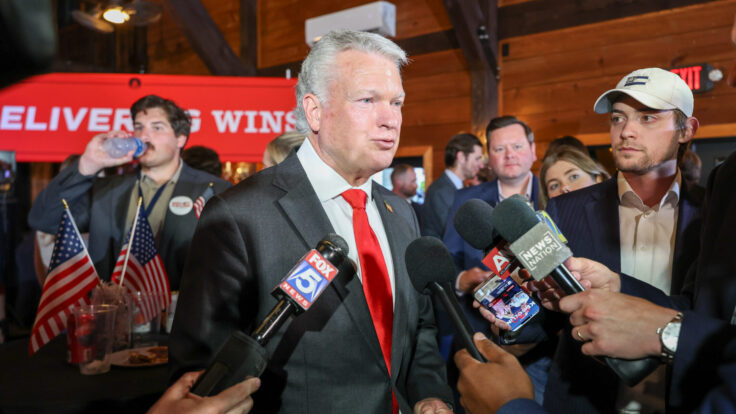
“toss-up”: R.N.C. chair Michael Whatley will run for retiring Sen. Thom Tillis’s North Carolina seat, with Trump expected to endorse him once he makes it official. Whatley is now the presumptive G.O.P. nominee in a race that could have turned into a fractious nightmare. Meanwhile, as Politico first reported,
Lara Trump, a former R.N.C. co-chair herself, has withdrawn from consideration—a decision ideally timed for Republicans. Now she won’t freeze the field and kill months of fundraising time for the eventual G.O.P. nominee.
Leigh Ann Caldwell reported from Washington that Trump called Whatley on Monday to encourage him to run. “He has always said that he’d do it if Trump asked him,” Leigh Ann texted me. “An announcement is likely this week. It’s still
unclear who will replace Whatley as R.N.C. chair, but it will be up to Trump.”
The race remains a toss-up, said Jessica Taylor, the Senate race editor at the Cook Political Report. Whatley, she emailed me, “will have a massive fundraising Rolodex to draw from, and it certainly helps that he appears to have cleared the field at the same time” that former North Carolina Gov. Roy Cooper is set to announce his campaign for the Democratic
nomination.
Cooper is a state political powerhouse, but Taylor warned that “voters look at running for governor and Senate very differently,” and that a race for federal office will make it easier to tie Cooper to the national Democratic Party. Similarly, she said, Whatley will be more closely tied to Trump than Tillis would have been. “Whatley isn’t as widely known as someone like Lara Trump would have been,” Taylor added, “so he’ll still have work to do.” - Everything’s bigger in Texas…: Among the professional political class, Texas redistricting is perhaps the only gossip right now that rivals the rampant Epstein intrigue, as the Texas legislature moves forward on Trump’s orders to redraw the state’s congressional lines. We won’t know until the map drops which House incumbents are in electoral trouble and which aren’t, and there might be retirements on either side. But there could be ample drama in
the meantime, especially if Democratic legislators flee the state in order to break quorum and drag out the process. Beto O’Rourke has already called for national Democratic money to support a would-be lawmakers-on-the-lam effort.
This has happened twice in the past 22 years, and it’s been a national media spectacle each time. Most recently, in
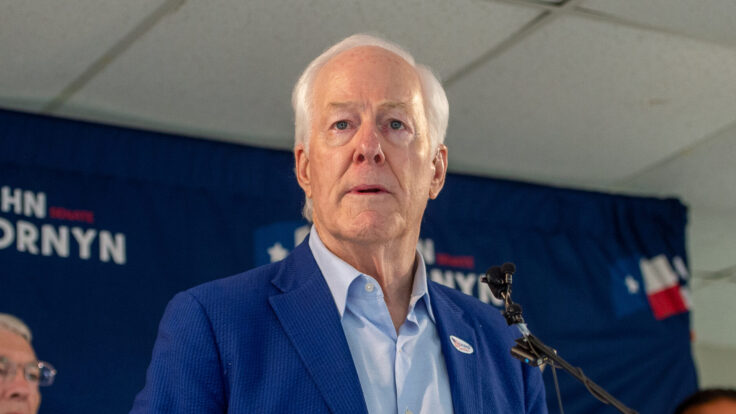
2021, Texas Democratic state reps decamped to Thomas Circle in D.C. to slow down a Republican voting bill, which is how Jasmine Crockett caught national media notice ahead of the congressional run she launched a few months later. If state reps once again flee the state, they could include James Talarico, a Democrat who’s having a post-Rogan viral moment as he mulls entering his party’s crowded primary field for Sen. John
Cornyn’s seat—the weirdest Senate race on the map.
|
|
|
And now, the main event... |
|
|
Tulsi Gabbard has been on the outs with Trump ever since their clash over Iran. But through
the conspiracy alchemy of Epstein and Russiagate, she’s seizing her chance to come in from the cold. |
|
|
Few have worked harder to get back into Donald Trump’s good graces than Tulsi
Gabbard, his Director of National Intelligence. Gabbard, who occupies the point where the horseshoe of the political spectrum becomes a circle, has long been an enthusiastic champion of conspiracy theories. It is one reason that Trump appointed her to the role to begin with, much to the displeasure of the intelligence community she now leads.
But Gabbard lost the president’s favor when she failed to understand that his interest in pursuing conspiracy theories wasn’t to validate
their truth, but rather to wield them as political weapons. Ever since she undermined Trump’s case for bombing Iran—with testimony that the country “is not building a nuclear weapon,” and then a cryptic video warning about “political elite warmongers”—she’s been trying to crawl back in from the cold. And when the
Epstein debacle resulted in an all-hands-on-deck demand for distraction, Gabbard clearly saw her chance. |
|
|
A MESSAGE FROM OUR SPONSOR |
From soybean and corn growers in the Midwest, to cotton growers in the South, to sugarbeet producers in the West, farmers across America
are deeply concerned the MAHA Commission is setting the stage to disregard decades of scientific research and recommend approaches that will ultimately jeopardize family farms, threaten the availability and affordability of healthy food, and undermine America’s national security. |
|
|
Within the past week, as the Trump administration has frantically tried to get the public—and, more
crucially, the MAGA base—to look somewhere, anywhere else, Tulsi has done her part to flood the zone. Last Friday, she released what she called “new evidence” of an Obama administration “conspiracy to subvert President Trump’s 2016 victory and presidency.” Her evidence for this “treasonous conspiracy” was an underwhelming set of bullet points that merely
rehashed what everyone who followed Russiagate already knew: that Russia didn’t actually hack voting machines or change any tallies. To be clear, no one seriously contended that Russia did that anyway. Gabbard also released an uncurated ream of
emails that she alleged proved her case.
Then yesterday, right around the time The Wall Street Journal dropped its story alleging
that the Justice Department had informed Trump in May that his name appeared in the Epstein files, Gabbard held a press conference in the White House briefing room alongside Karoline Leavitt. She announced she was, “at President Trump’s direction,” releasing a declassified report compiled during the first Trump administration by the
Republicans on the House Intelligence Committee (led at the time by Devin Nunes and his aide Kash Patel). She alleged that the document showed the Obama administration “directed the creation of an intelligence community assessment” on Russian interference “that they knew was false,” and thereby “conspired to subvert the will of the American people.” Gabbard went on to claim that Vladimir Putin had held back damaging information about
Hillary Clinton, including what Gabbard called her “psycho-emotional” problems.
As a distraction, it was not entirely convincing. At the press conference, Gabbard punted and “let Karoline speak” when CNN’s Kaitlan Collins asked her,
point-blank, whether she was just declassifying documents to get back into the president’s good graces and draw attention from Epsteingate. And yet, the diversion is taking on a momentum of its own. Yesterday evening, Gabbard turned over documents to the D.O.J. to, in her words, “deliver the accountability that President Trump, his family, and the American people deserve.” A.G. Pam Bondi immediately picked up the baton and announced the formation of a “strike force” to look into
Gabbard’s assertion that the Obama administration “manufactured” intelligence, and to potentially bring criminal charges against the former president.
It’s hard to imagine these efforts will turn over anything new. Democratic Rep. Jim Himes, House Intel’s current ranking member, pointed out that the 2017 intelligence assessment on Russian interference in the
2016 election “may be the most examined and reexamined assessment in the I.C.’s history,” reaffirmed by “four different investigations” over the past decade, “including a 2020 unanimous, bipartisan report by the Senate Intelligence Committee, led in part by” then-senator, now-Secretary of State Marco Rubio. (The House Intel report that Gabbard released yesterday was, by contrast, a purely partisan—and barely literate—product.) Trump has urged his supporters to move on from
Epstein, who’s been “dead for a long time.” But in Trump’s mind, it seems, Russiagate will live forever. |
Unfortunately for Gabbard, she was not the first one out of the gate to use her high office to officially
designate Russiagate a Democratic fiction—or, as the president has long dubbed it, a “witch hunt.” Earlier this month, C.I.A. Director John Ratcliffe sat down for an extraordinary interview with the friendly New York Post. He was publicizing the release of his agency’s
“tradecraft review” of how the I.C. reached its unanimous conclusion, in January 2017, that Russia had meddled in the 2016 presidential election with the aim of helping Trump win.
His interview, and the article, alleged all kinds of improprieties that “undermined the credibility of the I.C.A.”—the intelligence community
assessment—including a rushed timeline, “excessive” involvement of agency heads, and compartmentalization of intelligence. The article’s author, the pro-Trump columnist Miranda Devine, noted that the 2017 intelligence assessment was “deliberately corrupted by then-CIA Director John Brennan, FBI Director James Comey, and Director of National Intelligence James Clapper.”
Ratcliffe, like Gabbard after him, supplied his own
incendiary talk track. “You see how Brennan and Clapper and Comey manipulated [and] silenced all the career professionals and railroaded the process,” the C.I.A. director told Devine. “This was Obama, Comey, Clapper, and Brennan deciding, ‘We’re going to screw Trump.’ It was, ‘We’re going to create this and put the imprimatur of an I.C. assessment in a way that nobody can question it.’ They stamped it as Russian collusion and then classified it so nobody could see it.” |
|
|
But, as Kara Swisher once noted, every accusation from the Trump people is actually a
confession, and Ratcliffe’s interview was no different. The people screaming the loudest about the supposed politicization of intelligence were actually the ones using it as a political cudgel. The review, which was itself rushed (it took less than a month to compile), did not actually reach many of the conclusions that Ratcliffe attested. Yes, the 2017 assessment did indeed have a compressed timeline and heightened scrutiny from the principals—which was understandable, given the political
sensitivities—and there were some other small procedural irregularities, like some analysts having to carry the drafts of the assessment by hand between buildings.
There were two main issues, according to the review that Ratcliffe commissioned. The first was the inclusion of the Steele dossier, which was put together by a team of D.C. political consultants, relied on one dodgy source, and first planted the idea of a “pee-pee tape” among the liberal conspiracy set. The
C.I.A., according to the review, didn’t want the dossier included in the final assessment, but the F.B.I. did, so they reached a compromise: A two-page summary was included in the annex of the I.C.A. While Ratcliffe said the dossier’s inclusion tarnished the whole thing, the review didn’t say that. Instead, it wondered whether a footnote in the main body of the I.C.A. referring to the annex did. (Yes. Remember Russiagate in all its obsessive, ridiculous,
Gorpman-and-Bleemer detail? We’re here again.)
The other issue was the confidence level that the I.C. placed on just one word: “aspire.” Did Vladimir Putin interfere with the election just to denigrate Hillary Clinton, whom he’d long hated, and to sow doubt about the American democratic process? Or did he do it because he also aspired to help Trump win? The answer to
the first question was not in doubt, but the 2017 I.C.A. cited only one source on the second aspire bit. (Though it turned out the source was a really spectacular one: a high-ranking Kremlin aide who then had to be exfiltrated to Virginia in 2019.) Any journalist will tell you that relying on a single source might be a problem, but the I.C.A.
nevertheless went with a “high confidence” assessment that Putin had aspired to help Trump win, rather than the “medium confidence” one that, according to the review, a single source might merit.
Fair. But not exactly explosive stuff—and not even close to what Ratcliffe alleged in the Post interview. In fact, the review that Ratcliffe himself commissioned said the 2017 intel assessment was sound, concluding that the I.C.A. was “robust and consistent” with
the agency’s standards. Even despite the irregularities, it concluded, “this level of analytic rigor exceeded that of most I.C. assessments.”
Moreover, you didn’t exactly need a top-secret clearance to figure out the Kremlin’s extremely obvious preference for Trump in 2016. They were practically screaming it from the rooftops. I reported on it
months before the assessment came out, and months before I even knew the I.C. was working on it—as did many others.
But a skilled defense lawyer will take any discrepancies to undermine the whole case against their client. (Did the glove fit a little weird? Was Mark Fuhrman a racist asshole? Sure, but…) And that’s what Ratcliffe and Gabbard
are, like Bill Barr before them: not heads of independent American institutions, but defense lawyers for Donald Trump. (Barr similarly mischaracterized the Mueller report on Russian election interference as exonerating Trump.) But who reads anything these days? How many readers of the New York Post, besides
conspiracy theorists and unfortunate journalists, would go and read the C.I.A.’s review of its own work? Or the reams of documents that Gabbard declassified last night?
But you know who does read documents like these? The spy agencies of our adversaries, to glean American sources and methods. |
I don’t actually have much time to read these days, but I finally got my hands on a copy of
Our Dear Friends in Moscow, by my dear friends from Moscow, Andrei Soldatov and Irina Borogan. Andrei and Irina are legends who have spent over two decades covering the F.S.B. and the other Russian security services. They’ve also written several books, including
The Red Web, a history of the Kremlin’s slow—and successful—quest to control the internet in Russia. (Andrei’s father, Alexei, is one of the founding fathers of the Russian web—and, at the age of 73, is serving a two-year prison sentence on politically motivated charges. Because he
has terminal cancer, it is, effectively, a death sentence.)
The book chronicles the fates of Irina and Andrei’s journalistic colleagues from Izvestia, where they became reporters at the dawn of Putin’s endless presidency. Twenty-five years later, most of them serve Vladimir Putin in one way or another: one as minister of culture, another as a state
propagandist calling for the “liquidation” of Ukraine. The book is the story of how a generation lost its way—and how Russia, in its eternal identity crisis, once again turned its back on being part of the West and decided to turn inward. |
That’s all from me, friends. I’ll see you back here next week. Until then, good night. Tomorrow will be
worse.
Julia |
|
|
Join Emmy Award-winning journalist Peter Hamby, along with the team of expert journalists at Puck, as they let you in on the
conversations insiders are having across the four corners of power in America: Wall Street, Washington, Silicon Valley, and Hollywood. Presented in partnership with Audacy, new episodes publish daily, Monday through Friday. |
|
|
The industry’s go-to source for unflinching reporting on the trillion-dollar business of artificial intelligence - perhaps the
single most important technology of our time. Ian Krietzberg, the powerhouse journalist behind The Deep View, delivers twice-weekly insights into the latest dealmaking and breakthroughs in A.I., and how the intersecting worlds of finance, entertainment, media, and politics are being transformed in its wake. |
|
|
Need help? Review our FAQ page or contact us for assistance. For brand partnerships, email ads@puck.news. You received this email because you signed up to receive emails from Puck, or as part of your Puck account associated with {{customer.email}}. To stop receiving this newsletter and/or manage all your email preferences,
click here. |
Puck is published by Heat Media LLC. 107 Greenwich St, New York, NY 10006 |
|
|
|