 |
|
Greetings from Washington, where I’m standing on the precipice of a hundred-hour-long, White House Correspondents’ Dinner weekend, passed-canapé marathon. Wish me luck.
Tonight, before the storm, I’m hosting my annual private dinner for some of the media’s best and brightest at the Jefferson. Tomorrow, Puck and WME will co-host our first-ever Fourth Estate Party at The Riggs, where Matt Belloni and Peter Hamby will lead a conversation with Aaron Sorkin. No doubt, there will also be some toasting to Puck’s newest addition to the partnership: the incomparable John Heilemann, who is joining us as chief political columnist. I look forward to seeing many of you there.
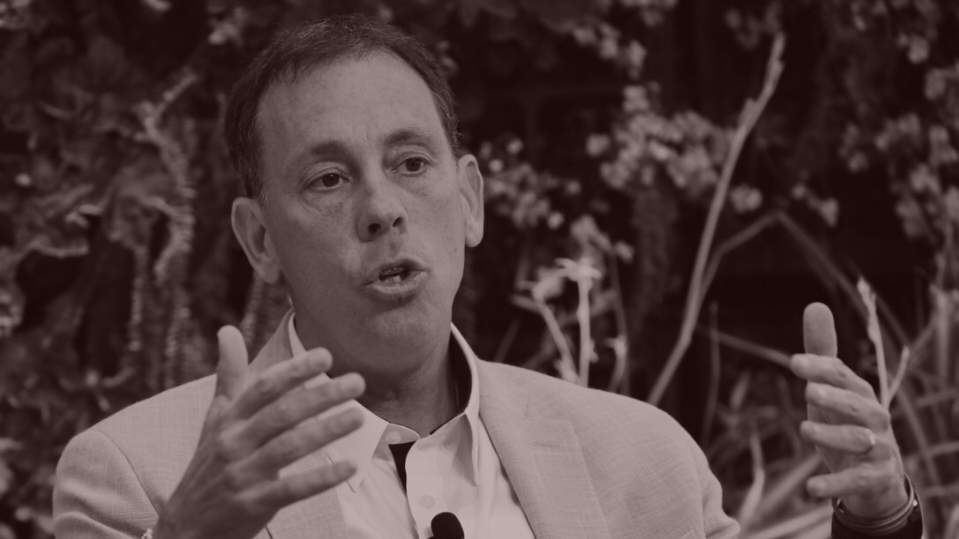
In tonight’s email, a candid conversation with the most interesting man in Washington media: Jim VandeHei, the Axios and Politico co-founder, who has now fashioned himself as a modern-day life coach and self-help guru. (“I fucking hate that term,” he tells me.) Jim was my boss in a previous life, a decade or so ago, and his attempt to transmit his fiercely self-confident and competitive spirit to the masses is, in fact, very on brand. Meanwhile, as always, Jim also has some very insightful (and colorful) perspectives on the D.C. media landscape—the Post, Punchbowl, Semafor, Politico, CNN—which he was characteristically generous enough to share with me, and you.
|
 |
| VandeHei in Full |
| Life lessons, media observations, and industrial analysis with the co-founder of both Politico and Axios on the eve of the town’s annual prom. |
|
|
|
| In the first chapter of his new business and self-help-ish book—appropriately titled Just the Good Stuff: No-BS Secrets to Success (No Matter What Life Throws at You)—Jim VandeHei, the Axios and Politico co-founder, reveals that he recently acquired a tattoo on his right shoulder. It’s a seemingly unexpected corporeal modification for a Midwest-bred, D.C.-based media executive who typically favors the town’s drab and flareless sartorial style. The tattoo reads “Zotheka,” a Malawian term he first encountered during a mission trip to East Africa with his two sons, which translates to, “It is possible.” Zotheka “nails the animating spirit of my view on work, life, health, and the purpose of this book,” VandeHei writes. (It is also the name of his wife’s foundation, which provides mentorship and financial aid to the underprivileged.) “You might roll your eyes at this cheesy lens,” VandeHei continues, betraying some self-awareness, “but the mere fact that a middling dipshit like me could rise to the pinnacle of American journalism, then become C.E.O. of two highly successful media start-ups—and then persuade you to read this—shows that truly anything is possible.”
These opening lines actually reveal a lot about VandeHei’s character, which I know from having worked for him, circa 2011-15, at Politico, and having covered his various exploits ever since. Jim is at once fiercely self-confident, optimistic, and competitive, with a whatever-it-takes professional ambition reminiscent of an earlier, glorified generation of media executives. He also has a penchant for straight talk that, at its best, yields pithy and cutting assessments of his competitors. (The words “middling” and “dipshit” are not reserved only for himself).
At the same time, he possesses an irrepressible penchant for evangelism that, for more than a decade, has compelled him to preach the gospel of self-confidence and competitive spirit, first to his employees—I recall one speech from the earlyish Politico days where he told the entire staff, with great fervor, “You’re better than The New York Times, you’re better than The Washington Post”—and later to Axios subscribers in his nightly Finish Line email, and now to the denizens of the self-help aisle.
Sure, there’s a TEDx or megachurch vibe here. But it’s also very genuine and occasionally compelling, and VandeHei is hardly one to balk at his critics. Is he proselytizing for $25 a copy because he’s trying to better your life or his own? Does his latest incarnation as an inspirational life coach betray his natural opportunism, or the genuine traits of a generationally talented executive leader? The answer is probably all of the above—and so what?
“I don’t sit here and think I’m a self-help guru. In fact, I fucking hate that term,” VandeHei told me over the phone this week. “I’m an entrepreneur and a C.E.O., but I’m really a journalist at heart. And I’m in the unique position where we’ve started a couple media companies, hired and run large staffs, and we took notes. I observed this stuff, I think I’m decent at synthesizing this stuff, and people seem to respond to it in a really positive way.” |
|
|
| According to VandeHei, the Axios Finish Line email goes out to “about a half million people,” and the open rate is about 50 percent. “More importantly,” he says, “on any given night, I might get hundreds or even a thousand-plus emails from people saying, ‘Hey, man, this really hit home for me.’ And those emails are coming not only from C.E.O.s of companies, but also people who are retired or young people who are just getting into the workforce. It clearly hit a sweet spot.” (There are others who forward less complimentary thoughts to industry friends, but such is life.)
This time last year, Politico took VandeHei to task over his new “Zen incarnation” and “surreal wellness evolution.” What was a veteran political journalist and news executive doing sermonizing on self-help theology, and how did that align with the win-the-news-cycle ethos of both Politico and Axios? (There is no love lost between VandeHei and his former company, which he left almost a decade ago, as everyone in D.C. well knows.)
During our chat, I offered another thesis: A survey of the news industry suggests that service journalism and lifestyle verticals have become integral to many businesses. The New York Times, of course, is now a games-and-recipes-and-consumer-reviews company that supports the ne plus ultra of American journalism. The new leaders of The Washington Post and CNN are hard at work imagining similar products in health and wellness that might allow them to replicate some of that success. So why shouldn’t VandeHei leverage his own natural inclinations as a corporate coach?
“I think there is a very bright future for what I would call application journalism, where, as journalists, we learn a lot, we know a lot, and now we try to help people put that to use,” VandeHei said. “We have a base of smart professionals, people who care about news and information on a daily basis because they’re usually trying to get ahead at work. And so, in that respect, the column and the book fit perfectly into that because it’s adding on a layer of application that you wouldn’t get just from reading about the latest trends in hiring or firing or workplace culture. I do think it is a part of our identity: How does a smart professional navigate this fast-changing, chaotic world and maintain their sanity and health? If we can help feed that, that’s a good place to be as a business and a good place to be editorially.” |
|
|
| VandeHei’s other obsession du jour is A.I., which he recently elaborated on during an interview in the Times. VandeHei says he is already preparing for the bot news singularity by refocusing Axios’s business around star talents like Mike Allen, his longtime business partner, and Dan Primack and Sara Fischer, rather than aggregated news items synthesized in bullet-point form, which has historically been one of Axios’s chief value propositions.
His philosophy is straightforward: “If you’re a commodity, you’re fucked. If you’re distinctive, you probably have a bright future.” He continued: “I don’t think it’s that different from what Puck is doing. Let’s assume Sam Altman is right, and let’s assume A.I. is even better than we think it is—in a year and a half, it thinks like a human and acts like a human, it knows you better than you know you, it’s able to distill information the way your brain wants to distill information… let’s assume all that’s right. What’s going to have value is authentic subject-matter expertise: reporters, who, because of the nuance of humans, can tell you shit that you did not know, because they either have historical knowledge, or sourcing, or just understand the topic in a way no one else understands it—and, by the way, they can break news and deliver it right away. Machines can’t do that.”
In fact, this is a gospel that VandeHei has been preaching since long before the specter of artificial intelligence. Politico’s early talent rosters included the likes of Maggie Haberman, Jonathan Martin, Ben Smith, and Jake Sherman, among others; Axios’s early stars were Allen and Jonathan Swan. VandeHei has long believed that you can stand up an entire media company around a handful of highly talented journalists who dominate specified coverage areas. (Ahem…) The challenge, and one of VandeHei’s evergreen complaints, is that there is a limited talent pool. “You can count the number of great journalists on one or two hands,” he has said.
Nevertheless, this philosophy informs VandeHei’s assessment of the broader media landscape as well, especially among newer companies. “I look at the new breed [of media companies], and what I like about all of them is that they’re staying smaller, longer. They’re much more focused on revenue. All of them are very focused on a very specific audience and produce high-quality content and figure out more ways to make money off of it.” He continued: “I think anything that is kind of niche works. I think the days of building a massive, massive company, a billion-dollar revenue media company that’s cutting across topics and countries—at least for right now, those days are over.”
VandeHei said he commended Semafor, the startup led by Justin Smith and Ben Smith, for pivoting away from its initial plan to go broad and try to supplant the likes of the Times and Bloomberg on a global level. “I think they went out with these very broad ambitions and they realized how difficult the media environment is. At least for the time being, they’ve curtailed those ambitions and played to their strength, which is doing high-end sponsored events and, you know, limited the amount of hiring that they do. And I think that’s probably the smart thing to do in this environment.”
Like almost everyone else, he appeared bearish on The Daily Beast, where former Disney TV chief Ben Sherwood and former Hearst chief content officer Joanna Coles have taken a minority stake from Barry Diller and are now trying to rehabilitate the brand as a sophisticated digital tabloid. “That’s a tough business,” VandeHei said. “The idea of a high-end tabloid that’s based on a lot of subscriptions, if you’re going to have a big staff, feels really hard. The only way any of these publications work is if they’re lean, they’re mean, they’re focused, and they’re tethered to a very realistic way of monetizing that content through subscriptions, events, or advertising.”
He continued: “My advice to them or anybody in any media space,” he continued, “is to figure out, what are the one, two, or three things that you’re going to be dominant in, that you’re going to be better than anybody else in your competitive class? Make sure that every one of those things is monetizable, and then figure out the fewest number of people you can hire to achieve excellence in those categories. If you can do those three things, you’re probably going to be a pretty successful company. If you have a big, bloated staff, or you have foggy thinking about your mission, or you have wishful thinking about your business model, you’re screwed.”
On that note, VandeHei didn’t pass on the opportunity to take another shot at Jimmy Finkelstein’s now-defunct Messenger, of which he has long been a vociferous critic. “That was a moronic exercise from conception,” he said, “because it just defied all the known knowns about how media works, and how people get content and how you monetize that content.” |
|
|
| The Times, of course, has set the standard for what success in this industry looks like. But what about the bigger players besides the Times: The Washington Post—VandeHei’s alma mater—and CNN, both of which are trying to rehabilitate their businesses under new leaders after years of declining audience engagement and revenue?
“The Washington Post still has a very powerful, well-known brand, and a heritage of doing awesome, high-impact journalism,” he said. “It’s got an owner in Jeff Bezos who has made it very clear that he’s in it for the long haul, and he’s willing to take on some losses to get to profitability.” The challenge for Post C.E.O. Will Lewis, VandeHei continued, is to figure out how to be distinctive in areas that the Times hasn’t already claimed while also boxing out competitors like Axios and Politico and Punchbowl in Washington. “Can they go deeper and try to reclaim dominance in Washington? [Lewis] has got some formidable challenges. You got a lot of unions over there. You have a big staff that for at least a period of time was a little demoralized. But, like, you’re The Washington Post, man! You should have a swagger that people see coming a mile away.”
As for CNN, VandeHei proposed a dramatic shift of the business model in line with his broader philosophy of orienting the brand not around star anchors, but star reporters on specific topics—a transformation that will probably inevitably occur as part of C.E.O. Mark Thompson’s ongoing digital transformation, in part because digital economics can no longer justify the high-seven-figure talent salaries subsidized by the cable bundle. “CNN has a lot of newsgathering resources around the world that nobody else has, a cable station that has a decent brand but no viewership, and they have a massive digital audience that they don’t know what to do with. So, what do you do? I’d figure out a way to be digital-first, but line it up with CNN TV. And I’d probably change the topics and I would mash them up. I wouldn’t just have a longevity/wellness vertical, I’d have a longevity/wellness show and I’d have a longevity/wellness pay product. I would do the same thing around A.I., I would do the same thing around politics and policy—all the topics that their audience cares the most about, you create a subscription point plus an advertising point across digital and across linear.”
He continued: “I think [Thompson] is right that you don’t need these big talents,” VandeHei continued. “There’s no reason to be paying people more than a million dollars. I’d probably change the talent mix. Like, I’d take that million bucks, and I’d go, ‘Maggie and Swan, here you go. Tell us the editor and the support you want. You’re getting 2 million bucks a year, you’re in.’ If there’s like 10—or whatever, there’s 20—there’s 20 reporters in the world that matter, I would figure out a way to get all of them. CNN would be the place of the most talented, ass-kicking people across the topics that smart professionals care about. And I would try to make as much money off of linear while you can and move it to digital.” And yet, he conceded, that might not even work. “That said, you could do all of that, and that can be the smartest possible thing you could do, and it could still fail. That’s why media is a bitch of a business.”
Of course, VandeHei still loves it, and, despite Politico and Axios having sold for $1 billion and $525 million, to Axel Springer and Cox Enterprises, respectively, he has no intention of giving it up. “My love of the games has only intensified,” he said. “Like, I’m 53, I think I’m more jazzed about the game than I was 20 years ago.” Thus, Zotheka. |
|
|
|
| FOUR STORIES WE’RE TALKING ABOUT |
 |
|
 |
|
 |
| ‘All-In’ for Trump |
| On the Silicon Valley billionaires cutting checks for 45. |
| TEDDY SCHLEIFER |
|
 |
|
|
|

|
 |
|
|
|
Need help? Review our FAQs
page or contact
us for assistance. For brand partnerships, email ads@puck.news.
|
|
You received this email because you signed up to receive emails from Puck, or as part of your Puck account associated with . To stop receiving this newsletter and/or manage all your email preferences, click here.
|
|
Puck is published by Heat Media LLC. 227 W 17th St New York, NY 10011.
|
|
|
|