 |
|
Happy Sunday. Welcome back to Dry Powder.
|
|
Succession planning brings out a leader’s true colors. And right now, we’re in an epidemic of strange succession planning. In today’s issue, my thoughts on the shakeup underway at the Carlyle Group, and across Wall Street; what the saga of Gautam Adani proves about the financial markets; and some notes on Jay Powell’s attempt to engineer a “soft landing.”
Also, if you haven’t yet taken our audience survey, now is good a time as any. It’s less than five minutes to complete and will help Puck immensely. Thanks in advance.
|
|
|
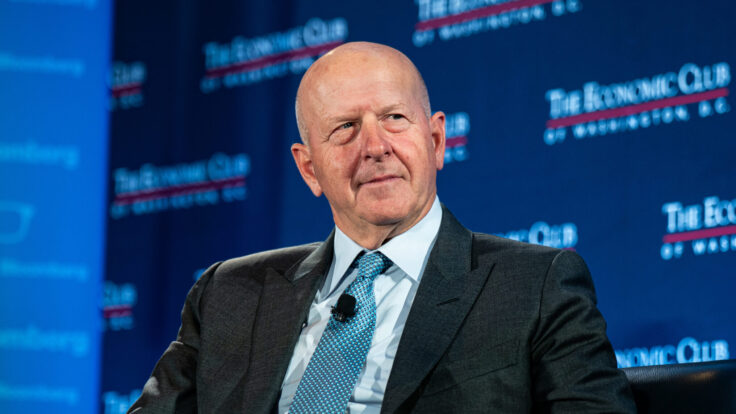
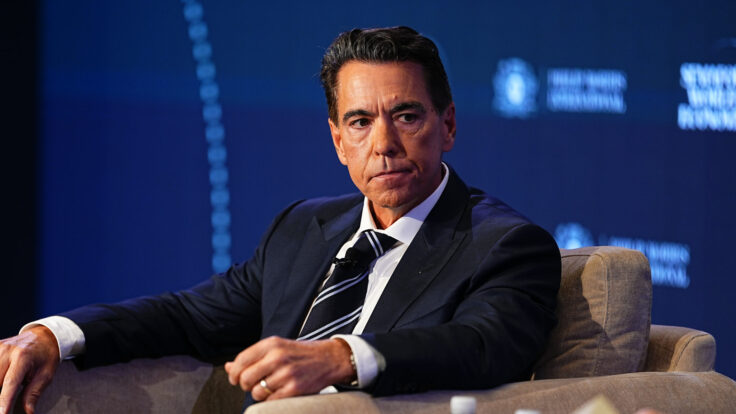
| Harvey Schwartz, the former No. 2 at Goldman Sachs, who lost the succession battle five years ago to David Solomon, is apparently in talks to become the new C.E.O. at the Carlyle Group, according to Semafor. I admit that this caught me by surprise. As Jerry Seinfeld once said to George Costanza when George was contemplating the idea of becoming a Yankees broadcaster, “Well, they tend to give those jobs to ex-ballplayers and people that are, you know, in broadcasting.” After all, the leadership positions of the most important private equity firms—Carlyle has a market value these days of some $14 billion, up 25 percent so far this year—tend to go to people who are in private equity. Just look at Jon Gray, who is slated to succeed Steve Schwarzman at Blackstone, or the ascension of Joe Bae and Scott Nuttall as co-C.E.O.s of KKR. They all have spent much of their professional lives in private-equity and at the firms they are running.
But that’s not Schwartz’s jam. After graduating from Rutgers, in 1987, Schwartz had a number of jobs in finance before going to Columbia to get his M.B.A. in 1996. He joined Goldman Sachs out of Columbia, as a commodities trader. He was never a banker or in Goldman’s massive private-equity division. He was considered a very good manager of Goldman’s sales and trading division, of its technology infrastructure, and of its operations. He was named Goldman’s chief financial officer in 2012.
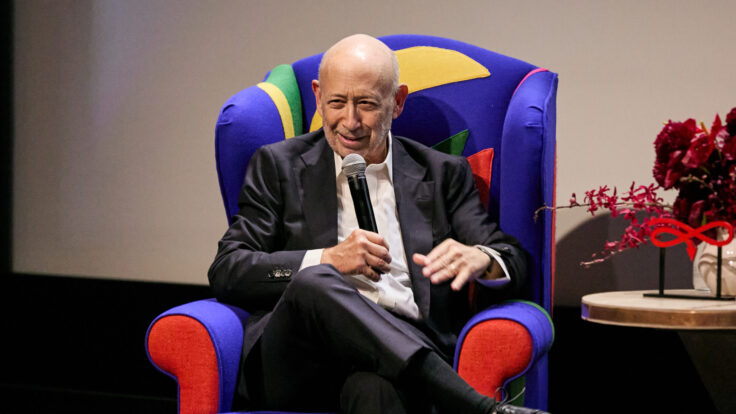
Lloyd Blankfein, the Goldman C.E.O. before Solomon, was particularly impressed with the job Schwartz did as C.F.O. “Harvey was crushing it,” one Goldman executive told me a few years ago. “Lloyd felt like, ‘Well, look at this guy.’” He did the C.F.O. things particularly well—the earnings calls, dealing with regulators, handling investor relations, and managing the Goldman board of directors. In 2016, Blankfein promoted both Schwartz and Solomon to be co-chief operating officers of the firm, setting up a clear succession battle between the two men.
Solomon crushed it; Schwartz not so much. I was told that the “stress of the situation” got to Schwartz and that he became “monomaniacal” and “a control freak,” although people at Goldman at the time who were closest to Schwartz disputed that characterization to me. In any event, like Gary Cohn before him, Schwartz decided he needed to know whether he was The One to lead Goldman into the future and he brought the question to the Goldman board of directors, prematurely, in retrospect.
Schwartz discovered, to his dismay, that the support for him to become Blankfein’s successor was not there. Not even Blankfein thought he was the right choice for Goldman. “He did not handle the situation particularly well,” a former Goldman partner close to Schwartz told me at the time. “If Lloyd had another four or five years to go, it could have played out quite differently. Because Harvey is actually much better externally than people give him credit for.” Schwartz decided to leave Goldman. (Goldman Kremlinologists can always feel free to peruse my 2011 book, Money & Power: How Goldman Sachs Came to Rule the World.)
Since then, Schwartz has slimmed down considerably—he’s looking more like a C.E.O. these days—and joined the board of directors of SoFi, the publicly traded lending business, and was named “group chairperson” and a non-executive director of the Bank of London, a new, tech-driven global clearing, agency, and transaction-oriented bank that claims to be able to “disrupt the fundamentals of banking.” Schwartz is featured prominently in the bank’s publicity materials, speaking with authority.
But Schwartz has limited experience doing private-equity deals. As one former Goldman executive with a private-equity background told me about Harvey, he has “No experience at all in long-term investing nor in managing a rambunctious group of type As.” Perhaps that doesn’t matter to Carlyle, which has been looking for a new leader since neither of the two chosen successors, Glenn Youngkin and Kewsong Lee, worked out. Youngkin left to run a successful campaign for governor of Virginia. Lee “resigned” after losing the confidence of the founders that he was the right leader for the company.
I would have thought that someone like Sandra Horbach, who joined Carlyle in 2005 after 18 years at Forstmann Little, would have been a perfect choice to run the firm at this moment. But perhaps she didn’t want the hassle, or perhaps the lure of the Goldman brand proved irresistible. |
| Dalio’s Succession Principles |
|
| At least Carlyle is trying to turn the page. We’re in an epidemic of strange succession planning, it seems to me. Over at Bridgewater Associates, the venerable hedge fund, there are once again three co-chief investment officers, plus two co-chief executive officers, in addition to founder Ray Dalio, who’s no longer involved with the firm but is still lurking around, giving talks and making pronouncements. (His Bridgewater bio these days lists him as a “CIO Mentor.”)
And that is on top of the departure of the successive chosen successors that Dalio had previously appointed to lead Bridgewater, including both David McCormick—who ran unsuccessfully for the Senate in Pennsylvania—and Eileen Murphy, who later sued the firm. For a principled thinker like Dalio, it seems less like succession than the legacy management of a 73-year-old founder who isn’t quite ready to walk out the door.
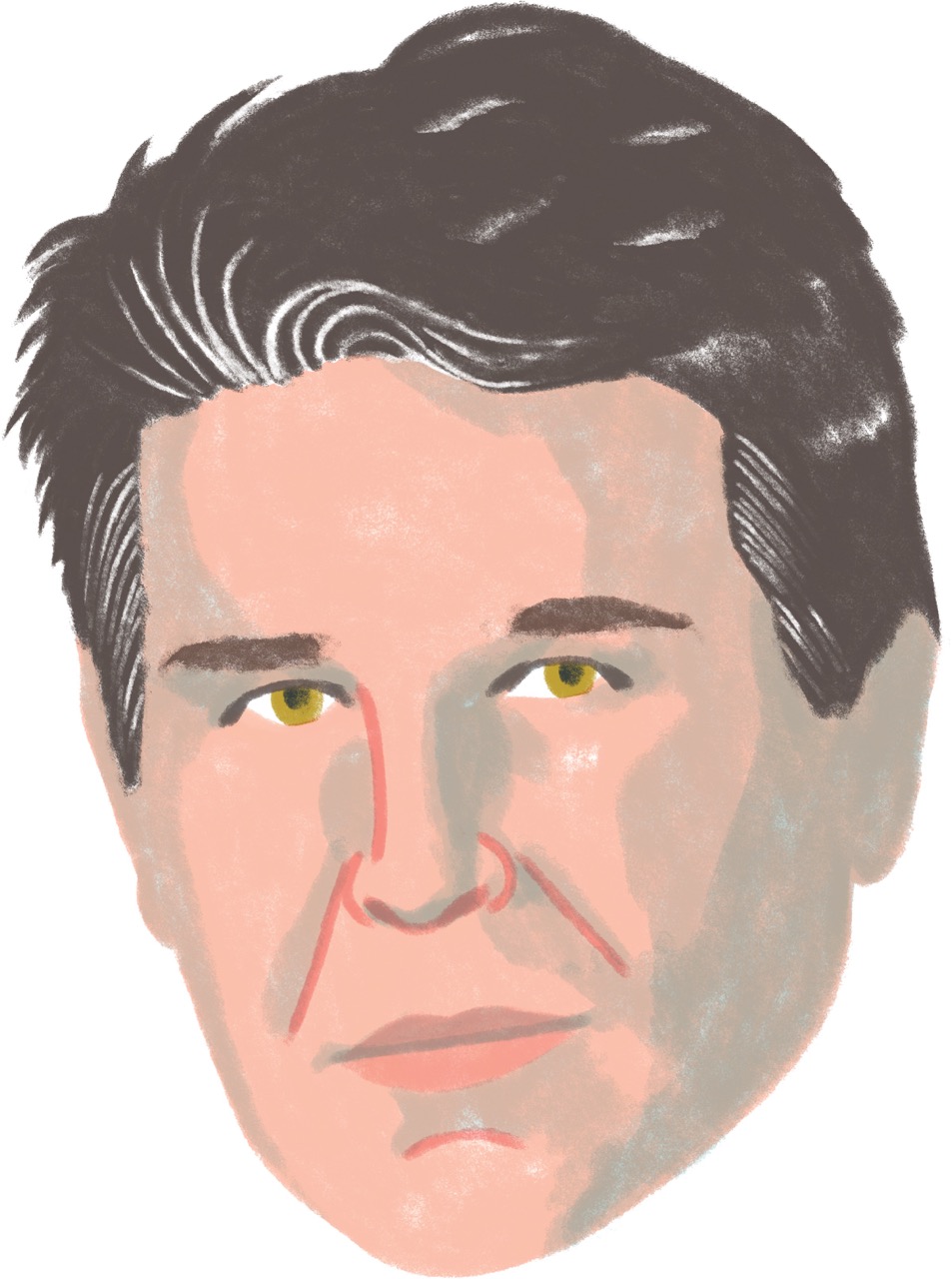
I don’t mean to pick on Dalio, one of the more outspoken visionaries in modern finance. A version of the same thing is happening across the corporate landscape these days. We’ve all just witnessed the triumphant return of Bob Iger to the Disney c-suite after his hand-picked successor, Bob Chapek, was shown the door unceremoniously, courtesy of the Disney board with the support of both Iger and Christine McCarthy, the Disney C.F.O. At leading private equity firms, like the aforementioned Blackstone Group and KKR, we’ve seen the appointment of successors to the founders—Schwarzman, Henry Kravis and George Roberts, respectively—but we’ve also seen, like Dalio at Bridgewater, that the O.G.s haven’t fully disengaged, either.
I can’t say I blame them. What could be better than being the billionaire founder of a private equity firm where everyone kowtows to you, all while you’re getting richer and richer? But that looming presence doesn’t make it any easier for the designated successor, or successors, to do their job. The truth is, succession should be a clean break, not some purgatory where the former leader is sharing the stage with the chosen successors. Trust me, I can’t stand North Carolina basketball one bit—tough loss yesterday, guys—but I do feel sorry for Hubert Davis when the ESPN camera pans over to Roy Williams sitting in the stands of every Carolina game. Watch the game from home, Roy! At least Coach K has the decency to stay out of Cameron and to let his successor, Jon Scheyer, do his job, for better or worse.
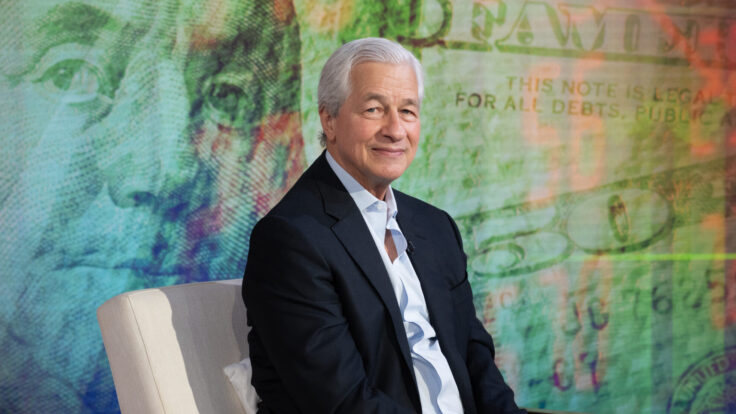
Then there are the C.E.O.s who just refuse to leave the stage and who find ways to systematically eliminate potential credible successors. Obvious examples of this phenomenon are Jamie Dimon, at JPMorgan Chase, and Brian Moynihan, at Bank of America. They have both run their organizations well for many years; Dimon, especially, has been able to turn a Balkanized bank into a powerhouse, with a $400 billion market value that blows away the competition. But a $50 million special retention bonus for Dimon granted to him in 2022? That seems a bit excessive, to get him to stick around. Everyone knows what a great job Jamie has done at JPMorgan Chase since he took over the bank in 2006, but perhaps a more important bonus could be allotted for choosing his successor and making sure she’s a smashing success. |
|
|
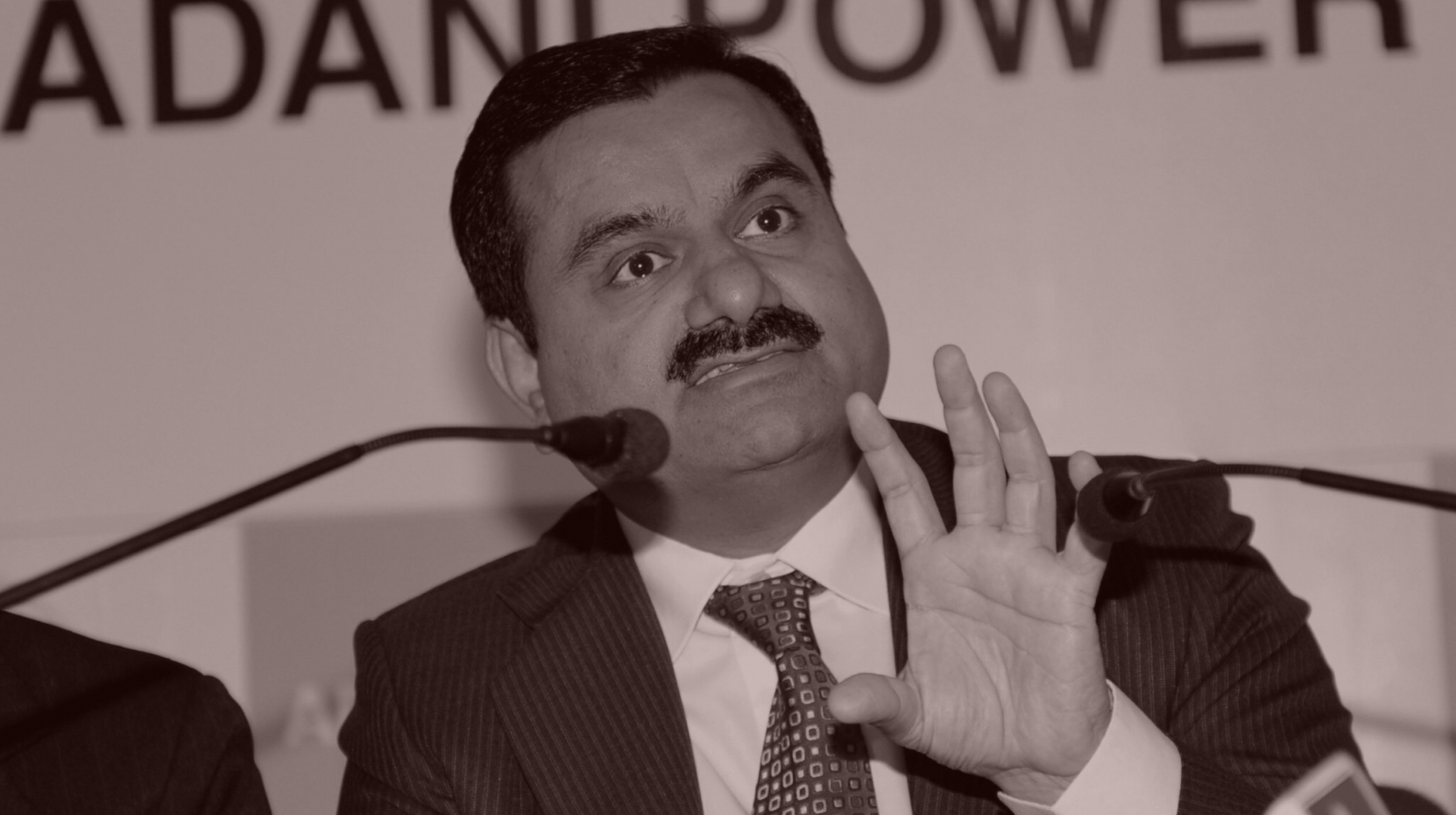
| The saga of Gautam Adani, whose business empire has lost more than $100 billion in value since it was targeted by short seller Nathan Anderson at Hindenburg Research, proves yet again what we’ve always known about the financial markets: it’s a confidence game. And once that confidence has been lost, for whatever reason, it almost doesn’t matter.
Gautam, once the world’s third richest man, behind Bernard Arnault and Elon Musk and pretty much pari-passu with Jeff Bezos, is now taking it on the chin, Elon-style. His personal keiretsu, Adani Enterprises, had increased in value by some 3000 percent over the past five years from a portfolio that includes everything from infrastructure and mining to coal, fossil fuels and integrated resources management. Of course, when a company’s valuation inflates so rapidly, it doesn’t take much to prick the balloon, as Anderson did with his research report, alleging that Adani had committed fraud and stock manipulation. Adani, of course, has vigorously denied the Hindenburg allegations. Gautam himself issued a 4-minute video and a 413-page rebuttal. But, alas, we’re in a very jittery market where people are in the mood to sell first and ask questions later.
Since the beginning of January, Adani’s $120 billion fortune has been sliced in half. He’s now worth around $60 billion—not tin, of course—including a loss of around $10 billion more on Friday. Gautam’s problem is that both Anderson and Hindenburg, which has been around since 2016, have a respectable track record of calling out overvalued companies that appear to be up to no good. Anderson was correct to write critically of Elon’s proposed takeover of Twitter and he was right to call out Lordstown Motors, the electric truck maker. He was also spectacularly right to raise questions about Nikola, another electric truck maker. He’s been right about a variety of other, smaller public companies, too. So when you have a reputation for being mostly right and then you make a claim about an empire as vast and as powerful as Adani’s, then well, investors flee immediately, consequences be damned.
The stocks of the companies that make up Adani World fell precipitously, as did their bonds, prompting some to say the bonds were suddenly looking attractive. (This is not investment advice.) Adani also got a little boost from the rating agencies that said they would hold off, for now, on downgrading the companies’ bonds. On the other hand, Gautam had to cancel what looked like a successful $2.5 billion equity raise.
Whether Gautam can abort a death spiral remains to be seen. These things come and go. If you had shorted Herbalife a decade ago, alongside Bill Ackman, you would have looked like a genius for the first few days after Ackman issued his takedown of the company—and then you would have lost your shirt, as Ackman did, hoping Herbalife wouldn’t recover, which it did over time thanks to a short squeeze engineered by Ackman’s hedge fund rivals, Dan Loeb and Carl Icahn.
For what it’s worth, Ackman said this past week that he found Hindenburg's Adani Group report “highly credible” and compared it to, you guessed it, his own crusade against Herbalife, which I hasten to remind everyone was not successful. Caveat emptor. |
|
|
| Finally, a few words on Jay Powell’s ongoing attempts to engineer a “soft landing,” the phrase lurking behind the Federal Reserve chairman’s not-quite-a-victory-lap but notably dovish commentary during his speech last week. Sure, he said all the correct words about ongoing uncertainty, and continuing to raise rates, and there being more “work to do” to bring down inflation. But investors read between the lines, and markets are forward looking. No wonder Wall Street swooned.
Look, everyone wants a soft landing, right? Because, after all, somehow getting out of 13 years of the Fed’s historic easy-money policies—bringing interest rates to their lowest levels ever—without a recession would be great for everyone and a big victory for Powell, if he can somehow pull it off.
But the reality is that the U.S. economy is still running pretty warm, and needs to be cooled down. If anyone had any doubts about that after JPow spoke on Thursday, when the Fed raised interest rates by a modest 25 basis points, they were quashed on Friday with the news that employers added 517,000 jobs in January and the unemployment rate, at 3.4 percent, fell to its lowest level since 1969, two years after the Red Sox almost won their first World Series since 1918. (Fortunately, the Red Sox have won four World Series since then but won’t be adding a fifth this coming season, obviously. But I digress.)
It’s clear that JPow and his fellow Fed members still have plenty of work to do to try to curb inflation and the market’s enthusiasm. The Fed’s short-term target interest-rate range—4.5 percent to 4.75 percent—is the highest it’s been since October 2007 and was the central bank’s eighth interest-rate hike in less than a year. All of this is designed, of course, to stem the nation’s rate of price and wage inflation, which is the highest in 40 years. Solving the conundrum of putting the brakes on inflation by raising interest rates without sending the economy spiraling downward into a recession has been the Fed’s mission for a year. And somehow JPow has pulled it off, at least so far.
But it takes a while for the effect of rapidly increasing interest rates to be felt across the economy as a whole. And, for reasons I still cannot fathom, there just seems no halting the exuberance of some investors. Since the average yield on the high yield bond reached 9.5 percent last October, it has rallied 200 basis points and now stands at 7.5 percent. I get that the bond market has finally become at least somewhat investible after 13 years in the wilderness, but I don’t understand the rally, especially since the Fed is so clearly not done raising rates. I don’t understand the rally in meme-land either. Tesla is up 77 percent since the start of 2023—pretty much from the moment I said on CNBC that Tesla investors should fasten their seatbelts to keep from falling because of the coming steep decline. I just don’t get it. Bitcoin, up 41 percent year-to-date; GameStop up 28 percent so far in 2023; Warner Brothers Discovery, up 62 percent year-to-date. (I’m happy for Zaz, but honestly I don’t understand.)
I suspect the reason for this latest bout of irrational exuberance is a collective sense that JPow is taking his foot off the interest-rate accelerator. On Friday, both the Dow Jones and the Nasdaq took a tumble. Perhaps the robust hiring numbers have finally spooked investors back to some semblance of reality. I know I am going to be right about Tesla at some point, like a broken clock is still right twice a day. |
|
|
|
| FOUR STORIES WE’RE TALKING ABOUT |
 |
|
 |
|
 |
|
 |
| The Dark Squad |
| Notes on the G.O.P.’s “Taliban 20” detente, Santos’s personality shuffle, and more. |
| TINA NGUYEN |
|
|
|
|
|
 |
|
|
|
Need help? Review our FAQs
page or contact
us for assistance. For brand partnerships, email ads@puck.news.
|
|
|
|
Puck is published by Heat Media LLC. 227 W 17th St New York, NY 10011.
|
|
|
|