 |
 |
|
Welcome back to The Best & The Brightest.
|
|
This is Dylan Byers, Puck’s senior media correspondent. Tonight, following Abby Livingston’s indispensable Capitol Hill cafeteria report, some new reporting from me on the departure of Fred Ryan, Jeff Bezos’s hand-picked publisher, from The Washington Post—with some words from Ryan, himself. Tomorrow, Tina Nguyen will be back at the helm with a dissection of the G.O.P. candidate game theory following Trump’s latest indictment.
|
| The Capitol Hill Cafeteria Report |
|
| An utterly indispensable, high-minded, and, yes, occasionally dishy readout of what our lawmakers are really legislating behind closed doors.
By Abby Livingston
- Censuring Schiff: In a 225-196 vote, a bipartisan House coalition successfully tabled freshman Republican Anna Paulina Luna’s attempt to censure Adam Schiff for his role as the lead Democratic investigator of Donald Trump during his time as president. Luna, a rising G.O.P. personality, had gone so far as to call Schiff “feckless” and “spineless,” and then tacked on a $16 million fine—half the cost of the Mueller investigation. But a coalition of all Democrats and 20 Republicans put the resolution to bed, along with seven members who voted present.
Schiff, who represents the district encompassing Hollywood, was at the center of the House’s Russian investigation into Trump, a process which turned him into a #resistance hero but a voodoo doll on the right. One of Kevin McCarthy’s first actions as speaker was to kick Schiff off the Intelligence committee.
Luna, herself, isn’t unambitious, either. She ran for Congress last year in the mold of Lauren Boebert, and her campaign bio credits Turning Point USA’s Charlie Kirk with recruiting her into politics. And now she’s gone pre-nuclear, making a name for herself by calling for the second-most severe punishment in the House to be deployed against a colleague.
Censures are miserable, public-shaming exercises in which a member engaged in misconduct must stand in the well of the House, as a speaker reads aloud public rebuke. But Luna probably did a favor for Schiff, who is running for Senate in an overwhelmingly liberal state. Schiff responded on Twitter that the move was intended “to distract from Trump’s indictment and retaliate against me for impeaching him.” He then tweeted a fundraising link.
- A League of Their Own: California Democrat Linda Sánchez will make history Wednesday night as the first woman to coach a team in the annual Congressional Baseball Game. Sánchez, a fan favorite on the Democratic side of Nationals Park, was unavailable for comment. But her fellow coach, Bill Pascrell of New Jersey, told me she has “an instinctive approach to the game” and the team “has tremendous faith in her.”
Nevertheless, the odds are long against the Democrats, who lost ringer Cedric Richmond when he joined the White House in 2020. Pascrell expressed optimism in rookie hitters Jimmy Panetta of California and Dan Goldman of New York City, but acknowledged the Democrats’ much smaller roster and two-year losing streak. “It’s a lean year for us,” he told me.
The G.O.P.’s coach, former minor leaguer Roger Williams of Texas, had an ominous warning for the Democrats: “We’re better this year.” When asked to name his best new hitter, he laughed, “They’re all pretty damn good.” But when pressed, he pointed to Senator Eric Schmitt of Missouri.
Thanks to last term’s retirements and incumbent losses, at least 22 new ballplayers have joined the teams’ two rosters. That lot includes Texan Jasmine Crockett, who noted she will be the first Black female Democrat to play the game. (Former Rep. Mia Love, of Utah, broke that glass ceiling for Republicans in the mid-2010s.)
- Crenshaw’s Eye for an Eye: In other sports news, Dan Crenshaw expressed his displeasure with the referees of Tuesday night’s Congressional Soccer Match in a rather dramatic fashion: He tossed his glass eye in objection. “The refs… have two eyeballs, but they don’t use them,” he said on a video captured by Punchbowl’s Max Cohen. “So I am going to give them one of mine.”
Crenshaw, who lost his eye while serving as a Navy Seal in Afghanistan, then pulled out his glass eye and tossed it into the Republican team’s trophy. Despite the perceived injustice, the G.O.P. defeated the Democrats 4-2. Yes, there are as many sports teams in Congress as any public high school in America. And they’re sometimes just as juvenile.
|
 |
| A Tale of Two Fred Ryans |
| Fred Ryan’s tenure atop The Washington Post Company can be split into two: the Bezos-fueled resurrection years and then the post-Baron, post-Trump malaise. So what comes next? |
|
|
|
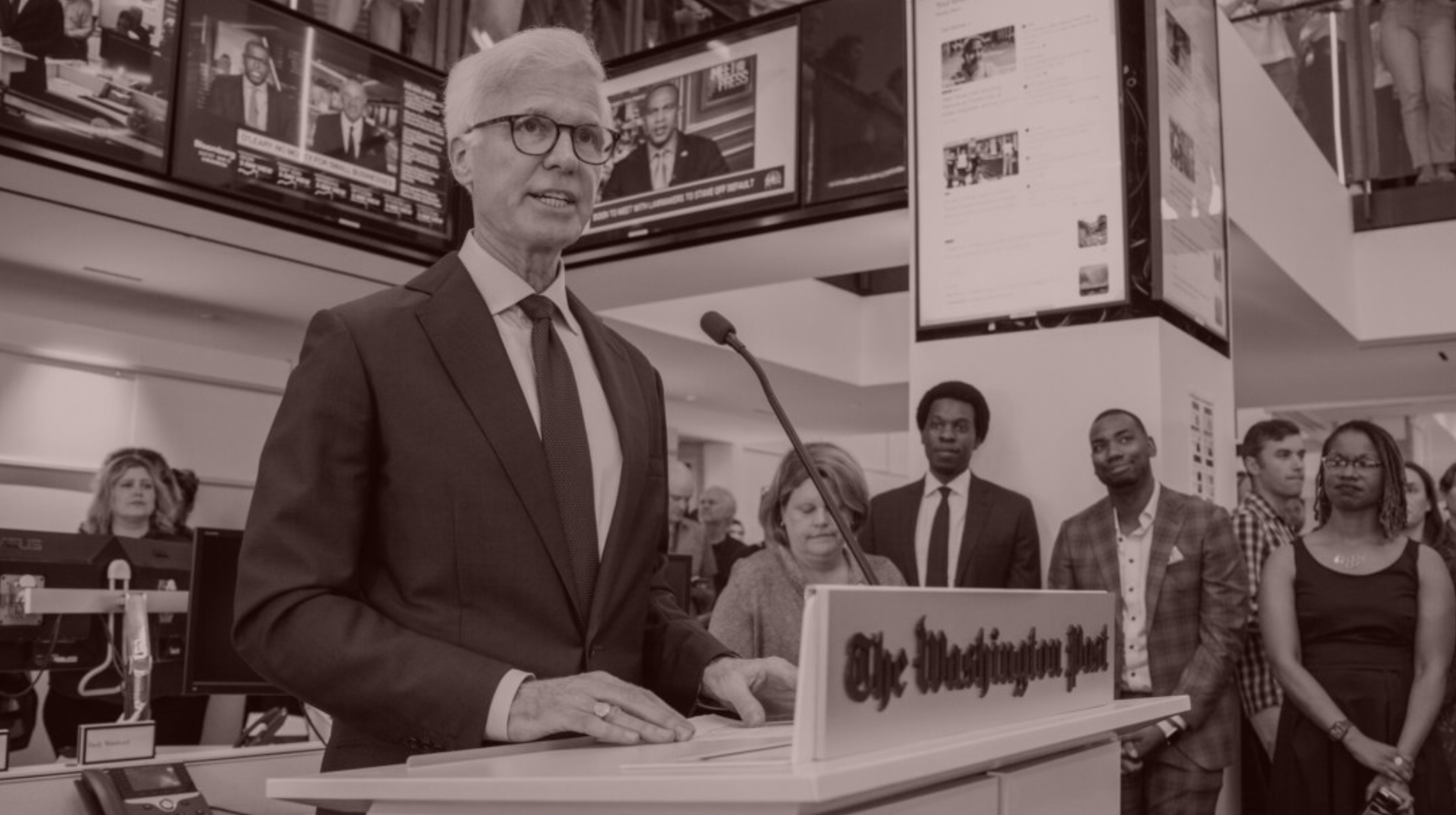
| On Monday, as Washington Post Co. chief executive Fred Ryan began to address his full staff regarding the news of his just announced departure, his microphone cut out. This was not at all his fault, of course, and yet it provided a fitting metaphor for his final years of his reign—a flaccid denouement to an epic run in which, after rescuing the moribund Post with the Bezos dowry, the company had become lethargic and flat-footed. Fitting, too, was the image of the svelte gray-haired Reaganite tapping away at the device (is this thing on…?) while several reporters began quietly delighting in his misfortune. “Couldn’t even say bye with a working mic,” one journalist scoffed afterward.
Ryan’s legacy at the Post Co. is, in many ways, a tale told in two countervailing acts. The first began in 2013, shortly after Jeff Bezos bought the paper for a criminally inexpensive price of $250 million and appointed Ryan, the former Reagan aide-turned-Politico executive, as his inaugural publisher and C.E.O. Working with Marty Baron, the legendary executive editor, Ryan deployed Bezos’s vast resources to dramatically overhaul the company’s digital operation and then rode the wave of liberal panic over Trump’s political ascent and presidency, growing the paper’s paid subscriber count from 35,000 to 3 million in the process.
In those halcyon days, the Post became a pillar of the anti-Trump resistance: reporters like Josh Dawsey and David Fahrenthold became minor national celebrities, the company paid for a ham-fisted Super Bowl ad featuring a Tom Hanks voice over. Meanwhile, Bezos triumphantly declared that the Post could supplant The New York Times as “the new paper of record.”
The second act, of course, will be remembered less favorably. In early 2021, in the span of a week, Trump left office and Baron stepped down. Subscribers churned, revenue declined, and it soon became abundantly clear to Post staff that Ryan had never figured out a strategy for growth in the post-“Democracy Dies in the Darkness” era. While Meredith Kopit-Levien had been aggressively diversifying the Times’s business and building out subscriber-focused lifestyle products, Ryan had dragged his feet on several potential acquisitions, missed the opportune window to offload the company’s SaaS service, and made a few arguably misguided investments in international expansion.
Increasingly disillusioned by Ryan’s indecision and lack of vision, leaders from across the company’s product, tech, and marketing orgs decamped for sunnier pastures while several star journalists took jobs elsewhere. In the process, Ryan famously bungled a relatively minor layoff announcement, driving the vast majority of the newsroom to join an already embittered union effort. A malaise set in… and it never lifted. |
|
|
| In an interview, Ryan noted that he was “the longest serving C.E.O. or publisher of any major American news organization” and commended himself for transforming the Post into a digital business, doubling the size of the newsroom, expanding internationally, and launching new coverage verticals. “I think it’s well-known that we went from massive projected losses to multiple years of significant profitability,” he said. And indeed, that’s all true. Under his stewardship, Bezos’s baby has multiplied in value.
But Ryan’s critics, who have long portrayed him as a gentleman C.E.O., and more of a Chamber of Commerce type than a real visionary, tend to suggest that just as Politico’s success is truly owed to Jim VandeHei, the Post’s historic run resulted from the alchemy of Bezos, Baron, and Trump. Their thesis rests on the following data points: Since 2021, the Post’s subscriber base has declined to 2.5 million, and the company lost money in 2022 and is on track to lose money again in 2023, I’m told. (Ryan declined to discuss financial performance.)
In any event, the overwhelming majority of current and former Post staffers I talk to, as well as other industry executives, place blame for the company’s troubles on Ryan. “He made all the wrong decisions and read all the wrong signals,” one veteran media executive told me. “They thought the bump in subs was because of the Post, when in fact all of it was therapy for liberals who were funding the resistance.” |
|
A MESSAGE FROM OUR SPONSOR
|
| |
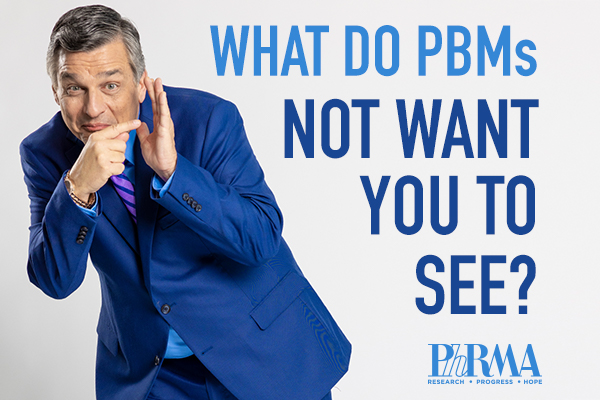 |
| Insurers and PBMs don’t pay full price for medicines. So why do you?
Insurance companies and pharmacy benefit managers (PBMs) get savings that can reduce the cost of some brand medicines by 50% or more. But they don’t have to share these savings with you.
What else are they hiding? |
|
|
|
|
| The beginning of Ryan’s end likely came in January, when Bezos visited the paper’s headquarters to hold one-on-one meetings with top editors and business leaders. Bezos came armed with well-researched stats on the paper’s subscriptions and traffic, sources briefed on those meetings said, and asked detailed questions about his publisher’s leadership, divulging to at least one editor that he was displeased with how Ryan had handled the layoffs.
Bezos also encouraged his interlocutors to speak candidly, and many expressed frustration with Ryan’s lack of vision, an endless stream of memos and meetings that seemed to go nowhere, and even the way he seemed to look down on Post journalists. Privately, Ryan was infuriated by how many reporters worked remotely even after Covid restrictions had eased, and he suspected that many were playing hooky. For a time, he monitored badge swipes while pushing for mandated office attendance. One former Post journalist summarized the internal sentiments toward Ryan thusly: “There was never a plan other than to break news, and it didn’t help that he hated everyone in the newsroom.”
Ryan finally announced this week that he would be stepping down in August to run the Center on Public Civility, a Reagan Foundation initiative that will be backed by Bezos himself. Some Posties have long suspected that Bezos has been planning to depose Ryan since that January visit, but wanted to afford him an opportunity to find a graceful exit. (Ryan declined to say when he and Bezos determined he would leave.) In any event, Ryan’s exit has been a masterclass in executive departure.
Meanwhile, Bezos has enlisted Patty Stonesifer, a longtime friend and confidant, three-decade Amazon board member, and one-time Microsoft executive and Gates Foundation C.E.O., to serve as the Post Co.’s interim chief executive—a move that was immediately celebrated by many in the newsroom. “Patty is brilliant,” Sally Quinn, the famed Post journalist, told me. “I know they say she’s an interim person, but I wish they would make it formal because I can’t think of anybody better than Patty. … This is a major turning point for the paper.”
On Monday night, the Post threw a party for the release of Ben Terris’s new book that effectively functioned as a celebration for the long overdue leadership transition, sources said. “People were elated,” said one attendee; another described it as “total jubilation.” To his credit, Ryan also attended and gave a toast to Terris. “That was actually pretty classy,” one Post source said. “It wasn’t easy to show up at that.” |
|
|
|
|
| While Stonesifer steadies the ship and helps Bezos find his new chief executive, scrutiny over the Post’s fortunes is now likely to center on Sally Buzbee, Ryan’s hand-picked executive editor. Last November, I reported that Buzbee herself had privately criticized Ryan’s business strategy and bemoaned his unwillingness to pursue acquisitions. Of course, Buzbee hasn’t been immune to internal criticism herself. She had big shoes to fill, no doubt, but some say she’s failed to articulate a clear editorial mission or to imbue the newsroom with a sense of vitality.
Both of her top deputy editors have left in recent months: Steven Ginsberg to The Athletic, Cameron Barr to his memoirs. (The Times reported that Ryan had accused Barr of leaking unflattering information to the press, and even sought his ouster. Ryan told me that was “utter nonsense,” and added, “if I wasn’t leaving to go run an institute on civility, I would use stronger terms.”) Even Buzbee has floated the idea of leaving, inviting staffers in December to tell her if they wanted her to leave. “It won’t hurt my feelings,” Semafor reported her saying.
Of course, the most important question about the Post’s future is for Bezos, himself. For all that people endlessly compare the Times to the Post, they are only similar on a superficial level. Underneath the hood, The New York Times Company is a publicly traded, dual-class entity that is subject to Wall Street analyst scrutiny and investor relations, and whose dividend fuels generations of the Sulzberger family. The Post, on the other hand, is Bezos’ own private media island: he can grow it, shrink it to profitability, set it forward on an ambitious growth path, or anything in between. All that Ryan’s departure really suggests is that he isn’t going to simply let it stay put. |
|
|
|
| FOUR STORIES WE’RE TALKING ABOUT |
|
|
|

|
 |
|
|
|
Need help? Review our FAQs
page or contact
us for assistance. For brand partnerships, email ads@puck.news.
|
|
You received this email because you signed up to receive emails from Puck, or as part of your Puck account associated with . To stop receiving this newsletter and/or manage all your email preferences, click here.
|
|
Puck is published by Heat Media LLC. 227 W 17th St New York, NY 10011.
|
|
|
|