 |
|
Happy Wednesday, I’m Bill Cohan.
|
|
Before we get into today’s edition of Dry Powder, a few words in honor of Charlie Munger, who died Tuesday morning at 99. Munger, of course, was Warren Buffett’s longtime investing partner at Berkshire Hathaway. Warren, please accept my very sincere condolences.
I made my first investment in Berkshire Hathaway around 1990, while I was a young associate at Lazard. The stock, one of the highest-priced publicly traded securities, was then $12,000 a share. On Tuesday, the Berkshire Hathaway A stock closed at roughly $546,000 per share, little changed for the day. That’s not a typo. Buffett has never split the A stock, making it pretty unaffordable these days. (He did create B shares for the masses; they trade at $360 per share.)
Normally, when a key man of Munger’s magnitude passes away, a related stock will react negatively. The fact that the Berkshire stock barely registered a blip is testament to the profit machine that the two men created together. What’s more, it’s in the process of being emulated across Wall Street by the likes of Blackstone, KKR, Apollo, and Brookfield. What an amazing legacy Charlie Munger has left us.
And now back to our regularly scheduled programming…
|
|
|
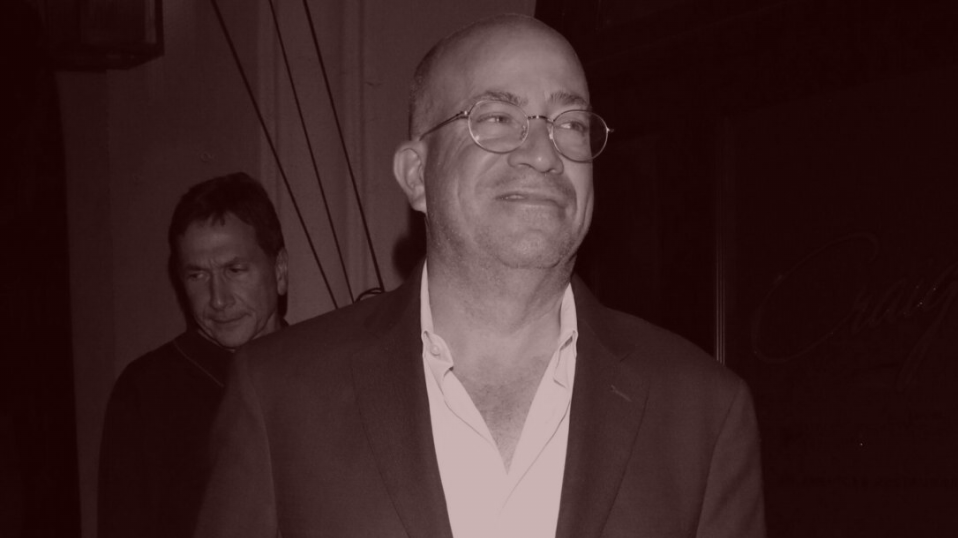
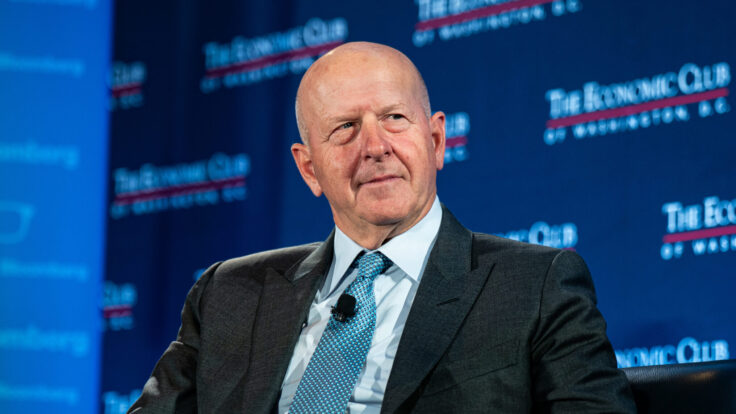
| Earlier this month, as loyal readers well know, Jeff Zucker’s RedBird IMI fund tendered a clever debt-for-equity offer to acquire The Telegraph and The Spectator by simply offering to pay down the roughly $1.4 billion of debt to Lloyds Bank that Sir Frederick Barclay, who owned the publications with his late twin brother, defaulted on earlier this year. This surprising bid froze the auction, run by Goldman Sachs, that featured all the usual suspects and added a new wrinkle to the most compelling British media-finance story in ages, at least since both the Financial Times and The Economist traded hands last decade.
Much of the resultant kerfuffle, at least in London, has coalesced around the sourcing of the capital. Zucker’s partners at RedBird IMI are, of course, not only former Goldman banker Gerry Cardinale, the founder and C.E.O. of RedBird (Cardinale = red bird, duh…) but also Sheikh Mansour bin Zayed Al Nahyan, an Emirati royal. The prospect of foreign ownership of two British periodicals has kicked up some vague notions about the dangers of foreign ownership—concerns that Zucker recently tried to dispel in an interview with The Telegraph, itself. But that’s much less interesting to me than the structure and strategy of Zucker’s offer.
To recap quickly: The once wealthy Barclay twins bought the publications in 2004 from Hollinger, the Canadian media conglomerate formerly owned by Conrad Black, for £729.5 million in cash, of which £64.5 million came from the company itself. Back then, the Barclays bested several private equity firms, as well as the likes of Axel Springer, and Lord Rothermere’s DMGT, the owner of the Daily Mail, to take control of the publications.
But, in June 2023, the Barclay family defaulted on the $1.4 billion in loans owed to Lloyds, which put the publications’ holding company, the Bermuda-based B. UK, into liquidation as a result. Using bankers at Goldman Sachs, Lloyds put the properties up for sale in October. The idea, of course, was to sell the publications for as much as possible, to recoup the money owed to the bank and maybe even generate a profit if the bidding turned sufficiently robust. First-round bids for the assets were supposed to be received on Tuesday, and Friday is the day the Lloyds debt must be paid to cure the default.
But on November 20, RedBird IMI threw the auction process into some degree of confusion, if not doubt, when the firm announced it was going to pay Lloyds’ debt off in full by providing loans to the Barclay family that it would then use to pay off Lloyds. At that point, RedBird IMI would have an option from the family to take control of The Telegraph and The Spectator.
As an old restructuring banker, I found this structure nothing if not clever. Assuming this transaction happens, or is allowed to happen, there would no longer be a need for a liquidation because the Barclay family would suddenly be able to pay off the debt. First, cure the default, then exercise the option to get the assets you want from the borrower: it’s a trick as old as Wall Street. Not only would the Zucker deal potentially kill the auction—no default, ergo no need for a remedy for a default—but it might also allow RedBird IMI to get the assets more cheaply than if they were bid up in a formal process.
Will Zucker’s gambit work? Will the default be cured solely because RedBird IMI agrees to pay off the Barclay debt at par? You would think so. On the other hand, the default occurred in June. It’s nearly six months later, and an auction process is underway. I’m not sure that Lloyds will just call it off because of the Zucker offer, especially since there is growing opposition to the deal in London political circles. When deal risk starts to enter the picture—especially when politicians or regulators start objecting—that often gives a seller pause about whether to anoint an auction winner that might not be able to complete the deal. That fact alone raises questions about the efficacy of the Zucker proposal. On the other hand, if the default is cured, then the auction process might be mooted. |
|
|
| But here’s where it gets interesting. According to my partner Dylan Byers, the two publications generated revenue in 2022 of about $345 million and EBITDA of $70 million. Assuming that the $70 million of EBITDA holds up, the $1.4 billion Zucker & Co. offer appears to be 20 times EBITDA. That would be more than the 17x EBITDA that Jeff Bezos paid for The Washington Post in 2013, but significantly less than the 44x operating income that Nikkei paid for the Financial Times in 2015. (Operating income is generally less than EBITDA, so it’s likely Nikkei paid a smaller multiple of EBITDA for the Financial Times. Either way, that number was ratcheted up in order to fend off potential interest from Axel Springer, which, after losing out on the FT, paid $350 million for Business Insider.)
It’s quite possible that an offer of 100 cents on the dollar for Lloyds’ debt is a windfall that the bank never expected. Put another way, is Zucker overpaying for The Telegraph and The Spectator? Could he get the publications for less if he played it straight and just participated in the Goldman-run auction? Given the political opposition, was a high premium the price of moving beyond the auction process toward completion? It’s certainly not unusual for an outlandish bid to shut down an M&A auction.
If I were advising Zucker, the calculus would be: Would you rather overpay to shut down the auction, or play out the auction process knowing that you could very well get the publications at a discount to the par value of the debt? This is clearly a distressed debt situation: It’s obvious that the $70 million in EBITDA is not enough to pay the annual interest on the debt, let alone pay down the principal. Leverage of 20x EBITDA is even more than the 13x debt to EBITDA that Elon Musk plopped onto Twitter/X, much to the dismay of the seven big banks that lent him the money a year ago and have yet to sell off the debt. The Telegraph and The Spectator are seriously leveraged. So shouldn’t Zucker be trying to take advantage of that fact with RedBird’s bid?
And this is where it gets even more interesting. A source close to Zucker told me that the right way to think about what he is doing here is to have Lloyds paid back in full by Friday (the deadline) and as a result, pre-empt the auction process—which has been robust, apparently. Zucker’s thinking is that if he can shut down the auction process and get some certainty—subject to regulatory approval, of course—he should and will. As for the purchase price, here is how Zucker is thinking about it: RedBird IMI is paying around $760 million for the two publications, which is likely going to generate $75 million in EBITDA this year, or roughly 10x EBITDA, not 20x EBITDA. The balance of what is owed to Lloyds will be coming separately from Sheikh Mansour to the Barclays and will be a two-year obligation of the Barclays, not RedBird IMI.
In the end, if it all works as Zucker hopes, the auction will be shut down, Zucker will get his publications for 10x EBITDA, Lloyds will get paid in full, the Barclays will owe money to the Sheikh, and the RedBird guys will have demonstrated their intellect. Pretty clever, and just what you would expect from a bunch of ex-Goldman bankers who came up with the idea. Now, if U.K. regulators approve the deal, Zucker will certainly be back in the spotlight. (Dylan will have more on this fast-moving story later.) |
| Microsoft’s Open Questions |
|
| I had no dog in the hunt regarding the bizarre OpenAI/ChatGPT story that dominated the business news headlines in the days before Thanksgiving. Whatever was bugging the nonprofit board members at OpenAI about Sam Altman, the company’s C.E.O., seems to have been resolved, with Sam and his partner, Greg Brockman, staying, the board going, and my old friend Larry Summers somehow being asked to join the new board of directors. I’m glad that things worked out for Sam and for the vast majority of OpenAI employees whose equity was at stake. (I encourage those curious about the details to search out Kara Swisher’s tweets and Threads about the drama, as it unfolded in real time. She and Scott Galloway also produced several excellent podcasts about the controversy.)
But there was one aspect of the sordid machinations that really surprised me: Why did Microsoft, one of the wealthiest and most sophisticated corporations on Earth—with a mile-long record of mostly successful deal-making—fail to secure board seats and other more traditional governance safeguards and warrants as part of its 49 percent ownership stake in OpenAI? We’re not talking about immaterial sums of money here, either: Back in January, Microsoft agreed to invest $10 billion more into OpenAI, in tranches, bringing its stake in the company up to 49 percent. (Although a significant portion of the investment appears to have been in the form of cloud compute credits, rather than cash.)
That deal valued OpenAI at around $30 billion. Prior to last week’s debacle, OpenAI was about to be valued at roughly three times that amount, quite a boost in 10 months’ time. That, among other things, probably helps to explain the fact that Microsoft is now valued at $2.8 trillion, up 58 percent so far in 2023.
To try and solve the mystery of how Microsoft could make such a huge investment into another company but not demand a board seat or other governance protections, I reached out to Frank Shaw, Microsoft’s chief communications officer, but instead of an answer I got the Heisman. “Hi there!” he wrote. “I’m not sure we have very much to say on this just now. 😊” (I tried a follow-up, but he didn’t reply.)
So, of course, I did the next best thing: I asked ChatGPT why the largest investor in OpenAI did not get a board seat in January. There were a few curious aspects to its response. First, apparently, ChatGPT is not exactly up to date on its information hoovering. “As of my last knowledge update in January 2022, Microsoft did not have a 49 percent ownership stake in OpenAI.” You’re kidding, right? The world’s most sophisticated new technology is nearly 22 months out of date? But I digress.
Suffice it to say that had Microsoft secured its board seat, or board seats, as it should have done, it’s likely that this whole drama could have been avoided. Obviously, Microsoft made the investment because it’s a big supporter of Altman—hence its offer to hire Sam and his team in the middle of the debacle—and had its representative or representatives been on the board and in the boardroom, it would have been highly unlikely that the board would have fired the company’s C.E.O. for an alleged failure to communicate “candidly.” I know that OpenAI has a funky nonprofit structure, which will be changed now, I suspect, and that its weird board composition likely led to the events that unfolded and probably is the reason Microsoft did not get a board seat in January. (Is that right, Frank?)
In any event, it’s still not clear whether Microsoft will get what it should have gotten all along—a board seat, or several, as part of the new board configuration. Wall Street analysts, such as Mark Moerdler at Bernstein Research, expect Microsoft and other OpenAI investors “to push for board seats and more of a say to protect their investments,” as Moerdler wrote in a recent note. According to OpenAI’s pre-Thanksgiving announcement, the company has “an agreement in principle” for Sam to return to the company with a new “initial board” comprising Summers, Bret Taylor— the former board chair of Twitter when it was triumphantly sold to Elon Musk—and Adam D’Angelo, chief executive of Quora. According to The New York Times, D’Angelo was “among those who pushed Mr. Altman out, but then over the weekend led the talks to bring him back.” Go figure. And for that D’Angelo retains a seat on the reconstituted board? If I were Microsoft C.E.O. Satya Nadella, I would have fired his ass in an instant. |
|
|
|
| FOUR STORIES WE’RE TALKING ABOUT |
 |
|
 |
| Haley’s Comet |
| On the anxieties of the G.O.P. megadonor class. |
| TEDDY SCHLEIFER |
|
 |
|
 |
| Biden’s Woes |
| Why can’t POTUS sell the strong economy? |
| PETER HAMBY |
|
|
|
|
|
 |
|
|
|
Need help? Review our FAQs
page or contact
us for assistance. For brand partnerships, email ads@puck.news.
|
|
You received this email because you signed up to receive emails from Puck, or as part of your Puck account associated with . To stop receiving this newsletter and/or manage all your email preferences, click here.
|
|
Puck is published by Heat Media LLC. 227 W 17th St New York, NY 10011.
|
|
|
|