{{ 'now' | timezone: 'America/New_York' | date: '%b %d, %Y' }} |
|
|
Hello, and welcome back to Line Sheet. We now live in a world where even those of us who aren’t
Leandra Medine are compelled to try white and grey tights. Truly, the social media responses to my posts of the new Jil Sander collection, which featured both shades, have been voluminous and ecstatic—the precise inverse of when I post photos of Taylor Swift or Blake Lively in bad outfits. The tights are
going to be a thing. The clothes might be, too. Definitely the shoes.
Other things in today’s issue: my thoughts on the new Prada collection (and Mark Zuckerberg’s front-row appearance at the show), the latest speculation regarding Lauren Sánchez’s next Met Gala dress, and the implications of Gucci’s A.I.-boosted ads that were released in the lead-up to the fashion show. For the main event, I check in on Jens and
Emma Grede, who are in talks to make an investment that could, theoretically, change the course of their business. (Stay tuned for reports from Gucci, Emporio Armani, and Meryll Rogge’s debut at Marni in tomorrow’s issue.)
Tomorrow on Fashion People, my guest is Charlotte Chesnais, the designer whose singular, namesake jewelry line has become a wardrobe essential for many inside the fashion industry and out. We discuss what it’s
like to build a business in France, the nuances of the jewelry market, the greatness of Michael Rider at Celine, and why her stuff is so cool. (The Hurly Burly ring is my favorite.) Listen
here and here.
Mentioned in
this issue: Jens and Emma Grede, Elsa Hosk, Helsa, Skims, Nike, Kim Kardashian, Kristin Juszcyk, Off Season, Revolve, Popular Culture, Erik Torstensson, Karlie Kloss, Prada, Lauren Sánchez and Jeff Bezos, Gucci, Demna, Mouna Ayoub, Jen Rubio, and many, many more… |
Three Things You Should Know…
|
- Intellectual
honesty at Prada: The word “iterative” could be categorized as startup jargon, but it also describes many of Miuccia Prada and Raf Simons’s runways. For instance, a few seasons ago, they put each model in a different shoe design, creating the feeling of swiping through a series of Instagram Stories. This season’s collection mimicked an endless scroll of sorts, too: Just 15 models showed 60 looks, but the outfits didn’t totally change; things were merely
added or subtracted to reflect the realities of how people wear “real” clothes, as the duo likes to say. Backstage, during the wildest scrum in all of fashion land, Prada reminisced about the early days, when they only hired 15 models out of necessity; Kate Moss would change her outfit entirely five times over.
|
- Simons
and Prada are playmates: It’s a back and forth, push and pull. Some seasons are far more successful than others. Occasionally, they fall flat and leave you feeling nothing. More often, though, the tension between them adds a brainy depth to their clothes that doesn’t really exist anywhere else in fashion right now. This season’s piling on, then peeling away, of layers was incredibly effective. The collection was about individual pieces—the maroon leather shacket, the knitted color-blocked scarf,
the mini rain slicker cape—but also about how they were arranged. All to say, they were giving us a lot of information. “They’re so smart,” I said to an industry friend. “They’re the only ones,” he replied.
Speaking of smart (sorry, I can’t resist a segue), there have been reports since June that Prada was developing smart glasses with EssilorLuxottica investor Meta, which helps to explain why ultimate startup guy, Meta C.E.O. Mark Zuckerberg, and his wife,
Priscilla Chan, sat front row at today’s show, wearing Prada sweaters in camel and grey. The internet was not kind about the appearance, but, as with the Bezoses’ Grand European Couture Tour, I’m not quite sure what people expect. Of course the Prada Group might want to experiment with something like this. We all use Meta products every day. As Prada herself said recently in New York magazine, “I insist on intellectual honesty. … Our job is to work for
a company that has to sell clothes and bags and everything. That point for me is crucial.”
|
|
|
A MESSAGE FROM OUR SPONSOR |
The Maison is delighted to present the Dance Reflections by Van Cleef & Arpels Festival, returning to New York for
the second time from February 19 to March 21, 2026. Discover some twenty performances at this contemporary dance event presented in collaboration with prestigious institutions. |
|
|
- Let
the Lauren Sánchez Met guessing games begin: This week, Lauren Sánchez and Jeff Bezos were named honorary chairs of this year’s Met Gala—formalizing a title that many presumed they already carried and that they effectively did. Naturally, this meaningless micro-update has further amplified the dormant but abiding speculation among the non-M.B.A. crowd that Bezos is buying Condé Nast. (As far as I know, this isn’t true. Also, why in the world would
Bezos further invest in print media when his existing asset, The Washington Post Company, is engaged in a multiyear public self-immolation?)
Anyway, with the fundraiser (slash Vogue marketing vehicle) still less than three months away, there’s already plenty of speculation regarding what Mrs. Bezos might wear. She was on a maybe-scouting trip at Couture week in Paris last month. And people in the auction industry are speculating that Sánchez was the top bidder on one of the Dior
gowns put on the block by French socialite Mouna Ayoub. (I’m told that’s not true.) My guess is that she hasn’t decided. Remember that the dress code for this year’s gala is “Fashion Is Art.” - We must accept that A.I. ads are the future: Gucci’s new ad campaign teasing this week’s runway show—Demna’s first proper collection for Kering’s struggling cash cow—depicts rich old ladies and old rich cars. Fairly typical stuff.
But the images were all generated with A.I., and there’s been a predictable online grievance session about the dissonance between the idea of making a luxury product, which is supposed to be about craftsmanship or whatever, and generating an image out of thin air, which looks cheap. Folks in the fashion industry were also annoyed because they feel this kind of content creation is filching jobs from real people.
Both arguments are nonsense, of course. The idea of luxury is a construct in
itself and relatively meaningless. Demna understands this better than anyone. Also, A.I. is going to render a lot of work people do today meaningless. There will be new work, but probably less work, and we will all have to adapt. By the way, I thought those ads were funny, experimental, and hardly a big deal in the grand scheme of the Gucci comeback strategy. Also: Everyone is talking about Gucci now. Isn’t that the point?
|
Now on to the main event… |
|
|
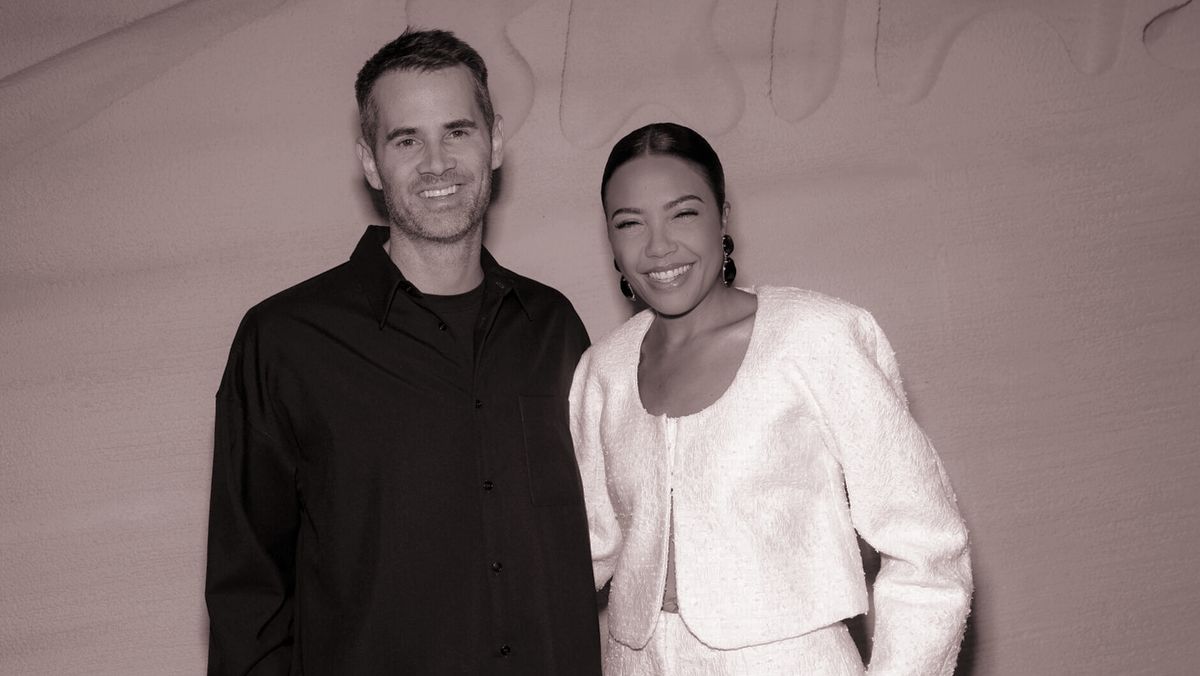
Popular Culture, the fashion funding vehicle run by Jens and Emma Grede that launched Skims,
may have found its latest reclamation project—and one that hints at the shape of the company’s post-Kim future. |
|
|
In 2022, model Elsa Hosk decided to give in to the lurid temptation that seduced many
influencers with millions of followers: She launched a fashion line, Helsa, with a company that ostensibly knew how to do the dirty work: Revolve, the decades-old, Los Angeles–based online retailer known for its elevated skank aesthetic.
In recent years, Revolve has developed an influencer-centric marketing strategy, with in-house brands like LPA, designed by Pasadena-bred, Sicily-influenced Pia Baroncini, and SRG, from social media personality
Sofia Richie Grainge. But Hosk’s line has arguably been the most successful, serving as a sort of R&D unit within the company. The Helsa team has gotten incredibly good at making more affordable, low-quality, bleach-blonde-bubble-gum knockoffs of designer pieces from Alaïa or The Row. If a piece hits within Helsa, the broader Revolve team will often copy and tweak it for another, more affordable portfolio label, diffusing the already diffused. |
|
|
A MESSAGE FROM OUR SPONSOR |
The Maison is delighted to present the Dance Reflections by Van Cleef & Arpels Festival, returning to New York for
the second time from February 19 to March 21, 2026. Discover some twenty performances at this contemporary dance event presented in collaboration with prestigious institutions. |
|
|
Imitation may be the sincerest form of flattery, but it doesn’t make you rich. I’m told that Hosk recently
grew disillusioned with Revolve, whose shares are down more than 19 percent this year, and has considered taking her brand elsewhere and dissolving the relationship. (Hosk negotiated 100 percent ownership when she launched Helsa.) Currently, she’s in talks with Jens and Emma Grede, the husband-and-wife entrepreneur-operators behind Los Angeles–based Popular Culture, a holding company that includes Frame, Good American, Khy, and Skims, co-founded by Kim
Kardashian. More recently, the Gredes acquired a minority stake in The Elder Statesman, Calabasas king Greg Chait’s cashmere line beloved by Hollywood agents and mystics alike, and are now running that business, too. If a deal with Hosk were to materialize, the Gredes and their investment partners would receive a piece of equity in exchange for cash and operational support, plugging her into Popular Culture’s system.
The Helsa business, I’m told, does about $35
million in sales a year, driven wholly by Revolve. The Gredes believe that Helsa has the chance to be much bigger, perhaps in the vein of Toteme or Veronica Beard, that latter of which is backed by serial investors Andrew Rosen and John Howard, who often co-invest with Popular Culture and hold a significant stake in Skims. Those businesses generate hundreds of millions of dollars a year in sales.
If Revolve does fail to keep Helsa in-house, it will no
doubt downplay a separation with Hosk to investors; giving up the operational piece doesn’t mean the company can’t do business with her. After all, the Gredes recently partnered with Revolve on Off Season, their sports apparel line with NFL WAG Kristin Juszczyk. However, it would likely become a traditional wholesale partnership, which would result in diminished profits for Revolve. |
The potential alliance with Hosk offers clues about Popular Culture’s go-forward strategy. From the
beginning, the Gredes and their investors have used Popular Culture as a vehicle to develop influencer-led brands (I’m using the word generously and not judgmentally here). Even Frame, founded by Jens and his former business partner Erik Torstensson, took this approach in a sense by launching an ongoing series of collaborations with models, the first being Karlie Kloss, as early as 2013.
Of course, the Gredes have become best known for their ongoing
relationship with the Kardashians, with the most fruitful outcome being Skims. But, as I have often documented in this email, the Gredes have begun to outgrow the Kardashians and have understandably explored life outside their orbit. Emma, known as an innately talented merchandiser, launched Off Season last year, and is about to publish a memoir-slash-self-help book this spring. Jens remains focused on Skims, whose partnership with Nike is finally picking up. The Spring ’26 ballet-inspired
collection, fronted by Lisa from Blackpink, was a hit with customers. Currently, the collaboration accounts for around half of Nike’s top 10 women’s apparel styles; Nike’s top-selling women’s leggings also come from the collection. Some investors remain hopeful that Nike could provide Skims with a lucrative exit, but others recognize that the sportswear giant is still managing its own turnaround. (Reps for Nike and Skims had no comment regarding these stats.) Perhaps a fruitful
partnership could offer other optionality.
The outlier at Popular Culture is Elder Statesman, which Chait struggled to keep afloat for years despite numerous cash infusions, including one from another husband-and-wife team, Richard and Laurie Lynn Stark, the brilliant founders of Chrome Hearts. Chait, a scruffy fixture of the indie-sleaze era, made a name for himself in the late aughts by dating models and famous girls and launching the Australian denim
brand Ksubi (formerly known as Tsubi) stateside. He developed Elder Statesman by using Loro Piana cashmere and selling as many blankets as he did fluo-colored sweaters with crystals sewn into the body. |
|
|
Since the Gredes took over, Chait has become a tabloid fixture thanks to his marriage to Grace
Morton, the daughter of Hard Rock Cafe founder Peter Morton. But the back office is all business. The Gredes have elevated former Frame C.E.O. Nicolas Dreyfus to a larger role at Popular Culture that includes overseeing Elder and tweaking the supply chain, with annual revenue surpassing $20 million. They’re about to open a permanent store in Aspen, with more to come. The Gredes, who co-invested in Elder Statesman alongside the Von
Furstenberg family, view this as a long-term investment in a luxury business rather than a scale play—quite different from Frame, Good American, Skims, and even Helsa.
Plenty of industry observers suggest that the Gredes should be relentlessly focused on the Skims exit, particularly given its $5 billion valuation. But the Gredes have made their reputation—and their money (at least on paper)—by following their own instincts rather than market shamans. Success with a brand like
Helsa could prove that the Gredes don’t need the Kardashians to make a brand work. They just need an audience. |
I love that Chantal Fernandez interviewed power P.R. Paul Wilmot (more
broadly famous from this incredible Ali G sketch) for this story about what it was really like to work at Calvin Klein in the 1990s when Carolyn Bessette Kennedy was also there.
[The Cut]
Former Away C.E.O. and future retailer Jen Rubio has become a Met trustee. We love to see it.
[Puck]
Outdoor Voices has created a special collection for… Sam’s Club. It includes kid’s clothing. What can I say? This is the reality of the brand management biz. [Retail Dive] |
Until tomorrow,
Lauren
P.S.: We use affiliate links because we are a business. We may make
a couple bucks off them. |
|
|
Puck’s daily art market email, anchored by industry expert Marion Maneker, offers unparalleled access to the mega-auctions and galleries,
elite buyers and sellers, and the power players who run this opaque world. |
|
|
Puck founding partner Matt Belloni takes you inside the business of Hollywood, using exclusive reporting and insight to explain the
backstories on everything from Marvel movies to the streaming wars. |
|
|
Need help? Review our FAQ page or contact us for assistance. For brand partnerships, email ads@puck.news. You received this email because you
signed up to receive emails from Puck, or as part of your Puck account associated with {{customer.email}}. To stop receiving this newsletter and/or manage all your email preferences, click here. |
Puck is published by Heat Media LLC. 107 Greenwich St., New York, NY 10006 |
|
|
|



_01KJE20K8HE60RGMET20CSQYMW.jpg)