Matthew Belloni leads a revealing conversation with Noah Baumbach, Emily Mortimer, and Nina Gold, uncovering the behind-the-scenes decisions that shaped one of the season’s highly-touted comedies.
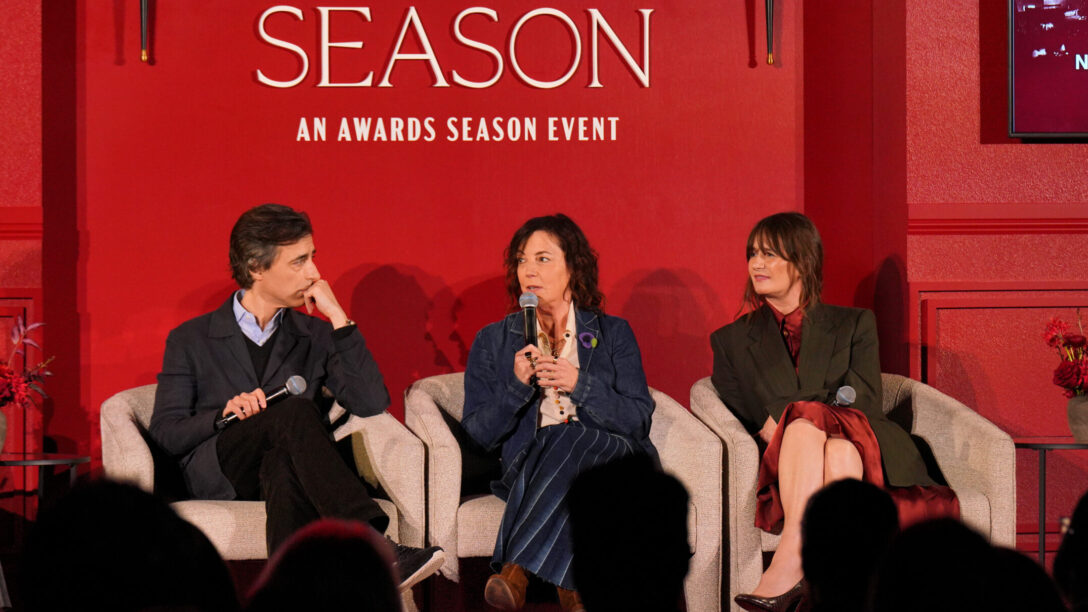
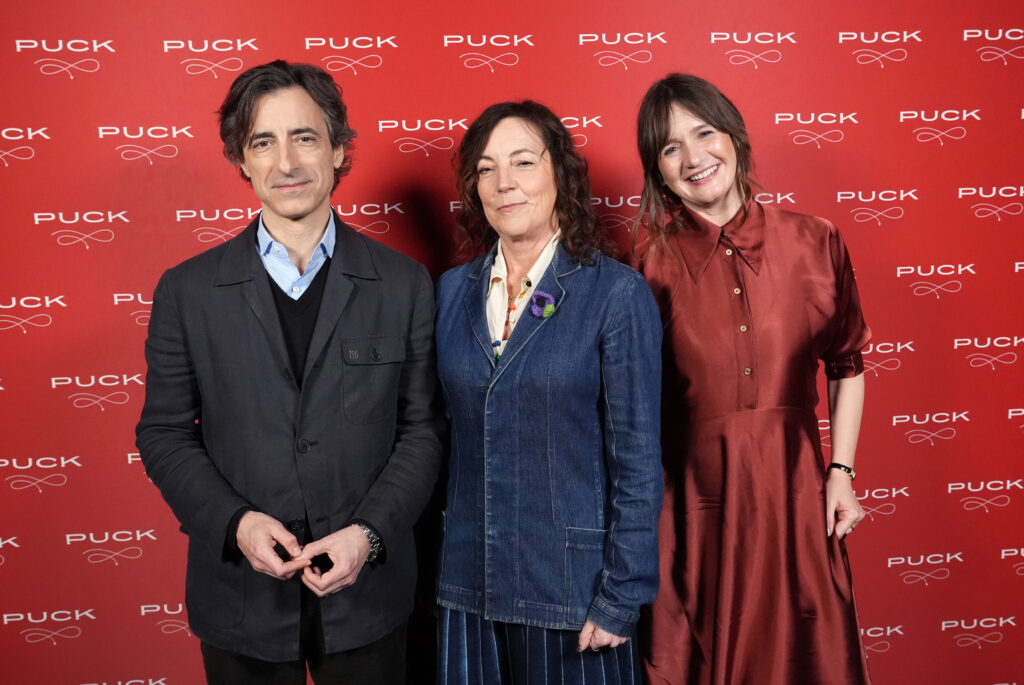
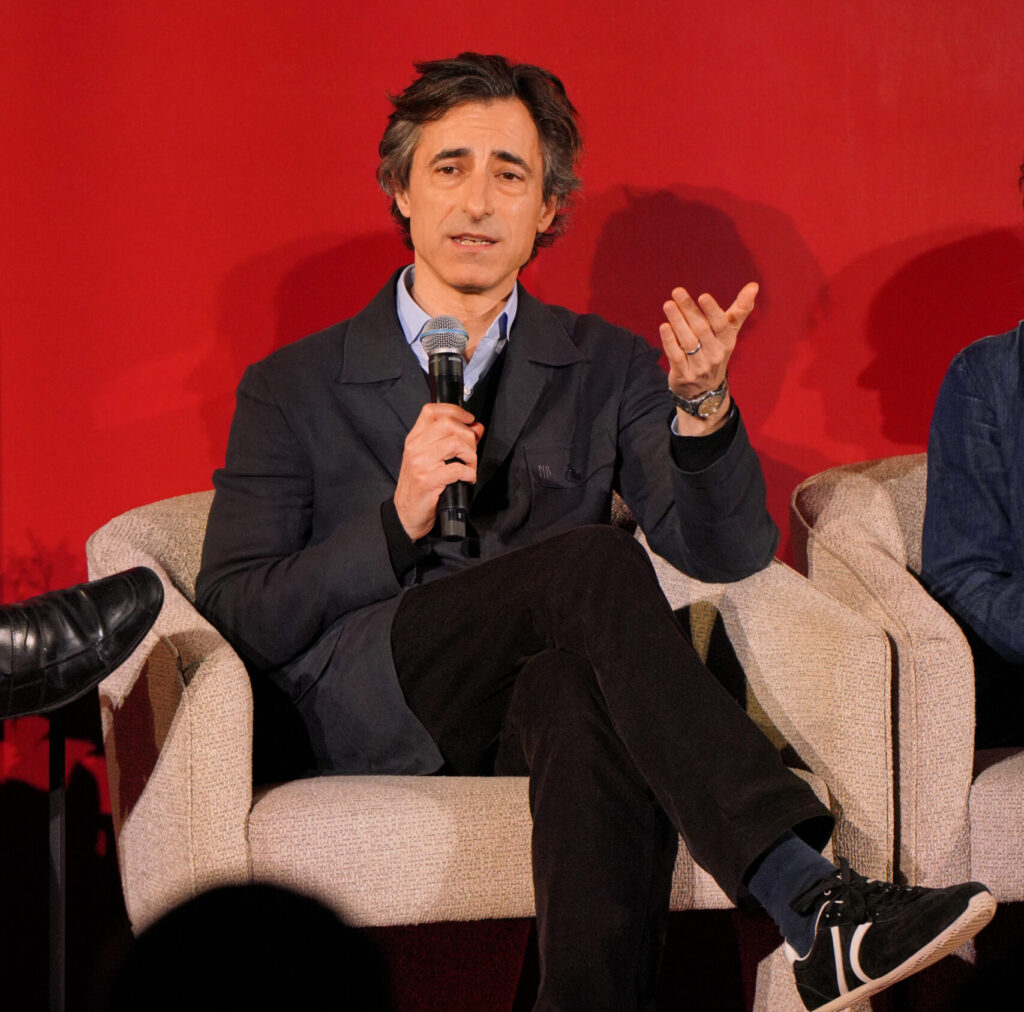
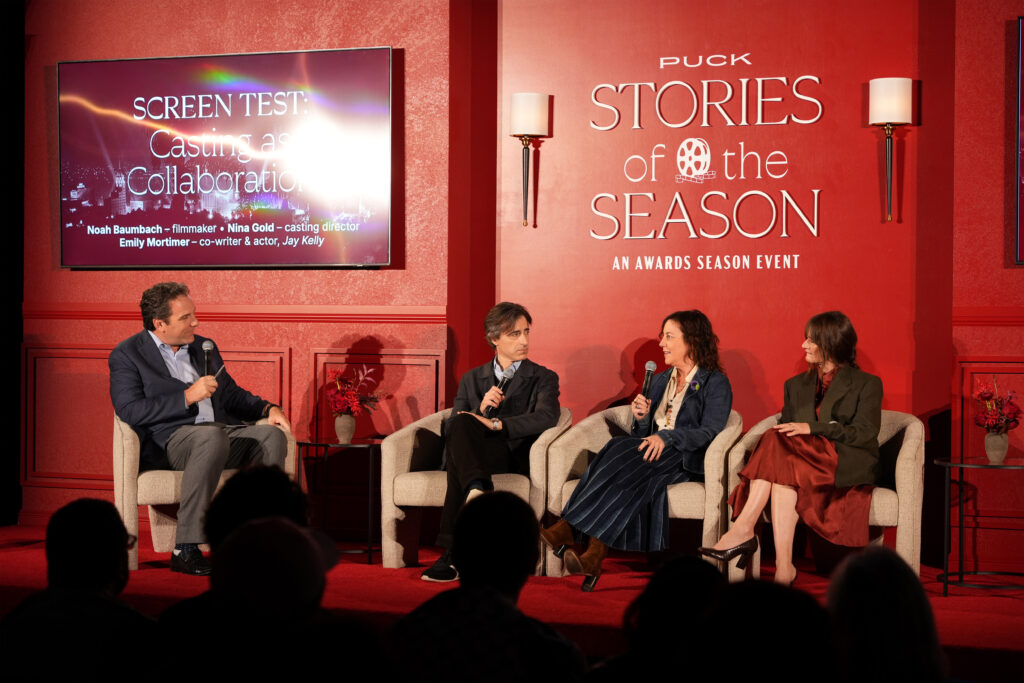
(From left to right): Noah Baumbach, Nina Gold and Emily Mortimer speak onstage during Puck's Stories of the Season.
All Photos: Gonzalo Marroquin/Getty Images for Puck
Kicking things off for Puck’s Stories of the Season event at the Sunset Room in Los Angeles, Matt Belloni took center stage to lead a candid, insightful panel conversation with the brain trust behind Jay Kelly, the polarizing coming-of-age comedy drama: NoahBaumbach (director), Emily Mortimer (star/co-writer), and Nina Gold (casting director).
In front of a sold-out audience, the trio peeled back the curtain on the film’s casting journey—exploring how a script informs the actors they bring into the fold, the pros and cons of the self-tape era, actors’ audition habits that drive them crazy, how they settle casting disputes, what happens when the perfect actor isn’t available, and much, much more. The following has been slightly edited for length and clarity.
Imagining George Clooney
Matthew Belloni: I’ve always been fascinated by the casting process, and I know actors try to get in the heads of casting directors and filmmakers. I want to know what the initial conversations are like between a filmmaker like you, Noah, and your casting director, Nina.
Noah Baumbach: In the case of Nina, we actually had never worked together. So we were also learning each other at the same time that we’re learning the movie. I’m coming in with ideas already, as is she, but I might describe the kind of actors—
Do you think of actors while you’re writing?
Baumbach: I do. I think sometimes it’s useful. Sometimes I like to write for an actor, and other times I like to write sort of not thinking about it.
Were you writing for Clooney?
Baumbach: We wrote the character more as the character. And then at a certain point, started to think it should be George.
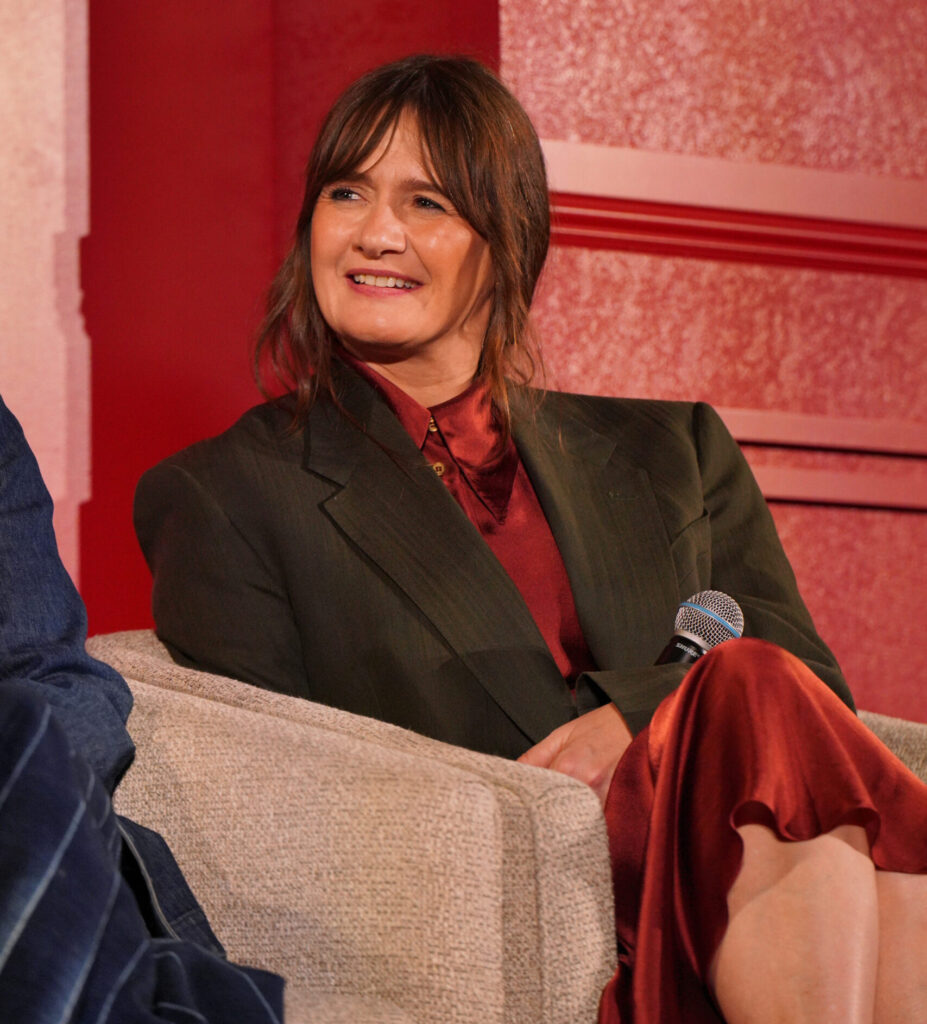
Emily Mortimer.
Emily’s smiling. I think it was Clooney in your head.
Emily Mortimer: Well, as Clooney himself says, there are only about three people in the world that could’ve played that part. And he luckily said yes. Very early on once we had a finished first draft, he was who we fell to thinking about, because he’s kind of perfect.
Nina, how do you approach that first conversation with a filmmaker, especially someone you haven’t worked with before?
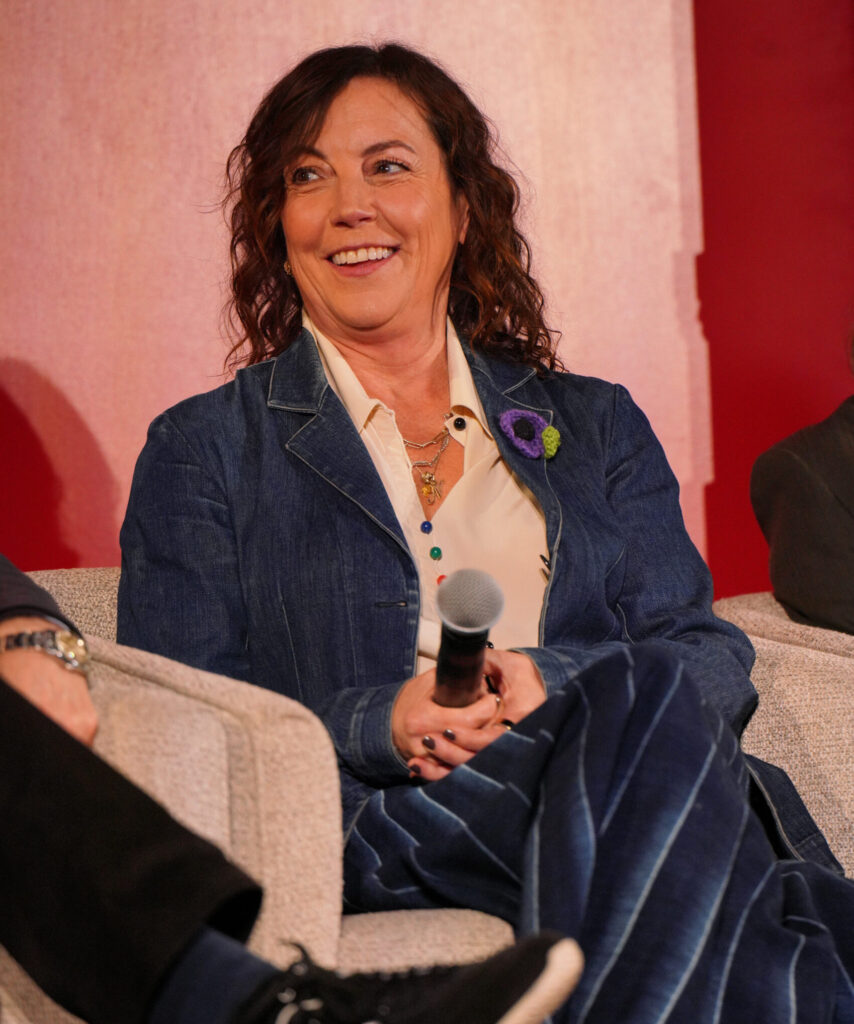
Nina Gold: It’s a very long conversation that goes on for many, many days and weeks. By the time I was there, George and Adam [Sandler] were already there. And then we just talk in a lot of detail about every single character, big and tiny, for many, many, many conversations. And then refine and hone, and keep the process going until we eventually get there.
Do you spitball names?
Baumbach: Yeah. There’s also, once we’ve seen a lot of actors, we have boards, and then it becomes mixing and matching. There’s so many great people who auditioned for this movie, so it really becomes sort of like, Who goes with whom.
There’s an actor who plays a young George Clooney in this film. What’s the process for casting the younger version of actors?
Gold: I guess that was the part that we met the most people for. We met and auditioned a lot of people, and it was just about trying to refine and refine until we got the person who seemed to have the most physical similarity, but also could kind of embody him as well, and embody his essence.
Baumbach: Because, in a way, it shouldn’t be imitation. You almost want him to be his own character. What we loved about Charlie [Rowe]—and Louis [Partridge], who plays the young Billy [Crudup]—is that they were their own characters. They both got the essence, but it wasn’t an imitation. They were really interesting on their own.
Describe a kind of strategy you have when the actor you believe is perfect for a role is not available? Like perfect, like consensus, everyone agrees, but they’re not available.
Baumbach: You go ask again. You pull every lever you can: What if we move the dates, and they came here, and we did this, and this, and this? That’s what you do first. And then [if that doesn’t work], you have to give it up. And then you find the next perfect person.
Nina Gold.
Nina, is that your process typically?
Gold: Yeah, I think so. You have to hope for a miracle, and then just keep your mind open and have another excellent thought—hopefully quickly.
What are things actors do that you can’t stand in auditions?
Baumbach: Improvise.
Gold: I’m not a great fan of eating. I think people find it’s kind of a helpful thing to do to take their mind off something.
Casting Questions
I hear from casting directors all the time that they feel like something has been lost in the self-tape era—that when most actors are auditioning via Zoom or via self-tape, it’s not quite the same as seeing it in person. Do you agree with that?
Gold: I think it’s really great to see people in person, and there is definitely an extra thing that you can be discovering and experiencing. But the good thing about the self-tape thing is you get to expand the opportunity to many more people. People who don’t happen to be in L.A. on a Friday night can still be part of the process.
Baumbach: I think the self-tape is useful for very early rounds, but you don’t want to just go on that. What does happen in the room, besides all the intangibles, is you can direct them in the reading, whereas [with] the self-tape, they’re going off their own interpretation. And sometimes if can be totally off, and you want to take that into account and give them another chance. The best casting directors—and I think Nina is the best—are great with the actors in the room and make them feel comfortable and read well with them.
Noah Baumbach.
How do you resolve differences of opinion, arguments, disagreements about certain actors?
Baumbach: Sometimes, maybe I won’t quite see it and Nina might feel strongly about it. I feel like we had some of those. It’s the same when Emily and I were writing together. If somebody makes a real case for something that I’m not quite sure on, I’ll listen and revisit it and go back to it. If she’s like, This person is amazing, and I didn’t feel like their audition quite clicked, I’ll definitely see them again.
Nina, you must have a photographic memory. How many headshots are in your head?
Gold: On a good day, quite a lot. I have a good memory for actors and a terrible memory for absolutely everything else. It is kind of the whole job of casting, to try to keep a long-term research project going on. It’s a long-term amassing of knowledge and thoughts.
Mortimer: What you feel with Nina is that she just really loves actors. And I’ve been in rooms where Nina’s been auditioning actors, and there’s just such attention to them and care for them, and understanding of how difficult it is to do that. And I really feel that for this movie in particular, when we were writing it—yes, there’s George Clooney, there’s Jay Kelly the movie star, and he’s the hero of the film, but everybody’s the hero of their own story. And this film is peopled with people who aren’t famous. And Nina is the perfect casting agent for that, because she sees the individuals. She sees each one of the actors as distinct and the hero of their own story.
Gold: But I think that’s also a function of this script, which is written with such incredible character detail. Even the tiniest parts really do exist in their own right, in their own story, because of the incredible detail of the writing of every single bit of this script.
Didn't get an email? Check your spam folder and confirm the spelling of your email, and try again. If you continue to have trouble, reach out to fritz@puck.news.
Didn't get an email? Check your spam folder and confirm the spelling of your email, and try again. If you continue to have trouble, reach out to fritz@puck.news.
Member Exclusive
Get access to this story
Create a free account to preview Puck’s full offering, including exclusive articles, private emails from authors, and more.