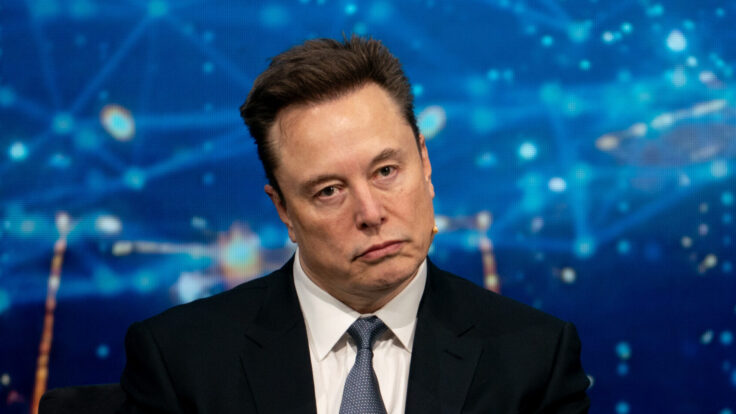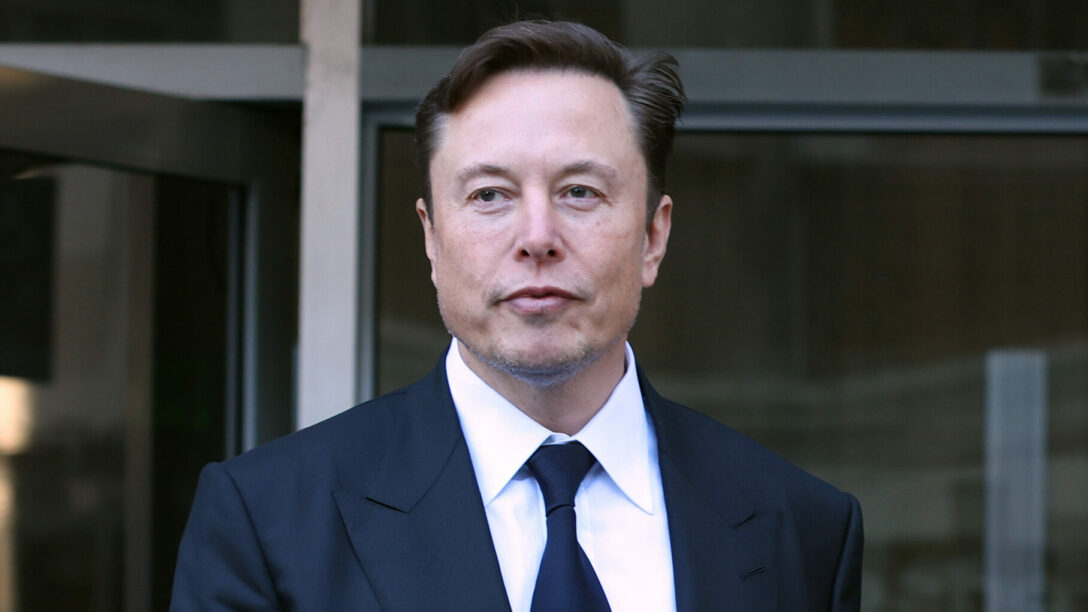

It’s been five long months since Elon Musk completed his $44 billion acquisition of Twitter, and in that time a handful of moments have seemed to capture the demise of the service. The cruel and unusual firings. The API shutdown. The advertiser exodus. The service’s technical instability. The algorithmic gerrymandering, implemented to assuage the new owner’s ego by ensuring we all see his tweets. This weekend, the next phase of Twitter’s never-ending ending began: the removal of verified badges that were doled out during the pre-Elon era. (In another Elon-esque hallmark of dysfunction, the promised revocation hadn’t taken hold as of publication.)
The old system required proof of identity, notability determined by the prominence of your organization and activity on the platform. The new system swaps out the identity requirement for a financial one: $8 per month for individuals, and $1,000 per month for businesses. Payment entitles users access to writing longer tweets, utilizing higher-quality video uploads, an undo button, and the privilege of being featured in the “For You” default feed, along with some other minor features. But as Twitter shuts down the old badge system, I’ve decided that it just doesn’t make sense for me, either ethically or financially, to participate in this next one.
Yes, I had the old check mark. I earned it the old-fashioned way: by having lunch at Twitter’s San Francisco office during my time at The Onion, between 2007 and 2012. As I recently wrote in an R.I.P. Twitter thread, I’m not fundamentally opposed to paying for social media (I paid for Twitter Blue under Jack Dorsey’s Twitter), and I believe in the promise of a sustainable and healthy social media ecosystem. I’m also excited by the idea of a cleaner economic relationship between users and platforms, particularly one in which I’m not the product. But I refuse to endorse Twitter’s current management with my money. I won’t help a chaos-spawning egomaniac, who inflicts his psychological wounds on the world, dig himself out of a hole that his ego created. Especially when the new badge doesn’t involve any “verification” process at all.
In defending his new pay-for-verification scheme, Elon offered some absurd First Amendment-baiting pablum about how “widespread verification will democratize journalism and empower the voice of the people.” And yet it sounds like the decision is motivated entirely by finding a new revenue stream to help soften the ruinous financial decision to buy Twitter in the first place. Various tactics during his stewardship, from limiting amplification inside the For You recommendation engine to this maneuver, Musk is simply squeezing dollars out of people willing to give him money. He is not “democratizing journalism,” or solving the platform’s notorious bot challenges, or empowering the voice of the people. He’s turning Twitter into his own private SoHo House, or worse.
It’s a shame, because Twitter has been a valuable directory of human knowledge and a useful way to find and sort through different types of voices. As my friend Jules Terpak, a Gen Z video-first content creator who covers tech and digital culture, posted recently, “If you curate your following list for learning / exploring curiosities and unfollow all the low vibrational shit—Twitter is an untouchable social media platform.” Sadly for all of us, Elon has very much torched the platform and this pay-to-play transformation risks further distancing Twitter from its potential role as a virtual town square.
The thing that bugs me about this live Twitter experiment is that Elon has made some great observations about Twitter’s failures: it needs to engender trust, people need to know who is real and who is a bot, the company needs to be financially sustainable, and it can’t operate based on mysterious and unfair algorithms. But then, as with so many other things he criticizes, he offers a solution wide of the mark. Limiting the promoted “For You” feed to those willing to pay for it just turns Twitter into a Home Shopping Network or grocery store circular, not a place for diverse, interesting, and high quality content. It’s payola as a business plan. The fact that it’s out in the open doesn’t make it any less of a problem.
AR We There Yet?
On the first Saturday in September of 2020, I drove out to Santa Clarita from my home in Los Angeles. I was headed to a studio owned by Diplo, where we were both about to step into the pages of early technology history. He and I would be the third and fourth people, respectively, to be hologramed into a virtual reality space. We were performing at VR Burning Man—the IRL event, of course, had been canceled because of the pandemic.
From an airport hangar-sized space, we donned Microsoft HoloLens headsets and beamed our bodies into a virtual reality “world,” using a platform called AltspaceVR that Microsoft acquired back in 2017. The headsets allowed us to simultaneously perceive the physical room we were in, populated by lights, computers, and technicians, and also the virtual room we were inhabiting, populated by legless avatars gathered around a massive cartoon tent.
For a few weeks after this experience, I fully immersed myself in virtual reality. I bought an Oculus headset and visited the virtual International Space Station, where I tested the limits of spacewalks by trying to “walk” all the way down to the Earth’s surface (not allowed, sadly), and generally made a mess of the ISS by throwing toilet paper around the station. I played a handful of VR games. I bought a second headset for my wife, who never once used it. In hindsight, this was the height of the metaverse as it’s been pitched to us: the version that was supposed to represent a consumer-friendly, immersive, interactive digital environment as the “next stage of the internet.”
In retrospect, that was the year the hype cycle peaked. Despite major talent agencies hiring metaverse agents, SXSW being overtaken by the theme back in 2022, and venture capitalists pouring at least $115 billion into the idea of an immersive virtual world, the metaverse of today—for which Mark Zuckerberg rebranded his entire damn company—looks emptier than a suburban shopping mall. (For a bleak but poignant look inside, read Paul Murray’s New York magazine piece, Who Is Still Inside The Metaverse?) Within the past two weeks, AltspaceVR, where I had my virtual Burning Man experience, has been shuttered, and Disney just eliminated its “next-generation storytelling and consumer-experiences unit.” Meta, formerly Facebook, has since announced another 10,000 layoffs and a pivot to A.I.
I don’t think the possibility of a Ready Player One future is completely gone. But I do think the irrational exuberance for such investments is over, for now, much the same way that our appetite for pandemic lockdown-era virtual meetups has essentially vanished. Remember Zoom happy hours? I was really into those! But when was the last time you joined one, your preferred cocktail in hand? And what about the audio-based social network Clubhouse, which at one point Twitter considered acquiring for $4 billion? I loved that audio-centric digital space. I met good people, threw good parties, and enjoyed myself—right up until the moment that I could meet good people, throw good parties, and enjoy myself in a shared physical space. As soon as I started filming my PBS series, America Outdoors, in the summer of 2021, my Clubhouse time fell off a cliff and never recovered. Now other companies that copied the model have dialed back or canceled their plans.
My most absurd Covid-era investment in virtual community was the Facebook Portal, a face-tracking, internet-connected video camera that made remote communication with friends and family slightly less painful (though never actually more joyful) than cell phones and laptops. I bought three of those Portals, one for my home, and two for family members. That’s how dark Covid was: the global pandemic convinced me to put a Zuckerbergian surveillance camera in my home and the homes of my loved ones! (In November, Meta shut down its Portal project entirely.) The only technological bet that seems to have survived lockdown-era exuberance is QR codes. They not only made it to the other side, but appear to be growing in usage and popularity at restaurants, on television, even on business cards. My 70-something in-laws know how to use them. The metaverse, on the other hand, has fallen into digital purgatory.
Something interesting happened as I was writing this piece. The notepad app I was using to draft it repeatedly autocorrected “metaverse” to “Meta averse.” I can’t think of a simpler, more appropriate omen for the shift in opportunities from the metaverse to artificial intelligence. The media theorist Marshall McLuhan famously said the medium was the message. Turns out he was only scratching the surface: social media is the message, and maybe it shouldn’t be. Whether it’s reclaiming our own verification or prioritizing IRL over many second-rate AR experiences, looks like we’re starting to figure that out.