Hello, sports fans. And welcome back to Wall Power, your private newsletter dedicated
to the art world. I’m Marion Maneker.
Mrs. Wallpower and I are still in the Scottish Highlands—Glencoe now—but we’re making our way south and east toward Edinburgh for the weekend. Tonight, Julie Davich has a look at Françoise Gilot’s works on paper at Rosenberg & Co. Plus, I have a conversation with the young collector Pete Scantland, whose extensive
collecting has yielded major gifts to the Columbus Museum of Art in Ohio. Having followed his acquisitions for years, I found time to sit down with him last month in the art-filled New York offices of Orange Barrel Media, the digital advertising company he founded. His advice about the collecting habits of the younger generations, below the fold.
But first… |
-
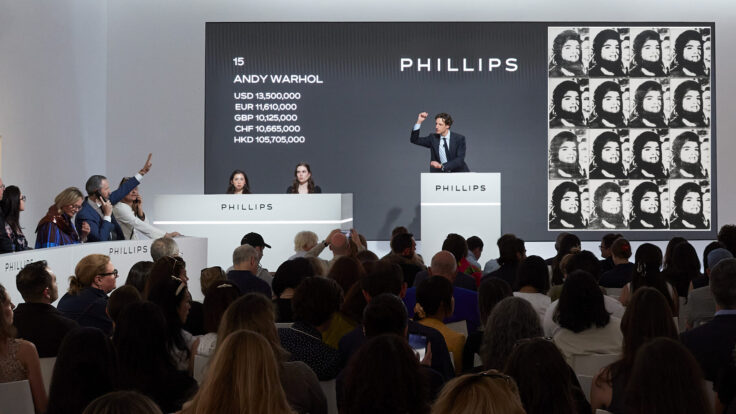
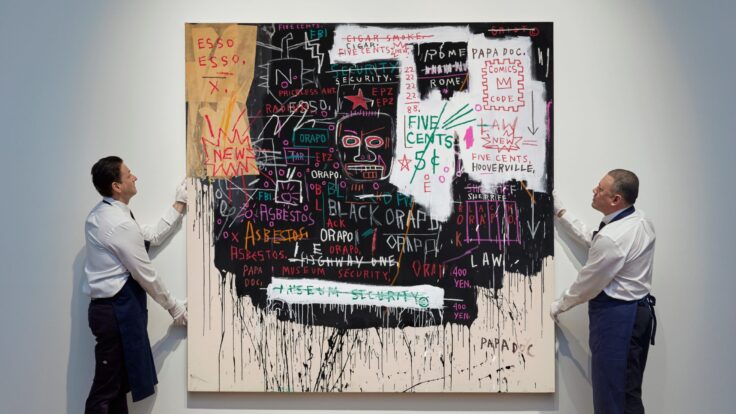
The Saltzman collection at Christie’s: Christie’s has announced the $70 million collection of Arnold and Joan Saltzman containing works by Fernand Léger, Henry Moore, František Kupka, Henri Matisse, and Edvard Munch—one more sign
that the auction houses and consignors believe demand is still high for art. According to former auction house personnel, the Saltzman heirs have been actively considering selling their parents’ art for six years, but finally committed to consigning in the last few weeks. The Léger is expected to sell for $20 million or more, the Matisse for $10 million, and the Moore sculpture for $9 million.
|
|
|
A MESSAGE FROM OUR SPONSOR |
|
|

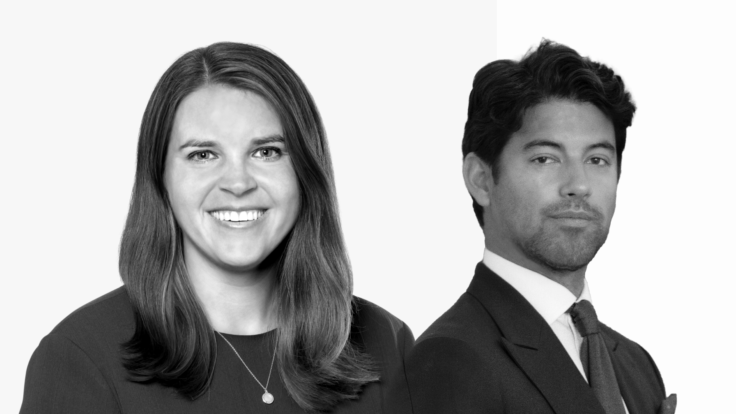
| Julie Brener Davich
|
|
- The other
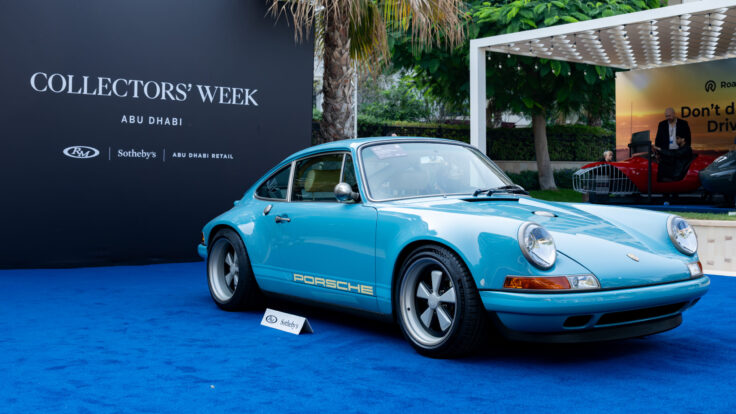
Bucksbaums: Sotheby’s, meanwhile, is selling a half-dozen works from the estate of Matthew and Carolyn “Kay” Bucksbaum, collectively estimated at $27 million, in its November modern art evening sale. The highest-priced lot is Magritte’s Le Jockey Perdu, from 1942, which Sotheby’s previewed in Abu Dhabi last week and which is estimated to bring in $9 million. Other offerings include a Dubuffet
estimated at $6 million and works by Dalí, Klee, and Miró. The couple’s daughter Ann, who founded the Planet Word museum in Washington, D.C., is married to the journalist Thomas Friedman; the Bucksbaums’ son John and his wife, Jackie, donated $25 million to the Art Institute of Chicago last year. If you recognize the surname, it’s because Matthew was brother-in-law to
Melva.
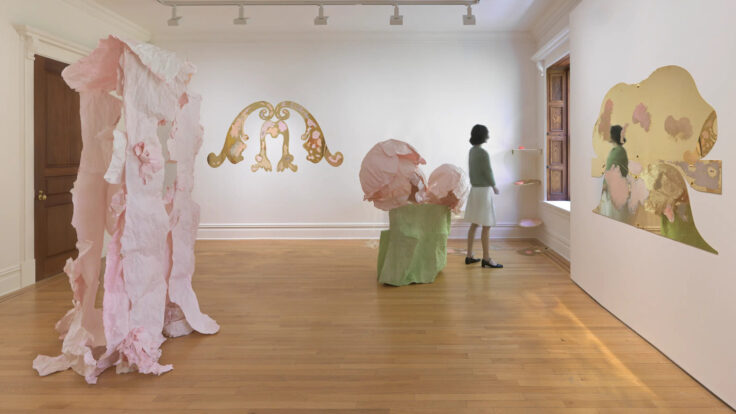
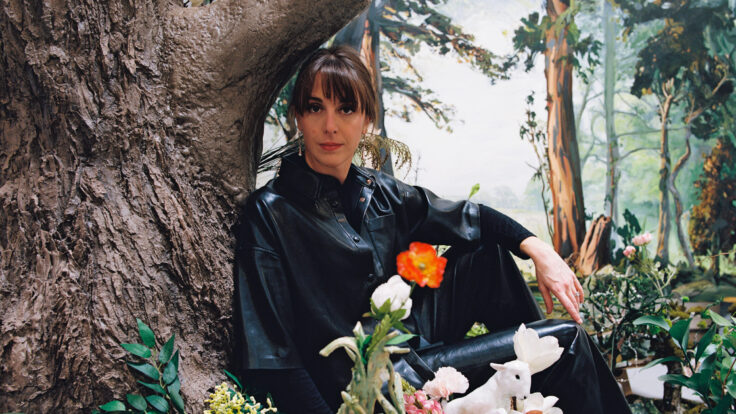
- Gallery Hopping With Julie: Françoise Gilot at Rosenberg & Co.: Though art history mostly relegates Françoise Gilot to the role of Picasso’s lover and the mother to two of his children, she was also an accomplished artist. The current exhibition of her work at Rosenberg & Co. is a chance to see 15 works on paper from her prolific output. The pieces include drawings,
lithographs, and monotypes she made between the 1940s and the 1990s, with prices ranging from $15,000 (for editions) to $200,000. This small show follows last year’s larger retrospective at the gallery, a tribute to the artist after her death in 2023 at 101.
It seems fitting that proprietor Marianne Rosenberg, the granddaughter of Picasso’s dealer, Paul Rosenberg, is helping resurrect Gilot’s artistic legacy. Gilot was with Picasso for a decade, in the
mid-20th century. She later married Dr. Jonas Salk (of polio vaccine fame) in 1970 and began working mostly on paper, splitting her time between her native France and California, where Salk was based. The market didn’t really get to know Gilot in depth until 2012, when she co-curated an exhibition of her own art alongside Picasso’s at Gagosian. Her work has only gained more appreciation in the past few years.
The current Rosenberg & Co. show includes a few earlier
figurative and still-life drawings that nod to Gilot’s evolution into abstraction, but it mainly focuses on her lithographs and monotypes from the 1980s and 1990s. There are four works from this period that are by far the standouts in the show: Among them, Arvor, from 1986, is a coastal scene, with the fibers in the natural blue paper evoking the surface of the ocean. Wanderer, from 1991, depicts a character whom Gilot created and frequently revisited in her work. She used
collage elements, like a roadmap of France, botanical illustrations, and marbled papers, to compose the figure. It’s nice to see Gilot’s “personal visual language,” as the gallery describes the show, getting its due, separate and apart from Picasso’s.
|
|
|
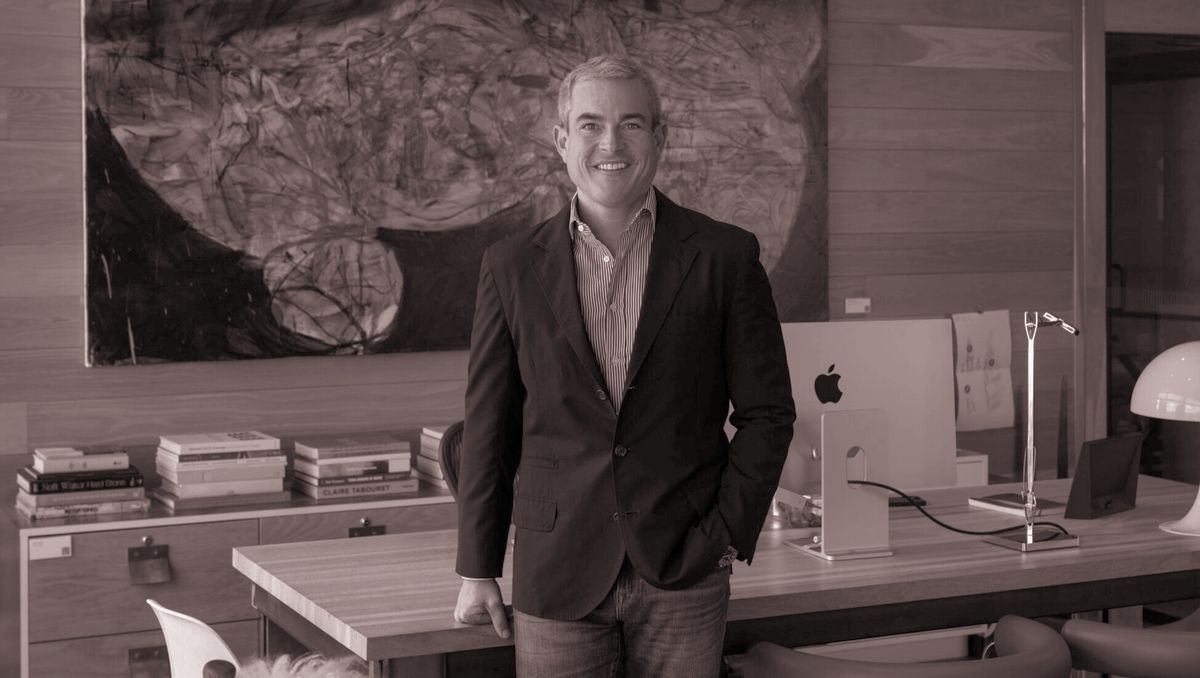
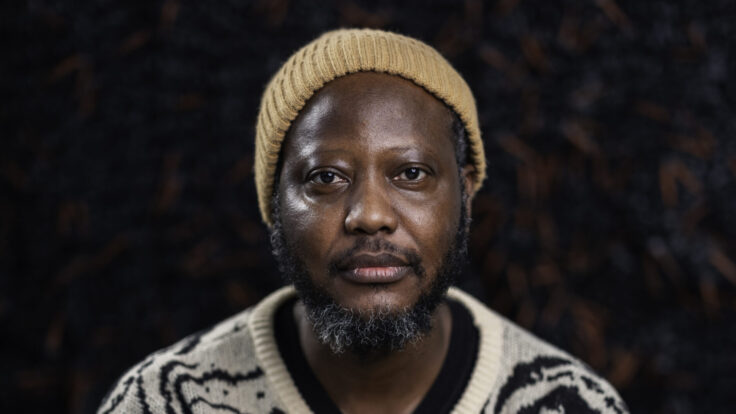
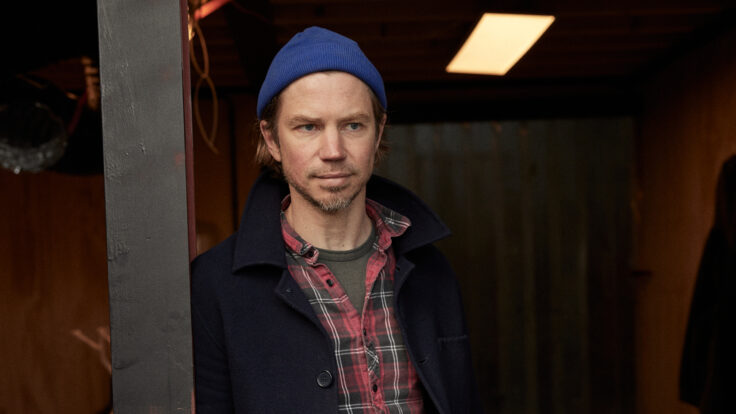
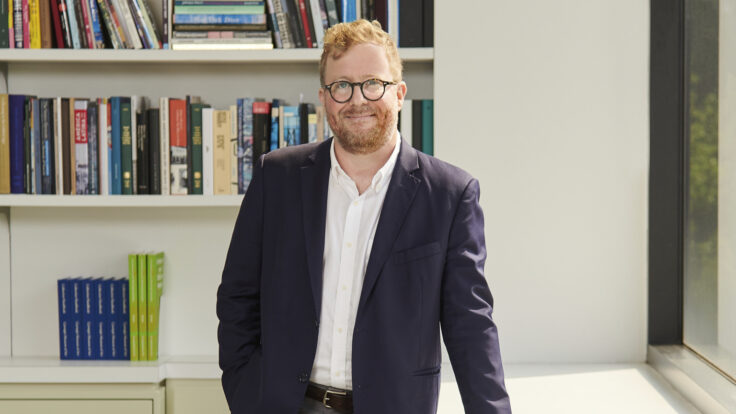
After he figured out how to build a better billboard, Ohio native Peter
Scantland began building a collection. Now, the 46-year-old is endowing and collaborating with museums, and offering a promising ideal of the younger collector. |
|
|
A common fear in the art world these days is that, because Millennials—as well as the
micro-generation known as Xennials—are more interested in experiences than in accumulating objects, they will somehow become a “lost generation” of collectors. With that myth in mind, I wanted to speak to a collector from this supposedly missing generation—one who, in his mid-40s, has been active for some time and seems to be as engaged now as he ever was.
Peter Scantland is the founder of Orange Barrel Media, a company that does outdoor advertising—billboards and the
like—founded in Columbus, Ohio. The bulk of its employees are still there, though the company now operates in 30 cities around the United States, including New York and Los Angeles. In 2021, the Scantland family—Peter, his twin brother Matt, his sister, and his parents—donated 27 works to the Columbus Museum of Art, along with $2 million to endow a position at the museum focused on learning and engagement. A second wave of 33 promised works followed in 2023, including pieces by
sought-after, of-the-moment artists such as Hayley Barker, Danielle McKinney, Robert Nava, Lauren Quin, Kenny Rivero, Marina Perez Simão, Sarah Slappey, Emma Webster, Blair Whiteford, and Oscar yi Hou. |
|
|
A MESSAGE FROM OUR SPONSOR |
|
|
Twenty years after he first started collecting, Scantland is showing excellent taste
and an unusual commitment to artists of his generation—and to his Ohio hometown. In the following conversation, lightly edited as usual, we discussed the origins of his interest in art, his work with museums, his collecting philosophy, and more. |
Marion Maneker: Tell me the story of Orange Barrel.
Did you start it fairly young? Do you come out of the advertising business, or did you just recognize that this moribund outdoor advertising thing could be transformed?
Pete Scantland: I started in 2004, so last year we celebrated 20 years. And most days it’s still a lot of fun. I graduated from college in 2001, and I had a realization that my friends—whether they were living in Columbus, where I grew up, or in New York City or Chicago—were returning back into the city
and reversing a sort of generational deurbanization of America. I was working in advertising, and realized that advertisers would want to reach this audience.
The out-of-home advertising industry had been built, mostly in the early part of the 20th century, to focus on highways. A lot of it really paralleled the construction of the interstate system in the U.S. So most billboards you see today are 50, 75, or even 100 years old. The name on them may be new, but they were built a generation
ago, and they were mostly local businesses.
I was looking at how we could make our downtown more interesting to this new generation of people who want [it] to go from a nine-to-five district to a 24-hour one. Our mayor was really interested in new ideas, and I spoke with him about how the income from the signage could help fuel the conversion of buildings into finding new life. At the same time, if done in an urban and very creative way, these signs could contribute to the vibrancy and
the sense of place that was happening. Rather than focusing on standardized highway billboards, let’s make them contextual to the neighborhood, and have content on them that’s different from typical advertising.
That allowed me to unite my longstanding interest in art—in working with artists, museums, and others—so that the signs we were building were more attractive to the public. By focusing on the two principal complaints regulators had about this industry—aesthetic concerns and
economic ones—we developed public-private partnership models where the communities in which the signs were located could participate economically. We were able to build a new business in this industry, and today, we’re in about 30 cities. We’re by far the largest developer of new locations.
A major distinguishing feature is that your installations are generally three-dimensional. They’re not like standard roadside billboards that are just made out of pixels.
We’re
always thinking about each site as its own unique set of opportunities, in designing something that fits into that location and adding something to it—not just something that will create value for our clients or advertisers. When I started, I never conceived what we’d be able to do today. What’s interesting is, digitization has really harmed almost every legacy media, except for the very oldest one: outdoor advertising. It’s created this new set of possibilities that create value, not only for
the advertiser and the media company, but also for the public who sees it. |
The Museum Marketing Collab
|
You work a lot with museums. Is that because of your own interest in art? Did
you go out and seek museums, or is that just built out as a natural part of your business?
It originated with my interest; I’ve been super interested in art since I was a little kid. For a moment, I wanted to become an artist, then I realized that what I actually wanted to do was work with artists and with people who help facilitate artists. And I wanted to be an entrepreneur, which, when you’re doing it right, can also be very creative. So we’ve always worked with museums as a
content partner, helping them create awareness for their exhibitions and for what’s happening at the museum. More recently, we’ve become more like business partners, because our company sits at the intersection of two things that every museum is struggling with right now: How do you fund the increasing ambitions and costs of running a museum today? And how do you create awareness in a broader way so that you can have a bigger tent to better serve your communities? |
|
|
We also work with artists directly. As we’ve grown and have been able to invest more,
[we’ve been] thinking about how we can align with artists who want to do public projects. Last year, we did about 100 artist projects, ranging from international artists whom all of your readers would know, to community artists in every city we’re operating in. What’s common with all of these artists is that they want to engage with more people beyond the traditional gallery or museum context. |
The
Birth of a Collection
|
Did you start collecting after you knew your company had taken off, or have you
been collecting all along?
I’ve always wanted to collect art, but, of course, it took a while before I was in a position to do it. I had been thinking a lot about what I would collect when I was in a fortunate enough position, so when I started, I was able to jump in pretty quickly. My collection is about the most interesting art of our time, made by artists of my generation. I felt I wouldn’t be in a position to build a truly great collection focusing on another era—I wouldn’t
have the ability to do that financially, and also [there’s] the [lack of] availability of the material.
As I’ve evolved, I’ve been thinking about which artists are really relevant to the artists that I’ve collected today. And that’s led to Martin Wong, Jack Whitten, and other seminal artists, who you can tell that many of the artists I’m collecting today are looking at and engaging with. Many of the artists that I’ve collected I have had the opportunity
to meet—these are artists that are in our lives and in our world. Although I do love studio visits, I’m primarily working through galleries and thinking about what artists I’m interested in, and trying to get ahold of the best work that I can.
How do you think about what interests you?
There’s a core of artists that I’ve collected and want to continue collecting as they grow. First and foremost, it has to appeal to me aesthetically. It has to appeal to me
conceptually. I do think about how it fits into the broader collection, but not in a narrow way. I have a working list of things that I’m interested in, of artists I’m interested in, of shows I want to see. And then, of course, every day, you come across something new and interesting that you haven’t seen or heard about. I’m trying to keep engaged and talk to galleries, talk to curators, talk to other artists, talk to other collectors.
You’ve now been doing this for a while. I’m
assuming if someone around your age is interested in getting into this, they come to you. Do you have a group of people who want to learn or get some guidance on how to start collecting?
Sure. I always try to be helpful, and I’ve benefited from mentors as well. While the industry and the museums will need to evolve to attract this next generation, I’m quite sure it can be done. What’s different about this generation is that people are less tethered to geography. They’re just as
likely to find their philanthropic passion in Africa as they are in their hometown, and they can learn and get involved in a way that hasn’t previously been available. We’re in this moment where everyone is trying to figure out what that means, and how to ensure that we are cultivating the next generation of supporters, and model[ing] the type of institutions that are inspiring and attractive to people who are thinking about the world in a much deeper way than just showcasing great art.
|
Just to catch everyone up on the last few days’ worth of art fair–related announcements:
This morning, Frieze announced a new fair, Frieze Abu Dhabi, that will take place in November 2026 at Manarat Al Saadiyat. Given the recent establishment of Art Basel Doha, we now have dueling art fairs in the Gulf region. At least they’re three months apart. Speaking of Doha, Art Basel has released a list of the 87 participating galleries for its February fair there, a number well above the 50 initially projected. Sixteen of those galleries will be showing with Art Basel for the first time,
alongside the name-brand London and New York galleries like Acquavella, Gagosian, Hauser & Wirth, Pace, White Cube, and David Zwirner.
Elsewhere in fairs, the Independent art fair announced that it will partner with the Henry Street Settlement to host the nonprofit’s annual fundraiser on the fair’s opening night: May 14, 2026. The Henry Street Settlement, which has provided services to the Lower East Side since 1893, was long associated with the ADAA art fair at the Park Avenue Armory,
where it used to host its gala. Now that Independent has moved to Pier 36 on the Lower East Side, the fundraiser will take place in the neighborhood that Henry Street Settlement serves.
That’s it for today. We will be back with you again on Sunday.
M |
|
|
The ultimate fashion industry bible, offering incisive reportage on all aspects of the business and its biggest
players. Anchored by preeminent fashion journalist Lauren Sherman, Line Sheet also features veteran reporter Rachel Strugatz, who delivers unparalleled intel on what’s happening in the beauty industry, and Sarah Shapiro, a longtime retail strategist who writes about e-commerce, brick-and-mortar, D.T.C., and more. |
|
|
Finally, a media podcast about what’s actually happening in the media—not the oversanitized,
legal-and-standards-approved version you read online. Join Dylan Byers, Puck’s veteran media reporter, as he sits down with TV personalities, moguls, pundits, and industry executives for raw, honest, sometimes salacious conversations about the business of media and its biggest egos. New episodes publish every Tuesday and Friday. |
|
|
Need help? Review our FAQ page or contact us for assistance. For brand partnerships, email ads@puck.news. You received this email because you signed up to receive emails from Puck, or as part of your Puck account associated with {{customer.email}}. To stop receiving this newsletter and/or manage all your email preferences, click here. |
Puck is published by Heat Media LLC. 107 Greenwich St, New York, NY 10006
|
|
|
|