{{ 'now' | timezone: 'America/New_York' | date: '%b %d, %Y' }}
|
|
|
Welcome back to Dry Powder. I’m Bill Cohan. Before we dive in, a quick and
special thank-you to Oscar de la Renta C.E.O. Alex Bolen for co-hosting a fabulous Super Bowl party with Puck on Sunday night. I was thrilled to drink a fine single malt scotch out of a co-branded Solo cup at the Whitby alongside fashion eminences and industry swells such as the Zagats, Risa Heller, and Nate Silver (who had the Seahawks with the points). A lovely time was had by all.
Ever since the latest batch of
Epstein files dropped, top executives on Wall Street have been confounded by the swirl around Kathy Ruemmler, the former Latham & Watkins rainmaker and Obama-era White House counsel, and current general counsel of Goldman Sachs. Indeed, the latest trove of emails not only depicted Ruemmler’s chummy (and occasionally flirty) email patois with the late pedophile, but also unearthed details of one of her romantic relationships. At the highest echelons of Wall Street, many assumed Ruemmler’s days at 200 West were numbered. After all, Goldman’s tolerance for any kind of scandal, real or imagined, is quite low. (If you thought billionaire investors and centimillionaire bankers were high-minded puritans, I have news for you…)
Anyway, I’ve done a fair amount of reporting on this spicy topic and found, unsurprisingly, that the truth is far more nuanced than any recent journalism has depicted.
There’s a reason why David Solomon and Goldman are standing behind Ruemmler: She actually saw Jeffrey Epstein for what he was, and found a way to extract professional value from his relationships while keeping him at arm’s length and managing her own reputation. In many ways, it’s exactly the sort of high-functioning executive behavior that Goldman rewards.
But first…
|
- David
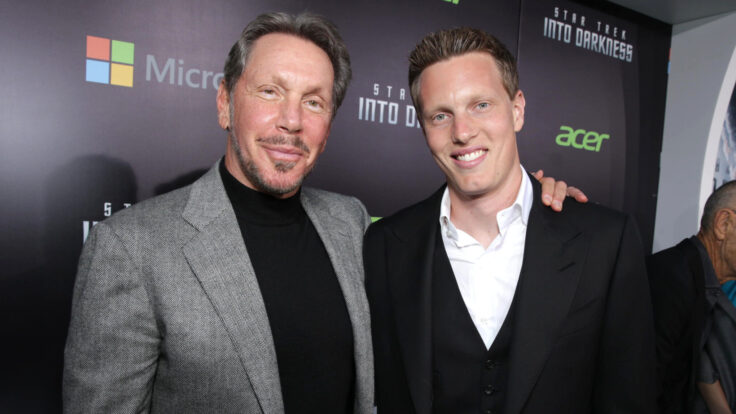
Ellison’s “ticking fee”: So, Paramount Skydance has improved its hostile bid to acquire Warner Bros. Discovery… somewhat. On Tuesday, the company agreed to pay the $2.8 billion breakup fee that WBD would owe Netflix if its board were to switch allegiance to PSKY—a standard concession in a competitive situation. The new proposal would also reimburse WBD for a $1.5 billion fee, likely to be incurred this year, related to its July 2025 debt-exchange offer. PSKY also agreed to a few
other WBD demands, including giving the company more flexibility to run its business between signing and closing, and the ability to clean up its own balance sheet. These are all things the Ellisons should have offered months ago.But they did introduce one novel concept: a “ticking fee.” In short, PSKY would pay WBD shareholders an additional 25 cents per share—an incremental $650 million—for every quarter that a transaction between their two companies hasn’t
closed after the end of this year. The idea, presumably, is to signal PSKY’s confidence that its deal would receive regulatory approval more quickly than Netflix’s deal. If it takes longer, the Ellisons would have to put their money where their mouth is.Who knows what financial or familial dynamics might lie behind Larry agreeing to cough up another $4.3 billion-plus for David, but not raising the overall $30-a-share offer? (Oracle stock is down
36 percent in the last six months—that might have something to do with it.) Anyway, WBD has said it is “not modifying its recommendation” regarding the Netflix agreement at this time. “We remain resolute in our commitment to maximize value for shareholders,” the company stated today. David Ellison, for his part, said, “We are making meaningful enhancements—backing this offer with billions of dollars, providing shareholders with certainty in value, a clear regulatory path, and protection against
market volatility.” Seems like PSKY is just trying to hang around the hoop, hoping Netflix gets crushed in the regulatory review—and maybe Larry has told his son, No más.
- The Saks bankruptcy feeding trough: With Saks Global’s bankruptcy in full flower and more than 700 entries on the court docket, the time has come to reveal what its principal advisors will be paid for their services. PJT, led by partner Jamie Baird,
will get a monthly fee of $200,000, some of which could eventually be credited against a $28 million “restructuring fee,” payable upon a successful exit from bankruptcy. It may also earn additional fees if it raises capital for the debtor or facilitates a sale. Total potential fees are capped at $47.5 million, although they can exceed the cap under certain circumstances.Willkie Farr, which supplanted Kirkland & Ellis as Saks Global’s principal legal advisor, will get paid by the hour,
ranging from partner Robin Spigel on the high end ($2,975 per hour—wowza) to paralegal Rohan Sasso ($485 per hour). (Disclosure: Saks has sued Puck over our coverage of its financial condition.)The world has certainly changed since my restructuring days at Lazard, when we’d be thrilled to get a monthly fee of as much as $200,000—I don’t remember any other fees, and certainly no big bonuses for getting my clients
out of bankruptcy, which of course we did. But that’s been the trend in recent years. No doubt it will be a bonanza for the professionals involved, which is why more and more companies are looking to the U.K. to effect a restructuring, as I reported last week.
- Goldman always wins…: This week, Goldman
Sachs’s market capitalization once again surpassed that of rival Morgan Stanley. For more than 18 months, Morgan Stanley’s market cap had exceeded Goldman’s by roughly $25 billion. (JPMorgan Chase blows them both away, of course, at—gulp—nearly $900 billion.) But the gap has narrowed in recent months, and on Tuesday, Goldman once again reigned supreme: $285 billion versus Morgan Stanley’s $280 billion. A perfect coda to the Goldman partners meeting in Miami, where guest speaker George W.
Bush shared a hopeful message about the long-term viability of our democracy. Congrats to all involved.
|
And now, on to the real saga at Goldman…
|
|
|
The curious case of Kathy Ruemmler—Goldman Sachs’s chief legal officer and former counsel to
Bill Clinton and Barack Obama—who’s mentioned 9,000 times in the Epstein files, and who, at the end of the day, may have just been doing her job.
|
|
|
As the detritus from the latest release of Epstein files washes over Wall Street, there’s
been endless curiosity regarding why Goldman Sachs hasn’t sent general counsel Kathy Ruemmler packing. Ruemmler—who rose to prominence through a major Enron white-collar crime case before serving in the Clinton administration and, eventually, as White House counsel under Obama—has had a brilliant career. After leaving Washington, she rejoined Latham & Watkins as a partner in its white-collar defense and prosecution department. So
everyone in the industry was stunned when her name appeared more than 9,000 times in the files between 2014 and 2019.
Those years, of course, came after Epstein’s conviction for soliciting a minor for prostitution and before Ruemmler joined Goldman Sachs. And the emails themselves were, as the kids say, cringe. Not only did Ruemmler refer to Epstein as “Uncle Jeffrey” in one email, but the files also surfaced details of her own romantic life.
Yet the truth is
often more complex than the blinkered narrative gleaned from large email dumps. I’ve pieced together much of the context regarding Ruemmler’s involvement with Epstein, and the real story may explain why Goldman is sticking with her. Indeed, as this most recent batch of 2.7 million emails and documents has made abundantly clear, the plutocratic class operates by its own set of rules when it comes to trade-offs between the ethical, the personal, and the profitable.
|
Ruemmler’s relationship with Epstein began innocently enough, in 2014, around the time she returned to
private practice. Epstein had called the Latham switchboard looking for her. She had no idea who he was or why he’d be trying to reach her in the late summer, but he left a message about a legal matter to discuss. So she called him back: After all, she’d just returned to Latham to be one of its rainmakers.
When they spoke, Epstein complimented Ruemmler on her catholic legal skills and told her they had people in common, including Larry Summers, whose office had been down
the hall from hers in the Obama White House, and Reid Weingarten, a prominent white-collar defense attorney at Steptoe & Johnson. It’s likely that Epstein intentionally dropped Weingarten’s name to send a signal: Weingarten and Ruemmler had been romantically involved, a relationship that Weingarten had abruptly ended.
As she spoke to Epstein, I was told by someone familiar with the situation, Ruemmler
wondered whether Weingarten might somehow be trying to send her business as a mea culpa of sorts. Bill Gates was the next name Epstein dropped on the call. The two men were trying to set up the world’s largest donor-advised fund, he explained. Would she be interested in quarterbacking it?
Ruemmler agreed to come up to Epstein’s mansion on East 71st Street, where they spoke for an hour as he gauged her bona fides for the Gates project. She left without knowing
whether she’d won the assignment, but Epstein called a few weeks later to ask if she would be open to meeting Gates to discuss the DAF. On September 8, the three of them met in Gates’s suite in the Four Seasons Hotel on 57th Street. (Gates owned the company that managed the hotel.) Epstein had also set up meetings for Gates that day with Leon Black, Larry Summers, and Mort Zuckerman. Ruemmler thought Gates was awkward—as was his relationship with Epstein—but she
found Epstein charming and avuncular as he advocated for her to join the DAF team.
After the meeting, Ruemmler went back to Latham’s office in the Lipstick Building on Third Avenue, the one infamous as the home of Bernie Madoff. Weeks passed and nothing happened, and she figured the opportunity must have slipped away. (The Gates DAF never materialized.) Later that month, however, Epstein reached out with a new ask: Would Ruemmler meet with him and Ariane de
Rothschild, the C.E.O. of Edmond de Rothschild, the Swiss private bank? As with many Swiss banks at the time, the Justice Department had been looking into whether Rothschild’s institution was violating banking disclosure laws. Things with the D.O.J. weren’t going well for Rothschild, and the bank was likely to get walloped with a fine—perhaps several hundred million dollars. Epstein told Ruemmler that Ariane wasn’t happy with the legal advice she’d been getting and wanted someone who
knew the department’s idiosyncrasies.
Ruemmler said she would take the meeting—at the very least, she figured, Ariane was a good contact, and Ruemmler herself had always urged young attorneys to take meetings and “build circles.” At the meeting, which included Rothschild’s C.F.O. and general counsel, Ruemmler noticed that Epstein seemed to be Ariane’s gatekeeper; he was willing to tell her things that others wouldn’t have dared, for fear of offending her.
Ariane and the bank
subsequently hired Latham, and Ruemmler put a team together. At a meeting with the D.O.J., which Ruemmler had arranged on Edmond de Rothschild’s behalf, she told the feds that the bank would cooperate fully and just needed a reset to put prior bad feelings behind them. For the next two years, with Epstein’s knowledge and support, Ruemmler and her team traveled frequently to Geneva, where the bank was located, and pored over client files for violations, looking for so-called “mitigation evidence”
that would make the D.O.J. less antagonistic. Latham’s hard work paid off: Edmond de Rothschild paid a $45 million fine—not hundreds of millions. Total fees came to $80 million, including $25 million paid to Epstein.
Ariane de Rothschild was ecstatic, and the bank hired Ruemmler and her firm to execute more assignments, including representing an indicted tech executive in California, resolving an issue at the Rothschild branch in Luxembourg, and exploring business opportunities with
Apollo Global Management—whether Apollo’s private credit or private equity products might appeal to Rothschild’s clients, say, or if Apollo could partner with Rothschild in Geneva to pull off a so-called “inversion” and move its headquarters overseas to save on taxes. (In the end, Apollo did not pursue the inversion.)
Over the years, Ruemmler watched Epstein advise Ariane on a variety of strategic alternatives for the family bank. She found him to be innately skilled at inserting himself
into situations where he wasn’t wanted, and trying to connect people who didn’t need to be connected. He was the ultimate interstitial man. The entire contents of one email that Epstein sent to Ruemmler and Nathan Myhrvold, the former Microsoft executive and co-founder of a Seattle V.C. firm, went as follows: “Nathan-Kathy, Kathy Nathan.”
Ruemmler wondered what the heck she was supposed to do with that. She had other questions about Epstein, too. Most of his ideas were
nonstarters, but she didn’t want to be rude—especially because he’d been sending business her way. If he got too pushy, which he did on more than one occasion, she would politely deflect, telling him, You do you. I’ll do me. When Epstein asked Ruemmler to join him on his private jet to Paris en route to meetings she had in Geneva, she declined and flew business class. Another time, he upgraded her to first class without her knowledge.
|
A flash point in the Epstein files concerns gifts that the late pedophile gave Ruemmler on her birthday: the
Louboutins and the Blahniks, the Hermès bag and $10,000 gift certificate to Bergdorf Goodman, the Apple Watch with the Hermès band. By then, Ruemmler had been making more than enough at Latham to buy those things herself if she wanted them, which I was told she didn’t. But she didn’t want to offend Epstein—he was helping her become a rainmaker, after all—so she thanked him profusely. She jokingly referred to him as “Uncle Jeffrey,” as in a January 2019 email: “Am totally tricked out by Uncle
Jeffrey today! Jeffrey boots, handbag, and watch!”
In fact, Epstein’s attention often struck Ruemmler as patronizing. He told her she was being undervalued at Latham, at least when it came to compensation. She did reach out to him in June 2016—he was the one plugged into Wall Street, anyway—after getting a call out of the blue from the general counsel of Citadel, who’d told her he was getting ready to retire and asked whether she’d have coffee to discuss potentially replacing him at the
hedge fund. Unsolicited, Epstein tried to insert himself into the situation. “[T]his one, i can negotiate,” he shot back. “[N]o limi[t]ations, could be fun. feel free to invite ken to my house for fri or sat. [H]e can check with pritzker or leon black. . no downside.” (Ken refers to Ken Griffin, the C.E.O. of Citadel.)
But Ruemmler didn’t want, or need, his help. She tried to be polite. “Trust me,” she wrote back, “this is way below his and your pay grade to be
negotiating.” But he persisted. “No, no, no, no, it’s right,” he replied. “[W]e can have fun. nobody going to jail.” This led to the infamous exchange where Epstein wrote, “there is an off chance Griffin might be interested in a woman,” and Ruemmler responded, with typical feistiness, “I ain’t no affirmative action.” To which Epstein responded, “I meant romantically.” From there, Ruemmler tried to lighten the exchange—not necessarily successfully.
Ruemmler did not take the job at Citadel,
but Epstein barged in again while she was in casual discussions about a potential big job at Facebook and preparing for a meeting with Sheryl Sandberg. Eventually, she met John F.W. Rogers, the longtime Goldman consigliere, for breakfast on a Saturday morning in March 2019; in 2020, she joined Goldman. ( Jennifer Connelly, a spokeswoman for Ruemmler, said, “Ms. Ruemmler neither sought nor needed Epstein’s involvement; his outreach reflects his
broader pattern of inserting himself into others’ professional affairs, and her response was simply intended to disengage.”)
|
What Ruemmler knew about Epstein’s behavior involving underage women, and when she knew it, is at the core of
any discussion about her ongoing viability as Goldman’s general counsel. She was certainly aware that Epstein had pleaded guilty to two prostitution-related offenses, including one with a minor, in 2008. But she has said that she was completely outside the loop regarding his subsequent deviant behavior.
She was presumably rattled, however, in November 2017—while the #MeToo movement was underway—when Epstein sent her a copy of an email he claimed to have received back in May 2014 from a
young woman whom he’d once paid for a sexualized massage. “Thank you for so many things,” the note to Epstein read. “When I met you I was young and quite overwhelmed and taken by you, so I found it difficult to find my footing and center. Now looking back on it I remember only goodness and I so hope you are happy. Lots of love to you Jeffrey.”
Epstein told Ruemmler he’d sent the note to help her see the distinction between a man paying for sex and a man using a power differential to take
advantage of women. “[J]effrey’s crimes were paying for sex,” he wrote Ruemmler, referring to himself in the third person. “[N]o surprise or misleading fabricated job interviews. [N]o abuse of power, only prostitution.” Ruemmler had little sympathy. “I hear you, sweetie,” she replied, “but there is abuse of power with your stuff too. I know you didn’t think about it that way, but it’s there.”
Meanwhile, Epstein’s crimes were catching up with him. Several of his associates—including
Ruemmler; Brad Karp, then senior partner at Paul Weiss; Ken Starr; Alan Dershowitz; and Epstein’s legal counsel, Marty Weinberg—formed an email chain in March 2019 to draft a letter to the editorial board of The New York Times defending Epstein’s 2008 plea deal. “This is great,” Ruemmler wrote. “Highly recommend that we not let perfect be the enemy of the good and get this submitted ASAP while fresh and [the]
NYT Ed Board should feel pressure to publish.” (The letter never ran.)
When a team of F.B.I. agents and N.Y.P.D. officers arrested Epstein shortly after his Gulfstream landed from Paris at Teterboro Airport on July 6, 2019, one of his first calls was to Ruemmler, according to a handwritten note he made at the time. She told him she couldn’t help him. She was shocked by the arrest, according to a source close to the situation, and by the federal indictment charging him with the sex
trafficking of minors 10 years before she’d met him.
Both the email chain and the phone call have caused Ruemmler some tsuris: What was she thinking trying to justify Epstein’s lenient plea deal to The New York Times, and then taking his call just after his arrest? She wasn’t his attorney, and wouldn’t be involved in anything related to his legal defense. But she was someone from whom he sought advice, for better or worse, and she felt obliged to give
him free advice when he asked—again, for better or for worse.
Ruemmler declined to comment on the record when I reached out. Connelly, her spokeswoman, sent me a statement, which reads in part: “Ms. Ruemmler has done nothing wrong and has nothing to hide. Nothing in the record suggests otherwise. Jeffrey Epstein was a man of a thousand faces. Ms. Ruemmler only saw the one he put on to win people over and gain credibility and acceptance. … Ms. Ruemmler has been clear and consistent from
the outset: She knew him through her work as a criminal defense attorney, shared a client with him, received referrals from him, and was friendly in that professional context. At times, Epstein sought informal advice, and she provided feedback based on her understanding at the time, without any formal involvement. Ms. Ruemmler has deep sympathy for those harmed by Epstein, and if she knew then what she knows now, she never would have dealt with him at all.” So far, her partners at Goldman are
taking her at her word.
|
|
|
Puck sports correspondent John Ourand and a rotating cast of industry insiders take you inside the executive suites and owners
boxes where the decisions that shape the entire sports business are made. You’ll hear interviews with players, network execs, and everyone in between. The Varsity is an extension of John’s private email for Puck by the same name. New episodes publish every Wednesday and Sunday.
|
|
|
Puck’s daily political newsletter from Washington on what’s really happening in this town, from the White House to the Pentagon
to Capitol Hill, K Street, and the campaign trail.
|
|
|
Need help? Review our
FAQ page or contact us for assistance. For brand partnerships, email ads@puck.news.
You received this email because you signed up to receive emails from Puck, or as part of your Puck account associated with {{customer.email}}. To stop receiving this newsletter and/or manage all your email preferences, click here.
|
Puck is published by Heat Media LLC. 107 Greenwich St., New York, NY 10006
|
|
|
|